PRESS RELEASE
For immediate release
LONDON: Monday October 13th 2008
UK store withdraws tropical rainforest flooring
RETAILER Next has withdrawn some of its hardwood flooring from sale following concerns it was made from rainforest timber from an illegal logging hotspot.
The store was one of a number of UK retailers which made bold ‘green’ claims about its flooring – but failed to provide evidence of its legality, according to a survey by the Environmental Investigation Agency (EIA).
The research was carried out by London-based campaign group EIA into merbau, a popular wood prized for its dark red colour and durability. It concluded that customers were unwittingly decking out their homes with highly suspect rainforest timber.
Found only in Indonesia, Papua New Guinea, and Malaysia, merbau (Instia spp.) – has been systematically looted from the forests of Papua, Indonesia, to feed international demand for flooring, decking, doors and furniture.
The probe follows a 2006 EIA investigation into leading UK merbau brands, the aftermath of which saw some retailers, including B&Q stop selling the wood. But the 2008 survey shows many UK companies continuing to turn a blind eye to the problem.
Of 16 retailers surveyed this year, 12 made a series of bold ‘green’ assurances about the wood’s origins but when questioned further, none, bar one, managed to produce satisfactory evidence that the timber had come from a legal forest source.
And in many cases, firms were found to be providing misleading and extraordinary information to consumers – with Next repeatedly insisting to investigators posing as customers that the tropical merbau was, in fact, from ‘sustainable forests’ in Sweden and Siberia.
Following a report last night (Sunday) on BBC Radio Five Live’s Donal McIntyre show into the research, Next announced it was withdrawing the product from sale on its internet homeware site, pending further investigations.
A Next spokesperson said: “Thank you for bringing this to our attention. On initial investigation we believed that we had significant documentation to support the origin of the product.
“However, it has now been brought to our attention that there is a missing link in some of the documentation. Until this has been rectified, we can confirm that we will be taking this product off the web-site with immediate effect."
Another company produced a Forest Stewardship Council (FSC) certificate relating to a factory in China– which, on further investigation, told EIA it had never produced FSC merbau.
It is not currently an offence in the UK to trade in imported timber known to have been cut illegally in its country of origin and the merbau trade epitomises the problem of illegal logging and the limitations of government actions to tackle it.
In the absence of any UK law or EU law, it is left to the timber industry to self-regulate and ensure the legality of its wood supplies.
EIA’s Campaign Director Julian Newman said he was pleased with the swift Next response but added it highlighted the problems many consumers faced when trying to shop ethically.
“The findings clearly show that the voluntary approach to excluding illegally-logged timber from the UK market is insufficient.
“Instead, the UK Government needs to put in place measures to outlaw the sale of wood products and timber derived from illegal logging.
“These forests form part of the last remaining tracts of intact rainforests in the Asia Pacific region, provide essential livelihoods for local communities and support a wealth of biodiversity.”
Recent UK sales of wooden flooring from tropical countries are booming.
The UK is now the largest importer of Chinese-made flooring in the EU, and imported three million square metres in the first six months of 2008 – a 58 per cent increase compared with 2007.
Campaigners and lobbyists have long argued that only the risk of prosecution would make wholesalers and retailers pay attention to the origin of wood they supply, and discourage traders from passing on dubious certification to consumers.
A copy of the full briefing is available:
For more information, stills & footage -
Contact:
Stuart Coles, EIA Press Office
+ 44 (0) 207 354 7969
Mobile +44 (0) 7988 543 221
Stuartcoles@eia-international.org
* Tomorrow (Tuesday 14th) details of a plan to protect rainforests proposed by Prime Minister Gordon Brown & Cool Earth are due to be announced.
* In the UK, on October 17th, there will be a second reading in Parliament of a Private Member’s Bill, the Illegally-Logged Timber Bill.The Bill is cross-party sponsored by MPs: Barry Gardiner, Margaret Beckett, Elliot Morley, Eric Joyce, Andrew Dismore, Chris Huhne, Alun Michael, Joan Walley, Graham Stuart, James Paice, Ian Cawsey and John Mann.
* The US introduced landmark legislation in May this year to outlaw the import or sale of illegally-logged timber. No such policy has yet emerged in the EU.
ENDS
www.eia-international.org The Environmental Investigation Agency (EIA) is the world's leading organisation dedicated to exposing crimes against wildlife and the environment.
Monday, 13 October 2008
Sime Darby To Send First Shipment Of Traceable Palm Oil To Holland
October 13, 2008
Sime Darby To Send First Shipment Of Traceable Palm Oil To Holland
KUALA LUMPUR, Oct 13 (Bernama) -- Sime Darby plans to send its first shipment of certified and traceble palm oil to its facility, Unimills B.V., in Holland by October 19, its President and Group Chief Executive Officer, Datuk Seri Ahmad Zubir Murshid, said here today.
He said the shipment comprises palm oil that is sustainably produced as Sime Darby has obtained the Roundtable on Sustainable Palm Oil Certification (RSPO) from British Standards Institution (BSI) Management Systems."We are planning to send about 10,000-13,000 tonnes," he said.
"This is a step in the company's efforts towards meeting the highest standards of sustainability for the production of palm oil, told a press conference after receving the award from BSI.Unimills, a wholly-owned subsidiary of Sime Darby Bhd, is a leading edge supplier of tailor-made vegetable oils in Europe.
RSPO certification is a rigorous process in which the entire operations and processes of a particular business unit are thoroughly investigated.A company's agricultural practices as well as its social and environmental management policies are assessed.
He said the company plans to export more to Europe given that the continent is an important market for Malaysian palm oil and more so since the European Union is particular that palm oil imports should come from sustainable production methods.Plans are also afoot to expand exports to China, he said.-- BERNAMA
http://www.bernama.com/bernama/v5/newsindex.php?id=364145
Sime Darby To Send First Shipment Of Traceable Palm Oil To Holland
KUALA LUMPUR, Oct 13 (Bernama) -- Sime Darby plans to send its first shipment of certified and traceble palm oil to its facility, Unimills B.V., in Holland by October 19, its President and Group Chief Executive Officer, Datuk Seri Ahmad Zubir Murshid, said here today.
He said the shipment comprises palm oil that is sustainably produced as Sime Darby has obtained the Roundtable on Sustainable Palm Oil Certification (RSPO) from British Standards Institution (BSI) Management Systems."We are planning to send about 10,000-13,000 tonnes," he said.
"This is a step in the company's efforts towards meeting the highest standards of sustainability for the production of palm oil, told a press conference after receving the award from BSI.Unimills, a wholly-owned subsidiary of Sime Darby Bhd, is a leading edge supplier of tailor-made vegetable oils in Europe.
RSPO certification is a rigorous process in which the entire operations and processes of a particular business unit are thoroughly investigated.A company's agricultural practices as well as its social and environmental management policies are assessed.
He said the company plans to export more to Europe given that the continent is an important market for Malaysian palm oil and more so since the European Union is particular that palm oil imports should come from sustainable production methods.Plans are also afoot to expand exports to China, he said.-- BERNAMA
http://www.bernama.com/bernama/v5/newsindex.php?id=364145


Environment criminals build $10bn empire on ivory, timber and skins
Environment criminals build $10bn empire on ivory, timber and skins
Robert Booth
The Guardian,
Monday October 13 2008
Criminal syndicates are earning more than $10bn a year from a booming environmental crime business in rainforest logging, the trade in endangered animal skins and ivory and smuggling canisters of banned gas refrigerants, it is claimed today.
Environmental crime is a growing source of income for international gangs attracted by profit margins of up to 700% on illegal items such as tiger skins, according to the Environmental Investigation Agency. Yet the problem is being largely ignored by national and international crime fighting agencies, it says.
The UK-based charity has named several men it suspects of involvement in multimillion-dollar operations that have resulted in extensive environmental destruction, but who have not been successfully prosecuted.
They include an Indian, Sansar Chand, who, according to an interrogation report from the Indian Central Bureau of Investigations, has sold more than 12,000 animal skins to Nepal-based traders. The report says his haul included 400 tigers and 2,000 leopards, worth up to $10m on the open market in China, where EIA investigators found similar skins openly, but illegally, on sale. Since June 2005 Chand has been in Tis Hazari jail in Delhi.
Abdul Rasyid, an Indonesian businessman, has denied illegal logging of hardwoods such as ramin and balau in the protected Tanjung Puting national park. He was named by the Indonesian government in a list of individuals suspected of involvement in the trade. The country's forestry ministry alleged that he organised the trade in illegal timber, in an operation which the EIA said was overseen from Hong Kong and involved middlemen in Singapore. The case against him has since been dropped for lack of evidence.
According to a signed confession obtained by the Zambia Wildlife Authority, Benson Nkunika admits poaching 38 elephants for their ivory using a range of guns including an AK-47 on the orders of an area warden in South Luangwa, the country's most famous national park.
The EIA believes a network of environmental crime rings is thriving in the developing world, even in the ivory trade, which has been the subject of an international ban since 1989. "It is clear the ivory trade is growing among organised criminals because of the increasing numbers of large seizures we are seeing," said Mary Rice, director of the EIA. "That is reflected in the trade in wild cat skins and illegal logging. Seizures in the 1990s were typically of far smaller volumes."
In a report published today which includes the findings of several investigations, the EIA concludes: "Environmental crime generates tens of billions of dollars in profits for criminal enterprises every year, and it is growing. In part this is due to the proliferation of international and regional environmental agreements, leading to more controls on a range of commodities. It is also due to mutations in the operations of criminal syndicates which have been diversifying their operations into new areas like counterfeiting and environmental crime."
The latest trend is the illegal trade in hydrochlorofluorocarbons (HCFCs), gas compounds used in refrigeration and aerosols which are known to contribute to global warming. Julian Newman, an EIA investigator, said US authorities had intercepted the first attempts to smuggle HCFCs, which were intended to replace chlorofluorocarbons (CFCs) but are now being phased out in the US.
http://www.guardian.co.uk/environment/2008/oct/13/2
Robert Booth
The Guardian,
Monday October 13 2008
Criminal syndicates are earning more than $10bn a year from a booming environmental crime business in rainforest logging, the trade in endangered animal skins and ivory and smuggling canisters of banned gas refrigerants, it is claimed today.
Environmental crime is a growing source of income for international gangs attracted by profit margins of up to 700% on illegal items such as tiger skins, according to the Environmental Investigation Agency. Yet the problem is being largely ignored by national and international crime fighting agencies, it says.
The UK-based charity has named several men it suspects of involvement in multimillion-dollar operations that have resulted in extensive environmental destruction, but who have not been successfully prosecuted.
They include an Indian, Sansar Chand, who, according to an interrogation report from the Indian Central Bureau of Investigations, has sold more than 12,000 animal skins to Nepal-based traders. The report says his haul included 400 tigers and 2,000 leopards, worth up to $10m on the open market in China, where EIA investigators found similar skins openly, but illegally, on sale. Since June 2005 Chand has been in Tis Hazari jail in Delhi.
Abdul Rasyid, an Indonesian businessman, has denied illegal logging of hardwoods such as ramin and balau in the protected Tanjung Puting national park. He was named by the Indonesian government in a list of individuals suspected of involvement in the trade. The country's forestry ministry alleged that he organised the trade in illegal timber, in an operation which the EIA said was overseen from Hong Kong and involved middlemen in Singapore. The case against him has since been dropped for lack of evidence.
According to a signed confession obtained by the Zambia Wildlife Authority, Benson Nkunika admits poaching 38 elephants for their ivory using a range of guns including an AK-47 on the orders of an area warden in South Luangwa, the country's most famous national park.
The EIA believes a network of environmental crime rings is thriving in the developing world, even in the ivory trade, which has been the subject of an international ban since 1989. "It is clear the ivory trade is growing among organised criminals because of the increasing numbers of large seizures we are seeing," said Mary Rice, director of the EIA. "That is reflected in the trade in wild cat skins and illegal logging. Seizures in the 1990s were typically of far smaller volumes."
In a report published today which includes the findings of several investigations, the EIA concludes: "Environmental crime generates tens of billions of dollars in profits for criminal enterprises every year, and it is growing. In part this is due to the proliferation of international and regional environmental agreements, leading to more controls on a range of commodities. It is also due to mutations in the operations of criminal syndicates which have been diversifying their operations into new areas like counterfeiting and environmental crime."
The latest trend is the illegal trade in hydrochlorofluorocarbons (HCFCs), gas compounds used in refrigeration and aerosols which are known to contribute to global warming. Julian Newman, an EIA investigator, said US authorities had intercepted the first attempts to smuggle HCFCs, which were intended to replace chlorofluorocarbons (CFCs) but are now being phased out in the US.
http://www.guardian.co.uk/environment/2008/oct/13/2
Saturday, 11 October 2008
Palm oil causing environmental havoc - everywhere.
2008/10/11 New Straits Times
Injured elephants on the rise, says Sabah wildlife dept
Bernama
SANDAKAN, Sat:
The Sabah Wildlife Department (SWD) has a mammoth problem on its hands. It is increasingly concerned over the rise in the number of injured and dead elephants in the state.
In one instance, a 25-year veteran wildlife guide and lecturer was reduced to tears when he saw a calf (young elephant) in excruciating pain after falling prey to a man-made trap in Kinabatangan. SWD director Laurentius Ambu noted that the bigger issue facing the department involved elephants getting injured or maimed, mostly due to man-made traps and subsequently succumbing to the injuries. He said that early last month, a calf was found dead from unknown causes.
“Such traps are usually set by oil palm plantation workers to make ends meet by trapping wild boars and deers for sale to restaurants or self-consumption.
“Besides being a cruel and inhumane way to kill wildlife, it is also illegal as it leads to injuries and eventual death of not only elephants but also orang utans, monkeys and other wildlife,” Ambu said in a statement today.He said poachers used rope and wire to set traps for wild boars and deers.
“However, when a calf falls prey to such traps, the rope or wire mesh is left tied around its leg, leading to infection and eventual death,” added Ambu.“We have received photographs of a young elephant in pain from a Japanese wildlife guide and lecturer who frequents Kinabatangan.
“According to Inada Nobuhiro, despite his 25 years experience working up close with wildlife, he became emotional when he watched the animal suffer.“We have to address the problem faced by our elephants before it is too late.
We do not want a similar situation like in Africa,” he added.Ambu warned poachers that the department would use its resources such as the honorary wildlife wardens to put a stop to their activities.The SWD has been working on implementing a management plan for Sabah’s elephants based on resolutions formulated by various stakeholders such as elephant experts in May, at the Bornean Elephant Workshop in Rasa Ria. — BERNAMA
http://www.nst.com.my/Current_News/NST/Saturday/NewsBreak/20081011173318/Article/index_html
Injured elephants on the rise, says Sabah wildlife dept
Bernama
SANDAKAN, Sat:
The Sabah Wildlife Department (SWD) has a mammoth problem on its hands. It is increasingly concerned over the rise in the number of injured and dead elephants in the state.
In one instance, a 25-year veteran wildlife guide and lecturer was reduced to tears when he saw a calf (young elephant) in excruciating pain after falling prey to a man-made trap in Kinabatangan. SWD director Laurentius Ambu noted that the bigger issue facing the department involved elephants getting injured or maimed, mostly due to man-made traps and subsequently succumbing to the injuries. He said that early last month, a calf was found dead from unknown causes.
“Such traps are usually set by oil palm plantation workers to make ends meet by trapping wild boars and deers for sale to restaurants or self-consumption.
“Besides being a cruel and inhumane way to kill wildlife, it is also illegal as it leads to injuries and eventual death of not only elephants but also orang utans, monkeys and other wildlife,” Ambu said in a statement today.He said poachers used rope and wire to set traps for wild boars and deers.
“However, when a calf falls prey to such traps, the rope or wire mesh is left tied around its leg, leading to infection and eventual death,” added Ambu.“We have received photographs of a young elephant in pain from a Japanese wildlife guide and lecturer who frequents Kinabatangan.
“According to Inada Nobuhiro, despite his 25 years experience working up close with wildlife, he became emotional when he watched the animal suffer.“We have to address the problem faced by our elephants before it is too late.
We do not want a similar situation like in Africa,” he added.Ambu warned poachers that the department would use its resources such as the honorary wildlife wardens to put a stop to their activities.The SWD has been working on implementing a management plan for Sabah’s elephants based on resolutions formulated by various stakeholders such as elephant experts in May, at the Bornean Elephant Workshop in Rasa Ria. — BERNAMA
http://www.nst.com.my/Current_News/NST/Saturday/NewsBreak/20081011173318/Article/index_html
ILLEGAL LOGGING ALARMING
Business: ILLEGAL LOGGING ALARMING
Landowners take companies to court
Tiy Chung
THE PARADISE FORESTS OF INDONESIA, PAPUA New Guinea and the Solomon Islands are falling at an alarming rate. Every year 20 percent of global greenhouse gas emissions come from the logging of natural and ancient forests.
Illegal and destructive logging in PNG is fuelling global warming which is melting icecaps, contributing to the drowning of Pacific Islands Countries and low-lying areas in PNG.
PNG’s forests can either help fight climate change if left standing or put the foot on the accelerator of global warming if the destructive and illegal logging continues. In fact by protecting its forests from logging PNG could make hundreds of millions of dollars from carbon financing. But, as a University of Papua New Guinea report points out: “PNG’s forests could make a significant contribution to global efforts to combat climate change.
"However, the current state of forest management and lack of effective governance means that PNG is a long way from being able to meaningfully participate in the carbon economy.”
The World Bank estimates that up to 70 percent of logging in PNG is illegal. Greenpeace believes the figure is as high as 90 percent due to the fact that many timber licences are obtained without the proper prior and informed consent of landowners.
“The PNG Government must put in place a moratorium on the allocation of any new logging concessions or extensions and conduct a review of all existing concessions. “Any concession found to be in breach of the laws must be revoked.
There should also be an immediate investigation into serious allegations of corruption between politicians and logging companies,” said Sam Moko, forest campaigner for Greenpeace Australia Pacific. “Landowners are suffering while US$40 million allegedly sits in a Singapore bank account of a senior government minister from a logging company.”
Revelations: New revelations that K100 million have gone missing from the PNG National Forest Authority is further evidence that the governance surrounding forestry is out of control. In April this year, the current Forest Minister, Belden Namah, said, “I have noticed a lot of corruption going on within the forestry department.
Most [forest] officers are not supporting the landowners with their issues and are not promoting government laws and policies that are already in place to penalise the logging companies". Currently, there are 15 cases where landowners are taking logging companies to court for breaching forestry laws.
Greenpeace crew from the ship Esperanza have visited remote areas of Papua New Guinea’s Gulf and Western Provinces during September to document what is going on.
We found there were many social and environmental problems caused by industrial logging, as well breaches of the PNG Logging Code of Practice by logging companies. Local people tell of total disrespect from the company towards them. Examples of this include the destruction of sacred sites, lack of promised development, withholding royalty payments, logging too close to villages and endangering the food supply. Infrastructure like roads, airstrips and ports are rudimentary for the benefit of the logging operation and usually falls into disrepair once a company moves on.
The schools and medical facilities do not have materials, equipment or medicines. The logging industry is involved in a deception where exploitation masquerades as development.
The industry also makes over-inflated claims about the numbers of people it employs and its contribution to rural development. Foreigners do most of the skilled work, while PNG nationals are paid a pittance for dangerous work, usually done with no safety equipment.
Payslips obtained by Greenpeace from two Rimbunan Hijau (RH) concessions—Vailala and Wawoi Guavi—show workers working long hours for very little pay. Many camp workers are brought in from other areas and have no local fishing or hunting rights so must buy goods at inflated prices from the company's canteen, the only store in the area.
One fortnightly payslip showed a worker being paid K185.25 for 114 hours of work. After costs for food were deducted, he took home K5. Forestry workers are trapped in a debt cycle with logging companies and have no option but to continue working. Ken Karere, from Vailala, an RH concession, told Greenpeace, “The workload it’s very big...You have no food.
You have to go back to the store and buy food on credit and their prices are very high. All is recorded. So once I get paid, all that money goes towards the credit and you’re only left with maybe K10, K15. You have to survive on that for another two weeks but after one day that money’s finished.” “How are people supposed to invest in their and their family’s future on this type of wage?
This is not gainful employment that benefits PNG’s future, this is induced indebtedness verging on slavery,” Moko said. “These people work incredibly hard and are still well below the poverty line. They don’t even have enough money to pay to leave the area.” The International Tropical Timber Organisation (ITTO) in a diagnostic report released last year stated: “It is believed that the narrow focus of the PNG Forests Authority on exploitation of the forest resource for the primary financial benefit of the national government presents a conflict of interest which colours decisions made by the government at all levels.”
Moratorium: If the PNG Government is interested in participating in the International Carbon Market they must demonstrate a genuine commitment to saving the forests of PNG by introducing a moratorium on the allocation of all new and proposed logging concessions and extensions.
This must be done to improve Papua New Guinea’s reputation as a forest manager and address the key forest carbon issues of ‘permanence’ and ‘additionality’ before they can be taken seriously for REDD financial incentives. PNG must be able to demonstrate that they have the capacity and willingness to monitor and enforce forest protection, the ability to monitor and independently verify emission reductions, and establish national carbon accounting, before engaging with the international community on carbon financing initiatives.
PNG must also move to develop a legal and regulatory framework for carbon trading and financing and/or Payment of Ecosystem Services that ensures protection of the rights of the customary landowners as well as requiring multi-stakeholder governance and the development of national forest carbon standards.
http://www.islandsbusiness.com/islands_business/index_dynamic/containerNameToReplace=MiddleMiddle/focusModuleID=18198/overideSkinName=issueArticle-full.tpl
Landowners take companies to court
Tiy Chung
THE PARADISE FORESTS OF INDONESIA, PAPUA New Guinea and the Solomon Islands are falling at an alarming rate. Every year 20 percent of global greenhouse gas emissions come from the logging of natural and ancient forests.
Illegal and destructive logging in PNG is fuelling global warming which is melting icecaps, contributing to the drowning of Pacific Islands Countries and low-lying areas in PNG.
PNG’s forests can either help fight climate change if left standing or put the foot on the accelerator of global warming if the destructive and illegal logging continues. In fact by protecting its forests from logging PNG could make hundreds of millions of dollars from carbon financing. But, as a University of Papua New Guinea report points out: “PNG’s forests could make a significant contribution to global efforts to combat climate change.
"However, the current state of forest management and lack of effective governance means that PNG is a long way from being able to meaningfully participate in the carbon economy.”
The World Bank estimates that up to 70 percent of logging in PNG is illegal. Greenpeace believes the figure is as high as 90 percent due to the fact that many timber licences are obtained without the proper prior and informed consent of landowners.
“The PNG Government must put in place a moratorium on the allocation of any new logging concessions or extensions and conduct a review of all existing concessions. “Any concession found to be in breach of the laws must be revoked.
There should also be an immediate investigation into serious allegations of corruption between politicians and logging companies,” said Sam Moko, forest campaigner for Greenpeace Australia Pacific. “Landowners are suffering while US$40 million allegedly sits in a Singapore bank account of a senior government minister from a logging company.”
Revelations: New revelations that K100 million have gone missing from the PNG National Forest Authority is further evidence that the governance surrounding forestry is out of control. In April this year, the current Forest Minister, Belden Namah, said, “I have noticed a lot of corruption going on within the forestry department.
Most [forest] officers are not supporting the landowners with their issues and are not promoting government laws and policies that are already in place to penalise the logging companies". Currently, there are 15 cases where landowners are taking logging companies to court for breaching forestry laws.
Greenpeace crew from the ship Esperanza have visited remote areas of Papua New Guinea’s Gulf and Western Provinces during September to document what is going on.
We found there were many social and environmental problems caused by industrial logging, as well breaches of the PNG Logging Code of Practice by logging companies. Local people tell of total disrespect from the company towards them. Examples of this include the destruction of sacred sites, lack of promised development, withholding royalty payments, logging too close to villages and endangering the food supply. Infrastructure like roads, airstrips and ports are rudimentary for the benefit of the logging operation and usually falls into disrepair once a company moves on.
The schools and medical facilities do not have materials, equipment or medicines. The logging industry is involved in a deception where exploitation masquerades as development.
The industry also makes over-inflated claims about the numbers of people it employs and its contribution to rural development. Foreigners do most of the skilled work, while PNG nationals are paid a pittance for dangerous work, usually done with no safety equipment.
Payslips obtained by Greenpeace from two Rimbunan Hijau (RH) concessions—Vailala and Wawoi Guavi—show workers working long hours for very little pay. Many camp workers are brought in from other areas and have no local fishing or hunting rights so must buy goods at inflated prices from the company's canteen, the only store in the area.
One fortnightly payslip showed a worker being paid K185.25 for 114 hours of work. After costs for food were deducted, he took home K5. Forestry workers are trapped in a debt cycle with logging companies and have no option but to continue working. Ken Karere, from Vailala, an RH concession, told Greenpeace, “The workload it’s very big...You have no food.
You have to go back to the store and buy food on credit and their prices are very high. All is recorded. So once I get paid, all that money goes towards the credit and you’re only left with maybe K10, K15. You have to survive on that for another two weeks but after one day that money’s finished.” “How are people supposed to invest in their and their family’s future on this type of wage?
This is not gainful employment that benefits PNG’s future, this is induced indebtedness verging on slavery,” Moko said. “These people work incredibly hard and are still well below the poverty line. They don’t even have enough money to pay to leave the area.” The International Tropical Timber Organisation (ITTO) in a diagnostic report released last year stated: “It is believed that the narrow focus of the PNG Forests Authority on exploitation of the forest resource for the primary financial benefit of the national government presents a conflict of interest which colours decisions made by the government at all levels.”
Moratorium: If the PNG Government is interested in participating in the International Carbon Market they must demonstrate a genuine commitment to saving the forests of PNG by introducing a moratorium on the allocation of all new and proposed logging concessions and extensions.
This must be done to improve Papua New Guinea’s reputation as a forest manager and address the key forest carbon issues of ‘permanence’ and ‘additionality’ before they can be taken seriously for REDD financial incentives. PNG must be able to demonstrate that they have the capacity and willingness to monitor and enforce forest protection, the ability to monitor and independently verify emission reductions, and establish national carbon accounting, before engaging with the international community on carbon financing initiatives.
PNG must also move to develop a legal and regulatory framework for carbon trading and financing and/or Payment of Ecosystem Services that ensures protection of the rights of the customary landowners as well as requiring multi-stakeholder governance and the development of national forest carbon standards.
http://www.islandsbusiness.com/islands_business/index_dynamic/containerNameToReplace=MiddleMiddle/focusModuleID=18198/overideSkinName=issueArticle-full.tpl
Greenpeace warns of forest conversion
The Jakarta Post , October 11, 2008
Greenpeace warns of forest conversion
JAKARTA: International environment group Greenpeace has uncovered new evidence of a massive project converting forest area into palm oil plantations in Lereh area, Jayapura regency, Papua, which it says will have catastrophic consequences for the area's residents and biodiversity.
"Just three months ago, this area, like much of Papua, was pristine forest. What we see today is forest clearing on a massive scale, including evidence of land burning to prepare the land for palm oil," Greenpeace Southeast Asia forest campaigner Bustar Maitar said Thursday.
Bustar said palm oil companies had been amassing large areas of land to be used for palm oil plantations at the expense of local land owners.
The Lereh forests contains a wealth of primary sago and nipah plants, which are crucial to the survival of locals, Greenpeace announced.
The rapid expansion of palm oil plantations is the biggest contributor to deforestation in the country, Greenpeace said.
Greenpeace campaigners are staying aboard ship MV Ezperanza during their visit to Papua, which ends Nov. 15. -- JP
Greenpeace warns of forest conversion
JAKARTA: International environment group Greenpeace has uncovered new evidence of a massive project converting forest area into palm oil plantations in Lereh area, Jayapura regency, Papua, which it says will have catastrophic consequences for the area's residents and biodiversity.
"Just three months ago, this area, like much of Papua, was pristine forest. What we see today is forest clearing on a massive scale, including evidence of land burning to prepare the land for palm oil," Greenpeace Southeast Asia forest campaigner Bustar Maitar said Thursday.
Bustar said palm oil companies had been amassing large areas of land to be used for palm oil plantations at the expense of local land owners.
The Lereh forests contains a wealth of primary sago and nipah plants, which are crucial to the survival of locals, Greenpeace announced.
The rapid expansion of palm oil plantations is the biggest contributor to deforestation in the country, Greenpeace said.
Greenpeace campaigners are staying aboard ship MV Ezperanza during their visit to Papua, which ends Nov. 15. -- JP
Palm oil clearing swathes of forest in Indonesia's Papua: Greenpeace
Palm oil clearing swathes of forest in Indonesia's Papua: Greenpeace
JAKARTA (AFP) — Palm oil companies are clearing massive swathes of untouched forest in Indonesia's remote easternmost Papua region, environmental group Greenpeace said Friday.
"Palm oil companies have obtained the land conversion permits for tens of thousand of hectares," Greenpeace campaigner Bustar Maitar told AFP.
Observations from the air in the Lereh region near Papuan capital Jayapura showed palm oil producers including Indonesian giant Sinar Mas had started widespread clearing to make way for palm oil plantations, Maitar said.
Continued clearing and expansion of the concessions will have a devastating impact on Papua's forests, Maitar said, adding the land-clearing is allowed under Indonesian law.
Greenpeace in a statement called for an immediate moratorium on all forest conversion in Papua, which has so far been largely isolated from Indonesia's palm oil boom by poor transport links.
Fears are that the expansion of palm oil and logging could send Papua down the road of other Indonesian islands Sumatra and Borneo, where land-clearing and the illegal logging that has followed has stripped once-great forests.
"It is crucial that the last remaining intact tracts of Indonesia's forest are protected in order to combat climate change," Maitar said in the statement.
Local people in the area are heavily reliant on the forest for food and building materials and face the collapse of communities if clearing goes ahead, Greenpeace said.
"The locals can't depend on getting basic necessities from Java island or other places. And because of climate change, they can't predict the timing of rice harvests," Maitar said.
Sinar Mas could not be reached for comment.
Land-clearing for palm oil is a major source of deforestation in Indonesia, where the clearing of forests has pushed the country into the position of the world's third-highest carbon emitter.
Papua, which occupies the western end of New Guinea island, is a largely inaccessible region of highlands and thick forests that has been under the control of Jakarta since the 1960s.
Foreign journalists are barred from the region without a special permit.
JAKARTA (AFP) — Palm oil companies are clearing massive swathes of untouched forest in Indonesia's remote easternmost Papua region, environmental group Greenpeace said Friday.
"Palm oil companies have obtained the land conversion permits for tens of thousand of hectares," Greenpeace campaigner Bustar Maitar told AFP.
Observations from the air in the Lereh region near Papuan capital Jayapura showed palm oil producers including Indonesian giant Sinar Mas had started widespread clearing to make way for palm oil plantations, Maitar said.
Continued clearing and expansion of the concessions will have a devastating impact on Papua's forests, Maitar said, adding the land-clearing is allowed under Indonesian law.
Greenpeace in a statement called for an immediate moratorium on all forest conversion in Papua, which has so far been largely isolated from Indonesia's palm oil boom by poor transport links.
Fears are that the expansion of palm oil and logging could send Papua down the road of other Indonesian islands Sumatra and Borneo, where land-clearing and the illegal logging that has followed has stripped once-great forests.
"It is crucial that the last remaining intact tracts of Indonesia's forest are protected in order to combat climate change," Maitar said in the statement.
Local people in the area are heavily reliant on the forest for food and building materials and face the collapse of communities if clearing goes ahead, Greenpeace said.
"The locals can't depend on getting basic necessities from Java island or other places. And because of climate change, they can't predict the timing of rice harvests," Maitar said.
Sinar Mas could not be reached for comment.
Land-clearing for palm oil is a major source of deforestation in Indonesia, where the clearing of forests has pushed the country into the position of the world's third-highest carbon emitter.
Papua, which occupies the western end of New Guinea island, is a largely inaccessible region of highlands and thick forests that has been under the control of Jakarta since the 1960s.
Foreign journalists are barred from the region without a special permit.
Thursday, 9 October 2008
MALAYSIAN PALM OIL: GREEN GOLD OR GREEN WASH
A new Friends of the Earth report “MALAYSIAN PALM OIL: GREEN GOLD OR GREEN WASH?” exposes the green-wash of the Malaysian palm oil lobby and shows that:
1. Malaysia’s largest state, Sarawak, plans to more than double its 2007 levels of oil palm acreage by 2010, taking it to a total of 1.3 million hectares. This expansion is coming at the expense of tropical forests contrary to claims by the Malaysian palm oil lobby.
2. Plantation companies regularly practice open burning on carbon rich peat soils releasing millions of tonnes of greenhouse gases into the atmosphere and contributing to regional air pollution.
3. Forest reserves promised to the Penan indigenous communities of Sarawak - threatened by plantation expansion and logging - have never materialised.The full text of the report is online here:http://www.foei.org/en/publications/pdfs/malaysian-palm-oil
Kenneth Richter
Biofuels CampaignerFriends of the Earth 26-28 Underwood Street London N1 7JQ Tel + 44 20 7566 1671
1. Malaysia’s largest state, Sarawak, plans to more than double its 2007 levels of oil palm acreage by 2010, taking it to a total of 1.3 million hectares. This expansion is coming at the expense of tropical forests contrary to claims by the Malaysian palm oil lobby.
2. Plantation companies regularly practice open burning on carbon rich peat soils releasing millions of tonnes of greenhouse gases into the atmosphere and contributing to regional air pollution.
3. Forest reserves promised to the Penan indigenous communities of Sarawak - threatened by plantation expansion and logging - have never materialised.The full text of the report is online here:http://www.foei.org/en/publications/pdfs/malaysian-palm-oil
Kenneth Richter
Biofuels CampaignerFriends of the Earth 26-28 Underwood Street London N1 7JQ Tel + 44 20 7566 1671
KPK grills lawmaker on Banyuasin forestry graft
Wednesday, October 8, 2008
KPK grills lawmaker on Banyuasin forestry graft
The Jakarta Post , Jakarta Wed, 10/08/2008
The Corruption Eradication Commission (KPK) on Wednesday questioned Tamsil Linrung, a lawmaker of the Prosperous Justice Party (PKS), over the development of a protected forest area in Banyuasin, South Sumatra.
Tamsil, who is also a member of House Commission IV on forestry, agriculture and fisheries, said he was questioned about receiving a bribe from businessman Chandra Antonio Tan."I don't know him and have never met him," Tamsil told reporters after the questioning session.
KPK claimed that several members of the commission received a total Rp 5 billion (US$520,000) in checks from Chandra and Sofyan Rebuin, manager of the Tanjung Api Api Seaport management and development body, to expedite an approval of the forest conversion.Tamsil admitted that House Commission IV had received money from its secretariat, but had forgotten how much.
"I don't know whether it was from Chandra, but I have returned the money to the KPK," he said.Previously, the Corruption Court sentenced Sarjan Tahir, a member of the commission from the Democratic Party, to 20 years in prison for his role in the graft case. Sarjan reportedly distributed money to 21 other members of the commission. (dre)
http://www.thejakartapost.com/news/2008/10/08/kpk-grills-lawmaker-banyuasin-forestry-graft.html
KPK grills lawmaker on Banyuasin forestry graft
The Jakarta Post , Jakarta Wed, 10/08/2008
The Corruption Eradication Commission (KPK) on Wednesday questioned Tamsil Linrung, a lawmaker of the Prosperous Justice Party (PKS), over the development of a protected forest area in Banyuasin, South Sumatra.
Tamsil, who is also a member of House Commission IV on forestry, agriculture and fisheries, said he was questioned about receiving a bribe from businessman Chandra Antonio Tan."I don't know him and have never met him," Tamsil told reporters after the questioning session.
KPK claimed that several members of the commission received a total Rp 5 billion (US$520,000) in checks from Chandra and Sofyan Rebuin, manager of the Tanjung Api Api Seaport management and development body, to expedite an approval of the forest conversion.Tamsil admitted that House Commission IV had received money from its secretariat, but had forgotten how much.
"I don't know whether it was from Chandra, but I have returned the money to the KPK," he said.Previously, the Corruption Court sentenced Sarjan Tahir, a member of the commission from the Democratic Party, to 20 years in prison for his role in the graft case. Sarjan reportedly distributed money to 21 other members of the commission. (dre)
http://www.thejakartapost.com/news/2008/10/08/kpk-grills-lawmaker-banyuasin-forestry-graft.html
Wednesday, 8 October 2008
RI dismisses 'Guinness' forest report as 'slanderous'
Personal note: Anyone visiting Indonesia would be horrified at the level of deforestation, much of it caused by the government itself selling off forests to palm oil companies.
http://old.thejakartapost.com/detailheadlines.asp?fileid=20081007.A06&irec=5
RI dismisses 'Guinness' forest report as 'slanderous'
Adianto P. Simamora, The Jakarta Post, Jakarta 8th October
For the second year running, Indonesia has entered the Guinness Book of World Records as the country with the highest rate of deforestation on the planet, with forest loss equivalent to 300 soccer fields each hour.
On Monday, State Minister for the Environment Rachmat Witoelar promptly labeled the report "slanderous", claiming it used obsolete data on Indonesia's forests.
"I am very disturbed by the report, because references it used were not valid," he told reporters.
The 2009 Guinness World Records, released in September, ranked Indonesia's deforestation rate as the world's highest, at 1.8 million hectares per year between 2000 and 2005 -- a loss of 2 percent of its forests each year.
Indonesian forests were cleared at the rate of approximately 52 square kilometers each day, or 300 soccer fields every hour, it said.
In its 2008 edition, Guinness World Records named Indonesia as the country with the fastest deforestation rate, based on data from, among others, global environment watchdog Greenpeace.
Rachmat stressed the deforestation rate in Indonesia had been curbed to 1.08 million hectares per year in the period between 2000 and 2005.
Forestry Ministry data shows that the deforestation rate was a steady 1.8 million hectares annually between 1987 and 1997. It then spiked to 2.8 million hectares per year until 2000, due mainly to severe forest fires. However, between 2000 and 2006, the rate fell to 1.08 million hectares per year.
Rachmat said the government had taken several steps to protect forests as part of its contribution to the global reduction of greenhouse gas emissions.
"We protect our forests; many provinces and regencies have also launched a logging moratorium to protect their forests. They are also eying profits from REDD," he said, referring to the reduction of emissions from forest deforestation and degradation scheme.
REDD was adopted at the Bali conference on climate change last December as a mechanism to slash emissions.
Rachmat said Guinness had apparently sought references from Yale University, which published a report in July that caused an uproar among Indonesian officials.
Indonesia protested Yale's environmental performance index (EPI) report, which ranked Indonesia 102nd out of 149 polluting countries, mainly due to unbridled deforestation.
The report said Indonesia produced 85 percent of its carbon emissions through deforestation, putting the country just behind China and the United States as the world's biggest emitters.
It said forests were almost wiped out on the heavily populated Java Island, while Sumatra had lost 35 percent of its forests and Kalimantan had lost 19 percent in the 1990s.
Following Indonesia's protest, Margaret K. Musser of Yale's School of Forestry and Environmental Studies wrote to Rachmat in August, saying the accuracy of the index was not endorsed by the Yale administration.
The Indonesian government repeatedly claims to have curbed illegal logging in recent years through law enforcement.
http://old.thejakartapost.com/detailheadlines.asp?fileid=20081007.A06&irec=5
RI dismisses 'Guinness' forest report as 'slanderous'
Adianto P. Simamora, The Jakarta Post, Jakarta 8th October
For the second year running, Indonesia has entered the Guinness Book of World Records as the country with the highest rate of deforestation on the planet, with forest loss equivalent to 300 soccer fields each hour.
On Monday, State Minister for the Environment Rachmat Witoelar promptly labeled the report "slanderous", claiming it used obsolete data on Indonesia's forests.
"I am very disturbed by the report, because references it used were not valid," he told reporters.
The 2009 Guinness World Records, released in September, ranked Indonesia's deforestation rate as the world's highest, at 1.8 million hectares per year between 2000 and 2005 -- a loss of 2 percent of its forests each year.
Indonesian forests were cleared at the rate of approximately 52 square kilometers each day, or 300 soccer fields every hour, it said.
In its 2008 edition, Guinness World Records named Indonesia as the country with the fastest deforestation rate, based on data from, among others, global environment watchdog Greenpeace.
Rachmat stressed the deforestation rate in Indonesia had been curbed to 1.08 million hectares per year in the period between 2000 and 2005.
Forestry Ministry data shows that the deforestation rate was a steady 1.8 million hectares annually between 1987 and 1997. It then spiked to 2.8 million hectares per year until 2000, due mainly to severe forest fires. However, between 2000 and 2006, the rate fell to 1.08 million hectares per year.
Rachmat said the government had taken several steps to protect forests as part of its contribution to the global reduction of greenhouse gas emissions.
"We protect our forests; many provinces and regencies have also launched a logging moratorium to protect their forests. They are also eying profits from REDD," he said, referring to the reduction of emissions from forest deforestation and degradation scheme.
REDD was adopted at the Bali conference on climate change last December as a mechanism to slash emissions.
Rachmat said Guinness had apparently sought references from Yale University, which published a report in July that caused an uproar among Indonesian officials.
Indonesia protested Yale's environmental performance index (EPI) report, which ranked Indonesia 102nd out of 149 polluting countries, mainly due to unbridled deforestation.
The report said Indonesia produced 85 percent of its carbon emissions through deforestation, putting the country just behind China and the United States as the world's biggest emitters.
It said forests were almost wiped out on the heavily populated Java Island, while Sumatra had lost 35 percent of its forests and Kalimantan had lost 19 percent in the 1990s.
Following Indonesia's protest, Margaret K. Musser of Yale's School of Forestry and Environmental Studies wrote to Rachmat in August, saying the accuracy of the index was not endorsed by the Yale administration.
The Indonesian government repeatedly claims to have curbed illegal logging in recent years through law enforcement.
Indonesia Papua forests seen under palm oil threat
Indonesia Papua forests seen under palm oil threat
Wed Oct 8, 2008
JAKARTA (Reuters) - Indonesia must do more to save pristine rainforests in Papua from destruction, particularly with plans to open up huge tracts of land to develop palm oil plantations, environmentalists said on Wednesday. The rapidly expanding palm oil industry in Southeast Asia has come under attack by green groups for destroying rainforests and wildlife, as well the emission of greenhouse gases.
"Although the deforestation rate in Papua is still low, the threat is very high, for instance, with palm oil plantation expansion," Bustar Maitar of Greenpeace said.
He was speaking by telephone from aboard a ship the group is using to tour Indonesia's easternmost province to raise awareness on forests and climate change.
Indonesia's administration in Papua has said it is opening up to 15 million acres (6 million hectares) of land for palm oil, despite earlier pledges to save Indonesia's last forest frontier by tapping carbon trading projects.
Alex Hesegem, Papua's deputy governor, said at least 93,000 hectares of land had been opened for palm oil plantations, but that was being done following environmental principles and government regulations.
"Some regencies have signed a contract with the government and private companies for this palm oil plantation and some more will sign a contract in the near future," Hesegem told Reuters.
Activists said they suspected some companies aimed to use the licenses for logging.
"In my estimation, the maximum they can open is 200-300 thousand hectares because the contour of the area is mountainous," said Jefri Saragih of Sawit Watch, a pressure group that monitors the impact of palm oil on forests.
The United Nations Food and Agriculture Organization (FAO) said in a report that Indonesia was suffering the fastest forest loss in the world at almost 1.9 million hectares per year.
Indonesia, the world's biggest palm oil producer, produced 17.18 million tons of crude palm oil in 2007, and production is expected to rise to 18.6 million tons this year.
(Reporting by Olivia Rondonuwu and John Pakage, editing by Ed Davies and Jerry Norton)
http://www.reuters.com/article/environmentNews/idUSTRE4973T020081008?feedType=RSS&feedName=environmentNews
Wed Oct 8, 2008
JAKARTA (Reuters) - Indonesia must do more to save pristine rainforests in Papua from destruction, particularly with plans to open up huge tracts of land to develop palm oil plantations, environmentalists said on Wednesday. The rapidly expanding palm oil industry in Southeast Asia has come under attack by green groups for destroying rainforests and wildlife, as well the emission of greenhouse gases.
"Although the deforestation rate in Papua is still low, the threat is very high, for instance, with palm oil plantation expansion," Bustar Maitar of Greenpeace said.
He was speaking by telephone from aboard a ship the group is using to tour Indonesia's easternmost province to raise awareness on forests and climate change.
Indonesia's administration in Papua has said it is opening up to 15 million acres (6 million hectares) of land for palm oil, despite earlier pledges to save Indonesia's last forest frontier by tapping carbon trading projects.
Alex Hesegem, Papua's deputy governor, said at least 93,000 hectares of land had been opened for palm oil plantations, but that was being done following environmental principles and government regulations.
"Some regencies have signed a contract with the government and private companies for this palm oil plantation and some more will sign a contract in the near future," Hesegem told Reuters.
Activists said they suspected some companies aimed to use the licenses for logging.
"In my estimation, the maximum they can open is 200-300 thousand hectares because the contour of the area is mountainous," said Jefri Saragih of Sawit Watch, a pressure group that monitors the impact of palm oil on forests.
The United Nations Food and Agriculture Organization (FAO) said in a report that Indonesia was suffering the fastest forest loss in the world at almost 1.9 million hectares per year.
Indonesia, the world's biggest palm oil producer, produced 17.18 million tons of crude palm oil in 2007, and production is expected to rise to 18.6 million tons this year.
(Reporting by Olivia Rondonuwu and John Pakage, editing by Ed Davies and Jerry Norton)
http://www.reuters.com/article/environmentNews/idUSTRE4973T020081008?feedType=RSS&feedName=environmentNews
Tuesday, 7 October 2008
You can make a difference
http://www.birminghammail.net/news/birmingham-campaigns/go-green/go-green-news/2008/10/07/you-can-make-a-difference-97319-21981635/
You can make a difference
Oct 7 2008 By Diane Parkes
JUST a few days ago Charlotte Uhlenbroek was flying over the rain forest in Borneo – and seeing the results of the decisions we make every day in the supermarket.
There to film orangutans for a new television series looking at primates, the zoologist and presenter saw how thousands of trees had been ripped up for palm oil plantations – an oil which forms the basis of countless products in our shopping baskets.
“I was last in Borneo about five years ago and this time we were doing an aerial view of the forest and you could see these huge areas which had been deforested for palm oil,” she says.
“You see miles and miles of palm oil plantations and then these little patches of forest. And it is when you see things like this that you know you are part of a global situation.
“Every time you buy a packet of biscuits or a bottle of washing up liquid, you have a direct impact on the world. If people really care and they really want to do something, they have to be making the right shopping decisions.”
And those decisions can have a huge positive impact.
“When I was there I saw plantations where they have started to create forest corridors for wildlife,” says Charlotte.
“They want to then market their products as sustainable and that is solely because of pressure from shoppers.
“I was at a meeting with Tesco and we were talking about the impact of palm oil plantations on the planet. They said that because the oil comes from so many sources and gets mixed on the way it is not possible to ensure the palm oil they use is sustainable.
“But, you know, if people overnight refused to buy a product that was not sustainable they would find a way to do that. Shops cannot ignore pressure from shoppers – everything is linked and we can have an impact.”
Charlotte was talking to the Birmingham Mail in between her visit to Borneo and a trip to Uganda to go gorilla spotting.
A renowned primates expert, 41-year-old Charlotte first became interested in animals as a child when she lived in Nepal and took to rescuing stray dogs on the streets of Kathmandu.
Returning to the UK, where she spent her first 10 days before her family moved abroad because of her father’s job as a United Nations agriculturalist specialist, Charlotte took a BSc in zoology and psychology and a PhD in zoology.
After her studies, Charlotte spent more than four years studying chimpanzees on projects with world-famed chimp expert Jane Goodall in Tanzania and Burundi before being discovered for television when she appeared in an episode of the Jonathan Scott series Dawn to Dusk.
In the past 10 years she has presented a host of programmes including Chimpanzee Diary, Congo’s Secret Chimps, Cousins, Talking with Animals and Secret Gorillas of Mondika. And despite all the creatures she has spotted, primates remain close to her heart. Which is why her visit to Borneo was so exciting.
You can make a difference
Oct 7 2008 By Diane Parkes
JUST a few days ago Charlotte Uhlenbroek was flying over the rain forest in Borneo – and seeing the results of the decisions we make every day in the supermarket.
There to film orangutans for a new television series looking at primates, the zoologist and presenter saw how thousands of trees had been ripped up for palm oil plantations – an oil which forms the basis of countless products in our shopping baskets.
“I was last in Borneo about five years ago and this time we were doing an aerial view of the forest and you could see these huge areas which had been deforested for palm oil,” she says.
“You see miles and miles of palm oil plantations and then these little patches of forest. And it is when you see things like this that you know you are part of a global situation.
“Every time you buy a packet of biscuits or a bottle of washing up liquid, you have a direct impact on the world. If people really care and they really want to do something, they have to be making the right shopping decisions.”
And those decisions can have a huge positive impact.
“When I was there I saw plantations where they have started to create forest corridors for wildlife,” says Charlotte.
“They want to then market their products as sustainable and that is solely because of pressure from shoppers.
“I was at a meeting with Tesco and we were talking about the impact of palm oil plantations on the planet. They said that because the oil comes from so many sources and gets mixed on the way it is not possible to ensure the palm oil they use is sustainable.
“But, you know, if people overnight refused to buy a product that was not sustainable they would find a way to do that. Shops cannot ignore pressure from shoppers – everything is linked and we can have an impact.”
Charlotte was talking to the Birmingham Mail in between her visit to Borneo and a trip to Uganda to go gorilla spotting.
A renowned primates expert, 41-year-old Charlotte first became interested in animals as a child when she lived in Nepal and took to rescuing stray dogs on the streets of Kathmandu.
Returning to the UK, where she spent her first 10 days before her family moved abroad because of her father’s job as a United Nations agriculturalist specialist, Charlotte took a BSc in zoology and psychology and a PhD in zoology.
After her studies, Charlotte spent more than four years studying chimpanzees on projects with world-famed chimp expert Jane Goodall in Tanzania and Burundi before being discovered for television when she appeared in an episode of the Jonathan Scott series Dawn to Dusk.
In the past 10 years she has presented a host of programmes including Chimpanzee Diary, Congo’s Secret Chimps, Cousins, Talking with Animals and Secret Gorillas of Mondika. And despite all the creatures she has spotted, primates remain close to her heart. Which is why her visit to Borneo was so exciting.
Audits could curb illegal logging
The Jakarta Post 7th October 2008
Audits could curb illegal logging
Vincent Lingga, Jakarta
The Indonesian Forestry Ministry's bold move to require forestry companies to have their wood stocks audited throughout the supply chain to ensure the wood is derived from sustainably managed forests could go a long way in reducing illegal logging in the country.
Hadi Pasaribu, the Forestry Ministry's director general for the management of forestry production, who revealed the new policy recently, did not elaborate as to when the audit -- internationally known as forest certification scheme -- would be mandatory for wood-based companies.
But surely the new measure needs thorough preparation because the audit or certification process requires independent certifiers who must be accredited according to the international standards as those applied by the Bonn-based Forest Stewardship Council.
It is international market forces (consumers and traders) united into a global green consumer campaign that have forced wood-based companies to have their wood certified as green by independent certifying companies.
Hence, whatever the system used by the Forestry Ministry for the wood audit, an inspection or certification scheme, it must be based on international standards to gain international recognition.
Wood audit for forest certification aims at verifying that a particular wood is derived from sustainably managed forests. This process requires companies in the whole wood supply chain to hold chain-of-custody certificates so that the label or bar-code can follow the word from the forests to the finished product.
The chain of custody itself is the process of wood harvesting, primary and secondary processing, manufacturing, distribution and sales. The wood audit, as referred to by Pasaribu, inspects each of these processing steps to ensure that the timber or wood originated from forests which are being managed in accordance with social, environmental and economic aspects of sustainable forest management.
Hence, for example, a buyer of a wood cupboard from a furniture store in Denmark which sells certified green products is able to ascertain that the product he or she is purchasing was made from timber derived from sustainably managed forests in a particular area in a specified country.
The current wood or timber inspection carried out by the Forestry Industry Revitalization Agency, besides being ineffective and vulnerable to corruption and abuse, inspects only legal documents from forestry offices which can easily be forged or falsified.
No wonder Indonesia is on the losing side in a battle against illegal logging, despite an intense crackdown by authorities.
The government has enacted laws on environmental protection and has issued myriads of regulations and rulings to protect forests and erected non-tariff barriers to prevent the trading of illegally-cut wood.
However, illegal logging continues on a massive scale.
But the new wood audit scheme, called Wood Legality Verification System, will involve independent certifiers such as environmental NGOs which have been accredited to conduct such certification, according to Pasaribu.
Since forest certification involves the employment of multidisciplinary teams consisting of various specialists such as forest engineers, ecologists and sociologists to evaluate the various aspects of forest management, the audit or certification process could be quite costly.
Therefore market incentives are necessary to make wood audit or forest certification attractive to wood-based companies. Certainly, the best incentives are premium prices paid to wood products derived from certified forests.
Even though premium prices gained by certified wood today do not seem to be high enough to spark a rush by wood companies to certify, neither the government nor companies can wait much longer.
Market forces have become much stronger now and can force companies to certify the origin of the wood they use. Five European Union governments, including Britain's, have adopted procurement policies that would oblige state-funded construction projects to use certified wood.
Certainly, countries cannot demand that all wood entering their territories be certified, since that would break the rules of the World Trade Organization. But more consumer organizations, especially in major developed countries, have pressured suppliers of wooden products to certify, otherwise they will face massive boycotts.
The concept of forest certification thus uses market forces to curb illegal logging through demand-side and supply-side approaches, mobilizing consumers and traders to shun forest products that are not certified according to internationally recognized standards of sustainable forest management.
Such threats of boycott from powerful consumer organizations and environmental NGOs could force forest-based companies (producers) to have their operations and products certified by accredited, independent forest certifying bodies.
The author is a staff writer at The Jakarta Post.
http://old.thejakartapost.com/detaileditorial.asp?fileid=20081007.F05&irec=4
Audits could curb illegal logging
Vincent Lingga, Jakarta
The Indonesian Forestry Ministry's bold move to require forestry companies to have their wood stocks audited throughout the supply chain to ensure the wood is derived from sustainably managed forests could go a long way in reducing illegal logging in the country.
Hadi Pasaribu, the Forestry Ministry's director general for the management of forestry production, who revealed the new policy recently, did not elaborate as to when the audit -- internationally known as forest certification scheme -- would be mandatory for wood-based companies.
But surely the new measure needs thorough preparation because the audit or certification process requires independent certifiers who must be accredited according to the international standards as those applied by the Bonn-based Forest Stewardship Council.
It is international market forces (consumers and traders) united into a global green consumer campaign that have forced wood-based companies to have their wood certified as green by independent certifying companies.
Hence, whatever the system used by the Forestry Ministry for the wood audit, an inspection or certification scheme, it must be based on international standards to gain international recognition.
Wood audit for forest certification aims at verifying that a particular wood is derived from sustainably managed forests. This process requires companies in the whole wood supply chain to hold chain-of-custody certificates so that the label or bar-code can follow the word from the forests to the finished product.
The chain of custody itself is the process of wood harvesting, primary and secondary processing, manufacturing, distribution and sales. The wood audit, as referred to by Pasaribu, inspects each of these processing steps to ensure that the timber or wood originated from forests which are being managed in accordance with social, environmental and economic aspects of sustainable forest management.
Hence, for example, a buyer of a wood cupboard from a furniture store in Denmark which sells certified green products is able to ascertain that the product he or she is purchasing was made from timber derived from sustainably managed forests in a particular area in a specified country.
The current wood or timber inspection carried out by the Forestry Industry Revitalization Agency, besides being ineffective and vulnerable to corruption and abuse, inspects only legal documents from forestry offices which can easily be forged or falsified.
No wonder Indonesia is on the losing side in a battle against illegal logging, despite an intense crackdown by authorities.
The government has enacted laws on environmental protection and has issued myriads of regulations and rulings to protect forests and erected non-tariff barriers to prevent the trading of illegally-cut wood.
However, illegal logging continues on a massive scale.
But the new wood audit scheme, called Wood Legality Verification System, will involve independent certifiers such as environmental NGOs which have been accredited to conduct such certification, according to Pasaribu.
Since forest certification involves the employment of multidisciplinary teams consisting of various specialists such as forest engineers, ecologists and sociologists to evaluate the various aspects of forest management, the audit or certification process could be quite costly.
Therefore market incentives are necessary to make wood audit or forest certification attractive to wood-based companies. Certainly, the best incentives are premium prices paid to wood products derived from certified forests.
Even though premium prices gained by certified wood today do not seem to be high enough to spark a rush by wood companies to certify, neither the government nor companies can wait much longer.
Market forces have become much stronger now and can force companies to certify the origin of the wood they use. Five European Union governments, including Britain's, have adopted procurement policies that would oblige state-funded construction projects to use certified wood.
Certainly, countries cannot demand that all wood entering their territories be certified, since that would break the rules of the World Trade Organization. But more consumer organizations, especially in major developed countries, have pressured suppliers of wooden products to certify, otherwise they will face massive boycotts.
The concept of forest certification thus uses market forces to curb illegal logging through demand-side and supply-side approaches, mobilizing consumers and traders to shun forest products that are not certified according to internationally recognized standards of sustainable forest management.
Such threats of boycott from powerful consumer organizations and environmental NGOs could force forest-based companies (producers) to have their operations and products certified by accredited, independent forest certifying bodies.
The author is a staff writer at The Jakarta Post.
http://old.thejakartapost.com/detaileditorial.asp?fileid=20081007.F05&irec=4
Malaysian palm oil claims challenged
Malaysian palm oil claims challenged
NEW REPORT: MALAYSIAN PALM OIL: GREEN GOLD OR GREEN WASH? Friends of the Earth Challenges 'Green' Claims of Malaysian Palm Oil PENANG (MALAYSIA) / BRUSSELS (BELGIUM)
October 7, 2008 –
Malaysian palm oil exported for use in food, biofuels and cosmetics is far from 'green' – contrary to claims by Malaysian palm oil producers – shows the new report “Malaysian Palm Oil: Green Gold or Green Wash?” released today (October 7) by Friends of the Earth groups.
[1] The 70-page long report examines the case of the vast Malaysian State of Sarawak, which is developing large-scale plantations at breath-taking speed having overexploited its timber resources and depleted its forests. “This report exposes the misleading claim of the Malaysian palm oil lobby that its palm oil is sustainable.
Earlier this year the British advertising watchdog ruled that Malaysian palm oil ads claiming that the oil is sustainable were misleading the public. It is high time for Europe to limit its demand for palm oil products and halt the use of edible oils for energy use,” said Paul de Clerck, Friends of the Earth International Corporates Campaigner.
Sarawak plans to more than double its 2007 levels of oil palm acreage by 2010, taking it to a total of 1.3 million hectares. “An acceptance of Malaysia's palm oil claims will legitimise further tropical deforestation, human rights violations against indigenous peoples and the suppression of public participation in government decision making,” said Friends of the Earth International chair Meena Raman.
Meena Raman, who is also SAM / Friends of the Earth Malaysia Honorary Secretary, has been barred from entering Sarawak since 1994. The main findings of the report include: 1. Oil palm plantations are being expanded at the expense of tropical forests, contrary to claims by the Malaysian palm oil lobby. 2. The 'carbon debt' of palm oil is huge when the plantation is developed on peat soils and/or at the expense of forests. 3. In Sarawak plantation companies regularly practice open burning to clear land for planting, even on peat soils, contributing to regional air pollution (haze) and to the faster release of greenhouse gases into the atmosphere. 4. Virgin forests promised to the Penan indigenous communities of Sarawak have never materialised, contrary to the claims of the Malaysian palm oil lobby.
FOR MORE INFORMATION IN EUROPE Paul de Clerck, Corporates Campaigner for Friends of the Earth International: Tel: +32-494-38 09 59 (Belgian mobile) Anne van Schaik, Globalisation campaigner, Friends of the Earth Netherlands / Milieudefensie: Tel: +31-6-29 59 38 77 (Dutch mobile) Kenneth Richter, Biofuels Campaigner, Friends of the Earth England Wales and Northern Ireland: Tel: + 44-20-75 66 16 71 (UK office number) IN PENANG, MALAYSIA Meena Raman, Friends of the Earth International chair and SAM/Friends of the Earth Malaysia Director: Tel: +60-12 43 00 042 (Malaysian mobile) NOTES: [1] The executive summary of the report (embargoed until Oct.7) is online here: http://www.foei.org/en/publications/pdfs/malaysian-palm-oil-exec-sum The full text of the report for journalist preview (embargoed until Oct.7) is online here: http://www.foei.org/en/publications/pdfs/malaysian-palm-oil
NEW REPORT: MALAYSIAN PALM OIL: GREEN GOLD OR GREEN WASH? Friends of the Earth Challenges 'Green' Claims of Malaysian Palm Oil PENANG (MALAYSIA) / BRUSSELS (BELGIUM)
October 7, 2008 –
Malaysian palm oil exported for use in food, biofuels and cosmetics is far from 'green' – contrary to claims by Malaysian palm oil producers – shows the new report “Malaysian Palm Oil: Green Gold or Green Wash?” released today (October 7) by Friends of the Earth groups.
[1] The 70-page long report examines the case of the vast Malaysian State of Sarawak, which is developing large-scale plantations at breath-taking speed having overexploited its timber resources and depleted its forests. “This report exposes the misleading claim of the Malaysian palm oil lobby that its palm oil is sustainable.
Earlier this year the British advertising watchdog ruled that Malaysian palm oil ads claiming that the oil is sustainable were misleading the public. It is high time for Europe to limit its demand for palm oil products and halt the use of edible oils for energy use,” said Paul de Clerck, Friends of the Earth International Corporates Campaigner.
Sarawak plans to more than double its 2007 levels of oil palm acreage by 2010, taking it to a total of 1.3 million hectares. “An acceptance of Malaysia's palm oil claims will legitimise further tropical deforestation, human rights violations against indigenous peoples and the suppression of public participation in government decision making,” said Friends of the Earth International chair Meena Raman.
Meena Raman, who is also SAM / Friends of the Earth Malaysia Honorary Secretary, has been barred from entering Sarawak since 1994. The main findings of the report include: 1. Oil palm plantations are being expanded at the expense of tropical forests, contrary to claims by the Malaysian palm oil lobby. 2. The 'carbon debt' of palm oil is huge when the plantation is developed on peat soils and/or at the expense of forests. 3. In Sarawak plantation companies regularly practice open burning to clear land for planting, even on peat soils, contributing to regional air pollution (haze) and to the faster release of greenhouse gases into the atmosphere. 4. Virgin forests promised to the Penan indigenous communities of Sarawak have never materialised, contrary to the claims of the Malaysian palm oil lobby.
FOR MORE INFORMATION IN EUROPE Paul de Clerck, Corporates Campaigner for Friends of the Earth International: Tel: +32-494-38 09 59 (Belgian mobile) Anne van Schaik, Globalisation campaigner, Friends of the Earth Netherlands / Milieudefensie: Tel: +31-6-29 59 38 77 (Dutch mobile) Kenneth Richter, Biofuels Campaigner, Friends of the Earth England Wales and Northern Ireland: Tel: + 44-20-75 66 16 71 (UK office number) IN PENANG, MALAYSIA Meena Raman, Friends of the Earth International chair and SAM/Friends of the Earth Malaysia Director: Tel: +60-12 43 00 042 (Malaysian mobile) NOTES: [1] The executive summary of the report (embargoed until Oct.7) is online here: http://www.foei.org/en/publications/pdfs/malaysian-palm-oil-exec-sum The full text of the report for journalist preview (embargoed until Oct.7) is online here: http://www.foei.org/en/publications/pdfs/malaysian-palm-oil
Monday, 6 October 2008
Greenpeace ship tour in Indonesia
Greenpeace ship tour in Indonesia to show how Protecting Forests will Save the Climate
06 October 2008
Jakarta/Jayapura, Indonesia — Greenpeace today embarked on the Indonesian leg of its "Forests for Climate" ship tour, to shine the spotlight on the rampant destruction of the Paradise Forests - the last remaining ancient forests of Southeast Asia.
The Greenpeace ship Esperanza arrived this morning in Jayapura, Papua, the last frontier of intact ancient forest in Indonesia, to highlight the catastrophic impact that deforestation - for palm oil, logging and other industry expansion - has on the global climate, biodiversity loss and forest-dependent people.
The Esperanza (Spanish for "hope") carries the message 'Melindungi Hutan, Menyelamatkan Iklim', Indonesian for 'Protecting Forests Saves our Climate'.
"The forests of Indonesia are disappearing at an alarming rate, and the rapid expansion of oil palm plantations is currently the biggest driver of deforestation," said Bustar Maitar, Forest Campaigner, Greenpeace Southeast Asia. "The majority of these plantations are on biodiversity-rich peatland, which store huge amounts of carbon. When they are cleared and burned, it's like setting off a carbon bomb, releasing nearly two billion tonnes of carbon dioxide every year."
Deforestation releases around 20% of the world's greenhouse gas (GHG) emissions, contributing to dangerous climate change. Indonesia is currently the fourth largest contributor globally of GHG emissions (after the US, China and Brazil), but instead of using forests to save the climate, government and industry continue deforestation, thereby exacerbating the climate crisis.
"Tropical forests and peatland are critical to regulate the global climate," continued Maitar. "When forests are destroyed, we lose twice. Firstly, the forests aren't there to absorb emissions. Secondly, deforestation itself releases massive quantities of greenhouse gases. We need these vast tracts of forest to combat climate change and safeguard the planet."
The Esperanza will be touring the world's largest archipelago until 15 November, calling on the Indonesian government to implement an immediate moratorium on all forest conversion, including expansion of oil palm plantations, industrial logging, and other drivers of deforestation.
"This moratorium will not only help curb the country's greenhouse gas emissions, but will also safeguard the wealth of tropical biodiversity and protect the livelihood of forest dependent communities all across Indonesia." said Shailendra Yashwant, Campaigns Director, Greenpeace Southeast Asia.
Greenpeace is an independent, global campaigning organisation that acts to change attitudes and behaviour, to protect and conserve the environment, and to promote peace.
06 October 2008
Jakarta/Jayapura, Indonesia — Greenpeace today embarked on the Indonesian leg of its "Forests for Climate" ship tour, to shine the spotlight on the rampant destruction of the Paradise Forests - the last remaining ancient forests of Southeast Asia.
The Greenpeace ship Esperanza arrived this morning in Jayapura, Papua, the last frontier of intact ancient forest in Indonesia, to highlight the catastrophic impact that deforestation - for palm oil, logging and other industry expansion - has on the global climate, biodiversity loss and forest-dependent people.
The Esperanza (Spanish for "hope") carries the message 'Melindungi Hutan, Menyelamatkan Iklim', Indonesian for 'Protecting Forests Saves our Climate'.
"The forests of Indonesia are disappearing at an alarming rate, and the rapid expansion of oil palm plantations is currently the biggest driver of deforestation," said Bustar Maitar, Forest Campaigner, Greenpeace Southeast Asia. "The majority of these plantations are on biodiversity-rich peatland, which store huge amounts of carbon. When they are cleared and burned, it's like setting off a carbon bomb, releasing nearly two billion tonnes of carbon dioxide every year."
Deforestation releases around 20% of the world's greenhouse gas (GHG) emissions, contributing to dangerous climate change. Indonesia is currently the fourth largest contributor globally of GHG emissions (after the US, China and Brazil), but instead of using forests to save the climate, government and industry continue deforestation, thereby exacerbating the climate crisis.
"Tropical forests and peatland are critical to regulate the global climate," continued Maitar. "When forests are destroyed, we lose twice. Firstly, the forests aren't there to absorb emissions. Secondly, deforestation itself releases massive quantities of greenhouse gases. We need these vast tracts of forest to combat climate change and safeguard the planet."
The Esperanza will be touring the world's largest archipelago until 15 November, calling on the Indonesian government to implement an immediate moratorium on all forest conversion, including expansion of oil palm plantations, industrial logging, and other drivers of deforestation.
"This moratorium will not only help curb the country's greenhouse gas emissions, but will also safeguard the wealth of tropical biodiversity and protect the livelihood of forest dependent communities all across Indonesia." said Shailendra Yashwant, Campaigns Director, Greenpeace Southeast Asia.
Greenpeace is an independent, global campaigning organisation that acts to change attitudes and behaviour, to protect and conserve the environment, and to promote peace.
A neglected people
Monday October 6, 2008 The StarOnline, Malaysia
A neglected people
THE Penan’s protracted resistance to deforestation and the international attention the tribe continues to receive must have irked the Sarawak government.
The state government continues to dismiss their concerns over the loss of forest resources brought on by industrial logging that degrades the forest and pollutes the rivers.
At the height of the international anti-tropical timber campaign in the late 1980s, the state set up a Penan Affairs Committee to help the nomadic tribe to lead a settled life with promises of socio-economic development. The state announced allocations worth millions of ringgit.
Two decades later, the benefits remain elusive for many Penans. The rapid expansion of acacia and oil palm plantations eats into their ancestral land. To top it off, the natives are becoming illegals with many not having official documents.
The Human Rights Commission (Suhakam) has raised the issue of poor MyKad registration which complicates the issuance of birth certificates.
Suhakam has thus far failed in persuading the state government to resolve the land rights issue inflicting every native group in Sarawak.
In recent years, the Penans are turning to the court of law to stop further encroachment.
But the nomadic Penans face a tough battle in claiming native customary rights (NCR) as the Sarawak Land Code 1958 states that one cannot stake a claim for NCR if one had not cultivated that piece of land before Jan 1, 1958.
In May 2007, further restrictions were imposed when the clause “any other lawful method of establishing land claim” in Section 5(2) was dropped. Lawyers had previously used that provision to argue for a broader interpretation of land use.
“When environmental groups suggest setting aside forests for wildlife, the state will agree but when we demand for our forests to be protected, we are ignored. It seems that the wildlife living in the forests are more valued than us humans,” notes a young Penan.
Although disillusioned, the Penans remain hopeful.
As Balan Jon of Long Item puts it: “It’s not only our livelihood but our culture and survival as a tribe has been affected for so long. We’ll die if we continue to be neglected.”
A neglected people
THE Penan’s protracted resistance to deforestation and the international attention the tribe continues to receive must have irked the Sarawak government.
The state government continues to dismiss their concerns over the loss of forest resources brought on by industrial logging that degrades the forest and pollutes the rivers.
At the height of the international anti-tropical timber campaign in the late 1980s, the state set up a Penan Affairs Committee to help the nomadic tribe to lead a settled life with promises of socio-economic development. The state announced allocations worth millions of ringgit.
Two decades later, the benefits remain elusive for many Penans. The rapid expansion of acacia and oil palm plantations eats into their ancestral land. To top it off, the natives are becoming illegals with many not having official documents.
The Human Rights Commission (Suhakam) has raised the issue of poor MyKad registration which complicates the issuance of birth certificates.
Suhakam has thus far failed in persuading the state government to resolve the land rights issue inflicting every native group in Sarawak.
In recent years, the Penans are turning to the court of law to stop further encroachment.
But the nomadic Penans face a tough battle in claiming native customary rights (NCR) as the Sarawak Land Code 1958 states that one cannot stake a claim for NCR if one had not cultivated that piece of land before Jan 1, 1958.
In May 2007, further restrictions were imposed when the clause “any other lawful method of establishing land claim” in Section 5(2) was dropped. Lawyers had previously used that provision to argue for a broader interpretation of land use.
“When environmental groups suggest setting aside forests for wildlife, the state will agree but when we demand for our forests to be protected, we are ignored. It seems that the wildlife living in the forests are more valued than us humans,” notes a young Penan.
Although disillusioned, the Penans remain hopeful.
As Balan Jon of Long Item puts it: “It’s not only our livelihood but our culture and survival as a tribe has been affected for so long. We’ll die if we continue to be neglected.”
Zoos: Why a Revolution is Necessary to Justify Them
Zoos: Why a Revolution is Necessary to Justify Them
Jeremy Leon Hance, mongabay.comOctober 6, 2008
When the Grey Squirrel Met the Siberian Tiger
Watching a Siberian tiger kill a grey squirrel for a half-hour proved to be one of my most enlightening experiences at a zoo. It was a weekday; I was alone, not even an employee passed by.
The tiger pounced on the squirrel, flipped it into the air like a juggler's ball, pinned it and rolled it. A short reprieve from this unlikely encounter and the bloodied, half-crushed squirrel attempted an escape, dragging itself across the grass; the tiger watched curiously, let it go a few feet then pounced again.
My whole self suffered over the squirrel's pain and torture while marveling in the same instance at the tiger's power, the ease with which it knocked the rodent along the ground. Here in an institution where nature is faked was a relatively truthful half-hour: nature's brutality, grace, ugliness, awe, beauty, and tragedy were reveled. I never could conclude whether the Asian terror was just playing or if it simply lacked the knowledge (as has been proven with many captive cats) to finish off the squirrel. Either way, it took a long time for the rodent to die.
At 28 years of age I have spent countless hours in well over twenty zoos spanning four continents. I present this fact as the main expertise I posses in writing an essay analyzing contemporary zoos and their visitors.
That is to say, this is not an exploratory essay of a professional zoologist or biologist (or even a science major), rather this is one zoo-goers and environmental reporter's view of the current state of zoos and, more importantly and rarely discussed, some general ideas that could transform the zoo's place in our society.
This is my hope. Due to the desire to avoid a dissuadable length, I will not evaluate zoos separately (though of course they vary widely in quality), but rather sketch a general impression.
The True Purpose of Zoos Think about it: the zoological park—in which living beings are subjected to strict confinement, where they must live a life, no matter the size and 'naturalness' of the cage, wholly different from the natural one to which they are suited, where their instincts are dulled, tamed, and corrupted: eating involves no hunting or foraging and sexual relations are interfered with and closely monitored—allows such seemingly needless suffering to fellow creatures that we, as ethical (hopefully) animals, must not only supply a very good reason for this subjection, but also achieve it.
Zoos have a long history. China claims the first (as it does with most public institutions), but Egypt, Greece, and Rome all possessed zoos of a kind. However our contemporary zoos are direct descendants of Europe's first public zoos (replacing royal menageries meant only for the aristocratic class).
A product of the European Enlightenment, late 18th Century zoos were built with the purpose to harbor animals for scientific purposes and public education. These were noble ideas, but it would be two-hundred years before zoos began to consider the health and sanity of its inmates. At the same time, circa 1960s and 70s, zoos began to rethink their general purpose.
It was quite clear at this point that the earth was on the verge of a global extinction, called the Holocene Mass Extinction, and only strong efforts by scientists and societies at large could save the vast biodiversity of our planet. Contemporary zoological parks have added stipulations regarding species health and well-being, while embracing the idea that they must focus on conservation efforts worldwide and environmental education locally.
This is a purpose that makes sense. In fact this is the only reason to allow such unnatural captivity: the zoo should be a local Conservation Center, focusing wholly on saving (or reinstating) species in the wild and on educating the public on the importance of conservation and biodiversity. AZA (the accrediting Association of Zoos and Aquariums) exists to make this happen, and there are many quality conservation programs going in and coming out of most zoos.
My skepticism lies not so much with zoo's conservation programs, but with their effectiveness as educators.
Zoo: The Educational Institution? It appears that most zoos believe the animals themselves are sufficient education: somehow by seeing a bear in a cage one will be environmentally enlightened. Yet what do captive animals—lacking context—teach one about the natural world and its importance?
The zoo is an artificial 'wilderness'; it is man-made and man-managed. There is no connection between a pen and an ecosystem. A visitor can look through the glass and see an insect, a snake, a reptile and 'learn' nothing more than: they are boring, because they just sit there.
In the same manner polar bears appear as playful, cute, and hardly menacing, though they can kill a two-hundred pound seal (or human) with one hit from the paw. Finally, it's difficult to wrap one's head around an animal being endangered when its three feet from you. Without context—without quality information in a wide variety of forms—zoos only teach us illusions regarding nature and conservation, yet many zoos still believe that the caged animal will say it all. If this were true then according to my experience the main prey of Siberian Tigers would be the North American Gray Squirrels.
Zoos have tried—a little—to incorporate education into the premier attraction. Some zoos are satisfied with a including fascinating fact about each subject: 'the chameleon can look in two directions at once!' or 'the kangaroo is the world's largest marsupial!'
It's like if you went to see an exhibit on Van Gogh and all it said was 'he shot himself in the stomach!' Most zoos, however, have informative signs regarding the animal itself, including habitat, feeding, mating, nominal behavior etc. Even when zoos offer more information, they expound upon the subject as though it lives in a vacuum: zoos rarely explain an animal's place in its ecosystem.
Better information on this level would allow people to find more respect for animals (or plants) they usually ignore and avoid—reptiles, snakes, amphibians, insects, arachnids—and to gain new insight into the so-called charismatic species. A wide assortment of such information would help people understand why every part of an ecosystem is vital. Conservation and Education Since zoos embraced conservation, most include a display regarding the species' conservation status.
Some are even enlightened enough to include the reasons behind the animal's endangerment. But even this proves hardly sufficient: when a visitor reads about logging in Sumatra or the bush-meat problem in Congo, what can they really do but shrug their shoulders in wonder and drop a quarter in a donation bin? Zoos need to take these conservation issues and make them applicable.
If they want to stop logging in Borneo to save the orangutans, why doesn't the zoo provide a list of tropical woods to avoid purchasing? In addition, why don't they highlight that the rainforest isn't being cut for Borneo's needs, but western consumption? To tackle the bush-meant trade, zoos could address the larger issue of poverty in Africa.
American policy can have a large effect on this issue. These are merely two examples of how to make wildlife conservation meaningful to the average visitor. The zoo, as a conservation center, must make visitors aware of their responsibility in fixing these global problems. For in the end it is lack of funds, awareness, and will that continually allows our world to be ravaged in unsustainable and wasteful ways. To truly reach visitors, zoos should employ a variety of new educational strategies: signs in front of a cage are simply not enough.
For example, I find it odd that science and art museums have continuously rotating exhibits, but zoos do not. Why not include such exhibits exploring a particular species, a famous wildlife expedition, or the state of our earth? Imagine an exhibit on birds of paradise, the journeys and writings of Peter Matthiesen, or the recent extinction of the Baiji.
Quality and detailed exhibits may make some visitors excited by biology and conservation who are otherwise dispassionate to animals in cages. Displaying exhibits on conservation issues would kill two birds with one stone—excuse the completely inappropriate adage. Such exhibits could cover major topics like human population, rainforest deforestation, or global warming.
And if zoos are serious about shaping minds regarding conservation they should be pursuing honest and effective information: the presentation should not wipe away the complexities of these issues nor avoid our responsibility in making the difference. In the end, as I have related, conservation information must include concrete steps that the visitor can do to make a difference.
A theatre that would play quality nature and conservation programs would be a perfect place for tired visitors to take a respite and learn something new. With amazing programming such as the recent Planet Earth—including its follow-up episodes on conservation—and David Attenborough's or National Geographic's wonderful documentaries, it seems odd to me that zoos have not thought of this as a novel way to provide both entertainment and education.
However, if the programs that are played have no interest in conservation and science, but merely display 'funny' or 'dangerous' animals to entertain than they are not worthy of what should be zoo's higher place in society. While quality education may be lacking at most zoos, they are still doing great things in the conservation world.
The Bronx Zoo, arguably one of the best zoos in the world, is run by the Wildlife Conservation Society which currently has 660 field projects running around the world. The Association of Zoos and Aquariums (AZA) admirably bring zoos and conservation programs together around the country.
But this leaves me with a question: why are these conservation initiatives not proclaimed? Why don't zoo visitors see information first-hand what their local zoo (or zoos across the world) are working on? I'm not talking about just a little plaque and a few words, but an in-depth description of the project and its goals. Let the visitor know that the zoo does not exist solely for their needs, but as a research institute and base for overseas conservation. Allow them to comprehend that animals are not mere entertainment for humans, but a vital part of ecosystems around the world that the makes our earth as wondrous (and effective) as it is.
The Green Zoo? Currently, most zoos are standing contradictions. They use tremendous amounts of dirty power and water daily, both for guests and animals. Zoo cafes serve largely unhealthy and purely unethical foods. One minute you could be walking through a rainforest exhibit and the next drinking coffee or eating chocolate, both of which are grown in tropical countries.
Or you might have just read about the devastating impact of climate change on amphibians worldwide and then have a hamburger or hotdog for lunch (according to the UN livestock is responsible for 18 percent of greenhouse gases released into the atmosphere—5 percent more than global transportation).
Munch on some chips while watching orangutans and despairing of their plight without even realizing the threat to them and innumerable other Asian species is in your mouth—palm oil (which can appear in products ranging from snack foods to cosmetics and shampoo). Palm oil has ravaged forests across south-east Asia over the last few decades, especially in Indonesia (which lost 24 percent of its forest in just fifteen years) and Malaysia (6.6 percent).
Or shop in the gift store and buy something—pretty much anything—and you'll be supporting China's industrial and booming economy, which is run almost entirely on carbon emitting coal.
Imagine if the zoo put its ethics where its mouth is: power could be generated entirely from sustainable sources; water could be very carefully consumed, reused after treatment, and collected whenever it rains; the zoo restaurant could be filled with local foods; carrying chocolate and coffee that is both shade-grown and fair-trade (with explanations as to the importance of these distinctions) and offering a good selection of vegetarian meals.
In addition it could make a point of carrying foods that either do not contain palm oil or carry eco-certified palm oil. The gift shop could sell materials that are only ethically and sustainably produced. Instead of gifts from Chinese sweat shops or Indonesian rainforests, we could be buying alpaca scarves from co-operatives in Peru or hand-carved animals from recycled wood in Kenya.
If a zoo cannot live by the standards it attempts to teach than our gluttonous society is perhaps beyond the point of help. Obviously, many of these suggestions and ideas are dependent on funds. I am no economist but I imagine making a zoo 'green' would be expensive, but I also believe public benefactors and the government would quickly shore up funds for a 'green' zoo, and then tout that sustainability as an example to the public.
Despite continuous opportunities for zoos to improve upon their mission statement of education and conservation, some of their decisions simply boggle the mind. In 2000 the Minnesota Zoo—the state in which I grew up—decided to add a new attraction: a giant barn with lots of domesticated animals. In what way does this meet goals of wildlife conservation and education?
Here is the description from the website: "The objective of the Wells Fargo Family Farm is to create a place for Minnesota Zoo visitors to become part of a community of people, plants and animals striving to maintain balance with nature." That's all well and good, but these are not endangered species!
There are a few rare breeds in the barn, but a domestic breed—genetically managed by and for man—is not an endangered species. These are not wild species: they have no habitat, no prey, no ecosystem—so why are they taking up zoo's money and resources? The barn, as well, features a unique exhibit: cloned farm animals. I almost have no words for this, for in whose devious mind does a cloned domestic breed of cattle inspire conservation? This decision is odd for another reason.
Minnesota already has several places one can go for this exact experience. Numerous small working farms incorporate educational programs for children and adult visitors. The decision by the zoo to spend 4.5 million dollars—yes, 4.5 million—on this farm complex (when it could have been using the money for overseas conservation, breeding programs, or any set of educational activities) is a direct threat to small family-farms that gain a lot of their livelihood from visitors.
This giant barn illustrates a final disturbing trend in zoos recently. You may have noticed the barn's evocative title: Wells Fargo Family Farm. I wonder if all the tellers at Wells Fargo came and did a barn-raising? Hardly, instead Wells Fargo shelled out 4.5 million dollars to build the barn. But why didn't any board members turn around and say that the money would be much better spent on something, say, conservational? And does anyone remember those days when companies would donate money without requiring their logo to appear everywhere?
Visiting zoos now is like walking through a set of commercials: 3M, Cargill Target, Wal-mart, Verizon, the list goes on. Even more ironic is the dubious, if not atrocious, environmental records of many of these corporations. Even on the Minnesota Zoo website, Wells Fargo has made its mark: just under an adorable picture of a girl feeding a calf with a bottle appears a direct link to Wells Fargo's.
Such branding de-legitimizes zoos, as though these animals could (or should) be 'owned' by corporations. I don't know how we reached a point where this must be said, but aren't we overwhelmed with enough advertisements than to add them into a public institution like a zoo? I look forward to the day when the library shelf sports an ad for Mountain Dew, the judge's bench proclaims Home Depot, and the church pew has Hallmark carved into its wood.
Not only has the Minnesota Zoo strayed from conservation to build this fake monstrosity, but they sold themselves to a big, big bank. And, of course, at the end of any strange decision process—such as the one that led to a big barn plastered with Wells Fargo—lie clues, i.e. one of the board members of the zoo is the VP of Human Resources at Wells Fargo. Where could the Minnesota Zoo have better spent 4.5 million?
The options makes the mind reel: updating old exhibits, additional educational facilities, creating a new exhibit on a particularly threatened ecosystem, or how about a program that brings lower-income children and families to the zoo who can't afford the general admission price of $14.00. A Zoo is Not a Movie Often, zoos are viewed by adults as a place for children, as though adults are too 'old' to learn anything from encountering other species. Zoos are also rarely thought of as a place of science or serious conservation.
Visitors view zoos as a form of entertainment, something akin to a fluff movie, and most zoos have bought into that. Yet for the sake of the future, zoos need to rise above their self-belief and their public-perception that they are a carnival, something akin to a Disney movie or a theme park (like the ridiculous Disney's Animal Kingdom, in which the meld between theme park and zoo becomes so indistinguishable that animals are merely a backdrop to rides or confused with movie characters).
While our cultural fixation on entertainment and distraction is bad enough, it is a terrible thing when zoos place themselves in this category. To do so only perpetuates the idea that other species exist solely for our amusement and use (or abuse).
Animals in zoos are not Disney characters; they do not speak English and tell funny jokes. Animals are true and real because they are not us. These species are not our slaves or property. We have no claim (moral or otherwise) for mastery over them. Yet, it was the expansion of this mostly-western philosophy of human dominance over pretty much everything that allowed previous generations to purposefully (or just lazily) bring species to the brink.
One thinks of the American settlers who languidly shot bison from moving trains, killing at least 60 million animals (though they had an even more dubious reason added to boredom for this slaughter—our government wanted bison extinct to starve out Native Americans) or when the same Americans dropped the original population of two billion Passenger Pigeons to zero. The birds were ruthlessly hunted to provide low-quality meat to society's slaves, poor, and domestic animals.
Uniquely, we are a species that often destroys something for the sake of destruction or a desire to feel powerful. When I was a child I used to torture ants with a liquid blend of pesticides, toothpaste, whole milk, window cleaner, etc. I would watch them squirm and die for hours. I always felt bad when I did it, yet I still went ahead. This is the place where the view of life as entertainment leads us.
If one seeks pure entertainment, there are many other options than a zoo. This is not to say that one can't be entertained at a zoo, rather that such an experience should be complimented by education, awe, respect, and enlightenment. These are living and breathing beings, not pixels or stuffed bears.
While western cultural humans may have a tradition of believing itself vastly superior to all other forms of life, seeing the breadth of a polar bear, the social organization of an ant colony, the unruffled beauty of an eagle, the gaze of a mountain gorilla, the deadliness of a copperhead should be an avenue to question such beliefs, not reinforce them. Zoo's Effectiveness: Analysis of a Study In 2007 AZA (Association of Zoos and Aquariums) published the findings of a survey that addresses many of the issues I have explored thus far. This survey, three years in the making, interviewed visitors from a total of twelve zoos and aquariums. They asked questions regarding educational experiences, conservation, and the place of zoos in society.
AZA, an extremely respectful and noble organization, view their findings as proof that "visits to accredited zoos and aquariums prompt individuals to reconsider their role in environmental problems and conservation action, and to see themselves as part of the solution." I am not surprised by their findings. Zoos do produce a lot of good. The problem however is that instead of looking at their findings and seeing the gaps for improvement, the conclusions of the paper state that all is well and good. They're playing Pollyanna.
Allow me to state why. First, when they state that visiting zoos and aquariums causes reconsideration of environmental problems and conservation actions in the visitor and the belief that we—humans—are apart of the solution, they really mean that 54 percent of visitors affirmed this.
Fifty-four percent isn't bad, but it's hardly good. If we state that zoos are educational facilities and that their main focus is public education regarding conservation issues then how do these zoos seriously feel about failing 46 percent of the populace? While AZA sees this as a positive percentage, I only see it as proof that zoos are not doing enough—near enough—to change minds.
I wish the AZA had followed up this question by asking visitors to then list the concrete steps they learned to lessen their impact on the environment. Another curious finding from AZA's assessment was the results of a test given to adults to see if their knowledge of ecological concepts improved by visiting the zoo. Only 10 percent of visitors were found to have better knowledge of ecology after visiting the zoo. AZA states that this is because zoos underestimated the knowledge of the visitors.
If this is the case, should they not be rushing to provide more and better information? If the visitors have graduated from Ecology 101, shouldn't zoos step it up to Ecology 201? After all, the more knowledge our populace has regarding ecology the better informed they will be in tackling complex issues like mass extinction and climate change. For decades, zoos have sufficed with the basics: name, habitat, a few sentences about behavior. Regarding conservation information it is more even pathetic. Inadequate information is not enough anymore, and this study proves that clearly.
People are ready (and they must) come face-to-face with complex issues like climate change, bio-fuels, the Holocene mass extinction, poverty, and conservation, but why just focus on the problems without solutions? You want to cut your carbon foot-print: eat less red meat, buy less stuff, eat local foods, turn down your thermostat, and purchase a vehicle that gets at least 45 miles-per-gallon. If I can list a few big things in one sentence, you'd think a zoo could do a lot more than that. Ineffective Zoos Are Immoral
When confronted with a caged animal, let us say the beautiful snow leopard, my brain sometimes flashes to Edmund Dantes from The Count of Monte Cristo, falsely imprisoned for fourteen years (incidentally about the lifespan of a snow leopard) that lead to madness and a desperate escape. Just because these are not humans in prison, does not mean that animals in the zoo do not 'feel' their confinement.
Have you ever seen a polar bear pace back and forth, back and forth? That is called stereotypic behavior and has been compared to an insane man's ticks. Gorillas will pound on glass walls (and occasionally escape). Tigers (who in the wild may have a territory of over 50 square miles) patrol the same small acre incessantly.
Primates may appear listless and withdrawn or overtly active from stimulants to keep zoo-goers happy. An eagle may have nothing more to do all than sit on a single perch and defecate (most zoo birds no longer have the ability to fly, something that would instantly doom them in their natural habitat). No matter how much someone wants to dismiss the 'intelligence' or 'awareness' of these animals (and this is becoming increasingly difficult with new scientific studies), one cannot argue against the fact that they are living a life to which they are not at evolved. These are not tame animals; it took humans centuries, perhaps millennia, to turn the now extinct aurochs into the fatter, duller, blanker cattle we see on farms today: animals so far from their ancestors that they can only survive in managed environments.
Putting wild species in a managed environment is akin to a sane man locked in a madhouse. If wild animals are not allowed to strike awe in the visitor and to educate them about what decisions they (or their governments) make that affect their wild relatives than their incarceration is not merely reasonless, but criminal.
These animals are ambassadors for wilderness, for a bio-diverse earth, for the planet as it is (or even as it was). This is not a role they have chosen, but one we have forced upon them. Zoos have a moral obligation to achieve the most good out of this sad state of affairs. Final Thoughts An animal is worth more than a masterwork of art or an archeological treasure, simply because it lives. It breathes, it eats, it sleeps, it thinks, one day it will die; its true nature is impenetrable, because we can only view it through our own prejudices and limitations as humans.
I realize at times I probably sound terribly dour and that my ideas would suck all the fun out of any zoo experience, making it dim and serious. I am quite aware of this personal stuffiness: my wife likes to say that I am a 'zoo snob'; I don't deny the possibility. But I do not mean that a zoo experience should not be enjoyable. Experiencing the zoo should never become any less fun than it already is, rather it should be given the added dimensions of awe and education, of respect and a higher purpose to save the vastness of life on this planet, and in turn save ourselves.
For me, I am a quiet zoo-goer. It is almost a spiritual experience for me. I stand before an animal—unique and beautiful—and I undergo a sense of meaning and rejuvenation. It is a strange thing to experience such emotions while the source of them is locked in a cage, but there it is. I understand those who can find no joy in a zoo and those who see zoos as cruel (inherently they are), and I would stand and protest with them, if not for the fact that all other species are in the midst of a devastating ecological crisis, and it may only be these caged ambassadors who make people wake-up and act.
But the institution has responsibilities that should no longer be overlooked. Remember the next time you visit the zoo, to stare an animal in the face and to know that the only reason this animal is where it is… You. You and me and all of us are the reason these animals sits behind glass or bars; we are reason only a fraction of their habitat remains; we are the reason they have been driven to almost nothing; and may very well—sooner than we can imagine—be extinct and gone, forever flung from living.
What right do we have to this? And what right do zoos have to exist, if not to show us our illusion of mastery, our waste of creation, and our responsibility to make it right—as right as it can be? The zoo—if only it lived up to its purpose—could play a leading role in the preservation of creation, the saving of life. I hope it will take up its mantle, and leave-by the many immaturities that still plague it.
Jeremy Leon Hance, mongabay.comOctober 6, 2008
When the Grey Squirrel Met the Siberian Tiger
Watching a Siberian tiger kill a grey squirrel for a half-hour proved to be one of my most enlightening experiences at a zoo. It was a weekday; I was alone, not even an employee passed by.
The tiger pounced on the squirrel, flipped it into the air like a juggler's ball, pinned it and rolled it. A short reprieve from this unlikely encounter and the bloodied, half-crushed squirrel attempted an escape, dragging itself across the grass; the tiger watched curiously, let it go a few feet then pounced again.
My whole self suffered over the squirrel's pain and torture while marveling in the same instance at the tiger's power, the ease with which it knocked the rodent along the ground. Here in an institution where nature is faked was a relatively truthful half-hour: nature's brutality, grace, ugliness, awe, beauty, and tragedy were reveled. I never could conclude whether the Asian terror was just playing or if it simply lacked the knowledge (as has been proven with many captive cats) to finish off the squirrel. Either way, it took a long time for the rodent to die.
At 28 years of age I have spent countless hours in well over twenty zoos spanning four continents. I present this fact as the main expertise I posses in writing an essay analyzing contemporary zoos and their visitors.
That is to say, this is not an exploratory essay of a professional zoologist or biologist (or even a science major), rather this is one zoo-goers and environmental reporter's view of the current state of zoos and, more importantly and rarely discussed, some general ideas that could transform the zoo's place in our society.
This is my hope. Due to the desire to avoid a dissuadable length, I will not evaluate zoos separately (though of course they vary widely in quality), but rather sketch a general impression.
The True Purpose of Zoos Think about it: the zoological park—in which living beings are subjected to strict confinement, where they must live a life, no matter the size and 'naturalness' of the cage, wholly different from the natural one to which they are suited, where their instincts are dulled, tamed, and corrupted: eating involves no hunting or foraging and sexual relations are interfered with and closely monitored—allows such seemingly needless suffering to fellow creatures that we, as ethical (hopefully) animals, must not only supply a very good reason for this subjection, but also achieve it.
Zoos have a long history. China claims the first (as it does with most public institutions), but Egypt, Greece, and Rome all possessed zoos of a kind. However our contemporary zoos are direct descendants of Europe's first public zoos (replacing royal menageries meant only for the aristocratic class).
A product of the European Enlightenment, late 18th Century zoos were built with the purpose to harbor animals for scientific purposes and public education. These were noble ideas, but it would be two-hundred years before zoos began to consider the health and sanity of its inmates. At the same time, circa 1960s and 70s, zoos began to rethink their general purpose.
It was quite clear at this point that the earth was on the verge of a global extinction, called the Holocene Mass Extinction, and only strong efforts by scientists and societies at large could save the vast biodiversity of our planet. Contemporary zoological parks have added stipulations regarding species health and well-being, while embracing the idea that they must focus on conservation efforts worldwide and environmental education locally.
This is a purpose that makes sense. In fact this is the only reason to allow such unnatural captivity: the zoo should be a local Conservation Center, focusing wholly on saving (or reinstating) species in the wild and on educating the public on the importance of conservation and biodiversity. AZA (the accrediting Association of Zoos and Aquariums) exists to make this happen, and there are many quality conservation programs going in and coming out of most zoos.
My skepticism lies not so much with zoo's conservation programs, but with their effectiveness as educators.
Zoo: The Educational Institution? It appears that most zoos believe the animals themselves are sufficient education: somehow by seeing a bear in a cage one will be environmentally enlightened. Yet what do captive animals—lacking context—teach one about the natural world and its importance?
The zoo is an artificial 'wilderness'; it is man-made and man-managed. There is no connection between a pen and an ecosystem. A visitor can look through the glass and see an insect, a snake, a reptile and 'learn' nothing more than: they are boring, because they just sit there.
In the same manner polar bears appear as playful, cute, and hardly menacing, though they can kill a two-hundred pound seal (or human) with one hit from the paw. Finally, it's difficult to wrap one's head around an animal being endangered when its three feet from you. Without context—without quality information in a wide variety of forms—zoos only teach us illusions regarding nature and conservation, yet many zoos still believe that the caged animal will say it all. If this were true then according to my experience the main prey of Siberian Tigers would be the North American Gray Squirrels.
Zoos have tried—a little—to incorporate education into the premier attraction. Some zoos are satisfied with a including fascinating fact about each subject: 'the chameleon can look in two directions at once!' or 'the kangaroo is the world's largest marsupial!'
It's like if you went to see an exhibit on Van Gogh and all it said was 'he shot himself in the stomach!' Most zoos, however, have informative signs regarding the animal itself, including habitat, feeding, mating, nominal behavior etc. Even when zoos offer more information, they expound upon the subject as though it lives in a vacuum: zoos rarely explain an animal's place in its ecosystem.
Better information on this level would allow people to find more respect for animals (or plants) they usually ignore and avoid—reptiles, snakes, amphibians, insects, arachnids—and to gain new insight into the so-called charismatic species. A wide assortment of such information would help people understand why every part of an ecosystem is vital. Conservation and Education Since zoos embraced conservation, most include a display regarding the species' conservation status.
Some are even enlightened enough to include the reasons behind the animal's endangerment. But even this proves hardly sufficient: when a visitor reads about logging in Sumatra or the bush-meat problem in Congo, what can they really do but shrug their shoulders in wonder and drop a quarter in a donation bin? Zoos need to take these conservation issues and make them applicable.
If they want to stop logging in Borneo to save the orangutans, why doesn't the zoo provide a list of tropical woods to avoid purchasing? In addition, why don't they highlight that the rainforest isn't being cut for Borneo's needs, but western consumption? To tackle the bush-meant trade, zoos could address the larger issue of poverty in Africa.
American policy can have a large effect on this issue. These are merely two examples of how to make wildlife conservation meaningful to the average visitor. The zoo, as a conservation center, must make visitors aware of their responsibility in fixing these global problems. For in the end it is lack of funds, awareness, and will that continually allows our world to be ravaged in unsustainable and wasteful ways. To truly reach visitors, zoos should employ a variety of new educational strategies: signs in front of a cage are simply not enough.
For example, I find it odd that science and art museums have continuously rotating exhibits, but zoos do not. Why not include such exhibits exploring a particular species, a famous wildlife expedition, or the state of our earth? Imagine an exhibit on birds of paradise, the journeys and writings of Peter Matthiesen, or the recent extinction of the Baiji.
Quality and detailed exhibits may make some visitors excited by biology and conservation who are otherwise dispassionate to animals in cages. Displaying exhibits on conservation issues would kill two birds with one stone—excuse the completely inappropriate adage. Such exhibits could cover major topics like human population, rainforest deforestation, or global warming.
And if zoos are serious about shaping minds regarding conservation they should be pursuing honest and effective information: the presentation should not wipe away the complexities of these issues nor avoid our responsibility in making the difference. In the end, as I have related, conservation information must include concrete steps that the visitor can do to make a difference.
A theatre that would play quality nature and conservation programs would be a perfect place for tired visitors to take a respite and learn something new. With amazing programming such as the recent Planet Earth—including its follow-up episodes on conservation—and David Attenborough's or National Geographic's wonderful documentaries, it seems odd to me that zoos have not thought of this as a novel way to provide both entertainment and education.
However, if the programs that are played have no interest in conservation and science, but merely display 'funny' or 'dangerous' animals to entertain than they are not worthy of what should be zoo's higher place in society. While quality education may be lacking at most zoos, they are still doing great things in the conservation world.
The Bronx Zoo, arguably one of the best zoos in the world, is run by the Wildlife Conservation Society which currently has 660 field projects running around the world. The Association of Zoos and Aquariums (AZA) admirably bring zoos and conservation programs together around the country.
But this leaves me with a question: why are these conservation initiatives not proclaimed? Why don't zoo visitors see information first-hand what their local zoo (or zoos across the world) are working on? I'm not talking about just a little plaque and a few words, but an in-depth description of the project and its goals. Let the visitor know that the zoo does not exist solely for their needs, but as a research institute and base for overseas conservation. Allow them to comprehend that animals are not mere entertainment for humans, but a vital part of ecosystems around the world that the makes our earth as wondrous (and effective) as it is.
The Green Zoo? Currently, most zoos are standing contradictions. They use tremendous amounts of dirty power and water daily, both for guests and animals. Zoo cafes serve largely unhealthy and purely unethical foods. One minute you could be walking through a rainforest exhibit and the next drinking coffee or eating chocolate, both of which are grown in tropical countries.
Or you might have just read about the devastating impact of climate change on amphibians worldwide and then have a hamburger or hotdog for lunch (according to the UN livestock is responsible for 18 percent of greenhouse gases released into the atmosphere—5 percent more than global transportation).
Munch on some chips while watching orangutans and despairing of their plight without even realizing the threat to them and innumerable other Asian species is in your mouth—palm oil (which can appear in products ranging from snack foods to cosmetics and shampoo). Palm oil has ravaged forests across south-east Asia over the last few decades, especially in Indonesia (which lost 24 percent of its forest in just fifteen years) and Malaysia (6.6 percent).
Or shop in the gift store and buy something—pretty much anything—and you'll be supporting China's industrial and booming economy, which is run almost entirely on carbon emitting coal.
Imagine if the zoo put its ethics where its mouth is: power could be generated entirely from sustainable sources; water could be very carefully consumed, reused after treatment, and collected whenever it rains; the zoo restaurant could be filled with local foods; carrying chocolate and coffee that is both shade-grown and fair-trade (with explanations as to the importance of these distinctions) and offering a good selection of vegetarian meals.
In addition it could make a point of carrying foods that either do not contain palm oil or carry eco-certified palm oil. The gift shop could sell materials that are only ethically and sustainably produced. Instead of gifts from Chinese sweat shops or Indonesian rainforests, we could be buying alpaca scarves from co-operatives in Peru or hand-carved animals from recycled wood in Kenya.
If a zoo cannot live by the standards it attempts to teach than our gluttonous society is perhaps beyond the point of help. Obviously, many of these suggestions and ideas are dependent on funds. I am no economist but I imagine making a zoo 'green' would be expensive, but I also believe public benefactors and the government would quickly shore up funds for a 'green' zoo, and then tout that sustainability as an example to the public.
Despite continuous opportunities for zoos to improve upon their mission statement of education and conservation, some of their decisions simply boggle the mind. In 2000 the Minnesota Zoo—the state in which I grew up—decided to add a new attraction: a giant barn with lots of domesticated animals. In what way does this meet goals of wildlife conservation and education?
Here is the description from the website: "The objective of the Wells Fargo Family Farm is to create a place for Minnesota Zoo visitors to become part of a community of people, plants and animals striving to maintain balance with nature." That's all well and good, but these are not endangered species!
There are a few rare breeds in the barn, but a domestic breed—genetically managed by and for man—is not an endangered species. These are not wild species: they have no habitat, no prey, no ecosystem—so why are they taking up zoo's money and resources? The barn, as well, features a unique exhibit: cloned farm animals. I almost have no words for this, for in whose devious mind does a cloned domestic breed of cattle inspire conservation? This decision is odd for another reason.
Minnesota already has several places one can go for this exact experience. Numerous small working farms incorporate educational programs for children and adult visitors. The decision by the zoo to spend 4.5 million dollars—yes, 4.5 million—on this farm complex (when it could have been using the money for overseas conservation, breeding programs, or any set of educational activities) is a direct threat to small family-farms that gain a lot of their livelihood from visitors.
This giant barn illustrates a final disturbing trend in zoos recently. You may have noticed the barn's evocative title: Wells Fargo Family Farm. I wonder if all the tellers at Wells Fargo came and did a barn-raising? Hardly, instead Wells Fargo shelled out 4.5 million dollars to build the barn. But why didn't any board members turn around and say that the money would be much better spent on something, say, conservational? And does anyone remember those days when companies would donate money without requiring their logo to appear everywhere?
Visiting zoos now is like walking through a set of commercials: 3M, Cargill Target, Wal-mart, Verizon, the list goes on. Even more ironic is the dubious, if not atrocious, environmental records of many of these corporations. Even on the Minnesota Zoo website, Wells Fargo has made its mark: just under an adorable picture of a girl feeding a calf with a bottle appears a direct link to Wells Fargo's.
Such branding de-legitimizes zoos, as though these animals could (or should) be 'owned' by corporations. I don't know how we reached a point where this must be said, but aren't we overwhelmed with enough advertisements than to add them into a public institution like a zoo? I look forward to the day when the library shelf sports an ad for Mountain Dew, the judge's bench proclaims Home Depot, and the church pew has Hallmark carved into its wood.
Not only has the Minnesota Zoo strayed from conservation to build this fake monstrosity, but they sold themselves to a big, big bank. And, of course, at the end of any strange decision process—such as the one that led to a big barn plastered with Wells Fargo—lie clues, i.e. one of the board members of the zoo is the VP of Human Resources at Wells Fargo. Where could the Minnesota Zoo have better spent 4.5 million?
The options makes the mind reel: updating old exhibits, additional educational facilities, creating a new exhibit on a particularly threatened ecosystem, or how about a program that brings lower-income children and families to the zoo who can't afford the general admission price of $14.00. A Zoo is Not a Movie Often, zoos are viewed by adults as a place for children, as though adults are too 'old' to learn anything from encountering other species. Zoos are also rarely thought of as a place of science or serious conservation.
Visitors view zoos as a form of entertainment, something akin to a fluff movie, and most zoos have bought into that. Yet for the sake of the future, zoos need to rise above their self-belief and their public-perception that they are a carnival, something akin to a Disney movie or a theme park (like the ridiculous Disney's Animal Kingdom, in which the meld between theme park and zoo becomes so indistinguishable that animals are merely a backdrop to rides or confused with movie characters).
While our cultural fixation on entertainment and distraction is bad enough, it is a terrible thing when zoos place themselves in this category. To do so only perpetuates the idea that other species exist solely for our amusement and use (or abuse).
Animals in zoos are not Disney characters; they do not speak English and tell funny jokes. Animals are true and real because they are not us. These species are not our slaves or property. We have no claim (moral or otherwise) for mastery over them. Yet, it was the expansion of this mostly-western philosophy of human dominance over pretty much everything that allowed previous generations to purposefully (or just lazily) bring species to the brink.
One thinks of the American settlers who languidly shot bison from moving trains, killing at least 60 million animals (though they had an even more dubious reason added to boredom for this slaughter—our government wanted bison extinct to starve out Native Americans) or when the same Americans dropped the original population of two billion Passenger Pigeons to zero. The birds were ruthlessly hunted to provide low-quality meat to society's slaves, poor, and domestic animals.
Uniquely, we are a species that often destroys something for the sake of destruction or a desire to feel powerful. When I was a child I used to torture ants with a liquid blend of pesticides, toothpaste, whole milk, window cleaner, etc. I would watch them squirm and die for hours. I always felt bad when I did it, yet I still went ahead. This is the place where the view of life as entertainment leads us.
If one seeks pure entertainment, there are many other options than a zoo. This is not to say that one can't be entertained at a zoo, rather that such an experience should be complimented by education, awe, respect, and enlightenment. These are living and breathing beings, not pixels or stuffed bears.
While western cultural humans may have a tradition of believing itself vastly superior to all other forms of life, seeing the breadth of a polar bear, the social organization of an ant colony, the unruffled beauty of an eagle, the gaze of a mountain gorilla, the deadliness of a copperhead should be an avenue to question such beliefs, not reinforce them. Zoo's Effectiveness: Analysis of a Study In 2007 AZA (Association of Zoos and Aquariums) published the findings of a survey that addresses many of the issues I have explored thus far. This survey, three years in the making, interviewed visitors from a total of twelve zoos and aquariums. They asked questions regarding educational experiences, conservation, and the place of zoos in society.
AZA, an extremely respectful and noble organization, view their findings as proof that "visits to accredited zoos and aquariums prompt individuals to reconsider their role in environmental problems and conservation action, and to see themselves as part of the solution." I am not surprised by their findings. Zoos do produce a lot of good. The problem however is that instead of looking at their findings and seeing the gaps for improvement, the conclusions of the paper state that all is well and good. They're playing Pollyanna.
Allow me to state why. First, when they state that visiting zoos and aquariums causes reconsideration of environmental problems and conservation actions in the visitor and the belief that we—humans—are apart of the solution, they really mean that 54 percent of visitors affirmed this.
Fifty-four percent isn't bad, but it's hardly good. If we state that zoos are educational facilities and that their main focus is public education regarding conservation issues then how do these zoos seriously feel about failing 46 percent of the populace? While AZA sees this as a positive percentage, I only see it as proof that zoos are not doing enough—near enough—to change minds.
I wish the AZA had followed up this question by asking visitors to then list the concrete steps they learned to lessen their impact on the environment. Another curious finding from AZA's assessment was the results of a test given to adults to see if their knowledge of ecological concepts improved by visiting the zoo. Only 10 percent of visitors were found to have better knowledge of ecology after visiting the zoo. AZA states that this is because zoos underestimated the knowledge of the visitors.
If this is the case, should they not be rushing to provide more and better information? If the visitors have graduated from Ecology 101, shouldn't zoos step it up to Ecology 201? After all, the more knowledge our populace has regarding ecology the better informed they will be in tackling complex issues like mass extinction and climate change. For decades, zoos have sufficed with the basics: name, habitat, a few sentences about behavior. Regarding conservation information it is more even pathetic. Inadequate information is not enough anymore, and this study proves that clearly.
People are ready (and they must) come face-to-face with complex issues like climate change, bio-fuels, the Holocene mass extinction, poverty, and conservation, but why just focus on the problems without solutions? You want to cut your carbon foot-print: eat less red meat, buy less stuff, eat local foods, turn down your thermostat, and purchase a vehicle that gets at least 45 miles-per-gallon. If I can list a few big things in one sentence, you'd think a zoo could do a lot more than that. Ineffective Zoos Are Immoral
When confronted with a caged animal, let us say the beautiful snow leopard, my brain sometimes flashes to Edmund Dantes from The Count of Monte Cristo, falsely imprisoned for fourteen years (incidentally about the lifespan of a snow leopard) that lead to madness and a desperate escape. Just because these are not humans in prison, does not mean that animals in the zoo do not 'feel' their confinement.
Have you ever seen a polar bear pace back and forth, back and forth? That is called stereotypic behavior and has been compared to an insane man's ticks. Gorillas will pound on glass walls (and occasionally escape). Tigers (who in the wild may have a territory of over 50 square miles) patrol the same small acre incessantly.
Primates may appear listless and withdrawn or overtly active from stimulants to keep zoo-goers happy. An eagle may have nothing more to do all than sit on a single perch and defecate (most zoo birds no longer have the ability to fly, something that would instantly doom them in their natural habitat). No matter how much someone wants to dismiss the 'intelligence' or 'awareness' of these animals (and this is becoming increasingly difficult with new scientific studies), one cannot argue against the fact that they are living a life to which they are not at evolved. These are not tame animals; it took humans centuries, perhaps millennia, to turn the now extinct aurochs into the fatter, duller, blanker cattle we see on farms today: animals so far from their ancestors that they can only survive in managed environments.
Putting wild species in a managed environment is akin to a sane man locked in a madhouse. If wild animals are not allowed to strike awe in the visitor and to educate them about what decisions they (or their governments) make that affect their wild relatives than their incarceration is not merely reasonless, but criminal.
These animals are ambassadors for wilderness, for a bio-diverse earth, for the planet as it is (or even as it was). This is not a role they have chosen, but one we have forced upon them. Zoos have a moral obligation to achieve the most good out of this sad state of affairs. Final Thoughts An animal is worth more than a masterwork of art or an archeological treasure, simply because it lives. It breathes, it eats, it sleeps, it thinks, one day it will die; its true nature is impenetrable, because we can only view it through our own prejudices and limitations as humans.
I realize at times I probably sound terribly dour and that my ideas would suck all the fun out of any zoo experience, making it dim and serious. I am quite aware of this personal stuffiness: my wife likes to say that I am a 'zoo snob'; I don't deny the possibility. But I do not mean that a zoo experience should not be enjoyable. Experiencing the zoo should never become any less fun than it already is, rather it should be given the added dimensions of awe and education, of respect and a higher purpose to save the vastness of life on this planet, and in turn save ourselves.
For me, I am a quiet zoo-goer. It is almost a spiritual experience for me. I stand before an animal—unique and beautiful—and I undergo a sense of meaning and rejuvenation. It is a strange thing to experience such emotions while the source of them is locked in a cage, but there it is. I understand those who can find no joy in a zoo and those who see zoos as cruel (inherently they are), and I would stand and protest with them, if not for the fact that all other species are in the midst of a devastating ecological crisis, and it may only be these caged ambassadors who make people wake-up and act.
But the institution has responsibilities that should no longer be overlooked. Remember the next time you visit the zoo, to stare an animal in the face and to know that the only reason this animal is where it is… You. You and me and all of us are the reason these animals sits behind glass or bars; we are reason only a fraction of their habitat remains; we are the reason they have been driven to almost nothing; and may very well—sooner than we can imagine—be extinct and gone, forever flung from living.
What right do we have to this? And what right do zoos have to exist, if not to show us our illusion of mastery, our waste of creation, and our responsibility to make it right—as right as it can be? The zoo—if only it lived up to its purpose—could play a leading role in the preservation of creation, the saving of life. I hope it will take up its mantle, and leave-by the many immaturities that still plague it.
Off-exhibit secrets of troubled zoos
This is a long article with only one mention of orangutans. For those who are not familiar with the challenges faced in trying to save animals, not least from suffering, this article will provide you with a feel for the situation. There are countless zoos like this throughout Indonesia and elsewhere in SE Asia.
From ANIMAL PEOPLE, September 2008:
Off-exhibit secrets of troubled zoos
UBUD, GIANYAR--The Bali Zoo, featuring exhibits from which animals often "go walkabout," might be described as emphasizing form over substance.
Occupying a six-acre forested ravine in a residential neighborhood in Singapadu, a suburb of Ubud, the Bali Zoo has been described by tourism media as a "hidden jewel"--and it is, at a glance.
A closer look reveals species-inappropriate exhibits, neglect of animal health, and potentially deadly accidents to visitors and neighbors lurking just around many of the bends of the zoo's winding paths.ANIMAL PEOPLE discovered a long list of problems on two visits to the Bali Zoo in August 2008. Many would by themselves be sufficient to close a U.S. zoo for violating the federal Animal Welfare Act, pending substantial improvement.
The much larger Bali Safari & Marine Park, in Gianyar, offers an altogether safer, tamer atmosphere. The menagerie consists chiefly of elephants and big cats. The animals cannot even be seen from most of the park. Few animals are exhibited even in the animal areas. Shops and restaurants may outnumber the resident species.
Jansen Manansang, head of the family-controlled company that developed the Bali Safari & Marine Park, Taman Safari at Bogor, East Java, and the Taman Safari II park at Ragunan, West Java, was honored on August 14, 2008 in Jakarta by Indonesian president Susilo Bambang Yudhoyono.
But the Bali Safari & Marine Park elephant act, in which an elephant steps through a maze of audience volunteers lying flat on the stage, would not be permitted at an an accredited zoo in most of the world. Insurers and safety regulators would stop it if zoo association standards did not.
Bali Safari & Marine Park visitors for an added fee may be photographed cuddling lions, tigers, and orangutans, at least some of whom are drugged to stupifaction--as ANIMAL PEOPLE witnessed and documented for seven hours on August 31, 2008.
Asia Animal Protection Network founder John Wedderburn had already posted on the AAPN "ZooPage" that "the general good impression" that the park presents "is spoiled by the photography areas where you can have your picture taken with a drugged lion or tiger cub lying on a table."Wedderburn had earlier noted "various big cats chained to a bench for long periods so that visitors can have their photographs taken sitting beside them" at Taman Safari in Bogor, West Java, owned and built by the same investors.
Many photos posted to web sites by previous visitors to the Bali Safari & Marine Park and Taman Safari appeared to confirm Wedderburn's allegations.But Jansen Manansang, who heads the family-controlled company that developed the Bali Safari & Marine Park, Taman Safari, and the Taman Safari II park, is also president of the South East Asian Zoo Association.
The South East Asian Zoo Association is a member of the World Association of Zoos & Aquaria. Both associations' logos appear on the Bali Safari & Marine Park and Taman Safari web site front pages.
Drugging animals for photography and encouraging the public to handle animals "is contrary to the World Association of Zoos & Aquaria ethics and welfare policy," affirmed North Carolina Zoo director David Jones, who is vice chair of the WAZA ethics and welfare committee.
Jansen Manansang was a member of the WAZA working group that in October 2006 produced a document headlined "The Global Zoo Community takes up Global Zoo Standards through WAZA."The 21-page document opened with a seven-point "Crux of the issue" statement, mentioning that "a bad zoo conveys unfortunate subliminal messages," and expressing concern about "negative impacts on the safety of animals, public, and staff."
This all raised two questions preceding the ANIMAL PEOPLE visit to the Bali Safari & Marine Park. First, are the Manansang-directed zoos actually drugging and/or chaining animals for photography? Second, if this is happening, does the Manansang family know about it?
ANIMAL PEOPLE arrived at the Bali Safari & Marine Park soon after it opened in the morning. A lion cub photo concession was already attracting customers. The lion cub offered for the customers to pose with was sedated to the point of unconsciousness. He remained unconscious until about an hour before the concession closed in early afternoon.
He then began attempting to move and between frequent bouts of dry heaves appeared to be trying to find something to nurse from-- a hint that he had only recently been weaned, if weaned at all.
Tony Greenwood, owner of the Peel Zoo in Australia, joined ANIMAL PEOPLE in observing the lion cub about an hour after ANIMAL PEOPLE started. Greenwood, also involved in developing and attempting to improve the Bali Zoo, had business at the Bali Safari & Marine Park with general manager Esther Manansang, daughter of Jansen Manansang.
Esther Manansang's uncles Frans Manansang and Tony Sumampau were Jansen Manansang's partners in founding all three of the zoos that their family owns.
Esther Manansang boasted to media when the Bali Safari & Marine Park opened that "There will be no honking car horns or feeding animals" there, but apparently said nothing about drugging animals for photos. While ANIMAL PEOPLE continued watching the cub, also keeping an eye on two locations at which keepers sold visitors greens to feed elephants, Greenwood met with Esther Manansang.
After five hours the lion cub had almost continuous dry heaves, and was carried to an off-exhibit area over an attendant's shoulder, past a much smaller and younger tiger cub who had been offered for photography for nearly as longer. The tiger cub, if drugged, was less obviously so. The tiger cub was taken off exhibit soon afterward.
Greenwood emerged from his meeting with Esther Manansang stating that she had confirmed that the lion cub was sedated with a half-and-half blend of Ketamine and Xylazine (sold as Rompazine). Greenwood later posted a similar summary of his discussion with Esther Manansang on the Asia Dana Forum, a web site about Asian charities and travel, maintained by "Anada," one of the investors Greenwood introduced to the Bali Zoo.
Esther Manansang did not respond to an e-mail from ANIMAL PEOPLE asking how many lion and tiger cubs are used for photo concessions, how often they are drugged, and what becomes of them when they mature.
ANIMAL PEOPLE forwarded our findings to both David Jones and the WAZA secretariat in Liebefeld, Switzerland, along with seven photos from individual visitors' web sites and links to tourism web sites that illustrate and describe the Bafi Safari & Marine Park photo concession practices.
"The WAZA office have tried to make contact with Manansang," Jones reported on September 19, "but have had no response. It appears that this is not for the first time [that similar complaints were made].
Apparently something similar was reported a while back and they asked him about it then, with no response." Jones promised that he would, "acting on behalf of the welfare and ethics committee, formally ask for an explanation, and we will do that next week," he pledged, "if there is no response to the Swiss office."
Sabine Gyger of the WAZA secretariat had already asked Jansen Manansang to "Please look into the matter and respond." Taman Safari project consultant Sherman T. Wong on September 25 referred the drugging issue to South East Asian Zoo Association animal ethics & welfare committee chair G. Agoramoorthy. E-mailed Agoramoorthy on Sep-tember 28, "Animal shows and photography are allowed in SEAZA member zoos if they do not violate welfare and ethical standards. The SEAZA Ethics and Welfare Committee carried out assessment of all three Taman Safari Indonesia parks owned by Jansen [Manan-sang], and did not see any evidence regarding sedating animals for photography," but Agoramoorthy did not say when this assessment was done.
Neither did he mention the many web site references to the practice."I discussed [the drugging] with Esther [Manansang]. She had no recollection of speaking to anyone regarding sedating animals for photography," Agoramoorthy said.
Responded Greenwood, "The daughter cannot remember talking to me? I have no need to lie and the animals tell the tale any way. We have been in this industry all our lives. We are not silly. You were with me when we videotaped the animals in question This practice is widely known by many visitors. It is no surprise at all."
The WAZA 2008 annual meeting is to be held in October in Adelaide, Australia. Jansen Manansang is expected to attend. "I am going to suggest that it might be better for him to come to the meeting having stopped the practice, rather than it become an issue in Adelaide," Jones said. "One way or another," Jones promised, "I will get it looked into and hopefully stopped."
WAZA peer pressure may influence the direction of the Bali Safari & Marine Park--or may not. The Bali Zoo does not belong to either WAZA or the South East Asian Zoo Association. And Tony Green-wood, after two years of trying to lead founder Anak Agung Gede Putra by example, is openly running out of patience. Tony and Narelle Greenwood discovered the Bali Zoo in November 2006.
Attendence had collapsed since the terrorist attacks on Bali tourism facilities of 2002 and 2005. With 75 staff to pay and 350 animals to feed, the Bali Zoo was $500,000 in debt.
The Greenwoods bailed the Bali Zoo out financially and began rebuilding, repairing, and re-organizing the animal exhibits, but soon encountered resistance.For example, Anak Agung Gede Putra, who shares the name of the longtime hereditary rulers of the community, was in early September 2008 negotiating the acquisition of 14 elephants. He hoped to start an elephant trek around the grounds, to compete with the elephant trek offered by the vastly larger Bali Safari & Marine Park.
Greenwood wondered where Anak Agung Gede Putra could even find room for 14 elephants to stand. Unused space at the Bali Zoo is chiefly on steep slopes and seasonal floodplain, potentially suitable for expanding existing exhibits, but not for year-round elephant housing.
Seeking expert backup for his recommendations, Greenwood invited attendees at the August 2008 Asia for Animals conference held in Bali to tour the zoo and express their views to Anak Agung Gede Putra.
Among the Asia for Animals visitors who are known for acumen about zoo management standards and practices were ZooCheck Canada founder Rob Laidlaw; Indian Zoo Inquiry Report author Shubhobroto Ghosh; and Amy Corrigan and Louis Ng of the Animal Concerns Research and Edu-cation Society in Singapore. Corrigan and Ng are noted for their campaign seeking to relocate the Singapore Zoo's two lethargic polar bears, both green with algae.
The findings of the Asia for Animals visitors, many of them posted later to the Asian Animal Protection Network discussion group, focused on small and obsolescent enclosures. Some of the birds in the entry corridor were caged so closely that they could barely spread their wings. The lion and tiger exhibits had already been enlarged, but are not yet fully used by the animals, especially the lions, who continue to pace in the dimensions of their former habit. Greenwood had rearranged the monkey and gibbon exhibits to give the primates space more suited to their needs --but Anak Agung Gede Putra or some of his staff moved most of them back to their former quarters.
The Bali Zoo bear pit harks back to the Middle Ages, when similar pits were built near marketplaces throughout Europe. Passing animals around for visitors to pet and handle, including an endangered slow loris, would not meet the care standards of most zoo associations and the legal requirements of many nations.
Two Javan cattle stood in a reeking pond of their own diluted excrement, near the zoo restaurant, with no access to clean running water or food. Water pipes run along the back wall of their enclosure. Introducing clean running water would take a plumber just a couple of hours.
But there were less obvious failures of management, as ANIMAL PEOPLE verified on a re-visit with Greenwood two days after the Asia for Animals group visit.
A gate to the crocodile and pygmy hippo pond was open on both visits, with no visible lock. Several primate cages were left unlocked. The inmates of one cage appeared to know how to unhook a lock left open and escape, vocally objecting when Greenwood snapped the lock shut.
Deer of several species, including some with fully developed horns, on both visits hopped casually in and out of their enclosures in a petting area to mingle with visitors.The tiger exhibit is separated from dense housing just a few feet away by a one-brick-width wall that a tiger might be able to knock down with a charge. Greenwood said that the smaller of the two tigers in the exhibit, a white female, once leaped out of the exhibit to a visitor observation platform.
Had she turned right, she could have jumped down into the village. Instead she turned left, into the zoo grounds, where she was shot with a tranquilizer dart and returned to the exhibit.
The worst, however, was behind the scenes, in the off-exhibit area. A barren concrete cell housed two lion cubs, without food or water. The neighboring cell housed a lion cub with a large and evidently infected head wound. A variety of caged birds nearby also lacked food and water.Fetching water for first the lion cubs and then the birds, Greenwood explained that the local police and wildlife law enforcement authorities bring to the zoo any wildlife they confiscate in their work. Often they leave animals in the off-exhibit areas to be discovered hours later by staff, who may enter to attend the ponies stabled there between use at a pony-ride concession, or to burn garbage.
He believed that the lion cubs were born at the Bali Zoo, but that the birds were probably confiscated from alleged traffickers--with whom they may have been no worse off.
The off-exhibit area also housed seven gamecocks in the baskets in which they are typically displayed and taken to cockfights. Greenwood said the gamecocks belonged to Anak Agung Gede Putra himself, and were formerly exhibited near the Bali Zoo entrance. Greenwood had pressured Anak Agung Gede Putra to disassociate himself and the zoo from cockfighting, he said. This, Greenwood added, was the first that he had seen of the gamecocks since then.
Behind the gamecocks was a lumber pile. Atop the lumber pile, clinging to a board in apparent rigor mortis, recognized immediately by Green-wood's children, was the slow loris who had been passed around for Asia for Animals conference visitors to handle.None of the Bali Zoo staff admitted any knowledge that the slow loris had died. Several told conflicting stories about where he was. Aware that a slow loris, as a fellow primate, may carry any number of diseases communicable to humans, Greenwood and ANIMAL PEOPLE spent the next several hours trying to find a veterinarian capable of performing a necropsy. The slow loris meanwhile passed well beyond rigor mortis. By then, Greenwood believed from his own zookeeping experience, the odor of the remains indicated that the cause of death was salmonellosis. The slow loris might have become fatally ill from being handled by visitors who had previously touched some of the zoo reptiles.
--Merritt Clifton-- Merritt CliftonEditor, ANIMAL PEOPLEP.O. Box 960Clinton, WA 98236Telephone: 360-579-2505Fax: 360-579-2575E-mail: mailto:anmlpepl%40whidbey.comWeb: http://www.animalpeoplenews.org/[ANIMAL PEOPLE is the leading independent newspaper providing original investigative coverage of animal protection worldwide, founded in 1992. Our readership of 30,000-plus includes the decision-makers at more than 10,000 animal protection organizations. We have no alignment or affiliation with any other entity. $24/year; for free sample, send address.]
From ANIMAL PEOPLE, September 2008:
Off-exhibit secrets of troubled zoos
UBUD, GIANYAR--The Bali Zoo, featuring exhibits from which animals often "go walkabout," might be described as emphasizing form over substance.
Occupying a six-acre forested ravine in a residential neighborhood in Singapadu, a suburb of Ubud, the Bali Zoo has been described by tourism media as a "hidden jewel"--and it is, at a glance.
A closer look reveals species-inappropriate exhibits, neglect of animal health, and potentially deadly accidents to visitors and neighbors lurking just around many of the bends of the zoo's winding paths.ANIMAL PEOPLE discovered a long list of problems on two visits to the Bali Zoo in August 2008. Many would by themselves be sufficient to close a U.S. zoo for violating the federal Animal Welfare Act, pending substantial improvement.
The much larger Bali Safari & Marine Park, in Gianyar, offers an altogether safer, tamer atmosphere. The menagerie consists chiefly of elephants and big cats. The animals cannot even be seen from most of the park. Few animals are exhibited even in the animal areas. Shops and restaurants may outnumber the resident species.
Jansen Manansang, head of the family-controlled company that developed the Bali Safari & Marine Park, Taman Safari at Bogor, East Java, and the Taman Safari II park at Ragunan, West Java, was honored on August 14, 2008 in Jakarta by Indonesian president Susilo Bambang Yudhoyono.
But the Bali Safari & Marine Park elephant act, in which an elephant steps through a maze of audience volunteers lying flat on the stage, would not be permitted at an an accredited zoo in most of the world. Insurers and safety regulators would stop it if zoo association standards did not.
Bali Safari & Marine Park visitors for an added fee may be photographed cuddling lions, tigers, and orangutans, at least some of whom are drugged to stupifaction--as ANIMAL PEOPLE witnessed and documented for seven hours on August 31, 2008.
Asia Animal Protection Network founder John Wedderburn had already posted on the AAPN "ZooPage" that "the general good impression" that the park presents "is spoiled by the photography areas where you can have your picture taken with a drugged lion or tiger cub lying on a table."Wedderburn had earlier noted "various big cats chained to a bench for long periods so that visitors can have their photographs taken sitting beside them" at Taman Safari in Bogor, West Java, owned and built by the same investors.
Many photos posted to web sites by previous visitors to the Bali Safari & Marine Park and Taman Safari appeared to confirm Wedderburn's allegations.But Jansen Manansang, who heads the family-controlled company that developed the Bali Safari & Marine Park, Taman Safari, and the Taman Safari II park, is also president of the South East Asian Zoo Association.
The South East Asian Zoo Association is a member of the World Association of Zoos & Aquaria. Both associations' logos appear on the Bali Safari & Marine Park and Taman Safari web site front pages.
Drugging animals for photography and encouraging the public to handle animals "is contrary to the World Association of Zoos & Aquaria ethics and welfare policy," affirmed North Carolina Zoo director David Jones, who is vice chair of the WAZA ethics and welfare committee.
Jansen Manansang was a member of the WAZA working group that in October 2006 produced a document headlined "The Global Zoo Community takes up Global Zoo Standards through WAZA."The 21-page document opened with a seven-point "Crux of the issue" statement, mentioning that "a bad zoo conveys unfortunate subliminal messages," and expressing concern about "negative impacts on the safety of animals, public, and staff."
This all raised two questions preceding the ANIMAL PEOPLE visit to the Bali Safari & Marine Park. First, are the Manansang-directed zoos actually drugging and/or chaining animals for photography? Second, if this is happening, does the Manansang family know about it?
ANIMAL PEOPLE arrived at the Bali Safari & Marine Park soon after it opened in the morning. A lion cub photo concession was already attracting customers. The lion cub offered for the customers to pose with was sedated to the point of unconsciousness. He remained unconscious until about an hour before the concession closed in early afternoon.
He then began attempting to move and between frequent bouts of dry heaves appeared to be trying to find something to nurse from-- a hint that he had only recently been weaned, if weaned at all.
Tony Greenwood, owner of the Peel Zoo in Australia, joined ANIMAL PEOPLE in observing the lion cub about an hour after ANIMAL PEOPLE started. Greenwood, also involved in developing and attempting to improve the Bali Zoo, had business at the Bali Safari & Marine Park with general manager Esther Manansang, daughter of Jansen Manansang.
Esther Manansang's uncles Frans Manansang and Tony Sumampau were Jansen Manansang's partners in founding all three of the zoos that their family owns.
Esther Manansang boasted to media when the Bali Safari & Marine Park opened that "There will be no honking car horns or feeding animals" there, but apparently said nothing about drugging animals for photos. While ANIMAL PEOPLE continued watching the cub, also keeping an eye on two locations at which keepers sold visitors greens to feed elephants, Greenwood met with Esther Manansang.
After five hours the lion cub had almost continuous dry heaves, and was carried to an off-exhibit area over an attendant's shoulder, past a much smaller and younger tiger cub who had been offered for photography for nearly as longer. The tiger cub, if drugged, was less obviously so. The tiger cub was taken off exhibit soon afterward.
Greenwood emerged from his meeting with Esther Manansang stating that she had confirmed that the lion cub was sedated with a half-and-half blend of Ketamine and Xylazine (sold as Rompazine). Greenwood later posted a similar summary of his discussion with Esther Manansang on the Asia Dana Forum, a web site about Asian charities and travel, maintained by "Anada," one of the investors Greenwood introduced to the Bali Zoo.
Esther Manansang did not respond to an e-mail from ANIMAL PEOPLE asking how many lion and tiger cubs are used for photo concessions, how often they are drugged, and what becomes of them when they mature.
ANIMAL PEOPLE forwarded our findings to both David Jones and the WAZA secretariat in Liebefeld, Switzerland, along with seven photos from individual visitors' web sites and links to tourism web sites that illustrate and describe the Bafi Safari & Marine Park photo concession practices.
"The WAZA office have tried to make contact with Manansang," Jones reported on September 19, "but have had no response. It appears that this is not for the first time [that similar complaints were made].
Apparently something similar was reported a while back and they asked him about it then, with no response." Jones promised that he would, "acting on behalf of the welfare and ethics committee, formally ask for an explanation, and we will do that next week," he pledged, "if there is no response to the Swiss office."
Sabine Gyger of the WAZA secretariat had already asked Jansen Manansang to "Please look into the matter and respond." Taman Safari project consultant Sherman T. Wong on September 25 referred the drugging issue to South East Asian Zoo Association animal ethics & welfare committee chair G. Agoramoorthy. E-mailed Agoramoorthy on Sep-tember 28, "Animal shows and photography are allowed in SEAZA member zoos if they do not violate welfare and ethical standards. The SEAZA Ethics and Welfare Committee carried out assessment of all three Taman Safari Indonesia parks owned by Jansen [Manan-sang], and did not see any evidence regarding sedating animals for photography," but Agoramoorthy did not say when this assessment was done.
Neither did he mention the many web site references to the practice."I discussed [the drugging] with Esther [Manansang]. She had no recollection of speaking to anyone regarding sedating animals for photography," Agoramoorthy said.
Responded Greenwood, "The daughter cannot remember talking to me? I have no need to lie and the animals tell the tale any way. We have been in this industry all our lives. We are not silly. You were with me when we videotaped the animals in question This practice is widely known by many visitors. It is no surprise at all."
The WAZA 2008 annual meeting is to be held in October in Adelaide, Australia. Jansen Manansang is expected to attend. "I am going to suggest that it might be better for him to come to the meeting having stopped the practice, rather than it become an issue in Adelaide," Jones said. "One way or another," Jones promised, "I will get it looked into and hopefully stopped."
WAZA peer pressure may influence the direction of the Bali Safari & Marine Park--or may not. The Bali Zoo does not belong to either WAZA or the South East Asian Zoo Association. And Tony Green-wood, after two years of trying to lead founder Anak Agung Gede Putra by example, is openly running out of patience. Tony and Narelle Greenwood discovered the Bali Zoo in November 2006.
Attendence had collapsed since the terrorist attacks on Bali tourism facilities of 2002 and 2005. With 75 staff to pay and 350 animals to feed, the Bali Zoo was $500,000 in debt.
The Greenwoods bailed the Bali Zoo out financially and began rebuilding, repairing, and re-organizing the animal exhibits, but soon encountered resistance.For example, Anak Agung Gede Putra, who shares the name of the longtime hereditary rulers of the community, was in early September 2008 negotiating the acquisition of 14 elephants. He hoped to start an elephant trek around the grounds, to compete with the elephant trek offered by the vastly larger Bali Safari & Marine Park.
Greenwood wondered where Anak Agung Gede Putra could even find room for 14 elephants to stand. Unused space at the Bali Zoo is chiefly on steep slopes and seasonal floodplain, potentially suitable for expanding existing exhibits, but not for year-round elephant housing.
Seeking expert backup for his recommendations, Greenwood invited attendees at the August 2008 Asia for Animals conference held in Bali to tour the zoo and express their views to Anak Agung Gede Putra.
Among the Asia for Animals visitors who are known for acumen about zoo management standards and practices were ZooCheck Canada founder Rob Laidlaw; Indian Zoo Inquiry Report author Shubhobroto Ghosh; and Amy Corrigan and Louis Ng of the Animal Concerns Research and Edu-cation Society in Singapore. Corrigan and Ng are noted for their campaign seeking to relocate the Singapore Zoo's two lethargic polar bears, both green with algae.
The findings of the Asia for Animals visitors, many of them posted later to the Asian Animal Protection Network discussion group, focused on small and obsolescent enclosures. Some of the birds in the entry corridor were caged so closely that they could barely spread their wings. The lion and tiger exhibits had already been enlarged, but are not yet fully used by the animals, especially the lions, who continue to pace in the dimensions of their former habit. Greenwood had rearranged the monkey and gibbon exhibits to give the primates space more suited to their needs --but Anak Agung Gede Putra or some of his staff moved most of them back to their former quarters.
The Bali Zoo bear pit harks back to the Middle Ages, when similar pits were built near marketplaces throughout Europe. Passing animals around for visitors to pet and handle, including an endangered slow loris, would not meet the care standards of most zoo associations and the legal requirements of many nations.
Two Javan cattle stood in a reeking pond of their own diluted excrement, near the zoo restaurant, with no access to clean running water or food. Water pipes run along the back wall of their enclosure. Introducing clean running water would take a plumber just a couple of hours.
But there were less obvious failures of management, as ANIMAL PEOPLE verified on a re-visit with Greenwood two days after the Asia for Animals group visit.
A gate to the crocodile and pygmy hippo pond was open on both visits, with no visible lock. Several primate cages were left unlocked. The inmates of one cage appeared to know how to unhook a lock left open and escape, vocally objecting when Greenwood snapped the lock shut.
Deer of several species, including some with fully developed horns, on both visits hopped casually in and out of their enclosures in a petting area to mingle with visitors.The tiger exhibit is separated from dense housing just a few feet away by a one-brick-width wall that a tiger might be able to knock down with a charge. Greenwood said that the smaller of the two tigers in the exhibit, a white female, once leaped out of the exhibit to a visitor observation platform.
Had she turned right, she could have jumped down into the village. Instead she turned left, into the zoo grounds, where she was shot with a tranquilizer dart and returned to the exhibit.
The worst, however, was behind the scenes, in the off-exhibit area. A barren concrete cell housed two lion cubs, without food or water. The neighboring cell housed a lion cub with a large and evidently infected head wound. A variety of caged birds nearby also lacked food and water.Fetching water for first the lion cubs and then the birds, Greenwood explained that the local police and wildlife law enforcement authorities bring to the zoo any wildlife they confiscate in their work. Often they leave animals in the off-exhibit areas to be discovered hours later by staff, who may enter to attend the ponies stabled there between use at a pony-ride concession, or to burn garbage.
He believed that the lion cubs were born at the Bali Zoo, but that the birds were probably confiscated from alleged traffickers--with whom they may have been no worse off.
The off-exhibit area also housed seven gamecocks in the baskets in which they are typically displayed and taken to cockfights. Greenwood said the gamecocks belonged to Anak Agung Gede Putra himself, and were formerly exhibited near the Bali Zoo entrance. Greenwood had pressured Anak Agung Gede Putra to disassociate himself and the zoo from cockfighting, he said. This, Greenwood added, was the first that he had seen of the gamecocks since then.
Behind the gamecocks was a lumber pile. Atop the lumber pile, clinging to a board in apparent rigor mortis, recognized immediately by Green-wood's children, was the slow loris who had been passed around for Asia for Animals conference visitors to handle.None of the Bali Zoo staff admitted any knowledge that the slow loris had died. Several told conflicting stories about where he was. Aware that a slow loris, as a fellow primate, may carry any number of diseases communicable to humans, Greenwood and ANIMAL PEOPLE spent the next several hours trying to find a veterinarian capable of performing a necropsy. The slow loris meanwhile passed well beyond rigor mortis. By then, Greenwood believed from his own zookeeping experience, the odor of the remains indicated that the cause of death was salmonellosis. The slow loris might have become fatally ill from being handled by visitors who had previously touched some of the zoo reptiles.
--Merritt Clifton-- Merritt CliftonEditor, ANIMAL PEOPLEP.O. Box 960Clinton, WA 98236Telephone: 360-579-2505Fax: 360-579-2575E-mail: mailto:anmlpepl%40whidbey.comWeb: http://www.animalpeoplenews.org/[ANIMAL PEOPLE is the leading independent newspaper providing original investigative coverage of animal protection worldwide, founded in 1992. Our readership of 30,000-plus includes the decision-makers at more than 10,000 animal protection organizations. We have no alignment or affiliation with any other entity. $24/year; for free sample, send address.]
Tiger population dwindles to 1,400 in India / and relevance to orangutans
So much for WWF's etc. Save the Tiger campaign. Sadly, I predict their Save the Orangutan campaign will go the same way. But by that time those responsible for extracting vast sums of money out of the public and corporations will have changed jobs or retired on nice fat pensions….as probably happened during their multi-million pound tiger campaign …….which continues to this day.
Not that WWF was the only NGO group soliciting funds for tigers. Scarily, to me at least, there was/is a similar number of likeminded groups claiming to save the tigers - as there are with orangutans. Hmmmnn. My guess is it won't be too long before we see the orangutan population revised downwards (again), which in my mind would raise the question, 'where are all the millions of dollars/pounds raised each year by the very large multi-national NGOs like WWF being spent and even more importantly, what are these vast sums of money REALLY achieving - for orangutan conservation?'
The Times of India
Tiger population dwindles to 1,400 in India
5 Oct 2008,
UDHAGAMANDALAM (TAMIL NADU): Tiger population in 30 Tiger reserves in the country have dwindled to 1,411 at present from the 1,800 in 1972, according to statistics.
The country had 40,000 tigers in 1900, statistics released by CPR Environmental Education Centre (CPREEC), which is organising an exhibition titled "Tiger Tiger", on Sunday said.
"The habitats have been lost due to severe deforestation, contributing to the dwindling tiger numbers," it said. Non-forestry activities, fragmentation of forest patches were the major causes for the dwindling tiger population, it said. The exhibition sought to raise awareness about the need to save the tiger. "This would also provide a complete overview of the National animal -- its evolution, behaviour, social structure, cultural role, ecological significance, human impact upon it and what should be done to conserve it," it said. The CPREEC is a Centre of Excellence of the Ministry of Environment and Forests established jointly by the Ministry and CP Ramaswami Aiyar Foundation.
Not that WWF was the only NGO group soliciting funds for tigers. Scarily, to me at least, there was/is a similar number of likeminded groups claiming to save the tigers - as there are with orangutans. Hmmmnn. My guess is it won't be too long before we see the orangutan population revised downwards (again), which in my mind would raise the question, 'where are all the millions of dollars/pounds raised each year by the very large multi-national NGOs like WWF being spent and even more importantly, what are these vast sums of money REALLY achieving - for orangutan conservation?'
The Times of India
Tiger population dwindles to 1,400 in India
5 Oct 2008,
UDHAGAMANDALAM (TAMIL NADU): Tiger population in 30 Tiger reserves in the country have dwindled to 1,411 at present from the 1,800 in 1972, according to statistics.
The country had 40,000 tigers in 1900, statistics released by CPR Environmental Education Centre (CPREEC), which is organising an exhibition titled "Tiger Tiger", on Sunday said.
"The habitats have been lost due to severe deforestation, contributing to the dwindling tiger numbers," it said. Non-forestry activities, fragmentation of forest patches were the major causes for the dwindling tiger population, it said. The exhibition sought to raise awareness about the need to save the tiger. "This would also provide a complete overview of the National animal -- its evolution, behaviour, social structure, cultural role, ecological significance, human impact upon it and what should be done to conserve it," it said. The CPREEC is a Centre of Excellence of the Ministry of Environment and Forests established jointly by the Ministry and CP Ramaswami Aiyar Foundation.
Subscribe to:
Comments (Atom)


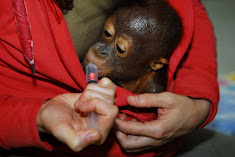


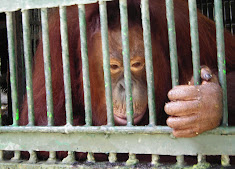


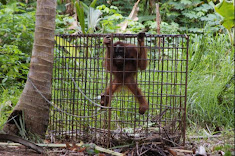
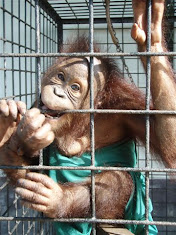


-a.jpg)


