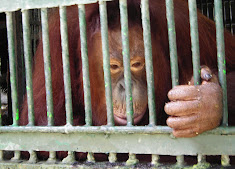
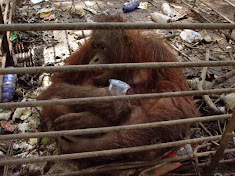
Bridge development in Kalimantan threatens rainforest, mangroves, and coral reef
http://news.mongabay.com/2010/0103-hance_pulau.html
http://news.mongabay.com/2010/0103-hance_pulau.html


Personal note: All this money and they still want the EC etc to send them more. See other posts below.
--------------------
January 04, 2010
Don Bisara & Muhamad Al Azhari The Jakarta Globe
$4 Billion Left Over On State Budget
The government has failed to spend Rp 38 trillion ($4 billion) of its 2009 budget due to inefficient bureaucracy and poor planning, despite much of the proposed spending being part of the stimulus package to help weather the global economic crisis.
“This is not the first time the government has money left over in their budget. This shows they are slow in spending the budget but very fast in making debt,” Hendri Saparini, an analyst from think-tank Econit, said on Sunday.
Anticorruption regulations also continued to slow spending, as officials feared being hauled in for graft. Analysts said reluctance to spend meant funds to boost the economy were not put into play. The situation has prompted a senior lawmaker to warn government agencies to spend their allocated budgets or else.
Adding insult to injury, the Finance Ministry had raised Rp 125.2 trillion to plug an expected 2.4 percent deficit in the state budget. But because only Rp 87.2 trillion of that money was spent, the government is now paying interest on Rp 38 trillion in idle debt.
“If this continues, it will burden future budgets as we have to pay back debt that has produced nothing for us,” Hendri said.
The Finance Ministry said in a news release on Friday that the state budget deficit was only 1.6 percent of gross domestic product for 2009, lower than the earlier 2.4 percent estimate that took the proposed stimulus into account.
However, the country fared better with its spending than in 2008, when the government still had Rp 80 trillion in unspent financing from foreign and domestic sources.
Harry Azhar Azis, chairman of the House of Representatives budget commission, said agencies and local governments that failed to meet spending targets would be sanctioned.
“The punishment could be in the form of budget cuts for the year after,” Harry said. “We will discuss with the [central] government how to scrutinize what’s wrong at the disbursement level. Is this because of officials or the regulations?”
The government managed to collect Rp 866.8 trillion in total revenue in 2009, lower than the targeted Rp 871 trillion, partly due to the economic downturn hitting commodity exports and corporate receipts falling.
State revenue from taxes was Rp 641.2 trillion in 2009, or 1.7 percent below the government’s goal, and non-tax revenue was Rp 224.5 trillion, or 3 percent above target.
The government managed to spend Rp 954 trillion in 2009, which was 4.7 percent below the targeted amount in the revised total budget of Rp 1,000.8 trillion.
http://thejakartaglobe.com/home/4-billion-left-over-on-state-budget/350649
http://www.suaram.net/node/254
2 January 2010
By Dr Kua Kia Soong, Director of SUARAM, 2 Jan 2010
The recent threat by the Registrar of Societies Datuk Mohd Alias Kalil
to deregister Sahabat Alam Malaysia (Friends of the Earth) “if there
is proof that it is involved in activities which could threaten the
nation’s interests” should be a wake-up call for Malaysians to
question the moral standing and class bias of the Administration. Mohd
Alias also said that the ROS was closely monitoring SAM and other
non-governmental organizations (NGOs) “which acted extremely in
fighting for their cause.”
We question the sincerity of the government in protecting our forests
and to commit to a forty per cent cut in carbon emissions when we
witness actions and the recent threats against Malaysian NGOs that have
been the genuine protectors of Malaysian nature and environment.
Sahabat Alam Malaysia (SAM) has been one of the most consistent
defenders of the Malaysian earth and the rights of our indigenous
peoples in the last thirty years or so. In their advocacy work, they
have used legal and peaceful means and like the contributions of other
NGOs, the country should thank them for their patriotic services all
these years. Through their monitoring, they have alerted us to the
pillage of our forests in West and East Malaysia as well as the plight
of our indigenous peoples whose native customary land has been
trespassed in the process.
This rape of the Malaysian forest is only possible through the close
collaboration between the timber tycoons/developers and the ruling elite
in West and East Malaysia. During the 1980s, Malaysia outpaced Indonesia
to become the world's largest exporter of tropical wood, which like
petroleum is a non-replaceable resource. Much of Malaysia's remaining
forests are in Sarawak and Sabah and these are managed for timber
production, each state being empowered to formulate forest policy
independently. During the past two decades, sustainable forest
management has been non-existent.
In the 1980s, through roadblocks, the indigenous Penan of Sarawak
attempted to stop logging in their traditional homeland but their
protests were put down by the Malaysian government, which blocked media
access to the region until the unrest was settled and the forest
dwellers cleared. The situation has deteriorated so much that in recent
years, the Penans have been forced to blockade timber roads yet again.
The gross injustice to the indigenous people of Sarawak has been
exacerbated by allegations of rape and sexual harassment of their
womenfolk and children by loggers.
The ruling elite in Sarawak is so morally bankrupt that it bans
Malaysians who have been involved in “anti-logging activities” from
entering the state while it bestows datukships and Tan Sris on timber
tycoons who are responsible for pillaging our forests.
I discovered on 23 August 2007 at Kuching airport that I could not
enter my own country state of Sarawak! At first the immigration officer
would not divulge the reason for my exclusion but after my heated
protests he let on that it was for “anti-logging activities”. I can
only recall taking part in the “Stop Bakun Dam” protest at the Lake
Gardens in Kuala Lumpur on 7 April 1996 which was promptly and brusquely
broken up by the police who used chemical-laced water cannons on women,
children and indigenous peoples alike. The Bakun dam will submerge an
area of forest in Sarawak which is the size of the whole island of
Singapore. It has already displaced 10,000 indigenous peoples from their
ancestral homes to a slum at Sungai Asap resettlement camp.
To date, there have been a considerable number of NGO activists who
have been banned from Sarawak, the latest being Sivarasa Rasiah, the
human rights lawyer and MP for Subang.
Is our country turning into a banana republic where a state government
can blacklist and ban their citizens from entering a part of their
own
country according to their whim? Imagine, we can go to every corner of
this earth but we cannot enter a part of our own country! We are
blacklisted for wanting to protect Sarawak’s forests and indigenous
peoples while the timber tycoons responsible for the rampant logging are
decorated with honorific titles through their links with the ruling
coalition. Can the government say that we have the human right to
freedom of movement in this country?
Since the new prime minister claims to be interested in reforms, we
hope he will ensure that the 1Malaysia he envisages does not tolerate
such abuse of human rights by the Sarawak state government. And since he
seems to be trying his best to garner support after the 2008 fiasco, let
us assure him that if the BN government should be as foolish as to
harass Malaysian NGOs like SAM, they will face a concerted campaign by
all the other Malaysian NGOs which they will live to regret.