Conservationists say Indonesian orangutans face extinction
Associated PressFirst Posted 05/07/2008
JAKARTA, Indonesia -- The world's largest population of wild orangutans on Indonesia's Borneo island faces extinction within three years due to rapidly expanding oil palm plantations, a conservationist group said Wednesday.
A report by the Center for Orangutan Protection says just 20,000 of the endangered primates remain in the tropical jungle of Central Kalimantan, down from 31,300 in 2004.
If the government does not protect wildlife from commercial exploitation, illegal logging and poachers, orangutans there could be extinct by 2011, said Hardi Baktiantoro, the group's head.
He said more than 5,000 orangutans in the region have been lost every year since 2004, due largely to loss of habitat.
Adding to the problem is a plan by Indonesian authorities to open up 1.1 million acres (455,000 hectares) -- an area larger than the US state of Rhode Island -- of protected land for palm oil growers, he said.
Indonesian President Susilo Bambang Yudhoyono announced a major initiative to save the nation's orangutans at the Bali Climate Conference last year, but it appears the plan has not received sufficient political support.
Toni Suhartono, the Forestry Ministry's top official for wildlife protection, said government programs to save the environment are hampered by a lack of funds and lack of knowledge about conservation.
Awareness "about the conservation of endangered species is very low. It is, therefore, not easy for us to propose budgets for conservation," Suhartono said.
Saturday, 10 May 2008
Speaker : Malaysia not to protect officials involved in illegal logging
05/06/08 14:45
Speaker : Malaysia not to protect officials involved in illegal logging
Jakarta (ANTARA News) - Malaysia will not protect any of its officials who proves to be involved in illegal logging activities in Indonesia, House of Representatives (DPR) Speaker Agung Laksono said following a meeting with visiting Malaysian Foreign Affairs Minister Rais Yatim at the Parliament building here on Monday.
"They (Malaysia) promised not to protect any of their officials involved (in illegal logging)," Laksono said as quoted in the DPR website on Tuesday.The Indonesian House leader at the meeting with Yatim said there was suspicion some Malaysian high ranking officials were behind illegal logging cases.
They were suspected of accommodating logs cut illegally from forests in Indonesia.The Malaysian foreign minister, according to Agung Laksono, assured him that the Malaysian government would not protect illegal loggers or prevent any investigation into officials if they were involved.
However, the minister did not mention any names. Lasksono quoted Yatim as saying Malaysia was ready to cooperate with Indonesia in dealing with activities that damaged Indonesia`s forests"They want to cooperate" the House Speaker said.
Meanwhile, Indonesian Forestry Minister MS Kaban last month said the Indonesian government would soon lodge a protest against Malaysia for accepting illegal logs smuggled on a large scale from West Kalimantan.
Minister Kaban made the statement in Muara Sungai Pawan, West Kalimantan, on Thursday when inspecting 12,000 cubic meters of logs that had been seized by the police and 19 boats detained for transporting the illegal logs.The forestry ministry believed the seized logs were about to be smuggled to Kuching, Malaysia.Minister Yatim, who was only recently appointed Malaysian foreign minister to replace Syed Hamid Albar, had come to Jakarta mainly to introduce himself. (*)
COPYRIGHT © 2008
Speaker : Malaysia not to protect officials involved in illegal logging
Jakarta (ANTARA News) - Malaysia will not protect any of its officials who proves to be involved in illegal logging activities in Indonesia, House of Representatives (DPR) Speaker Agung Laksono said following a meeting with visiting Malaysian Foreign Affairs Minister Rais Yatim at the Parliament building here on Monday.
"They (Malaysia) promised not to protect any of their officials involved (in illegal logging)," Laksono said as quoted in the DPR website on Tuesday.The Indonesian House leader at the meeting with Yatim said there was suspicion some Malaysian high ranking officials were behind illegal logging cases.
They were suspected of accommodating logs cut illegally from forests in Indonesia.The Malaysian foreign minister, according to Agung Laksono, assured him that the Malaysian government would not protect illegal loggers or prevent any investigation into officials if they were involved.
However, the minister did not mention any names. Lasksono quoted Yatim as saying Malaysia was ready to cooperate with Indonesia in dealing with activities that damaged Indonesia`s forests"They want to cooperate" the House Speaker said.
Meanwhile, Indonesian Forestry Minister MS Kaban last month said the Indonesian government would soon lodge a protest against Malaysia for accepting illegal logs smuggled on a large scale from West Kalimantan.
Minister Kaban made the statement in Muara Sungai Pawan, West Kalimantan, on Thursday when inspecting 12,000 cubic meters of logs that had been seized by the police and 19 boats detained for transporting the illegal logs.The forestry ministry believed the seized logs were about to be smuggled to Kuching, Malaysia.Minister Yatim, who was only recently appointed Malaysian foreign minister to replace Syed Hamid Albar, had come to Jakarta mainly to introduce himself. (*)
COPYRIGHT © 2008


Police detain Greenpeace activists dressed as orangutans
HELSINGIN SANOMAT INTERNATIONAL EDITION - BUSINESS & FINANCE
Finland
Neste filling station closed by anti-palm oil demonstration
Police detain Greenpeace activists dressed as orangutans
Greenpeace demonstrators dressed as orangutans converged on the Neste Oil filling station in the Eläintarha district of Helsinki on Wednesday morning, protesting the use of tropical palm oil in Neste's new diesel fuel.
At about ten in the morning, the simian-clad protesters placed locks on the nozzles of the fuel pumps at the Neste station dispensing the new Green-diesel fuel, putting them temporarily out of service. They also distributed leaflets to customers arriving at the station.
Greenpeace claims that the biofuel is not as green an option as it is claimed to be, as its widespread use encourages the clearing of rain forests in Indonesia and Malaysia.
"We launched the protest because Neste has not given up on the use of palm oil in the production of its Green-diesel, in spite of demands", said Greenpeace representative Sini Saarela. The protest lasted about an hour. The police first cordoned off the area, broke the locks that had been placed on the fuel nozzles, and detained 11 demonstrators.
Four people were still detained at 6:00 PM. Police say that there was no intention of placing anyone under arrest.
Neste Oil says that it will issue a criminal complaint and demand compensation for lost sales revenues over the protest.
Neste Oil introduced its new Green-diesel at all of its filling stations in the Helsinki region with staff. The new fuel contains at least ten per cent of Neste's own NExBTL fuel, produced from renewable raw materials according to a process developed by Neste Oil.
The main raw material for NExBTL is Malaysian palm oil. Greenpeace opposes the use of palm oil as a raw material for fuel, because the increase in demand for palm oil will encourage the establishment of oil palm plantations in land reclaimed from rain forests.
The clearing of rain forests releases carbon dioxide into the atmosphere, accelerating climate change. "People think that they are doing the right thing by buying diesel made out of palm oil, although the opposite is true", Saarela said. She also said that Greenpeace has proof that Neste's subcontractor, the IOI Group, is cutting down rain forests on the island of Borneo, and destroying the habitat of the endangered orangutans.
Neste Oil rejects Greenpeace's accusations. Simo Honkanen, Neste's director responsible for NExBTL, says that when correctly produced, palm oil is an excellent raw material for diesel fuel.
"When we consider the life cycle of the raw material and the production of the final product, palm oil causes the least carbon dioxide emissions of all biologically-based raw materials", Honkanen says. "We take responsibility for using raw material that is produced according to the principles of sustainable development."
Honkanen did not want to comment on the activities of IOI in Kalimantan, the Indonesian part of the island of Borneo. The IOI Group is the world's second-largest listed company producing palm oil. In a press release issued by Neste Oil, a representative of IOI said the company has committed to palm oil production which follows the standards of the Roundtable on Sustainable Palm Oil (RSPO).
The IOI representative did not give any detailed comments on Greenpeace's claims that rain forests were being cleared from land in Indonesia owned by a company in which IOI is a partial owner.
Finland
Neste filling station closed by anti-palm oil demonstration
Police detain Greenpeace activists dressed as orangutans
Greenpeace demonstrators dressed as orangutans converged on the Neste Oil filling station in the Eläintarha district of Helsinki on Wednesday morning, protesting the use of tropical palm oil in Neste's new diesel fuel.
At about ten in the morning, the simian-clad protesters placed locks on the nozzles of the fuel pumps at the Neste station dispensing the new Green-diesel fuel, putting them temporarily out of service. They also distributed leaflets to customers arriving at the station.
Greenpeace claims that the biofuel is not as green an option as it is claimed to be, as its widespread use encourages the clearing of rain forests in Indonesia and Malaysia.
"We launched the protest because Neste has not given up on the use of palm oil in the production of its Green-diesel, in spite of demands", said Greenpeace representative Sini Saarela. The protest lasted about an hour. The police first cordoned off the area, broke the locks that had been placed on the fuel nozzles, and detained 11 demonstrators.
Four people were still detained at 6:00 PM. Police say that there was no intention of placing anyone under arrest.
Neste Oil says that it will issue a criminal complaint and demand compensation for lost sales revenues over the protest.
Neste Oil introduced its new Green-diesel at all of its filling stations in the Helsinki region with staff. The new fuel contains at least ten per cent of Neste's own NExBTL fuel, produced from renewable raw materials according to a process developed by Neste Oil.
The main raw material for NExBTL is Malaysian palm oil. Greenpeace opposes the use of palm oil as a raw material for fuel, because the increase in demand for palm oil will encourage the establishment of oil palm plantations in land reclaimed from rain forests.
The clearing of rain forests releases carbon dioxide into the atmosphere, accelerating climate change. "People think that they are doing the right thing by buying diesel made out of palm oil, although the opposite is true", Saarela said. She also said that Greenpeace has proof that Neste's subcontractor, the IOI Group, is cutting down rain forests on the island of Borneo, and destroying the habitat of the endangered orangutans.
Neste Oil rejects Greenpeace's accusations. Simo Honkanen, Neste's director responsible for NExBTL, says that when correctly produced, palm oil is an excellent raw material for diesel fuel.
"When we consider the life cycle of the raw material and the production of the final product, palm oil causes the least carbon dioxide emissions of all biologically-based raw materials", Honkanen says. "We take responsibility for using raw material that is produced according to the principles of sustainable development."
Honkanen did not want to comment on the activities of IOI in Kalimantan, the Indonesian part of the island of Borneo. The IOI Group is the world's second-largest listed company producing palm oil. In a press release issued by Neste Oil, a representative of IOI said the company has committed to palm oil production which follows the standards of the Roundtable on Sustainable Palm Oil (RSPO).
The IOI representative did not give any detailed comments on Greenpeace's claims that rain forests were being cleared from land in Indonesia owned by a company in which IOI is a partial owner.
Conservationists say Indonesian orangutans face rapid extinction
The StarOnline Malaysia
Conservationists say Indonesian orangutans face rapid extinction
Wednesday May 7, 2008 MYT 9:29:47 PM
JAKARTA, Indonesia (AP): The world's largest population of wild orangutans on Indonesia's Borneo island faces extinction within three years due to rapidly expanding oil palm plantations, a conservationist group said Wednesday.
A report by the Center for Orangutan Protection says just 20,000 of the endangered primates remain in the tropical jungle of Central Kalimantan, down from 31,300 in 2004.
If the government does not protect wildlife from commercial exploitation, illegal logging and poachers, orangutans there could be extinct by 2011, said Hardi Baktiantoro, the group's head.
He said more than 5,000 orangutans in the region have been lost every year since 2004, due largely to loss of habitat.
Adding to the problem is a plan by Indonesian authorities to open up 1.1 million acres (455,000 hectares) -- an area larger than the U.S. state of Rhode Island -- of protected land for palm oil growers, he said.
Indonesian President Susilo Bambang Yudhoyono announced a major initiative to save the nation's orangutans at the Bali Climate Conference last year, but it appears the plan has not received sufficient political support.
Toni Suhartono, the Forestry Ministry's top official for wildlife protection, said government programs to save the environment are hampered by a lack of funds and lack of knowledge about conservation.
Awareness "about the conservation of endangered species is very low. It is, therefore, not easy for us to propose budgets for conservation,'' Suhartono said.
Conservationists say Indonesian orangutans face rapid extinction
Wednesday May 7, 2008 MYT 9:29:47 PM
JAKARTA, Indonesia (AP): The world's largest population of wild orangutans on Indonesia's Borneo island faces extinction within three years due to rapidly expanding oil palm plantations, a conservationist group said Wednesday.
A report by the Center for Orangutan Protection says just 20,000 of the endangered primates remain in the tropical jungle of Central Kalimantan, down from 31,300 in 2004.
If the government does not protect wildlife from commercial exploitation, illegal logging and poachers, orangutans there could be extinct by 2011, said Hardi Baktiantoro, the group's head.
He said more than 5,000 orangutans in the region have been lost every year since 2004, due largely to loss of habitat.
Adding to the problem is a plan by Indonesian authorities to open up 1.1 million acres (455,000 hectares) -- an area larger than the U.S. state of Rhode Island -- of protected land for palm oil growers, he said.
Indonesian President Susilo Bambang Yudhoyono announced a major initiative to save the nation's orangutans at the Bali Climate Conference last year, but it appears the plan has not received sufficient political support.
Toni Suhartono, the Forestry Ministry's top official for wildlife protection, said government programs to save the environment are hampered by a lack of funds and lack of knowledge about conservation.
Awareness "about the conservation of endangered species is very low. It is, therefore, not easy for us to propose budgets for conservation,'' Suhartono said.
Palm oil wiping out key orangutan habitat: activists
Palm oil wiping out key orangutan habitat: activists
JAKARTA (AFP) - One of the biggest populations of wild orangutans on Borneo will be extinct in three years without drastic measures to stop the expansion of palm oil plantations, conservationists said Wednesday.
"For Central Kalimantan, the species will be gone as soon as three years from now," Centre for Orangutan Protection director Hardi Bhaktiantoro told a press conference.
More than 30,000 wild orangutans live in the forests of Indonesia's Central Kalimantan province, or more than half the entire orangutan population of Borneo island which is shared between Indonesia, Malaysia and Brunei.
Experts believe the overall extinction rate of Borneo orangutans is nine percent per year, but in Central Kalimantan they are disappearing even faster due to unchecked expansion of palm oil plantations."The expansion of palm oil plantations is wiping out entire habitats and unless the government takes drastic measures to protect these orangutan sanctuaries there is no way to reverse the trend," Bhaktiantoro said.
He showed pictures taken in November of dead orangutans being carried outof new plantations in Central Kalimantan, where they are hunted as pests to prevent them eating palm seedlings.
Orangutans are found only on Borneo and Sumatra and are listed as endangered by the Swiss-based World Conservation Union, the paramount scientific authority on imperilled species.
It says numbers of the ape have fallen by well over 50 percent in the past 60 years as a result of habitat loss, poaching and the pet trade. Indonesia has already lost 72 percent of its 123 million hectares (304million acres) of ancient rain forest due to frenzied logging and burning of peatland for agriculture, according to Greenpeace figures.
But the recent growth in demand for palm oil from food, cosmetic and biofuel companies is putting more pressure on orangutan habitats, swathes of which lie outside conversation areas."The deforestation rate in the area (Central Kalimantan), especially for conversion to palm oil plantation is extremely high," Bhaktiantoro said.
President Susilo Bambang Yudhoyono was keen to trumpet his government'sefforts to save the orange apes as Indonesia hosted the UN-sponsored world climate conference in December. He used the occasion to unveil a scheme called the Orangutan Action Plan designed to stabilise orangutan populations and habitat by 2017 and promote sustainable forest management.source: http://afp.google.com/article/ALeqM5gSVxNnTzpJTiKSWlWwQCMNvJRDJw
JAKARTA (AFP) - One of the biggest populations of wild orangutans on Borneo will be extinct in three years without drastic measures to stop the expansion of palm oil plantations, conservationists said Wednesday.
"For Central Kalimantan, the species will be gone as soon as three years from now," Centre for Orangutan Protection director Hardi Bhaktiantoro told a press conference.
More than 30,000 wild orangutans live in the forests of Indonesia's Central Kalimantan province, or more than half the entire orangutan population of Borneo island which is shared between Indonesia, Malaysia and Brunei.
Experts believe the overall extinction rate of Borneo orangutans is nine percent per year, but in Central Kalimantan they are disappearing even faster due to unchecked expansion of palm oil plantations."The expansion of palm oil plantations is wiping out entire habitats and unless the government takes drastic measures to protect these orangutan sanctuaries there is no way to reverse the trend," Bhaktiantoro said.
He showed pictures taken in November of dead orangutans being carried outof new plantations in Central Kalimantan, where they are hunted as pests to prevent them eating palm seedlings.
Orangutans are found only on Borneo and Sumatra and are listed as endangered by the Swiss-based World Conservation Union, the paramount scientific authority on imperilled species.
It says numbers of the ape have fallen by well over 50 percent in the past 60 years as a result of habitat loss, poaching and the pet trade. Indonesia has already lost 72 percent of its 123 million hectares (304million acres) of ancient rain forest due to frenzied logging and burning of peatland for agriculture, according to Greenpeace figures.
But the recent growth in demand for palm oil from food, cosmetic and biofuel companies is putting more pressure on orangutan habitats, swathes of which lie outside conversation areas."The deforestation rate in the area (Central Kalimantan), especially for conversion to palm oil plantation is extremely high," Bhaktiantoro said.
President Susilo Bambang Yudhoyono was keen to trumpet his government'sefforts to save the orange apes as Indonesia hosted the UN-sponsored world climate conference in December. He used the occasion to unveil a scheme called the Orangutan Action Plan designed to stabilise orangutan populations and habitat by 2017 and promote sustainable forest management.source: http://afp.google.com/article/ALeqM5gSVxNnTzpJTiKSWlWwQCMNvJRDJw
Orangutan habitat in peril due to palm oil plantations
Vol. XXI, No. 197 Thursday, May 8, 2008 MANILA, PHILIPPINES FREE PREVIEW
Agribusiness
Orangutan habitat in peril due to palm oil plantations
JAKARTA - One of the biggest populations of wild orangutans on Borneo willbe extinct in three years without drastic measures to stop the expansionof palm oil plantations, conservationists said Wednesday.
"For Central Kalimantan, the species will be gone as soon as three yearsfrom now," Center for Orangutan Protection Director Hardi Bhaktiantoro told a press conference.
More than 30,000 wild orangutans live in the forests of Indonesia's Central Kalimantan province, or more than half the entire orangutan population of Borneo island which is shared between Indonesia, Malaysia and Brunei. Experts believe the overall extinction rate of Borneo orangutans is 9% per year, but in Central Kalimantan they are disappearing even faster due to unchecked expansion of palm oil plantations.http://www.bworldonline.com/BW050808/content.php?id=122
Agribusiness
Orangutan habitat in peril due to palm oil plantations
JAKARTA - One of the biggest populations of wild orangutans on Borneo willbe extinct in three years without drastic measures to stop the expansionof palm oil plantations, conservationists said Wednesday.
"For Central Kalimantan, the species will be gone as soon as three yearsfrom now," Center for Orangutan Protection Director Hardi Bhaktiantoro told a press conference.
More than 30,000 wild orangutans live in the forests of Indonesia's Central Kalimantan province, or more than half the entire orangutan population of Borneo island which is shared between Indonesia, Malaysia and Brunei. Experts believe the overall extinction rate of Borneo orangutans is 9% per year, but in Central Kalimantan they are disappearing even faster due to unchecked expansion of palm oil plantations.http://www.bworldonline.com/BW050808/content.php?id=122
Orangutan endangered in Indonesia
May 7, 2008,
Orangutan endangered in Indonesia
© 2008 The Associated Press
Indonesia - The world's largest population of wild orangutans on Indonesia's Borneo island faces extinction within three years due to rapidly expanding oil palm plantations, a conservationist group said Wednesday.
A report by the Center for Orangutan Protection says just 20,000 of the endangered primates remain in the tropical jungle of Central Kalimantan,down from 31,300 in 2004.
If the government does not protect wildlife from commercial exploitation, illegal logging and poachers, orangutans there could be extinct by 2011, said Hardi Baktiantoro, the group's head.
He said more than 5,000 orangutans in the region have been lost every yearsince 2004, due largely to loss of habitat.
Adding to the problem is a plan by Indonesian authorities to open up 1.1million acres _ an area larger than the state of Rhode Island _ of protected land for palm oil growers, he said.
Indonesian President Susilo Bambang Yudhoyono announced a major initiative to save the nation's orangutans at the Bali Climate Conference last year,but it appears the plan has not received sufficient political support.
Toni Suhartono, the Forestry Ministry's top official for wildlifeprotection, said government programs to save the environment are hamperedby a lack of funds and lack of knowledge about conservation. Awareness "about the conservation of endangered species is very low. It is, therefore, not easy for us to propose budgets for conservation,"Suhartono said.http://www.chron.com/disp/story.mpl/ap/fn/5760965.html
Orangutan endangered in Indonesia
© 2008 The Associated Press
Indonesia - The world's largest population of wild orangutans on Indonesia's Borneo island faces extinction within three years due to rapidly expanding oil palm plantations, a conservationist group said Wednesday.
A report by the Center for Orangutan Protection says just 20,000 of the endangered primates remain in the tropical jungle of Central Kalimantan,down from 31,300 in 2004.
If the government does not protect wildlife from commercial exploitation, illegal logging and poachers, orangutans there could be extinct by 2011, said Hardi Baktiantoro, the group's head.
He said more than 5,000 orangutans in the region have been lost every yearsince 2004, due largely to loss of habitat.
Adding to the problem is a plan by Indonesian authorities to open up 1.1million acres _ an area larger than the state of Rhode Island _ of protected land for palm oil growers, he said.
Indonesian President Susilo Bambang Yudhoyono announced a major initiative to save the nation's orangutans at the Bali Climate Conference last year,but it appears the plan has not received sufficient political support.
Toni Suhartono, the Forestry Ministry's top official for wildlifeprotection, said government programs to save the environment are hamperedby a lack of funds and lack of knowledge about conservation. Awareness "about the conservation of endangered species is very low. It is, therefore, not easy for us to propose budgets for conservation,"Suhartono said.http://www.chron.com/disp/story.mpl/ap/fn/5760965.html
Indonesia adopts stringent "green" palm oil standard
Indonesia adopts stringent "green" palm oil standard
Wed May 07 07:02:30 UTC 2008
JAKARTA (Reuters) - Indonesia, the world's biggest palm oil producer, plans to take firm measures aimed at ensuring palm oil firms meet stringent standards before labeling their products as eco-friendly, an industry watchdog said on Wednesday.
The rapidly expanding palm oil industry in Southeast Asia has come under attack by green groups for destroying rainforests and wildlife, as well the emission of greenhouse gases.
An industry-led initiative, the Round Table on Sustainable Palm Oil (RSPO), has launched a green labeling certification process that includes commitments to preserve rainforests and wildlife and avoiding conflicts with indigenous people.
RSPO groups producers, consumers and green groups and palm oil companies that meet the criteria set by the RSPO will be able to market their certified "green products" in global markets.
Desi Kusumadewi, spokeswoman of Roundtable on Sustainable Palm Oil (RSPO) for Indonesia, said independent surveyors will be assigned to audit palm oil plantations and certify them as 'eco-friendly'.
"Hopefully, the criteria will be officially approved by the end of May," Kusumadewi said. "Basically, Indonesia will use the international standards but it will personalize the criteria based on its own considerations."
Kusumadewi said three firms -- PT Mutuagung Lestari, PT Tuv Nord and state surveyor firm PT Sucofindo -- were waiting for approval to be RSPO audit programmers in Indonesia.
Malaysia, the world's second-largest palm oil producer, has already had four certification bodies approved by RSPO.
Malaysia and Indonesia, home to more than 4 percent of the world's rainforests, produce nearly 85 percent of total palm oil.
Both nations already have laws to protect tracts of rainforests against illegal logging, but green groups say penalties should be stiffened and that more rainforests should be locked away.
Earlier this month, Unilever, one of Indonesia's top palm oil buyers, said it will start buying palm oil from certified sustainable sources this year and aims to have all its palm oil certified by 2015.
Indonesia is estimated to have produced more than 17 million tonnes of crude palm oil in 2007. It exported about 11.9 million tonnes of palm oil products to China, India and European countries.
Greenpeace estimates Indonesia had the fastest pace of deforestation in the world between 2000 and 2005, equivalent to 300 soccer pitches of forest destroyed every hour.
(Reporting by Mita Valina Liem, editing by Sugita Katyal and Ben Tan)
Wed May 07 07:02:30 UTC 2008
JAKARTA (Reuters) - Indonesia, the world's biggest palm oil producer, plans to take firm measures aimed at ensuring palm oil firms meet stringent standards before labeling their products as eco-friendly, an industry watchdog said on Wednesday.
The rapidly expanding palm oil industry in Southeast Asia has come under attack by green groups for destroying rainforests and wildlife, as well the emission of greenhouse gases.
An industry-led initiative, the Round Table on Sustainable Palm Oil (RSPO), has launched a green labeling certification process that includes commitments to preserve rainforests and wildlife and avoiding conflicts with indigenous people.
RSPO groups producers, consumers and green groups and palm oil companies that meet the criteria set by the RSPO will be able to market their certified "green products" in global markets.
Desi Kusumadewi, spokeswoman of Roundtable on Sustainable Palm Oil (RSPO) for Indonesia, said independent surveyors will be assigned to audit palm oil plantations and certify them as 'eco-friendly'.
"Hopefully, the criteria will be officially approved by the end of May," Kusumadewi said. "Basically, Indonesia will use the international standards but it will personalize the criteria based on its own considerations."
Kusumadewi said three firms -- PT Mutuagung Lestari, PT Tuv Nord and state surveyor firm PT Sucofindo -- were waiting for approval to be RSPO audit programmers in Indonesia.
Malaysia, the world's second-largest palm oil producer, has already had four certification bodies approved by RSPO.
Malaysia and Indonesia, home to more than 4 percent of the world's rainforests, produce nearly 85 percent of total palm oil.
Both nations already have laws to protect tracts of rainforests against illegal logging, but green groups say penalties should be stiffened and that more rainforests should be locked away.
Earlier this month, Unilever, one of Indonesia's top palm oil buyers, said it will start buying palm oil from certified sustainable sources this year and aims to have all its palm oil certified by 2015.
Indonesia is estimated to have produced more than 17 million tonnes of crude palm oil in 2007. It exported about 11.9 million tonnes of palm oil products to China, India and European countries.
Greenpeace estimates Indonesia had the fastest pace of deforestation in the world between 2000 and 2005, equivalent to 300 soccer pitches of forest destroyed every hour.
(Reporting by Mita Valina Liem, editing by Sugita Katyal and Ben Tan)
Neste filling station closed by anti-palm oil demonstration
Neste filling station closed by anti-palm oil demonstration
Police detain Greenpeace activists dressed as orangutansGreenpeace demonstrators dressed as orangutans converged on the Neste Oilfilling station in the Eläintarha district of Helsinki on Wednesdaymorning, protesting the use of tropical palm oil in Neste's new dieselfuel.
At about ten in the morning, the simian-clad protesters placed lockson the nozzles of the fuel pumps at the Neste station dispensing thenew Green-diesel fuel, putting them temporarily out of service. Theyalso distributed leaflets to customers arriving at the station.
Greenpeace claims that the biofuel is not as green an option as itis claimed to be, as its widespread use encourages the clearing ofrain forests in Indonesia and Malaysia.
"We launched the protest because Neste has not given up on the use of palmoil in the production of its Green-diesel, in spite of demands", said Greenpeace representative Sini Saarela.
The protest lasted about an hour. The police first cordoned off thearea, broke the locks that had been placed on the fuel nozzles, anddetained 11 demonstrators.
Four people were still detained at 6:00 PM. Police say that therewas no intention of placing anyone under arrest.
Neste Oil says that it will issue a criminal complaint and demand compensation for lost sales revenues over the protest. Neste Oil introduced its new Green-diesel at all of its filling stations in the Helsinki region with staff. The new fuel contains at least ten percent of Neste's own NExBTL fuel, produced from renewable raw materials according to a process developed by Neste Oil.
The main raw material for NExBTL is Malaysian palm oil. Greenpeace opposes the use of palm oil as a raw material for fuel, because the increase in demand for palm oil will encourage the establishment of oil palm plantations in land reclaimed from rainforests.
The clearing of rain forests releases carbon dioxide into the atmosphere, accelerating climate change.
"People think that they are doing the right thing by buying dieselmade out of palm oil, although the opposite is true", Saarela said. She also said that Greenpeace has proof that Neste's subcontractor,the IOI Group, is cutting down rainforests on the island of Borneo,and destroying the habitat of the endangered orangutans.
Neste Oil rejects Greenpeace's accusations. Simo Honkanen, Neste's director responsible for NExBTL, says that when correctly produced, palmoil is an excellent raw material for diesel fuel.
"When we consider the life cycle of the raw material and the production of the final product, palm oil causes the least carbondioxide emissions of all biologically-based raw materials", Honkanen says. "We take responsibility for using raw material that is produced according to the principles of sustainable development." Honkanen did not want to comment on the activities of IOI inKalimantan, the Indonesian part of the island of Borneo.
The IOI Group is the world's second-largest listed company producing palmoil. In a press release issued by Neste Oil, a representative of IOI said the company has committed to palm oil production which follows the standards of the Roundtable on Sustainable Palm Oil (RSPO).
The IOI representative did not give any detailed comments on Greenpeace's claims that rain forests were being cleared from landi n Indonesia owned by a company in which IOI is a partial owner.
Previously in HS International Edition: Neste Oil believes certification will remove obstacles to use of palm oil in bio-diesel production (10.12.2007) Greenpeace: Neste palm oil-based biodiesel not so green (31.10.2007) Partners of Finnish companies accused of felling rain forests inIndonesia (7.5.2008) The two faces of tropical palm oil (3.2.2008)Links: Greenpeace International - Palm oil blockade 15. November 2007 Palm Oil Truth Foundation: Greenpeace: A Hired Economic Hitman? Neste Oil: Neste Oil launches unique renewable diesel commercially inFinland Roundtable on Sustainable Palm Oil (RSPO).http://www.hs.fi/english/article/Neste+filling+station+closed+by+anti-palm+oil+demonstration/1135236177302
Police detain Greenpeace activists dressed as orangutansGreenpeace demonstrators dressed as orangutans converged on the Neste Oilfilling station in the Eläintarha district of Helsinki on Wednesdaymorning, protesting the use of tropical palm oil in Neste's new dieselfuel.
At about ten in the morning, the simian-clad protesters placed lockson the nozzles of the fuel pumps at the Neste station dispensing thenew Green-diesel fuel, putting them temporarily out of service. Theyalso distributed leaflets to customers arriving at the station.
Greenpeace claims that the biofuel is not as green an option as itis claimed to be, as its widespread use encourages the clearing ofrain forests in Indonesia and Malaysia.
"We launched the protest because Neste has not given up on the use of palmoil in the production of its Green-diesel, in spite of demands", said Greenpeace representative Sini Saarela.
The protest lasted about an hour. The police first cordoned off thearea, broke the locks that had been placed on the fuel nozzles, anddetained 11 demonstrators.
Four people were still detained at 6:00 PM. Police say that therewas no intention of placing anyone under arrest.
Neste Oil says that it will issue a criminal complaint and demand compensation for lost sales revenues over the protest. Neste Oil introduced its new Green-diesel at all of its filling stations in the Helsinki region with staff. The new fuel contains at least ten percent of Neste's own NExBTL fuel, produced from renewable raw materials according to a process developed by Neste Oil.
The main raw material for NExBTL is Malaysian palm oil. Greenpeace opposes the use of palm oil as a raw material for fuel, because the increase in demand for palm oil will encourage the establishment of oil palm plantations in land reclaimed from rainforests.
The clearing of rain forests releases carbon dioxide into the atmosphere, accelerating climate change.
"People think that they are doing the right thing by buying dieselmade out of palm oil, although the opposite is true", Saarela said. She also said that Greenpeace has proof that Neste's subcontractor,the IOI Group, is cutting down rainforests on the island of Borneo,and destroying the habitat of the endangered orangutans.
Neste Oil rejects Greenpeace's accusations. Simo Honkanen, Neste's director responsible for NExBTL, says that when correctly produced, palmoil is an excellent raw material for diesel fuel.
"When we consider the life cycle of the raw material and the production of the final product, palm oil causes the least carbondioxide emissions of all biologically-based raw materials", Honkanen says. "We take responsibility for using raw material that is produced according to the principles of sustainable development." Honkanen did not want to comment on the activities of IOI inKalimantan, the Indonesian part of the island of Borneo.
The IOI Group is the world's second-largest listed company producing palmoil. In a press release issued by Neste Oil, a representative of IOI said the company has committed to palm oil production which follows the standards of the Roundtable on Sustainable Palm Oil (RSPO).
The IOI representative did not give any detailed comments on Greenpeace's claims that rain forests were being cleared from landi n Indonesia owned by a company in which IOI is a partial owner.
Previously in HS International Edition: Neste Oil believes certification will remove obstacles to use of palm oil in bio-diesel production (10.12.2007) Greenpeace: Neste palm oil-based biodiesel not so green (31.10.2007) Partners of Finnish companies accused of felling rain forests inIndonesia (7.5.2008) The two faces of tropical palm oil (3.2.2008)Links: Greenpeace International - Palm oil blockade 15. November 2007 Palm Oil Truth Foundation: Greenpeace: A Hired Economic Hitman? Neste Oil: Neste Oil launches unique renewable diesel commercially inFinland Roundtable on Sustainable Palm Oil (RSPO).http://www.hs.fi/english/article/Neste+filling+station+closed+by+anti-palm+oil+demonstration/1135236177302
Ministry, USAID team up for conservation project
Ministry, USAID team up for conservation project
The Jakarta Post, Jakarta May 9
The Forestry Ministry together with the U.S. Agency for International Development (USAID) announced more model conservation villages to be built around protected forests and nature preserves.
There are currently 182 conservation villages in West Java, Central Java, East Java, Nanggroe Aceh Darussalam and North Sumatra, Forestry Minister M.S. Ka'ban said here Wednesday.
"Those villages are located in upstream areas close to nature preserves," he said.
"Through the conservation villages project, we hope local people will help us to preserve forests."
The conservation village project is a community empowerment initiative involving local people. It aims to protect forests and wildlife habitats by reducing deforestation and watershed pollution.
There are around 22 million hectares of conservation area in Indonesia. However, according to the ministry, the areas are endangered by deforestation, forests fires, illegal logging and illegal trading of rare plants and animals.
Deforestation has damaged some 59 million hectares out of the country's 120.35 million hectares of forest.
According to the ministry, 2,040 villages with 660,845 inhabitants, who live adjacent to protected areas, are dependent on the forests for their livelihood.
Darori, the ministry's director general of forest preservation and nature conservation, said the conservation village model aims to educate local people about forest rehabilitation and ecosystem restoration.
"As a start, we must give people who live nearby the protected areas the correct information about forest preservation so as to maximize the benefits through conservation," he said.
"People must understand they will gain greater access to clean water through environment preservation," he said.
According to the director of Basic Human Services of USAID, Alfred Nakatsuma, the five-year project, which started in 2005, is having a positive effect.
"So far we're very happy with the results and we're planning future activities. Hopefully, the conservation village models can soon be implemented nationwide," he said.
Aep Saefudin, a conservation village resident living in Sukatani, Cianjur, West Java, said he was excited about the project.
"The field school, one of the programs within the project, has given us greater knowledge of how to benefit from the land properly," he said.
"However, not all of the villagers have benefited from the project yet. I suggest the government and USAID continue the project some time into the future," he said. (nkn)
The Jakarta Post, Jakarta May 9
The Forestry Ministry together with the U.S. Agency for International Development (USAID) announced more model conservation villages to be built around protected forests and nature preserves.
There are currently 182 conservation villages in West Java, Central Java, East Java, Nanggroe Aceh Darussalam and North Sumatra, Forestry Minister M.S. Ka'ban said here Wednesday.
"Those villages are located in upstream areas close to nature preserves," he said.
"Through the conservation villages project, we hope local people will help us to preserve forests."
The conservation village project is a community empowerment initiative involving local people. It aims to protect forests and wildlife habitats by reducing deforestation and watershed pollution.
There are around 22 million hectares of conservation area in Indonesia. However, according to the ministry, the areas are endangered by deforestation, forests fires, illegal logging and illegal trading of rare plants and animals.
Deforestation has damaged some 59 million hectares out of the country's 120.35 million hectares of forest.
According to the ministry, 2,040 villages with 660,845 inhabitants, who live adjacent to protected areas, are dependent on the forests for their livelihood.
Darori, the ministry's director general of forest preservation and nature conservation, said the conservation village model aims to educate local people about forest rehabilitation and ecosystem restoration.
"As a start, we must give people who live nearby the protected areas the correct information about forest preservation so as to maximize the benefits through conservation," he said.
"People must understand they will gain greater access to clean water through environment preservation," he said.
According to the director of Basic Human Services of USAID, Alfred Nakatsuma, the five-year project, which started in 2005, is having a positive effect.
"So far we're very happy with the results and we're planning future activities. Hopefully, the conservation village models can soon be implemented nationwide," he said.
Aep Saefudin, a conservation village resident living in Sukatani, Cianjur, West Java, said he was excited about the project.
"The field school, one of the programs within the project, has given us greater knowledge of how to benefit from the land properly," he said.
"However, not all of the villagers have benefited from the project yet. I suggest the government and USAID continue the project some time into the future," he said. (nkn)
Khir: No logging on my watch
New Straits Times, Malaysia
2008/05/09
Khir: No logging on my watch
SHAH ALAM: Former menteri besar Datuk Seri Dr Mohd Khir Toyo yesterday denied his administration had turned a blind eye to illegal logging at a forest reserve in Tanjung Karang.
Contrary to what was reported in the media, he said the Forestry Department did take action against the syndicate, which he claimed were Pakatan Rakyat members."We have a list of the 10 people in the illegal land committee who sold the land to unsuspecting buyers.
"Dr Mohd Khir alleged that the state government had the same list and urged it to take action against the culprits, adding that two people were arrested, and their machinery and motorcycles seized last November.However, he said no further action was taken because of a lack of evidence.
On Wednesday, it was reported that 650ha of the Raja Musa and Tanjung Karang forest reserves were ravaged by syndicates with political links.
2008/05/09
Khir: No logging on my watch
SHAH ALAM: Former menteri besar Datuk Seri Dr Mohd Khir Toyo yesterday denied his administration had turned a blind eye to illegal logging at a forest reserve in Tanjung Karang.
Contrary to what was reported in the media, he said the Forestry Department did take action against the syndicate, which he claimed were Pakatan Rakyat members."We have a list of the 10 people in the illegal land committee who sold the land to unsuspecting buyers.
"Dr Mohd Khir alleged that the state government had the same list and urged it to take action against the culprits, adding that two people were arrested, and their machinery and motorcycles seized last November.However, he said no further action was taken because of a lack of evidence.
On Wednesday, it was reported that 650ha of the Raja Musa and Tanjung Karang forest reserves were ravaged by syndicates with political links.
We did not approve logging in forest reserve, says ex-MB
Friday May 9, 2008 New Straits Times, Malaysia
We did not approve logging in forest reserve, says ex-MB
By CHRISTINA TAN
SHAH ALAM: Former Selangor mentri besar Datuk Seri Dr Mohd Khir Toyo claims his government had not approved any logging activity in the Raja Muda Forest Reserve but had tried to prosecute offenders instead.
“We tried to take two persons to court, unfortunately we did not have enough evidence,” said the chairman of the shadow Selangor exco committee at the Umno building here yesterday.
It was reported on Wednesday that a total of 650ha of land in the water catchment area in Kuala Selangor, including the Raja Musa Forest Reserve, has been illegally cleared over the past two to three years.
Dr Khir said this was the work of a syndicate, adding he would lodge a police report against the trespassers soon.
On another matter, Dr Khir questioned the integrity of a member of the current state executive council, claiming that he had committed a serious offence by obstructing a police operation during an anti-vice operation in Puchong Jaya in November.
On Nov 4, it was reported that DAP central committee member Ronnie Liu was arrested for allegedly obstructing police and enforcement officers from sealing a budget hotel in Puchong Jaya.
When contacted, Liu said he went to the hotel after a guest called him for help.
He said the guest had wanted to collect the money he left in the sealed hotel but was arrested by several undercover policemen.
He was in the police lock-up for a day before he was released unconditionally, Liu said.
We did not approve logging in forest reserve, says ex-MB
By CHRISTINA TAN
SHAH ALAM: Former Selangor mentri besar Datuk Seri Dr Mohd Khir Toyo claims his government had not approved any logging activity in the Raja Muda Forest Reserve but had tried to prosecute offenders instead.
“We tried to take two persons to court, unfortunately we did not have enough evidence,” said the chairman of the shadow Selangor exco committee at the Umno building here yesterday.
It was reported on Wednesday that a total of 650ha of land in the water catchment area in Kuala Selangor, including the Raja Musa Forest Reserve, has been illegally cleared over the past two to three years.
Dr Khir said this was the work of a syndicate, adding he would lodge a police report against the trespassers soon.
On another matter, Dr Khir questioned the integrity of a member of the current state executive council, claiming that he had committed a serious offence by obstructing a police operation during an anti-vice operation in Puchong Jaya in November.
On Nov 4, it was reported that DAP central committee member Ronnie Liu was arrested for allegedly obstructing police and enforcement officers from sealing a budget hotel in Puchong Jaya.
When contacted, Liu said he went to the hotel after a guest called him for help.
He said the guest had wanted to collect the money he left in the sealed hotel but was arrested by several undercover policemen.
He was in the police lock-up for a day before he was released unconditionally, Liu said.
ILLEGAL LOGGING MAY CAUSE FARMERS TO LOSE PADI CROP
ILLEGAL LOGGING MAY CAUSE FARMERS TO LOSE PADI CROP
TANJONG KARANG May 6 (Bernama)
More than 9,000 padi farmers in Selangor face the possibility of losing their crop because illegal loggers have felled timber in a water catchment area of the Raja Musa Forest Reserve which is a source of water to their padi fields.
The illegal loggers, who are suspected to have been operating there for two years, have levelled the area in the 650-hectare reserve. Besides the Raja Musa Forest Reserve, the Bestari Jaya Forest Reserve near Universiti Industri Selangor (Unisel) and the Hopeful Estate Forest Reserve are also sources of water supply for padi-growing areas in Tanjung Karang, Sabak Bernam, Sekinchan and Kuala Selangor.
It is learnt that land in the logged area of the Raja Musa Forest Reserve was sold illegally for between RM8,000 and RM8,500 for every two acres, and that about 100 people had bought plots. Illegal logging is also said to be going on in the Bestari Jaya and Hopeful Estate forest reserves.
TANJONG KARANG May 6 (Bernama)
More than 9,000 padi farmers in Selangor face the possibility of losing their crop because illegal loggers have felled timber in a water catchment area of the Raja Musa Forest Reserve which is a source of water to their padi fields.
The illegal loggers, who are suspected to have been operating there for two years, have levelled the area in the 650-hectare reserve. Besides the Raja Musa Forest Reserve, the Bestari Jaya Forest Reserve near Universiti Industri Selangor (Unisel) and the Hopeful Estate Forest Reserve are also sources of water supply for padi-growing areas in Tanjung Karang, Sabak Bernam, Sekinchan and Kuala Selangor.
It is learnt that land in the logged area of the Raja Musa Forest Reserve was sold illegally for between RM8,000 and RM8,500 for every two acres, and that about 100 people had bought plots. Illegal logging is also said to be going on in the Bestari Jaya and Hopeful Estate forest reserves.
Orangutans in danger of dying out
CBBC (BBC)
Friday May 09 2008
Orangutans in danger of dying out
Conservationists are worried that the world's largest population of wild orangutans in Borneo in south-east Asia will die out within three years.
That's because the trees that they live in are being cut down in order to grow palm oil, used for soaps and cooking.
It's thought there's just 20,000 of the mammals left in the tropical jungle spot, down from about 31,300 in 2004.
Campaigners say it's vital that Borneo's government step in to safeguard the animals' future.
Conservationist Hardi Baktiantoro said: "The cutting down of forests means the loss of habitat and source of food for orangutans.
"Orangutans will become homeless and starve."
He said the animals would then end up eating the palm oil seeds, and farmers would then hunt them as pests that were destroying their crops.
Friday May 09 2008
Orangutans in danger of dying out
Conservationists are worried that the world's largest population of wild orangutans in Borneo in south-east Asia will die out within three years.
That's because the trees that they live in are being cut down in order to grow palm oil, used for soaps and cooking.
It's thought there's just 20,000 of the mammals left in the tropical jungle spot, down from about 31,300 in 2004.
Campaigners say it's vital that Borneo's government step in to safeguard the animals' future.
Conservationist Hardi Baktiantoro said: "The cutting down of forests means the loss of habitat and source of food for orangutans.
"Orangutans will become homeless and starve."
He said the animals would then end up eating the palm oil seeds, and farmers would then hunt them as pests that were destroying their crops.
RI forest conversions alarming: Greenomics
RI forest conversions alarming: Greenomics
Adianto P. Simamora , The Jakarta Post , Jakarta Fri, 05/09/2008
Forest conversion has reached an alarming level in Indonesia with more than 10 million hectares of protected forest converted for business use since the inception of regional autonomy in 2000, a study says.
The study, conducted by the Greenomics Indonesia environmental group, found most regional spatial plans do not aim to protect forests.
"In fact, some existing spatial planning ... expedites forest conversions," Greenomics executive director Elfian Effendi told The Jakarta Post on Thursday.
"The area of converted forest now exceeds 158 times the size of Singapore."
Indonesia is the world's third-largest forestry country, with over 120 million hectares of rainforest.
The government has set aside about 40 million hectares for both protected and conservation forests, where plantation, agriculture or logging activities are not allowed.
"However, as forest conversion remains common practice, only 30 million hectares of protected forest are now left. They will disappear in the short term unless the government takes actions to stop forest conversion," Elfian said.
The issue of forest conversion made the headlines when the Corruption Eradication Commission (KPK) arrested lawmaker Al Amin Nasution for allegedly accepting a bribe to facilitate the approval for forest to be converted on Bintan Island, Riau, last month.
The Bintan administration requested the government's permit through the House of Representatives to convert around 200 hectares of a 7,300-hectare protected forest for an office complex project.
The Greenomics study found that in the last two years alone, there were at least 40 cases where forest land was converted into plantations and agricultural land, covering about 195,000 hectares of protected forest.
Greenomics found some 327,000 hectares of its protected forest has been converted under forest concessions in North Sumatra, while in Aceh about 160,000 hectares of protected forest was turned into plantation and agricultural areas.
According to the study, about 143,000 hectares of protected forest has illegally been converted for plantations and agricultural land in Riau province.
The Greenomics also said the West Kalimantan administration had failed to save its protected forests. "About 286,000 hectares of protected forest there has been converted into agricultural estates," he said.
In Central Kalimantan, about 225,000 hectares of protected forest has been converted into plantations.
President Susilo Bambang Yudhoyono should put an end to forest conversion by setting up a national team to determine whether regional spatial planning undermines or sustains protected and conservation forests, Greenomics said.
"We learned that only about 40 percent of spatial planning is aimed at saving protected forest in the country," he said.
"But, the forestry ministry seem powerless to handle the problem."
The Greenomics also supports ongoing moves by the KPK to resolve forest corruption cases.
Law enforcement against forest conversion practices should be simple because any business activity in the protected forests is illegal, he said.
"The KPK and police should find it easy to investigate forest conversion cases since perpetrators can't obtain a license to convert protected forests," he said.
Adianto P. Simamora , The Jakarta Post , Jakarta Fri, 05/09/2008
Forest conversion has reached an alarming level in Indonesia with more than 10 million hectares of protected forest converted for business use since the inception of regional autonomy in 2000, a study says.
The study, conducted by the Greenomics Indonesia environmental group, found most regional spatial plans do not aim to protect forests.
"In fact, some existing spatial planning ... expedites forest conversions," Greenomics executive director Elfian Effendi told The Jakarta Post on Thursday.
"The area of converted forest now exceeds 158 times the size of Singapore."
Indonesia is the world's third-largest forestry country, with over 120 million hectares of rainforest.
The government has set aside about 40 million hectares for both protected and conservation forests, where plantation, agriculture or logging activities are not allowed.
"However, as forest conversion remains common practice, only 30 million hectares of protected forest are now left. They will disappear in the short term unless the government takes actions to stop forest conversion," Elfian said.
The issue of forest conversion made the headlines when the Corruption Eradication Commission (KPK) arrested lawmaker Al Amin Nasution for allegedly accepting a bribe to facilitate the approval for forest to be converted on Bintan Island, Riau, last month.
The Bintan administration requested the government's permit through the House of Representatives to convert around 200 hectares of a 7,300-hectare protected forest for an office complex project.
The Greenomics study found that in the last two years alone, there were at least 40 cases where forest land was converted into plantations and agricultural land, covering about 195,000 hectares of protected forest.
Greenomics found some 327,000 hectares of its protected forest has been converted under forest concessions in North Sumatra, while in Aceh about 160,000 hectares of protected forest was turned into plantation and agricultural areas.
According to the study, about 143,000 hectares of protected forest has illegally been converted for plantations and agricultural land in Riau province.
The Greenomics also said the West Kalimantan administration had failed to save its protected forests. "About 286,000 hectares of protected forest there has been converted into agricultural estates," he said.
In Central Kalimantan, about 225,000 hectares of protected forest has been converted into plantations.
President Susilo Bambang Yudhoyono should put an end to forest conversion by setting up a national team to determine whether regional spatial planning undermines or sustains protected and conservation forests, Greenomics said.
"We learned that only about 40 percent of spatial planning is aimed at saving protected forest in the country," he said.
"But, the forestry ministry seem powerless to handle the problem."
The Greenomics also supports ongoing moves by the KPK to resolve forest corruption cases.
Law enforcement against forest conversion practices should be simple because any business activity in the protected forests is illegal, he said.
"The KPK and police should find it easy to investigate forest conversion cases since perpetrators can't obtain a license to convert protected forests," he said.
Tuesday, 6 May 2008
Big Plans for Biodiesel Stall in Southeast Asia
Big Plans for Biodiesel Stall in Southeast Asia
Source: The Wall Street Journal - April 30, 2008
By TOM WRIGHT, JAKARTA,
Plans to invest billions of dollars in biodiesel refineries across Southeast Asia have been put on hold as the prices of key raw ingredients-- particularly palm oil -- have shot up amid surging food demand in China and India.
An oversupply of biodiesel fuel in Europe thanks to a wave of heavilysubsidized U.S. imports and growing concern in the West about the adverse environmental impact of oil-palm cultivation have added to the bleak outlook, Asian producers say.
That is an unexpected reversal of fortune for the industry. Just a year ago, Asian companies were rushing to build biodiesel plants to take advantage of subsidies in Europe and the U.S. aimed at promoting the consumption of cleaner-burning fuels.
Projects being built or planned were forecast to pump out five million metric tons of biodiesel a year upon completion, or about half of Europe's total refining capacity in 2007. The Indonesian government boasted that $12.5 billion in new biofuel investments were in the pipeline for that country alone.
Biodiesel, refined from vegetable oils, is mixed with regular diesel and sold at the pump in Europe and the U.S. In theory, the blended fuel reduces greenhouse-gas emissions by stretching how far a vehicle can travel on gasoline or regular diesel.
The planned outlays on refineries seemed to make sense when crude-oil prices began rocketing last year. But the price of palm oil -- produced widely in Southeast Asia -- has climbed even more steeply, making biodiesel plants that use the commodity commercially unviable.
At the same time, the European Union -- by far the world's largest consumer of biodiesel -- is tightening its subsidy program to specifically exclude biodiesel produced from palm oil grown on recently destroyed natural forest.
Razing forests to plant palm oil -- a common, if often illegal, practice in places like Indonesia -- releases huge amounts of greenhouse gases into the atmosphere, negating any benefit from cleaner-burning fuels, recent studies have found.
Biodiesel makers in Asia are also complaining that U.S. exporters have flooded the European market with biodiesel fuel up to 30% cheaper than they are able to produce. U.S. producers of soybean-derived biodiesel get a $1per gallon tax credit and then export their product to Europe, benefiting from subsidies there as well.
Last week, an association of European biodiesel producers filed an official complaint to the European Commission claiming the U.S. export of subsidized biodiesel constitutes unfair competition.
The result: Some Asian palm-oil producers have scrapped their plans for biodiesel refineries, and only a few new plants have come on line. In Malaysia, for instance, the industry produced just 80,000 metric tons of biodiesel last year, much lower than the country's annual capacity of one million tons, Malaysian Commodities Minister Peter Chin said last week."At current high palm-oil prices, palm biodiesel is not viable," says AuKah Soon, a spokesman for Wilmar International Ltd, a Singapore-based palm-oil plantation owner.
Last year, Wilmar completed Southeast Asia's largest biodiesel plant on the Indonesian island of Sumatra. But the plant,which has the capacity to produce around one million tons of biodiesel each year, is running only to meet current contracts. "We fore see a very small percentage of our revenue coming from biodiesel this year," Mr. Soon says.
Sinar Mas Agro Resources & Technology Ltd., an Indonesian palm-oil company,has also suspended plans to invest $5.5 billion to build a huge biodiesel complex in Indonesia's remote Papua province with China National Offshore Oil Corp., says a Sinar Mas Agro spokeswoman.
The plan to develop one million hectares of virgin rainforest for the plantations has drawn complaints from environmentalists. Biodiesel producers who don't own oil-palm plantations have been hardest hit because they must fork out ever higher prices for their raw materials.
Crude-palm-oil futures on the Malaysian Derivatives Exchange have climbed 12% so far this year after jumping 50% in 2007. Mission Biofuels Ltd., which runs a refinery in Malaysia and is listed in Australia, warned investors recently that core earnings for its financial year ending June will be less than half an earlier forecast. Swaminathan Mahalingam, the company's managing director, says the 100,000-tons-per-year plant is operating at only 40% capacity. "We're only producing biodiesel if we have an order which makes sense," he says.
To be sure, biodiesel could still play an important role if fossil-fuel output is unable to keep up with growing world energy demand. Many biodiesel producers in Southeast Asia say they might kick-start production again if crude-oil prices remain above $115 per barrel. Goldman Sachs estimates that palm-oil-derived biodiesel exports to the EU can break even at current prices if crude remains above $100 a barrel.
To be commercially viable, similar biodiesel exports to the U.S. would require crude oil to trade at above $120 a barrel, Goldman estimates. Some biodiesel producers that buy palm oil from third parties say they can still make their expansion plans work. Finnish company Neste Oil Corp., for example, is moving ahead with an $800 million biodiesel plant in Singapore,which is expected to start operations in 2010.
Simo Honkanen, a vice president at Neste, says sales of the company's high-performance biodiesel are strong. Neste is confident it will be able to pass higher palm-oil prices to customers. "Those that survive will be companies that have a superb product," he says. Meanwhile, some Southeast Asian palm-oil producers are refocusing on more traditional products and markets.
Palm oil is still much more widely used to make cooking oil, margarine and cosmetics than it is for biodiesel. With diets improving in China and India, cooking-oil demand has soared, drivingup prices. With subsidized U.S. and European soybean oil still flowing into biodiesel, some palm-oil producers, including Wilmar, have switched gears and are trying to exploit the opportunity to supply China and other Asian markets with cooking oil.
Source: The Wall Street Journal - April 30, 2008
By TOM WRIGHT, JAKARTA,
Plans to invest billions of dollars in biodiesel refineries across Southeast Asia have been put on hold as the prices of key raw ingredients-- particularly palm oil -- have shot up amid surging food demand in China and India.
An oversupply of biodiesel fuel in Europe thanks to a wave of heavilysubsidized U.S. imports and growing concern in the West about the adverse environmental impact of oil-palm cultivation have added to the bleak outlook, Asian producers say.
That is an unexpected reversal of fortune for the industry. Just a year ago, Asian companies were rushing to build biodiesel plants to take advantage of subsidies in Europe and the U.S. aimed at promoting the consumption of cleaner-burning fuels.
Projects being built or planned were forecast to pump out five million metric tons of biodiesel a year upon completion, or about half of Europe's total refining capacity in 2007. The Indonesian government boasted that $12.5 billion in new biofuel investments were in the pipeline for that country alone.
Biodiesel, refined from vegetable oils, is mixed with regular diesel and sold at the pump in Europe and the U.S. In theory, the blended fuel reduces greenhouse-gas emissions by stretching how far a vehicle can travel on gasoline or regular diesel.
The planned outlays on refineries seemed to make sense when crude-oil prices began rocketing last year. But the price of palm oil -- produced widely in Southeast Asia -- has climbed even more steeply, making biodiesel plants that use the commodity commercially unviable.
At the same time, the European Union -- by far the world's largest consumer of biodiesel -- is tightening its subsidy program to specifically exclude biodiesel produced from palm oil grown on recently destroyed natural forest.
Razing forests to plant palm oil -- a common, if often illegal, practice in places like Indonesia -- releases huge amounts of greenhouse gases into the atmosphere, negating any benefit from cleaner-burning fuels, recent studies have found.
Biodiesel makers in Asia are also complaining that U.S. exporters have flooded the European market with biodiesel fuel up to 30% cheaper than they are able to produce. U.S. producers of soybean-derived biodiesel get a $1per gallon tax credit and then export their product to Europe, benefiting from subsidies there as well.
Last week, an association of European biodiesel producers filed an official complaint to the European Commission claiming the U.S. export of subsidized biodiesel constitutes unfair competition.
The result: Some Asian palm-oil producers have scrapped their plans for biodiesel refineries, and only a few new plants have come on line. In Malaysia, for instance, the industry produced just 80,000 metric tons of biodiesel last year, much lower than the country's annual capacity of one million tons, Malaysian Commodities Minister Peter Chin said last week."At current high palm-oil prices, palm biodiesel is not viable," says AuKah Soon, a spokesman for Wilmar International Ltd, a Singapore-based palm-oil plantation owner.
Last year, Wilmar completed Southeast Asia's largest biodiesel plant on the Indonesian island of Sumatra. But the plant,which has the capacity to produce around one million tons of biodiesel each year, is running only to meet current contracts. "We fore see a very small percentage of our revenue coming from biodiesel this year," Mr. Soon says.
Sinar Mas Agro Resources & Technology Ltd., an Indonesian palm-oil company,has also suspended plans to invest $5.5 billion to build a huge biodiesel complex in Indonesia's remote Papua province with China National Offshore Oil Corp., says a Sinar Mas Agro spokeswoman.
The plan to develop one million hectares of virgin rainforest for the plantations has drawn complaints from environmentalists. Biodiesel producers who don't own oil-palm plantations have been hardest hit because they must fork out ever higher prices for their raw materials.
Crude-palm-oil futures on the Malaysian Derivatives Exchange have climbed 12% so far this year after jumping 50% in 2007. Mission Biofuels Ltd., which runs a refinery in Malaysia and is listed in Australia, warned investors recently that core earnings for its financial year ending June will be less than half an earlier forecast. Swaminathan Mahalingam, the company's managing director, says the 100,000-tons-per-year plant is operating at only 40% capacity. "We're only producing biodiesel if we have an order which makes sense," he says.
To be sure, biodiesel could still play an important role if fossil-fuel output is unable to keep up with growing world energy demand. Many biodiesel producers in Southeast Asia say they might kick-start production again if crude-oil prices remain above $115 per barrel. Goldman Sachs estimates that palm-oil-derived biodiesel exports to the EU can break even at current prices if crude remains above $100 a barrel.
To be commercially viable, similar biodiesel exports to the U.S. would require crude oil to trade at above $120 a barrel, Goldman estimates. Some biodiesel producers that buy palm oil from third parties say they can still make their expansion plans work. Finnish company Neste Oil Corp., for example, is moving ahead with an $800 million biodiesel plant in Singapore,which is expected to start operations in 2010.
Simo Honkanen, a vice president at Neste, says sales of the company's high-performance biodiesel are strong. Neste is confident it will be able to pass higher palm-oil prices to customers. "Those that survive will be companies that have a superb product," he says. Meanwhile, some Southeast Asian palm-oil producers are refocusing on more traditional products and markets.
Palm oil is still much more widely used to make cooking oil, margarine and cosmetics than it is for biodiesel. With diets improving in China and India, cooking-oil demand has soared, drivingup prices. With subsidized U.S. and European soybean oil still flowing into biodiesel, some palm-oil producers, including Wilmar, have switched gears and are trying to exploit the opportunity to supply China and other Asian markets with cooking oil.
Foster forest concept, community-based reforestation
Foster forest concept, community-based reforestation
Source: The Jakarta Post - April 29, 2008 By Wahyoe Boediwardhana,Pasuruan, East Java
Villager Muhammad Yassin may not be aware Indonesia has reached a new record, it's fastest deforestation rate ever, clearing an estimated 1.8million hectares of forest each year.
But the 59-year-old villager of Jatiarjo, East Java does care about the forests on the slopes of Mount Arjuno, near his home. Every morning, the grandfather of five leaves his home, walking to thef orest three kilometers away. In the afternoon he returns home, carrying bundles of grass for his three cows. Along the edge of a forest owned by state forestry company Perum PerhutaniUnit II, Pasuruan, Yassin cultivates a plot of land some 250-square-meters in area. The former game hunter gained a permit to farm in the company's vulnerable forest areas by growing various trees.
"I have no other ambitions. I just want to see this forest lush and green again, like it was before. I'll be planting whatever seedlings I can get from the village or this forest, on this plot," Yassin told The Jakarta Post. Yassin now grows jackfruit, coffee, avocado, banana, papaya, guava, kapok, candlenut and bay trees, which he planted in around 2004.
Yassin is one of 17 members of the Forest Village Community Institute (LMDH) in Ngudi Lestari, Jatiarjo. Its members joined the program by applying for the so-called "foster forest concept". The "foster forest concept" was first introduced as a pilot project in 2004 by the Yayasan Kaliandra Sejati (YKS), a non-governmental organization dealing with the environment (which also operates the Center for Nature and Culture Education on the slopes of Arjuno) in Pasuruan.
In the wake of the reform drive in 1998, thousands of hectares of forests on the slopes of Mt. Arjuno and nearby Mt. Welirang were targeted for deforestation by unscrupulous profiteers. Hundreds of thousands of logs from various trees including pine, casuarina, mahogany, bay and acacia were looted. Some forests were denuded completely and left without any coverage to retain rainwater, making areas vulnerable to landslides and erosion.
Mt. Arjuno is an important area because it also serves as the water catchment area for more than 20 percent of the population of East Java. Yassin and other villagers affiliated with the LMDH-Ngudi Lestari programwere determined to restore the forest to its previous state.The idea of village community based reforestation emerged in 2004, LMDH-Ngudi Lestari chairman Faturrohman said. Previously, the community around the forest used its wood for fires or to make charcoal, hunted its animals for meat and squatted there.
In 2005, the "foster forest concept" started; by raising awareness of the need to protect forest areas, and and with campaigns to encourage people to take pride in forest conservation."The forest community, who formerly relied on hunting, tree felling,charcoal making (and other activities causing forest depletion), were provided with training.
Now local villagers have quit their old ways and are proud of their forest," Faturrohman said. In 2006, farmers began to replant trees with funding from the regional and state budgets. In 2007, the replanting had covered some 1,050 hectares, andthis year alone some 350 hectares have been reforested.The farmers chosen to join 'foster' groups are responsible for looking after vulnerable regenerated land, including 369 hectares in Jatiarjo and420 hectares in Dayurejo.
The farmers are responsible for the management, monitoring, care and maintenance of trees, including mahogany, bay and acacia. In compensation,they would receive incentives from the Environment Service Compensation(KPJL) program, under the YKS. With fees collected from those using YKS facilities in the pilot project, Rp 1,000 is set aside from each ticket, YKS manager Agus Wiyono said. "The fund is then spent on incentives," he said. "The number of visitors to the Kaliandra project is increasing each year.
In 2007, they totaled around 20,000, so the total levy funds collected reached around Rp 20 million,"Wiyono said.Yassin and his 16 peers currently only receive around Rp 1.2 million ayear. The amount could increase, with more private companies involved or investing in the project. The LMDH has a current membership of some 300 forest farmers."Any increase in the number of firms (needing local water resources fortheir operations) that join this program, would be beneficial. Farmers will gain extra income, a lot more vulnerable land will be regenerated, and thepublic image of water and forest-resource-conscious firms improved,"Faturrohman said.A Memorandum of Understanding and a contract of cooperation have been made to strengthen ties between LMDH, Perhutani in Pasuruan and the YKS.
East Java Perhutani's move comes as part of the Community Participation in Forest Management (PHBM) program, Pasuruan Forest deputy administrator EkaMuhamad Ruskanda said."Basically, forest community members are invited to play an active role in restoring, managing and ... conserving forested areas in Java," Ruskandatold the Post. Bintoro W. Prabowo, a public outreach and communications specialist of the Environmental Services Program (ESP), USAID -East Java, mentioned the necessity of involving more private firms in foster forest programs like the Jatiarjo project."It is a form of reforestation involving forest village communities best suited to this area...."It is now time to shift from the previous single-player system to amulti-player concept," Bintoro said.
Source: The Jakarta Post - April 29, 2008 By Wahyoe Boediwardhana,Pasuruan, East Java
Villager Muhammad Yassin may not be aware Indonesia has reached a new record, it's fastest deforestation rate ever, clearing an estimated 1.8million hectares of forest each year.
But the 59-year-old villager of Jatiarjo, East Java does care about the forests on the slopes of Mount Arjuno, near his home. Every morning, the grandfather of five leaves his home, walking to thef orest three kilometers away. In the afternoon he returns home, carrying bundles of grass for his three cows. Along the edge of a forest owned by state forestry company Perum PerhutaniUnit II, Pasuruan, Yassin cultivates a plot of land some 250-square-meters in area. The former game hunter gained a permit to farm in the company's vulnerable forest areas by growing various trees.
"I have no other ambitions. I just want to see this forest lush and green again, like it was before. I'll be planting whatever seedlings I can get from the village or this forest, on this plot," Yassin told The Jakarta Post. Yassin now grows jackfruit, coffee, avocado, banana, papaya, guava, kapok, candlenut and bay trees, which he planted in around 2004.
Yassin is one of 17 members of the Forest Village Community Institute (LMDH) in Ngudi Lestari, Jatiarjo. Its members joined the program by applying for the so-called "foster forest concept". The "foster forest concept" was first introduced as a pilot project in 2004 by the Yayasan Kaliandra Sejati (YKS), a non-governmental organization dealing with the environment (which also operates the Center for Nature and Culture Education on the slopes of Arjuno) in Pasuruan.
In the wake of the reform drive in 1998, thousands of hectares of forests on the slopes of Mt. Arjuno and nearby Mt. Welirang were targeted for deforestation by unscrupulous profiteers. Hundreds of thousands of logs from various trees including pine, casuarina, mahogany, bay and acacia were looted. Some forests were denuded completely and left without any coverage to retain rainwater, making areas vulnerable to landslides and erosion.
Mt. Arjuno is an important area because it also serves as the water catchment area for more than 20 percent of the population of East Java. Yassin and other villagers affiliated with the LMDH-Ngudi Lestari programwere determined to restore the forest to its previous state.The idea of village community based reforestation emerged in 2004, LMDH-Ngudi Lestari chairman Faturrohman said. Previously, the community around the forest used its wood for fires or to make charcoal, hunted its animals for meat and squatted there.
In 2005, the "foster forest concept" started; by raising awareness of the need to protect forest areas, and and with campaigns to encourage people to take pride in forest conservation."The forest community, who formerly relied on hunting, tree felling,charcoal making (and other activities causing forest depletion), were provided with training.
Now local villagers have quit their old ways and are proud of their forest," Faturrohman said. In 2006, farmers began to replant trees with funding from the regional and state budgets. In 2007, the replanting had covered some 1,050 hectares, andthis year alone some 350 hectares have been reforested.The farmers chosen to join 'foster' groups are responsible for looking after vulnerable regenerated land, including 369 hectares in Jatiarjo and420 hectares in Dayurejo.
The farmers are responsible for the management, monitoring, care and maintenance of trees, including mahogany, bay and acacia. In compensation,they would receive incentives from the Environment Service Compensation(KPJL) program, under the YKS. With fees collected from those using YKS facilities in the pilot project, Rp 1,000 is set aside from each ticket, YKS manager Agus Wiyono said. "The fund is then spent on incentives," he said. "The number of visitors to the Kaliandra project is increasing each year.
In 2007, they totaled around 20,000, so the total levy funds collected reached around Rp 20 million,"Wiyono said.Yassin and his 16 peers currently only receive around Rp 1.2 million ayear. The amount could increase, with more private companies involved or investing in the project. The LMDH has a current membership of some 300 forest farmers."Any increase in the number of firms (needing local water resources fortheir operations) that join this program, would be beneficial. Farmers will gain extra income, a lot more vulnerable land will be regenerated, and thepublic image of water and forest-resource-conscious firms improved,"Faturrohman said.A Memorandum of Understanding and a contract of cooperation have been made to strengthen ties between LMDH, Perhutani in Pasuruan and the YKS.
East Java Perhutani's move comes as part of the Community Participation in Forest Management (PHBM) program, Pasuruan Forest deputy administrator EkaMuhamad Ruskanda said."Basically, forest community members are invited to play an active role in restoring, managing and ... conserving forested areas in Java," Ruskandatold the Post. Bintoro W. Prabowo, a public outreach and communications specialist of the Environmental Services Program (ESP), USAID -East Java, mentioned the necessity of involving more private firms in foster forest programs like the Jatiarjo project."It is a form of reforestation involving forest village communities best suited to this area...."It is now time to shift from the previous single-player system to amulti-player concept," Bintoro said.
Forest Crimes: Political will is needed
Forest Crimes: Political will is needed
PILI - May 5, 2008
During the first quarter of 2008, news and developments on the Indonesianforest still bring great sorrow.
Post the Conference of Parties 13 (CoP 3)on climate change in Bali, December 2007, the fate of the Indonesian junglehas been reversed 180 degrees; it has become gloomy.It began from the government regulation No. 2 2008 on the forest renttariffs.
Following that is the detainment of House of Representatives member, Al Amin Nur Nasution, who is involved in bribery charges on the conversion of protected forest areas into parts of city areas in Bintan Regency.
Forest conservation is clearly not in the minds of the parliamant nor the government. That was in Jakarta.
Similar condition also occurs in other parts of Indonesia. Since long ago to present day, illegal logging still remains an unresolved problem. Although vast amount of forest areas have been destroyed by hazardous chainsaws, illegal loggers are still after the remaining forests. Forest clearance has become a nightmare for this nation.
It is never over, and never ends. Evidences have been collected and piled up high. In the beginning of April, the Indonesian National Police from 14 Regency and towns from Central Kilimanjaro held operations simultaneously. About 750 illegal timbers were discovered around Muara Bulan, Katingan Regency. Meanwhile, in Sampit, Kotawaringin Timur Regency, about 1200 timbers were recovered. Also, 750 illegal timbers were found in Arut River, Pangkalan Bun, Kotawaringin BaratRegency, and in Buntak and South Barito, there were about 1200 timbers recovered.
Other than that, operation previously held at Pulang Pisau Regency have also recovered and confiscated about 5244 illegal timbers inS ebangau Kuala District. In Sumatra, illegal loggers are also destroying the forest. The South Sumatra District Police Confederation Team, Polair Directorate, and Musi Banyuasin Police District confiscated 12904 illegal timbers and 639 cubic meters of processed wood, suspected as the result of illegal logging activity.
In Riau, officials have found tens of thousands of logs at the industrial timber plantation (HTI) owned by PT RAPP. Thousands of unlicensed timbers of various sizes and forms were found buried in three locations at forest areas in Gunung Sahilan Sub-District, Kampar District.The grave of the illegal logs were unearthed by flooding that occurred in the area.
The thievery of this green gold were reported heading to neighboring countries. Officials have detained not less than 94 tons ofillegal logs heading to Malaysia in Tanjung Parit and Tanjung Sempayang seas.
In March, stolen logs were also discovered in Ketapang, West Kalimantan.The police have detained 19 ships and 12 thousand meters of logs that were being smuggled to Kuching, Malaysia. It was said to be worth Rp 208billion. The police have so far arrested 26 suspects. Six of them are Ketapang Forestry Department Officials, including Head of ForestryDepartment of Ketapang, Saiful Hudari Iskandar.
The national police also questioned West Kalimantan Head Police District Brig. General Zaenal Abidinand other officials at Ketapang Police Sub District. In Riau, a number of government officials were also being questioned in relation to illegal logging cases, including 4 district heads in Riau being questioned as witnesses in issuing license for forest management. They are Indragiri Hulu District Head Raja Thamsir Rahman, Indragiri Hilir DistrictHead Indra Adnan, Kampar District Head Burhanuddin Husein, and PelalawanDistrict Head Tengku Azmun Jaafar.
Hence, if that is the case, what will become the future of the Indonesian forest? Forest crimes have occurred for so long. And, during that period,almost each year, operations to eradicate illegal activity have been conducted but yet without any significant effect.The forest criminals are getting more and more experienced and slicker, however, law enforcement still stand the same.
Efforts to eradicate illegal logging will never succeed if it is handled at the downstream of the problem. The main issue is really in the upstream, in the forest areas,from the source of the problem. The government should have taken extraordinary steps. It seems that this mega biodiversity country does not have the ability to manage its own natural heritage.
Illegal logging and corruption must be treated equally. On top of that, the government should have a political will to save the forests.This political will has long been empty. With a cross-country network, the illegal logging mafia should be treated with precaution. Law enforcers should not only conduct collective operations at a certain given time and then after that, no other follow activities. Moreover, the executives, the parliament and the local government should also have the same vision in saving the nations forests. Therefore, before pointing fingers to neighboring countries, the government should solve the illegal logging problems at home first.
PILI - May 5, 2008
During the first quarter of 2008, news and developments on the Indonesianforest still bring great sorrow.
Post the Conference of Parties 13 (CoP 3)on climate change in Bali, December 2007, the fate of the Indonesian junglehas been reversed 180 degrees; it has become gloomy.It began from the government regulation No. 2 2008 on the forest renttariffs.
Following that is the detainment of House of Representatives member, Al Amin Nur Nasution, who is involved in bribery charges on the conversion of protected forest areas into parts of city areas in Bintan Regency.
Forest conservation is clearly not in the minds of the parliamant nor the government. That was in Jakarta.
Similar condition also occurs in other parts of Indonesia. Since long ago to present day, illegal logging still remains an unresolved problem. Although vast amount of forest areas have been destroyed by hazardous chainsaws, illegal loggers are still after the remaining forests. Forest clearance has become a nightmare for this nation.
It is never over, and never ends. Evidences have been collected and piled up high. In the beginning of April, the Indonesian National Police from 14 Regency and towns from Central Kilimanjaro held operations simultaneously. About 750 illegal timbers were discovered around Muara Bulan, Katingan Regency. Meanwhile, in Sampit, Kotawaringin Timur Regency, about 1200 timbers were recovered. Also, 750 illegal timbers were found in Arut River, Pangkalan Bun, Kotawaringin BaratRegency, and in Buntak and South Barito, there were about 1200 timbers recovered.
Other than that, operation previously held at Pulang Pisau Regency have also recovered and confiscated about 5244 illegal timbers inS ebangau Kuala District. In Sumatra, illegal loggers are also destroying the forest. The South Sumatra District Police Confederation Team, Polair Directorate, and Musi Banyuasin Police District confiscated 12904 illegal timbers and 639 cubic meters of processed wood, suspected as the result of illegal logging activity.
In Riau, officials have found tens of thousands of logs at the industrial timber plantation (HTI) owned by PT RAPP. Thousands of unlicensed timbers of various sizes and forms were found buried in three locations at forest areas in Gunung Sahilan Sub-District, Kampar District.The grave of the illegal logs were unearthed by flooding that occurred in the area.
The thievery of this green gold were reported heading to neighboring countries. Officials have detained not less than 94 tons ofillegal logs heading to Malaysia in Tanjung Parit and Tanjung Sempayang seas.
In March, stolen logs were also discovered in Ketapang, West Kalimantan.The police have detained 19 ships and 12 thousand meters of logs that were being smuggled to Kuching, Malaysia. It was said to be worth Rp 208billion. The police have so far arrested 26 suspects. Six of them are Ketapang Forestry Department Officials, including Head of ForestryDepartment of Ketapang, Saiful Hudari Iskandar.
The national police also questioned West Kalimantan Head Police District Brig. General Zaenal Abidinand other officials at Ketapang Police Sub District. In Riau, a number of government officials were also being questioned in relation to illegal logging cases, including 4 district heads in Riau being questioned as witnesses in issuing license for forest management. They are Indragiri Hulu District Head Raja Thamsir Rahman, Indragiri Hilir DistrictHead Indra Adnan, Kampar District Head Burhanuddin Husein, and PelalawanDistrict Head Tengku Azmun Jaafar.
Hence, if that is the case, what will become the future of the Indonesian forest? Forest crimes have occurred for so long. And, during that period,almost each year, operations to eradicate illegal activity have been conducted but yet without any significant effect.The forest criminals are getting more and more experienced and slicker, however, law enforcement still stand the same.
Efforts to eradicate illegal logging will never succeed if it is handled at the downstream of the problem. The main issue is really in the upstream, in the forest areas,from the source of the problem. The government should have taken extraordinary steps. It seems that this mega biodiversity country does not have the ability to manage its own natural heritage.
Illegal logging and corruption must be treated equally. On top of that, the government should have a political will to save the forests.This political will has long been empty. With a cross-country network, the illegal logging mafia should be treated with precaution. Law enforcers should not only conduct collective operations at a certain given time and then after that, no other follow activities. Moreover, the executives, the parliament and the local government should also have the same vision in saving the nations forests. Therefore, before pointing fingers to neighboring countries, the government should solve the illegal logging problems at home first.
Monday, 5 May 2008
China farms the world to feed a ravenous economy
The Chinese Takeaway - everything they can get their hands on.
China farms the world to feed a ravenous economy
By DENIS D. GRAY
CHALEUNSOUK, Laos (AP) — The rice fields that blanketed this remote mountain village for generations are gone. In their place rise neat rows of young rubber trees — their sap destined for China.
All 60 families in this dirt-poor, mud-caked village of gaunt men and hunched women are now growing rubber, like thousands of others across the rugged mountains of northern Laos. They hope in coming years to reap huge profits from the tremendous demand for rubber just across the frontier in China.
As Beijing scrambles to feed its galloping economy, it has already scoured the world for mining and logging concessions. Now it is turning to crops to feed its people and industries. Chinese enterprises are snapping up vast tracts of land abroad and forging contract farming deals.
This quest raises both hope and criticism.
Laos' communist regime touts rubber as a miracle crop that will help lift the country from the ranks of the world's poorest nations. China is expected to consume a third of the world's rubber by 2020, become its largest car market and put 200 million vehicles on the road.
But some Laotian farmers are losing their ancestral lands or being forced to become wage workers on what were once their fields. Chinese companies are accused of getting rubber concessions from officials and not compensating farmers. They are also accused of violating laws, human rights and the environment, under conditions described by experts as "anarchic."
"The Chinese companies in the north are a bunch of thugs," says Charles Alton, a consultant in agronomy for international agencies in Laos. However, Alton says, the "unpoliced, unregulated situation" in northern Laos is ripe for exploitation.
The Chinese deny or don't comment on such allegations.
"I haven't heard of the bad behavior of Chinese companies abroad, but Chinese companies which intend to expand abroad must know it is important to have a good relationship with the local people," says Ju Hongzhen, president of the China Rubber Industry Association.
China's State Forestry Administration last year issued guidelines for Chinese firms running overseas plantations. The U.N. Food and Agriculture Organization is also scrambling to put out guidelines for a fast-moving global scenario.
From Southeast Asia to Africa, the Chinese are farming oil palm, eucalyptus, teak, corn, cassava, sugar cane, rubber and other crops. As in Laos, the industrial-size farms are variously viewed as an ecological nightmare or a big step toward slashing poverty.
In Congo, a Chinese telecommunications giant, ZTE International, has bought more than 7 million acres of forest to plant oil palms. In Zimbabwe, state-owned China International Water and Electric Corp. reportedly received rights from the government to farm 250,000 acres of corn in the south.
Indonesia is moving to develop biofuel plantations with The China National Overseas Oil Corporation. The London-based Environmental Investigation Agency, an advocacy group, believes other deals are in the works, often through proxy companies because of long-running anti-Chinese sentiment in the country. The group says the project would destroy natural forest.
In Myanmar, rubber concessions have gone to at least two Chinese companies, Ho Nan Ching and Yunnan Hongyu. Refugees fleeing Myanmar's military regime say troops are forcibly evicting farmers to make way for rubber plantations, including some run by Chinese enterprises.
A Chinese-Cambodian joint venture, Pheapimex-Wuzhishan, converted land of the Phong tribal people into a tree plantation 20 times larger than allowed by law in Cambodia, according to the environmental group Global Witness. The group says the concession in Mondulkiri province encroached on grazing grounds, destroyed sacred sites and used toxic herbicides.
Another Chinese enterprise in Kratie province circumvented the size restriction by registering as three separate companies, Global Witness says.
In Beijing, the Commerce Ministry declined to answer written questions about China's global reach in agriculture or operations of Chinese enterprises abroad except in Laos, where it said companies had a "very strong awareness for environmental protection." Local residents welcome the new developments because incomes have increased by as much as five times, a ministry statement said.
However, the central government in Laos last May ordered a moratorium on concessions over 100 hectares (247 acres), in part because it had become clear many were covers for logging.
Entire hills in the north have been scalped of green cover, and rubber trees penetrate into the tangled natural forests. Also being cleared are secondary forests, sources of medicinal herbs and edible plants that tribal people have depended on for generations.
The government edict against concessions appears to have been ignored in the north, where local officials often a make the rules in an environment of corruption, ill-defined land laws, vague agreements and conflicting agencies.
"The Chinese companies do everything in their power to take advantage but they are also taken advantage of. The system is corrupt and there are loopholes and sometimes it works in their favor and sometimes against them," says Weiyi Shi, an American economist who recently completed a study on the rubber industry.
The study found that when the China-Lao Ruifeng Rubber Company moved in, the frontier village of Changee lost most of its rice fields and grazing land and its burial grounds were desecrated. The pleas of villagers got no result and some protesters were reportedly held at gunpoint, with the Chinese using coercion through local authorities.
A company executive, Zheng Fengqi, contacted in China, denied there were any protests on the concession granted by the military.
"The local people also liked the project because they could earn more money and lead a life of better quality," he says.
Many independent farmers do indeed embrace the Chinese with enthusiasm, hoping to replicate an earlier rubber bonanza in China's neighboring Yunnan province. Some have personal contacts, even relatives, living in China and set up informal business arrangements with them.
Some villagers even torch their surrounding forests, hoping the Chinese will come in and offer them rubber trees.
"They see what is in China, where people have gone from wooden houses to concrete, walking or bikes to motorbikes and cars, buffaloes to hand tractors and kerosene to electricity," says Michael Dwyer, a natural resources researcher from the University of California, Berkeley. "They want the same."
Farmers can hope to take home up to $1,200 from an acre of rubber — roughly seven times more than from growing rice. But it will be another six to seven years before latex begins to ooze from most trees in the north.
"If the price is high we will prosper," says Chan Phoung, one of the villagers at Chaleunsouk, inhabited by the Khmu ethnic minority. "If it's low we don't know what we will do."
A friend adds: "It's like raising a pig for profit — it may die before you can sell it at the market."
Associated Press Writers Michelle Faul in Johannesburg, South Africa, Alan Clendenning in Sao Paulo, Brazil, Ian James in Caracas, Venezuela, Monte Hayes in Lima, Peru, Angus Shaw in Harare, Zimbabwe, and Ker Munthit in Phnom Penh, Cambodia, contributed to this report.
China farms the world to feed a ravenous economy
By DENIS D. GRAY
CHALEUNSOUK, Laos (AP) — The rice fields that blanketed this remote mountain village for generations are gone. In their place rise neat rows of young rubber trees — their sap destined for China.
All 60 families in this dirt-poor, mud-caked village of gaunt men and hunched women are now growing rubber, like thousands of others across the rugged mountains of northern Laos. They hope in coming years to reap huge profits from the tremendous demand for rubber just across the frontier in China.
As Beijing scrambles to feed its galloping economy, it has already scoured the world for mining and logging concessions. Now it is turning to crops to feed its people and industries. Chinese enterprises are snapping up vast tracts of land abroad and forging contract farming deals.
This quest raises both hope and criticism.
Laos' communist regime touts rubber as a miracle crop that will help lift the country from the ranks of the world's poorest nations. China is expected to consume a third of the world's rubber by 2020, become its largest car market and put 200 million vehicles on the road.
But some Laotian farmers are losing their ancestral lands or being forced to become wage workers on what were once their fields. Chinese companies are accused of getting rubber concessions from officials and not compensating farmers. They are also accused of violating laws, human rights and the environment, under conditions described by experts as "anarchic."
"The Chinese companies in the north are a bunch of thugs," says Charles Alton, a consultant in agronomy for international agencies in Laos. However, Alton says, the "unpoliced, unregulated situation" in northern Laos is ripe for exploitation.
The Chinese deny or don't comment on such allegations.
"I haven't heard of the bad behavior of Chinese companies abroad, but Chinese companies which intend to expand abroad must know it is important to have a good relationship with the local people," says Ju Hongzhen, president of the China Rubber Industry Association.
China's State Forestry Administration last year issued guidelines for Chinese firms running overseas plantations. The U.N. Food and Agriculture Organization is also scrambling to put out guidelines for a fast-moving global scenario.
From Southeast Asia to Africa, the Chinese are farming oil palm, eucalyptus, teak, corn, cassava, sugar cane, rubber and other crops. As in Laos, the industrial-size farms are variously viewed as an ecological nightmare or a big step toward slashing poverty.
In Congo, a Chinese telecommunications giant, ZTE International, has bought more than 7 million acres of forest to plant oil palms. In Zimbabwe, state-owned China International Water and Electric Corp. reportedly received rights from the government to farm 250,000 acres of corn in the south.
Indonesia is moving to develop biofuel plantations with The China National Overseas Oil Corporation. The London-based Environmental Investigation Agency, an advocacy group, believes other deals are in the works, often through proxy companies because of long-running anti-Chinese sentiment in the country. The group says the project would destroy natural forest.
In Myanmar, rubber concessions have gone to at least two Chinese companies, Ho Nan Ching and Yunnan Hongyu. Refugees fleeing Myanmar's military regime say troops are forcibly evicting farmers to make way for rubber plantations, including some run by Chinese enterprises.
A Chinese-Cambodian joint venture, Pheapimex-Wuzhishan, converted land of the Phong tribal people into a tree plantation 20 times larger than allowed by law in Cambodia, according to the environmental group Global Witness. The group says the concession in Mondulkiri province encroached on grazing grounds, destroyed sacred sites and used toxic herbicides.
Another Chinese enterprise in Kratie province circumvented the size restriction by registering as three separate companies, Global Witness says.
In Beijing, the Commerce Ministry declined to answer written questions about China's global reach in agriculture or operations of Chinese enterprises abroad except in Laos, where it said companies had a "very strong awareness for environmental protection." Local residents welcome the new developments because incomes have increased by as much as five times, a ministry statement said.
However, the central government in Laos last May ordered a moratorium on concessions over 100 hectares (247 acres), in part because it had become clear many were covers for logging.
Entire hills in the north have been scalped of green cover, and rubber trees penetrate into the tangled natural forests. Also being cleared are secondary forests, sources of medicinal herbs and edible plants that tribal people have depended on for generations.
The government edict against concessions appears to have been ignored in the north, where local officials often a make the rules in an environment of corruption, ill-defined land laws, vague agreements and conflicting agencies.
"The Chinese companies do everything in their power to take advantage but they are also taken advantage of. The system is corrupt and there are loopholes and sometimes it works in their favor and sometimes against them," says Weiyi Shi, an American economist who recently completed a study on the rubber industry.
The study found that when the China-Lao Ruifeng Rubber Company moved in, the frontier village of Changee lost most of its rice fields and grazing land and its burial grounds were desecrated. The pleas of villagers got no result and some protesters were reportedly held at gunpoint, with the Chinese using coercion through local authorities.
A company executive, Zheng Fengqi, contacted in China, denied there were any protests on the concession granted by the military.
"The local people also liked the project because they could earn more money and lead a life of better quality," he says.
Many independent farmers do indeed embrace the Chinese with enthusiasm, hoping to replicate an earlier rubber bonanza in China's neighboring Yunnan province. Some have personal contacts, even relatives, living in China and set up informal business arrangements with them.
Some villagers even torch their surrounding forests, hoping the Chinese will come in and offer them rubber trees.
"They see what is in China, where people have gone from wooden houses to concrete, walking or bikes to motorbikes and cars, buffaloes to hand tractors and kerosene to electricity," says Michael Dwyer, a natural resources researcher from the University of California, Berkeley. "They want the same."
Farmers can hope to take home up to $1,200 from an acre of rubber — roughly seven times more than from growing rice. But it will be another six to seven years before latex begins to ooze from most trees in the north.
"If the price is high we will prosper," says Chan Phoung, one of the villagers at Chaleunsouk, inhabited by the Khmu ethnic minority. "If it's low we don't know what we will do."
A friend adds: "It's like raising a pig for profit — it may die before you can sell it at the market."
Associated Press Writers Michelle Faul in Johannesburg, South Africa, Alan Clendenning in Sao Paulo, Brazil, Ian James in Caracas, Venezuela, Monte Hayes in Lima, Peru, Angus Shaw in Harare, Zimbabwe, and Ker Munthit in Phnom Penh, Cambodia, contributed to this report.
Police recover more logs in Riau; foil smuggling in S. Sulawesi
Note below the Malaysian connection........very, very common - along with Chinese criminals.
Monday, May 5, 2008
Police recover more logs in Riau; foil smuggling in S. Sulawesi
Rizal Harahap and Andi Hajramurni , The Jakarta Post , Pekanbaru, Makassar Sat,
Riau Police have recovered more than 3,500 logs believed to have been looted from protected forest in Kampar regency, while foiling an international high-value wood smuggling syndicate in South Sulawesi.
Kampar Police chief Adj. Sr. Comr. Muttaqien said Friday that the logs were recovered on Wednesday and Thursday in Kampar, Riau, after soldiers and officials were deployed to break a villagers' blockade intended to prevent their removal.
Some 100 security personnel from the local Army unit were deployed to break the blockade. Villagers wanted to prevent police from taking the logs from Mentulik village in Kampar Kiri Hilir subdistrict to Bangkinang.
The residents, mostly women and children, held a sit-in on a bridge leading to the village to prevent dozens of trucks from entering the village, saying the trucks would damage the road, an argument used by local traders to raise basic commodity prices. Police believe residents were paid by illicit owners to try to keep the logs in the village.
"We are surprised at the villagers' tactics but our tactics are better because we have assured them any damage to the road will be repaired by the Kampar administration," said Muttaqien.
He explained the logs were recovered thanks to local informants who remained anonymous. So far nobody has been arrested in the case.
Last week, the police also recovered more than 7,900 illegal logs from commercial forest belonging to timber company CV Alam Raya. The police are still investigating the case.
Meanwhile, South Sulawesi chief of detectives Sr. Comr. Sobri Effendy said in Makassar that police have detained 10 people suspected of involvement in smuggling valuable ebony wood from the province, while seven suspects are still at large.
"The 10 will be processed and charged with looting under the 1999 forestry law which carries a maximum five-year jail sentence and Rp 200 million (US$21,200) fine," he said, adding the police also seized 157 ebony logs when the suspects were arrested in a police operation in Mamuju on Thursday.
He said he was coordinating with Malaysian police to pursue Malaysian citizen Basri suspected of being the syndicate boss.
"Basri has purchased ebony wood looted from forest areas in South, West and Central Sulawesi to sell for far higher prices in South Korea and China," he said.
According to police preliminary investigations, the syndicate recruited members in Soppeng regency to form small gangs specializing in looting, collecting and transportation. Most wood looted from forests in Mamuju and Central Sulawesi is smuggled through Tawau.
Ebony costs up to Rp 100 million per cubic meter on the domestic market and Rp 150 million per cubic meter in Malaysia, China and South Korea. It is used to make luxury furniture and is also found in Papua.
Monday, May 5, 2008
Police recover more logs in Riau; foil smuggling in S. Sulawesi
Rizal Harahap and Andi Hajramurni , The Jakarta Post , Pekanbaru, Makassar Sat,
Riau Police have recovered more than 3,500 logs believed to have been looted from protected forest in Kampar regency, while foiling an international high-value wood smuggling syndicate in South Sulawesi.
Kampar Police chief Adj. Sr. Comr. Muttaqien said Friday that the logs were recovered on Wednesday and Thursday in Kampar, Riau, after soldiers and officials were deployed to break a villagers' blockade intended to prevent their removal.
Some 100 security personnel from the local Army unit were deployed to break the blockade. Villagers wanted to prevent police from taking the logs from Mentulik village in Kampar Kiri Hilir subdistrict to Bangkinang.
The residents, mostly women and children, held a sit-in on a bridge leading to the village to prevent dozens of trucks from entering the village, saying the trucks would damage the road, an argument used by local traders to raise basic commodity prices. Police believe residents were paid by illicit owners to try to keep the logs in the village.
"We are surprised at the villagers' tactics but our tactics are better because we have assured them any damage to the road will be repaired by the Kampar administration," said Muttaqien.
He explained the logs were recovered thanks to local informants who remained anonymous. So far nobody has been arrested in the case.
Last week, the police also recovered more than 7,900 illegal logs from commercial forest belonging to timber company CV Alam Raya. The police are still investigating the case.
Meanwhile, South Sulawesi chief of detectives Sr. Comr. Sobri Effendy said in Makassar that police have detained 10 people suspected of involvement in smuggling valuable ebony wood from the province, while seven suspects are still at large.
"The 10 will be processed and charged with looting under the 1999 forestry law which carries a maximum five-year jail sentence and Rp 200 million (US$21,200) fine," he said, adding the police also seized 157 ebony logs when the suspects were arrested in a police operation in Mamuju on Thursday.
He said he was coordinating with Malaysian police to pursue Malaysian citizen Basri suspected of being the syndicate boss.
"Basri has purchased ebony wood looted from forest areas in South, West and Central Sulawesi to sell for far higher prices in South Korea and China," he said.
According to police preliminary investigations, the syndicate recruited members in Soppeng regency to form small gangs specializing in looting, collecting and transportation. Most wood looted from forests in Mamuju and Central Sulawesi is smuggled through Tawau.
Ebony costs up to Rp 100 million per cubic meter on the domestic market and Rp 150 million per cubic meter in Malaysia, China and South Korea. It is used to make luxury furniture and is also found in Papua.
Illegal loggers push anti-graft police chief shuffle
To balance the previous good news. When the news below was first reported it 'looked' like good news (an alleged corrupt cop being transferred), but as I say so often to so many non-Indonesians nationals who ask me perfectly reasonable questions about Indonesia government or business matters, 'things are rarely as straightforward as they appear - you need to look for possible other agendas/answers beyond what you want to see and hear.' I'm no expert and I'm still learning the hard way!
Monday, May 5, 2008
Illegal loggers push anti-graft police chief shuffle: Walhi
Rizal Harahap , The Jakarta Post , Pekanbaru Mon, 05/05/2008 11:25 AM The Archipelago
The sudden reshuffle of Riau Police Chief Sutjiptadi, known for his anti-illegal logging stance, raises questions about the motives behind the replacement, an environment group says.
Brig. Gen. Sutjiptadi will be replaced and take up his position as governor of the Police Academy in Semarang, Central Java, in the midst of a crack down on illegal logging he initiated a year and a half ago.
"The replacement is bad news for Riau because it takes place when the war against illegal logging is at its peak. Frankly, we are disappointed about the move because he seems to have not been given the chance to finish his job, and there is no guarantee his successor could resolve those issues in Riau," executive director of the Indonesian Forum for the Environment (Walhi) in Riau, Jhony Setiawan Mundung, told The Jakarta Post on Friday.
Jhony said Sutjiptadi's transfer from Riau was a "planned conspiracy" involving six regional leaders and two large-scale pulp and paper mills.
"Many are annoyed at Sutjiptadi because they have become targets of operations against illegal logging. Replacing him is the peak of the conspiracy masterminded by the two prominent timber financiers. They would do anything, from pelting Sutjiptadi's official residence to murder threats to kill his wife, but he doesn't move. I doubt his successor could be like him," Jhony said.
He refuted allegations Sutjiptadi had received bribes from the illegal logging operators.
"There isn't any proof showing he's greedy for money. The threats however came when he turned them down. He was often offered bribes by messengers from the two financial backers to tolerate illegal logging like his predecessors, but Sutjiptadi refused. His courage in resisting the financiers deserves praise," Jhony said.
Despite failing to bring the illegal logging cases to court, Jhony said Sutjiptadi was able to cleanse his force of graft and bribery. He had dismissed and transferred 48 officers who collaborated with the financiers during his tenure.
"None of his predecessors were like him. Unfortunately, Sutjiptadi failed to beat the organized conspiracy, so much so that they could continue destroying the environment," he said.
Sutjiptadi shrugged off speculation that a third party had been involved in his transfer.
"I've never felt pressured. This is a promotion and I will get another star for it. I had a good time. Being transferred is normal. I've no qualms about it and I'm ready to move on," he said.
He also denied that the reshuffle at the Riau police headquarters would put a stop to illegal logging investigations.
"I will hand over illegal logging cases with evidence of corruption, such as the unlawful issuing of licenses, to the Corruption Eradication Commission (KPK)," Sutjiptadi said.
Jhony said Sutjiptadi's commitment to handing corruption cases over to the KPK was impressive.
"The plot to oust Sutjiptadi has instead become a blunder. The (timber companies) and regional leaders involved in illegal logging will be even more worried if their cases are handed over to the KPK. They were initially happy with the replacement, but the party will be over for them because Sutjiptadi has used his lethal weapon," Jhony said.
Monday, May 5, 2008
Illegal loggers push anti-graft police chief shuffle: Walhi
Rizal Harahap , The Jakarta Post , Pekanbaru Mon, 05/05/2008 11:25 AM The Archipelago
The sudden reshuffle of Riau Police Chief Sutjiptadi, known for his anti-illegal logging stance, raises questions about the motives behind the replacement, an environment group says.
Brig. Gen. Sutjiptadi will be replaced and take up his position as governor of the Police Academy in Semarang, Central Java, in the midst of a crack down on illegal logging he initiated a year and a half ago.
"The replacement is bad news for Riau because it takes place when the war against illegal logging is at its peak. Frankly, we are disappointed about the move because he seems to have not been given the chance to finish his job, and there is no guarantee his successor could resolve those issues in Riau," executive director of the Indonesian Forum for the Environment (Walhi) in Riau, Jhony Setiawan Mundung, told The Jakarta Post on Friday.
Jhony said Sutjiptadi's transfer from Riau was a "planned conspiracy" involving six regional leaders and two large-scale pulp and paper mills.
"Many are annoyed at Sutjiptadi because they have become targets of operations against illegal logging. Replacing him is the peak of the conspiracy masterminded by the two prominent timber financiers. They would do anything, from pelting Sutjiptadi's official residence to murder threats to kill his wife, but he doesn't move. I doubt his successor could be like him," Jhony said.
He refuted allegations Sutjiptadi had received bribes from the illegal logging operators.
"There isn't any proof showing he's greedy for money. The threats however came when he turned them down. He was often offered bribes by messengers from the two financial backers to tolerate illegal logging like his predecessors, but Sutjiptadi refused. His courage in resisting the financiers deserves praise," Jhony said.
Despite failing to bring the illegal logging cases to court, Jhony said Sutjiptadi was able to cleanse his force of graft and bribery. He had dismissed and transferred 48 officers who collaborated with the financiers during his tenure.
"None of his predecessors were like him. Unfortunately, Sutjiptadi failed to beat the organized conspiracy, so much so that they could continue destroying the environment," he said.
Sutjiptadi shrugged off speculation that a third party had been involved in his transfer.
"I've never felt pressured. This is a promotion and I will get another star for it. I had a good time. Being transferred is normal. I've no qualms about it and I'm ready to move on," he said.
He also denied that the reshuffle at the Riau police headquarters would put a stop to illegal logging investigations.
"I will hand over illegal logging cases with evidence of corruption, such as the unlawful issuing of licenses, to the Corruption Eradication Commission (KPK)," Sutjiptadi said.
Jhony said Sutjiptadi's commitment to handing corruption cases over to the KPK was impressive.
"The plot to oust Sutjiptadi has instead become a blunder. The (timber companies) and regional leaders involved in illegal logging will be even more worried if their cases are handed over to the KPK. They were initially happy with the replacement, but the party will be over for them because Sutjiptadi has used his lethal weapon," Jhony said.
Unilever palm oil policy wins fans
Good to see this being reported in Indonesia and good work done by Greenpeace, which I hope all of us will support and build on; it's the best news out of Indonesia in a long time. Hardi and COP have some related media activity scheduled for this week - more about this later.
Unilever palm oil policy wins fans
Monday, May 5, 2008
Adianto P. Simamora , The Jakarta Post , Jakarta Mon, 05/05/2008 National
Environmental group Greenpeace has echoed calls by consumer goods giant Unilever to impose a moratorium on deforestation in Indonesia in support for the company's pledge to purchase only certified sustainable palm oil.
Greenpeace also urged the country's palm oil plantations to use sustainable forest management methods and stop expanding into peatland forests.
"Unilever's calls for a moratorium on forest destruction in Indonesia should become an entry point for the government to stop the deforestation process," Greenpeace Southeast Asia political advisor Arif Wicaksono told The Jakarta Post on Saturday.
"The government has to take action to reverse deforestation by initiating a moratorium on logging and forest conversion."
Unilever has committed to using only palm oil from certified sustainable sources from the second half of this year.
The company said it would ensure the palm oil it used in Europe was also certified as sustainable by 2012.
"Now we need to take the next step," Unilever chief executive Patrick Cescau said in a statement in London on Thursday.
"Suppliers need to move to meet the criteria, by getting certified both the palm oil from their own plantations and the palm oil they buy from elsewhere."
Unilever is the world's biggest consumer of palm oil, which it uses in leading brands such as Dove, Persil and Flora.
The company's decision came after a Greenpeace campaign revealed Unilever's suppliers are actively destroying orangutan habitat and clearing Indonesia's peatlands and rain forests.
According to Greenpeace, destruction of peatland rain forests contributes 4 percent of global greenhouse gas emissions.
Greenhouse gas emissions are considered the main contributor to climate change.
The environmental group also said about 1,600 orangutans were killed on palm oil plantations during 2006.
Arif said companies using palm oil and members of the Roundtable on Sustainable Palm Oil (RSPO) should join forces with Unilever to stop ongoing forest destruction in Indonesia.
The RSPO is an initiative of an association of palm oil producers to promote the growth and use of sustainable palm oil.
"Even though the RSPO has existed since 2002, there is still no certified palm oil on the market," Greenpeace said.
Agriculture Minister Anton Apriyantono ordered governors to stop awarding new permits for the palm oil industry in peatlands last year. The order was issued as Indonesia hosted the climate change conference in Bali, which directed all countries to cut carbon dioxide emissions.
A 2006 report from Wetlands International found damage to Indonesia's peatlands resulted in 2 billion tons of carbon dioxide emissions per year, making the country the world's third largest emitter after the United States and China.
"But we have seen no changes since the minister's order. Many regents still grant permits to dig in peatland forests," Arif said.
"Greenpeace is not calling for an end to the palm oil industry but it is calling for an end to forest destruction."
Unilever palm oil policy wins fans
Monday, May 5, 2008
Adianto P. Simamora , The Jakarta Post , Jakarta Mon, 05/05/2008 National
Environmental group Greenpeace has echoed calls by consumer goods giant Unilever to impose a moratorium on deforestation in Indonesia in support for the company's pledge to purchase only certified sustainable palm oil.
Greenpeace also urged the country's palm oil plantations to use sustainable forest management methods and stop expanding into peatland forests.
"Unilever's calls for a moratorium on forest destruction in Indonesia should become an entry point for the government to stop the deforestation process," Greenpeace Southeast Asia political advisor Arif Wicaksono told The Jakarta Post on Saturday.
"The government has to take action to reverse deforestation by initiating a moratorium on logging and forest conversion."
Unilever has committed to using only palm oil from certified sustainable sources from the second half of this year.
The company said it would ensure the palm oil it used in Europe was also certified as sustainable by 2012.
"Now we need to take the next step," Unilever chief executive Patrick Cescau said in a statement in London on Thursday.
"Suppliers need to move to meet the criteria, by getting certified both the palm oil from their own plantations and the palm oil they buy from elsewhere."
Unilever is the world's biggest consumer of palm oil, which it uses in leading brands such as Dove, Persil and Flora.
The company's decision came after a Greenpeace campaign revealed Unilever's suppliers are actively destroying orangutan habitat and clearing Indonesia's peatlands and rain forests.
According to Greenpeace, destruction of peatland rain forests contributes 4 percent of global greenhouse gas emissions.
Greenhouse gas emissions are considered the main contributor to climate change.
The environmental group also said about 1,600 orangutans were killed on palm oil plantations during 2006.
Arif said companies using palm oil and members of the Roundtable on Sustainable Palm Oil (RSPO) should join forces with Unilever to stop ongoing forest destruction in Indonesia.
The RSPO is an initiative of an association of palm oil producers to promote the growth and use of sustainable palm oil.
"Even though the RSPO has existed since 2002, there is still no certified palm oil on the market," Greenpeace said.
Agriculture Minister Anton Apriyantono ordered governors to stop awarding new permits for the palm oil industry in peatlands last year. The order was issued as Indonesia hosted the climate change conference in Bali, which directed all countries to cut carbon dioxide emissions.
A 2006 report from Wetlands International found damage to Indonesia's peatlands resulted in 2 billion tons of carbon dioxide emissions per year, making the country the world's third largest emitter after the United States and China.
"But we have seen no changes since the minister's order. Many regents still grant permits to dig in peatland forests," Arif said.
"Greenpeace is not calling for an end to the palm oil industry but it is calling for an end to forest destruction."
Sunday, 4 May 2008
Crackdown on traffickers strains Thailand's wildlife centres
Crackdown on traffickers strains Thailand's wildlife centres
May 4, 2008
RATCHABURI, Thailand (AFP) — Staff at one of Thailand's 23 state wildlife rescue centres are getting good at scrimping by.
The tigers are eating cheap chicken rather than expensive beef, and keepers only let the big cats mate one day a year to limit the number of new mouths to feed.
If the situation gets too dire, the centre's director Pornchai Patumrattanathan says, they will feed their captive wild boars to the tigers.
"We can stop other plans, but we cannot stop animals from eating," Pornchai said, wandering between the rusting cages at the conservation and breeding centre in Thailand's western Ratchaburi province.
Thailand, with its highly developed infrastructure and location, is a transportation centre for the thriving illicit animal trade in Southeast Asia.
As Thai police crackdown on the illegal trafficking of animals, the captured creatures are putting a strain on the country's wildlife centres.
The number of animals being confiscated -- mostly endangered birds -- has more than doubled to 8,300 in 2007 from 4,000 in 2005, according to Thailand's Wildlife Conservation Office.
Thai law requires confiscated animals to be held until a court closes the trafficking case, which Pornchai says can take anywhere between nine months and five years.
Even if an illegal trader evades arrest, the state keeps the animal for five years while investigating, he said.
All this costs money, and the office's budget for 2008 is eight million baht (253,000 dollars). But it needs 17 million baht to deal with the flood of animals, according to office director Samart Sumanochitraporn.
"For the past few years, the budget hasn't been enough," Samart said. "These animals are expensive."
The Thai government has instead asked the conservation centres to cut their budgets by 20 percent this year, Samart said.
Pornchai says he cannot lop off a fifth of his 1.3-million-baht budget for the animals' food and medicine. He has already spent it all in the first five months of the fiscal year, forcing the centre to buy food and supplies on credit.
The centre tries to lower costs by growing its own fruit and collecting leaves and grass twice a day, but that is hardly enough to provide for the 523 animals in the 22-year-old Ratchaburi centre.
The crowded sanctuary is home to a menagerie that runs from sun bears to an angonoka, or ploughshare, tortoise, one of the most endangered animals with only an estimated 400 remaining in the world.
Pangolins, trafficked into China as a lucky snack, had to be set free because centres have not been able to keep them alive in captivity.
Snakes also go free because they are too abundant -- police can net as many as 300 pythons in a single bust.
Eighty percent of the animals at Pornchai's centre were confiscated and the rest were born there, donated or captured.
The centre specialises in breeding big cats but has had to limit the tigers' mating because of tight funds.
"If we breed too many, it will be too much for the budget because they eat too much," he said. "But this is a breeding centre, so what about our job?"
William Schaedla, director of conservation organisation WWF in Thailand, acknowledges the system is not perfect, but says it beats the alternatives. He says some countries in Asia kill or sell confiscated animals.
"You have dozens of animals and you don't know where they came from. Do you do the decent thing and put them in a holding facility while you try to sort things out, or do you do the easy thing and get rid of them?" Schaedla said.
"The Thais are trying very hard to look after them."
The inflow of animals also has the centre's keepers dealing with creatures they have never worked with before.
Last year they had to rearrange cages to house 53 orangutans trafficked out of Indonesia.
And despite no experience with elephants, the centre became home to a baby elephant nine months ago and now it is advising a centre in southern Thailand how to care for a new calf.
The majority of the animals confiscated from traffickers will never return to the wild, Pornchai says. After so long in captivity, it could be dangerous to release them.
"I wish my job didn't exist because if people didn't traffic animals they wouldn't need to bring them to me," Pornchai said.
"These animals are not happy to stay in the cages
May 4, 2008
RATCHABURI, Thailand (AFP) — Staff at one of Thailand's 23 state wildlife rescue centres are getting good at scrimping by.
The tigers are eating cheap chicken rather than expensive beef, and keepers only let the big cats mate one day a year to limit the number of new mouths to feed.
If the situation gets too dire, the centre's director Pornchai Patumrattanathan says, they will feed their captive wild boars to the tigers.
"We can stop other plans, but we cannot stop animals from eating," Pornchai said, wandering between the rusting cages at the conservation and breeding centre in Thailand's western Ratchaburi province.
Thailand, with its highly developed infrastructure and location, is a transportation centre for the thriving illicit animal trade in Southeast Asia.
As Thai police crackdown on the illegal trafficking of animals, the captured creatures are putting a strain on the country's wildlife centres.
The number of animals being confiscated -- mostly endangered birds -- has more than doubled to 8,300 in 2007 from 4,000 in 2005, according to Thailand's Wildlife Conservation Office.
Thai law requires confiscated animals to be held until a court closes the trafficking case, which Pornchai says can take anywhere between nine months and five years.
Even if an illegal trader evades arrest, the state keeps the animal for five years while investigating, he said.
All this costs money, and the office's budget for 2008 is eight million baht (253,000 dollars). But it needs 17 million baht to deal with the flood of animals, according to office director Samart Sumanochitraporn.
"For the past few years, the budget hasn't been enough," Samart said. "These animals are expensive."
The Thai government has instead asked the conservation centres to cut their budgets by 20 percent this year, Samart said.
Pornchai says he cannot lop off a fifth of his 1.3-million-baht budget for the animals' food and medicine. He has already spent it all in the first five months of the fiscal year, forcing the centre to buy food and supplies on credit.
The centre tries to lower costs by growing its own fruit and collecting leaves and grass twice a day, but that is hardly enough to provide for the 523 animals in the 22-year-old Ratchaburi centre.
The crowded sanctuary is home to a menagerie that runs from sun bears to an angonoka, or ploughshare, tortoise, one of the most endangered animals with only an estimated 400 remaining in the world.
Pangolins, trafficked into China as a lucky snack, had to be set free because centres have not been able to keep them alive in captivity.
Snakes also go free because they are too abundant -- police can net as many as 300 pythons in a single bust.
Eighty percent of the animals at Pornchai's centre were confiscated and the rest were born there, donated or captured.
The centre specialises in breeding big cats but has had to limit the tigers' mating because of tight funds.
"If we breed too many, it will be too much for the budget because they eat too much," he said. "But this is a breeding centre, so what about our job?"
William Schaedla, director of conservation organisation WWF in Thailand, acknowledges the system is not perfect, but says it beats the alternatives. He says some countries in Asia kill or sell confiscated animals.
"You have dozens of animals and you don't know where they came from. Do you do the decent thing and put them in a holding facility while you try to sort things out, or do you do the easy thing and get rid of them?" Schaedla said.
"The Thais are trying very hard to look after them."
The inflow of animals also has the centre's keepers dealing with creatures they have never worked with before.
Last year they had to rearrange cages to house 53 orangutans trafficked out of Indonesia.
And despite no experience with elephants, the centre became home to a baby elephant nine months ago and now it is advising a centre in southern Thailand how to care for a new calf.
The majority of the animals confiscated from traffickers will never return to the wild, Pornchai says. After so long in captivity, it could be dangerous to release them.
"I wish my job didn't exist because if people didn't traffic animals they wouldn't need to bring them to me," Pornchai said.
"These animals are not happy to stay in the cages
Crackdown on traffickers strains Thailand's wildlife centres
Crackdown on traffickers strains Thailand's wildlife centres
May 4, 2008
RATCHABURI, Thailand (AFP) — Staff at one of Thailand's 23 state wildlife rescue centres are getting good at scrimping by.
The tigers are eating cheap chicken rather than expensive beef, and keepers only let the big cats mate one day a year to limit the number of new mouths to feed.
If the situation gets too dire, the centre's director Pornchai Patumrattanathan says, they will feed their captive wild boars to the tigers.
"We can stop other plans, but we cannot stop animals from eating," Pornchai said, wandering between the rusting cages at the conservation and breeding centre in Thailand's western Ratchaburi province.
Thailand, with its highly developed infrastructure and location, is a transportation centre for the thriving illicit animal trade in Southeast Asia.
As Thai police crackdown on the illegal trafficking of animals, the captured creatures are putting a strain on the country's wildlife centres.
The number of animals being confiscated -- mostly endangered birds -- has more than doubled to 8,300 in 2007 from 4,000 in 2005, according to Thailand's Wildlife Conservation Office.
Thai law requires confiscated animals to be held until a court closes the trafficking case, which Pornchai says can take anywhere between nine months and five years.
Even if an illegal trader evades arrest, the state keeps the animal for five years while investigating, he said.
All this costs money, and the office's budget for 2008 is eight million baht (253,000 dollars). But it needs 17 million baht to deal with the flood of animals, according to office director Samart Sumanochitraporn.
"For the past few years, the budget hasn't been enough," Samart said. "These animals are expensive."
The Thai government has instead asked the conservation centres to cut their budgets by 20 percent this year, Samart said.
Pornchai says he cannot lop off a fifth of his 1.3-million-baht budget for the animals' food and medicine. He has already spent it all in the first five months of the fiscal year, forcing the centre to buy food and supplies on credit.
The centre tries to lower costs by growing its own fruit and collecting leaves and grass twice a day, but that is hardly enough to provide for the 523 animals in the 22-year-old Ratchaburi centre.
The crowded sanctuary is home to a menagerie that runs from sun bears to an angonoka, or ploughshare, tortoise, one of the most endangered animals with only an estimated 400 remaining in the world.
Pangolins, trafficked into China as a lucky snack, had to be set free because centres have not been able to keep them alive in captivity.
Snakes also go free because they are too abundant -- police can net as many as 300 pythons in a single bust.
Eighty percent of the animals at Pornchai's centre were confiscated and the rest were born there, donated or captured.
The centre specialises in breeding big cats but has had to limit the tigers' mating because of tight funds.
"If we breed too many, it will be too much for the budget because they eat too much," he said. "But this is a breeding centre, so what about our job?"
William Schaedla, director of conservation organisation WWF in Thailand, acknowledges the system is not perfect, but says it beats the alternatives. He says some countries in Asia kill or sell confiscated animals.
"You have dozens of animals and you don't know where they came from. Do you do the decent thing and put them in a holding facility while you try to sort things out, or do you do the easy thing and get rid of them?" Schaedla said.
"The Thais are trying very hard to look after them."
The inflow of animals also has the centre's keepers dealing with creatures they have never worked with before.
Last year they had to rearrange cages to house 53 orangutans trafficked out of Indonesia.
And despite no experience with elephants, the centre became home to a baby elephant nine months ago and now it is advising a centre in southern Thailand how to care for a new calf.
The majority of the animals confiscated from traffickers will never return to the wild, Pornchai says. After so long in captivity, it could be dangerous to release them.
"I wish my job didn't exist because if people didn't traffic animals they wouldn't need to bring them to me," Pornchai said.
"These animals are not happy to stay in the cages
May 4, 2008
RATCHABURI, Thailand (AFP) — Staff at one of Thailand's 23 state wildlife rescue centres are getting good at scrimping by.
The tigers are eating cheap chicken rather than expensive beef, and keepers only let the big cats mate one day a year to limit the number of new mouths to feed.
If the situation gets too dire, the centre's director Pornchai Patumrattanathan says, they will feed their captive wild boars to the tigers.
"We can stop other plans, but we cannot stop animals from eating," Pornchai said, wandering between the rusting cages at the conservation and breeding centre in Thailand's western Ratchaburi province.
Thailand, with its highly developed infrastructure and location, is a transportation centre for the thriving illicit animal trade in Southeast Asia.
As Thai police crackdown on the illegal trafficking of animals, the captured creatures are putting a strain on the country's wildlife centres.
The number of animals being confiscated -- mostly endangered birds -- has more than doubled to 8,300 in 2007 from 4,000 in 2005, according to Thailand's Wildlife Conservation Office.
Thai law requires confiscated animals to be held until a court closes the trafficking case, which Pornchai says can take anywhere between nine months and five years.
Even if an illegal trader evades arrest, the state keeps the animal for five years while investigating, he said.
All this costs money, and the office's budget for 2008 is eight million baht (253,000 dollars). But it needs 17 million baht to deal with the flood of animals, according to office director Samart Sumanochitraporn.
"For the past few years, the budget hasn't been enough," Samart said. "These animals are expensive."
The Thai government has instead asked the conservation centres to cut their budgets by 20 percent this year, Samart said.
Pornchai says he cannot lop off a fifth of his 1.3-million-baht budget for the animals' food and medicine. He has already spent it all in the first five months of the fiscal year, forcing the centre to buy food and supplies on credit.
The centre tries to lower costs by growing its own fruit and collecting leaves and grass twice a day, but that is hardly enough to provide for the 523 animals in the 22-year-old Ratchaburi centre.
The crowded sanctuary is home to a menagerie that runs from sun bears to an angonoka, or ploughshare, tortoise, one of the most endangered animals with only an estimated 400 remaining in the world.
Pangolins, trafficked into China as a lucky snack, had to be set free because centres have not been able to keep them alive in captivity.
Snakes also go free because they are too abundant -- police can net as many as 300 pythons in a single bust.
Eighty percent of the animals at Pornchai's centre were confiscated and the rest were born there, donated or captured.
The centre specialises in breeding big cats but has had to limit the tigers' mating because of tight funds.
"If we breed too many, it will be too much for the budget because they eat too much," he said. "But this is a breeding centre, so what about our job?"
William Schaedla, director of conservation organisation WWF in Thailand, acknowledges the system is not perfect, but says it beats the alternatives. He says some countries in Asia kill or sell confiscated animals.
"You have dozens of animals and you don't know where they came from. Do you do the decent thing and put them in a holding facility while you try to sort things out, or do you do the easy thing and get rid of them?" Schaedla said.
"The Thais are trying very hard to look after them."
The inflow of animals also has the centre's keepers dealing with creatures they have never worked with before.
Last year they had to rearrange cages to house 53 orangutans trafficked out of Indonesia.
And despite no experience with elephants, the centre became home to a baby elephant nine months ago and now it is advising a centre in southern Thailand how to care for a new calf.
The majority of the animals confiscated from traffickers will never return to the wild, Pornchai says. After so long in captivity, it could be dangerous to release them.
"I wish my job didn't exist because if people didn't traffic animals they wouldn't need to bring them to me," Pornchai said.
"These animals are not happy to stay in the cages
Malaysian palm oil struggles to promote 'green' image
Malaysian palm oil struggles to promote 'green' image
4th May 2008
KOTA KINABALU, Malaysia (AFP) — Malaysia is promoting its controversial palm oil industry as a model of eco-friendliness, but activists warn forests are still being destroyed to make way for vast plantations.
As palm oil prices boom, Malaysia has mounted a campaign to counter allegations that the crop is responsible for habitat destruction, air pollution from slash-and-burn farming, and pushing orangutans towards extinction.
It insists palm oil is only grown on legal agricultural land and that criticisms are an attempt by competitors in Europe and the United States to undermine growing demand for the commodity.
But environmentalists say that while virgin rainforests are now off-limits, tracts designated as "secondary forests", which are also valuable habitats teeming with wildlife, are not being spared.
Junaidi Payne from the World Wildlife Fund (WWF) said the government's stance is misleading and that the race to fulfil demand for palm oil risks causing further deforestation, both legal and illegal.
"It is actually a red herring to say that Malaysia does not convert rainforests to oil palm plantations," Payne said at a recent conference on palm oil sustainability in Sabah state on Borneo island.
Payne said that in the past 25 years, previously virgin forests which have been partially logged were downgraded to secondary forests, which are then deemed to be legal agriculture land.
"What bothers me is the current sustained price of crude palm oil," he said. "The success of palm oil production will have an impact on forest conservation as more land is set aside to cultivate the crop."
The charismatic orangutan, the flagship species for the forest conservation drive, is found only in Borneo -- which is shared between Indonesia and Malaysia -- and Indonesia's Sumatra island.
An estimated 41,000 orangutans live on Borneo, including Indonesia's Kalimantan and Malaysia's Sabah and Sarawak states, while Sumatra is home to 7,500 Sumatran orangutans, a sub-species of the red-haired ape.
The gentle animal is now threatened with extinction due to a loss of natural habitat, say experts who point out that most of Malaysia's orangutans live in secondary forests.
The Malaysian Palm Oil Council (MPOC) has vigorously fended off the allegations, pointing out that 60 percent of Malaysia's land mass is forested, while agriculture occupies just 19 percent.
"Every country has the right to develop 30 percent of their forest land to agriculture. So what is the issue?" MPOC chief executive officer Yusof Basiron told AFP.
"Records show that the UK has knowingly developed 70 percent of its land for agriculture, leaving less than 12 percent under forest," he said.
"Nobody asks the UK government to reverse the situation even though over-developed agricultural land can be easily reforested to help reduce global warming."
As palm oil prices spiral, driven by demand for clean-burning biofuels as well as for an ingredient in food and cosmetics, Malaysia and Indonesia are jockeying for top-dog status as the world's largest producer.
Malaysia says Indonesia likely seized its mantle as the world's biggest palm oil producer in 2007, due to dramatically increased planting. The two countries combined supply 85 percent of the world's palm oil.
Environmental campaigners Friends of the Earth in 2005 called for a boycott of palm oil products, predicting that orangutans would be wiped out within 12 years if forest destruction were to continue at current levels.
The adverse public opinion poses a threat to an industry which last year earned Malaysia 14.1 billion dollars in exports, a whopping 42 percent jump from 2006. That figure is tipped to rise to 15.7 billion dollars this year.
Indonesia and Malaysia have pledged to carry out joint research to counter anti-palm oil "propaganda" that jeopardises the lucrative industry.
"We will present accurate facts to all those who are against palm oil, whether for economic reasons, or due to concerns over global warming or because they are agents to palm oil competitors," said Malaysian Plantation Industries and Commodities Minister Peter Chin.
WWF's Borneo-based researcher Darrel Webber said the situation is much more serious in Indonesia, where deforestation is rampant.
"In Malaysia there is more awareness and cooperation between planters and conservation groups. The situation is much more acute in Kalimantan and Sumatra," he said.
Webber said Malaysian palm oil can be sustainable if industry players are willing to conserve animal habitats and work around indigenous communities, instead of fragmenting forested areas.
"It is important to note that palm oil is the only commodity that is going for such a thing as sustainable production. It is a real challenge but it is viable," he said.
4th May 2008
KOTA KINABALU, Malaysia (AFP) — Malaysia is promoting its controversial palm oil industry as a model of eco-friendliness, but activists warn forests are still being destroyed to make way for vast plantations.
As palm oil prices boom, Malaysia has mounted a campaign to counter allegations that the crop is responsible for habitat destruction, air pollution from slash-and-burn farming, and pushing orangutans towards extinction.
It insists palm oil is only grown on legal agricultural land and that criticisms are an attempt by competitors in Europe and the United States to undermine growing demand for the commodity.
But environmentalists say that while virgin rainforests are now off-limits, tracts designated as "secondary forests", which are also valuable habitats teeming with wildlife, are not being spared.
Junaidi Payne from the World Wildlife Fund (WWF) said the government's stance is misleading and that the race to fulfil demand for palm oil risks causing further deforestation, both legal and illegal.
"It is actually a red herring to say that Malaysia does not convert rainforests to oil palm plantations," Payne said at a recent conference on palm oil sustainability in Sabah state on Borneo island.
Payne said that in the past 25 years, previously virgin forests which have been partially logged were downgraded to secondary forests, which are then deemed to be legal agriculture land.
"What bothers me is the current sustained price of crude palm oil," he said. "The success of palm oil production will have an impact on forest conservation as more land is set aside to cultivate the crop."
The charismatic orangutan, the flagship species for the forest conservation drive, is found only in Borneo -- which is shared between Indonesia and Malaysia -- and Indonesia's Sumatra island.
An estimated 41,000 orangutans live on Borneo, including Indonesia's Kalimantan and Malaysia's Sabah and Sarawak states, while Sumatra is home to 7,500 Sumatran orangutans, a sub-species of the red-haired ape.
The gentle animal is now threatened with extinction due to a loss of natural habitat, say experts who point out that most of Malaysia's orangutans live in secondary forests.
The Malaysian Palm Oil Council (MPOC) has vigorously fended off the allegations, pointing out that 60 percent of Malaysia's land mass is forested, while agriculture occupies just 19 percent.
"Every country has the right to develop 30 percent of their forest land to agriculture. So what is the issue?" MPOC chief executive officer Yusof Basiron told AFP.
"Records show that the UK has knowingly developed 70 percent of its land for agriculture, leaving less than 12 percent under forest," he said.
"Nobody asks the UK government to reverse the situation even though over-developed agricultural land can be easily reforested to help reduce global warming."
As palm oil prices spiral, driven by demand for clean-burning biofuels as well as for an ingredient in food and cosmetics, Malaysia and Indonesia are jockeying for top-dog status as the world's largest producer.
Malaysia says Indonesia likely seized its mantle as the world's biggest palm oil producer in 2007, due to dramatically increased planting. The two countries combined supply 85 percent of the world's palm oil.
Environmental campaigners Friends of the Earth in 2005 called for a boycott of palm oil products, predicting that orangutans would be wiped out within 12 years if forest destruction were to continue at current levels.
The adverse public opinion poses a threat to an industry which last year earned Malaysia 14.1 billion dollars in exports, a whopping 42 percent jump from 2006. That figure is tipped to rise to 15.7 billion dollars this year.
Indonesia and Malaysia have pledged to carry out joint research to counter anti-palm oil "propaganda" that jeopardises the lucrative industry.
"We will present accurate facts to all those who are against palm oil, whether for economic reasons, or due to concerns over global warming or because they are agents to palm oil competitors," said Malaysian Plantation Industries and Commodities Minister Peter Chin.
WWF's Borneo-based researcher Darrel Webber said the situation is much more serious in Indonesia, where deforestation is rampant.
"In Malaysia there is more awareness and cooperation between planters and conservation groups. The situation is much more acute in Kalimantan and Sumatra," he said.
Webber said Malaysian palm oil can be sustainable if industry players are willing to conserve animal habitats and work around indigenous communities, instead of fragmenting forested areas.
"It is important to note that palm oil is the only commodity that is going for such a thing as sustainable production. It is a real challenge but it is viable," he said.
Friday, 2 May 2008
Indonesia Biofuel Not Behind Environment, Food Woes
Only after a lot of thought Have I decided to publish this article. Why the hesitation? Because it gives publicity to the voice of denial and deceit. On the other hand, the article does illustrate just how in denial the the interviewee is. i.e. his view is the opposite to the Indonesian governments' one, countless films and photos and even the RSPO. i.e. this person below refuses to accept the facts, but that's not unusal in the palm oil industry.
Indonesia Biofuel Not Behind Environment, Food Woes
INDONESIA: May 2, 2008
JAKARTA - Indonesia's biofuel sector is not a major force destroying tropical forests or squeezing out land used for food production, a senior industry official told Reuters on Wednesday.
The grain and oilseed-based biofuel sector has come under attack from green groups for accelerating the destruction of forests, while some analysts blame it for contributing to soaring world food prices by diverting crops that could be used for food.
"There is no proof that palm oil plantations clear the forest. The government's rule is very clear on this and firms don't dare violate it," Paulus Tjakrawan, secretary general of the Association of Indonesian Biofuel Producers, said.
Indonesia has diverse tropical forests with rare tigers and endangered orangutans, but Greenpeace estimates it had the fastest pace of deforestation in the world between 2000 and 2005, equivalent to 300 soccer pitches of forest destroyed every hour.
Tjakrawan said most of the association's members did not own palm oil plantations and new investment projects were mostly for producing crude palm oil, used in the production of a wide range of products from toothpaste to ice cream and biofuel.
He said Indonesia's booming population, currently estimated at 226 million people, was also a factor driving land clearance.
Tjakrawan, an electronic engineer by training, said the Indonesian biofuel sector was too small to cause global ripples.
"The biofuel industry at home is still at an early stage and does not affect world food prices due to its small consumption of palm oil."
But as the world's top producer, Indonesia has a clear influence on global food and energy issues through its policies on palm oil, the world's second most popular oil after soy.
TOP PALM OIL PRODUCER
The Southeast Asian country produced an estimated 17.18 million tonnes of palm oil in 2007, according the Indonesian Palm Oil Producers Association.
The combined capacity for biofuel using palm oil as a feed stock in Indonesia is 1.7 million tonnes per year and it exported an estimated of 300,000 tonnes of biofuel in 2007, according to data from its biofuel association.
Tjakrwawan blamed speculators for driving up palm oil prices and said this had hindered the development of the biofuel industry in Indonesia.
Rising palm oil prices and a lack of government incentives has prompted Indonesia's state-owned oil firm, PT Pertamina, to cut the blend in its diesel fuel gradually since 2007 from an initial 5 percent to 2.5 percent and then 1 percent.
"The biofuel industry in the country is declining due to a lack of government incentives," Tjakrawan said, adding Pertamina only bought 12,800 tonnes of biodiesel in 2007.
Five out of the nine firms in the Indonesian palm-oil based biofuel sector were using less than 10 percent of capacity or had stopped operations, he said.
"We have to think of our country, we don't want to end up importing biofuel from other countries," Tjakrawan said.
He noted research taking place in Indonesia into using high-yielding microalgae to produce biofuel, although said the infrastructure needed may be expensive.
According to data from the Bogor Agriculture Institute, biofuel derived from palm oil can produce 5,830 litres per hectare, while jatropha can yield 600 litres per hectare and microalgae 58,700-136,900 litres per hectare.
(Editing by Ed Davies)
Story by Mita Valina Liem
REUTERS NEWS SERVICE
Indonesia Biofuel Not Behind Environment, Food Woes
INDONESIA: May 2, 2008
JAKARTA - Indonesia's biofuel sector is not a major force destroying tropical forests or squeezing out land used for food production, a senior industry official told Reuters on Wednesday.
The grain and oilseed-based biofuel sector has come under attack from green groups for accelerating the destruction of forests, while some analysts blame it for contributing to soaring world food prices by diverting crops that could be used for food.
"There is no proof that palm oil plantations clear the forest. The government's rule is very clear on this and firms don't dare violate it," Paulus Tjakrawan, secretary general of the Association of Indonesian Biofuel Producers, said.
Indonesia has diverse tropical forests with rare tigers and endangered orangutans, but Greenpeace estimates it had the fastest pace of deforestation in the world between 2000 and 2005, equivalent to 300 soccer pitches of forest destroyed every hour.
Tjakrawan said most of the association's members did not own palm oil plantations and new investment projects were mostly for producing crude palm oil, used in the production of a wide range of products from toothpaste to ice cream and biofuel.
He said Indonesia's booming population, currently estimated at 226 million people, was also a factor driving land clearance.
Tjakrawan, an electronic engineer by training, said the Indonesian biofuel sector was too small to cause global ripples.
"The biofuel industry at home is still at an early stage and does not affect world food prices due to its small consumption of palm oil."
But as the world's top producer, Indonesia has a clear influence on global food and energy issues through its policies on palm oil, the world's second most popular oil after soy.
TOP PALM OIL PRODUCER
The Southeast Asian country produced an estimated 17.18 million tonnes of palm oil in 2007, according the Indonesian Palm Oil Producers Association.
The combined capacity for biofuel using palm oil as a feed stock in Indonesia is 1.7 million tonnes per year and it exported an estimated of 300,000 tonnes of biofuel in 2007, according to data from its biofuel association.
Tjakrwawan blamed speculators for driving up palm oil prices and said this had hindered the development of the biofuel industry in Indonesia.
Rising palm oil prices and a lack of government incentives has prompted Indonesia's state-owned oil firm, PT Pertamina, to cut the blend in its diesel fuel gradually since 2007 from an initial 5 percent to 2.5 percent and then 1 percent.
"The biofuel industry in the country is declining due to a lack of government incentives," Tjakrawan said, adding Pertamina only bought 12,800 tonnes of biodiesel in 2007.
Five out of the nine firms in the Indonesian palm-oil based biofuel sector were using less than 10 percent of capacity or had stopped operations, he said.
"We have to think of our country, we don't want to end up importing biofuel from other countries," Tjakrawan said.
He noted research taking place in Indonesia into using high-yielding microalgae to produce biofuel, although said the infrastructure needed may be expensive.
According to data from the Bogor Agriculture Institute, biofuel derived from palm oil can produce 5,830 litres per hectare, while jatropha can yield 600 litres per hectare and microalgae 58,700-136,900 litres per hectare.
(Editing by Ed Davies)
Story by Mita Valina Liem
REUTERS NEWS SERVICE
Timber company denies illegal logging activities
Timber company denies illegal logging activities
Rizal Harahap , The Jakarta Post , Pekanbaru Wed, 04/30/2008 1:10 PM The Archipelago
A timber company in Riau objected to charges that the thousands of logs discovered by Pelalawan Police in its concession area originated from illegal logging activities.
A lawyer representing CV Alam Lestari timber firm, Juniver Girsang, said the logs impounded by police had accompanying legal documents issued by authorized agencies.
"The logs were part of the remaining stock from the 2006 production year, and according to our working plan, which was the basis for felling the trees, had been authorized by the Riau Forestry Office," Juniver told the media in Pekanbaru on Tuesday.
He stressed that CV Alam Lestari had paid forestry resource taxes amounting to Rp 2.14 billion (approximately US$237,000) and reforestation fees of $1.29 million for the 23,000 cubic meters of timber in police custody since April 18.
"Our client paid its dues for the timber, but cannot use it because of restrictions in forestry operations in Riau since 2007," he said.
Juniver played down the controversy surrounding the forestry permit issued by the Pelalawan regent in January 2003 to CV Alam Lestari to manage a concession area spanning 3,300 hectares, despite the fact it violated a ministerial decree prohibiting regents from issuing forestry licenses from June 2002.
"If it's not legitimate, why did the local forestry office not point it out when the company applied for a license? There was also no problem with the timber tax and reforestation funds. Bear in mind that each and every permit held by CV Alam Lestari has never been revoked and is still valid and binding," said Juniver.
To settle the issue of the validity of the timber, Juniver said his office would hand over all disputed documents to the Pelalawan Police.
"Perhaps the police have not yet examined the documents thoroughly. We will ask them to halt investigations and release the timber so that it may be used by the company," he said.
Juniver said he was considering legal efforts to make up for the inconvenience his client had been through as a result of the production lull.
"The agency that issued the permit should also take responsibility. So far the company has been disadvantaged because it can't operate, even though it has the relevant permits and has spent a lot of money for them," he said.
Pelalawan Police chief Adj. Sr. Comr. I Gusti Ketut Gunawa acknowledged police had not yet studied the documents because they had been retained by the Corruption Eradication Commission (KPK) in Jakarta.
According to Gunawa, the documents have been withheld by the KPK in connection with a graft case involving the Pelalawan regent for alleged bribery and permit issuance.
"We will coordinate with the KPK to get the documents, to use as evidence for summoning people and naming suspects later," he said.
Separately, the executive director of the Riau office of the Indonesian Forum for the Environment (Walhi), Jhoni Setiawan Mundung, said the timber discoveries in Pelalawan were proof the government never conducted field observations when issuing forestry licenses.
"It turned out that the volume of timber seized by police amounted to 23,000 cubic meters. This shows that license issuance was based only on deals over the table, instead of observing the exact number of logs in the field," he said.
Mundung urged the police and the KPK to investigate alleged collusion between the company and agency that issued the timber license, due to claims from both parties of not knowing the exact volume of timber.
He also asked police and the KPK to examine not just the officials and owners of the company. "I believe there are still many more people involved," he said.
Rizal Harahap , The Jakarta Post , Pekanbaru Wed, 04/30/2008 1:10 PM The Archipelago
A timber company in Riau objected to charges that the thousands of logs discovered by Pelalawan Police in its concession area originated from illegal logging activities.
A lawyer representing CV Alam Lestari timber firm, Juniver Girsang, said the logs impounded by police had accompanying legal documents issued by authorized agencies.
"The logs were part of the remaining stock from the 2006 production year, and according to our working plan, which was the basis for felling the trees, had been authorized by the Riau Forestry Office," Juniver told the media in Pekanbaru on Tuesday.
He stressed that CV Alam Lestari had paid forestry resource taxes amounting to Rp 2.14 billion (approximately US$237,000) and reforestation fees of $1.29 million for the 23,000 cubic meters of timber in police custody since April 18.
"Our client paid its dues for the timber, but cannot use it because of restrictions in forestry operations in Riau since 2007," he said.
Juniver played down the controversy surrounding the forestry permit issued by the Pelalawan regent in January 2003 to CV Alam Lestari to manage a concession area spanning 3,300 hectares, despite the fact it violated a ministerial decree prohibiting regents from issuing forestry licenses from June 2002.
"If it's not legitimate, why did the local forestry office not point it out when the company applied for a license? There was also no problem with the timber tax and reforestation funds. Bear in mind that each and every permit held by CV Alam Lestari has never been revoked and is still valid and binding," said Juniver.
To settle the issue of the validity of the timber, Juniver said his office would hand over all disputed documents to the Pelalawan Police.
"Perhaps the police have not yet examined the documents thoroughly. We will ask them to halt investigations and release the timber so that it may be used by the company," he said.
Juniver said he was considering legal efforts to make up for the inconvenience his client had been through as a result of the production lull.
"The agency that issued the permit should also take responsibility. So far the company has been disadvantaged because it can't operate, even though it has the relevant permits and has spent a lot of money for them," he said.
Pelalawan Police chief Adj. Sr. Comr. I Gusti Ketut Gunawa acknowledged police had not yet studied the documents because they had been retained by the Corruption Eradication Commission (KPK) in Jakarta.
According to Gunawa, the documents have been withheld by the KPK in connection with a graft case involving the Pelalawan regent for alleged bribery and permit issuance.
"We will coordinate with the KPK to get the documents, to use as evidence for summoning people and naming suspects later," he said.
Separately, the executive director of the Riau office of the Indonesian Forum for the Environment (Walhi), Jhoni Setiawan Mundung, said the timber discoveries in Pelalawan were proof the government never conducted field observations when issuing forestry licenses.
"It turned out that the volume of timber seized by police amounted to 23,000 cubic meters. This shows that license issuance was based only on deals over the table, instead of observing the exact number of logs in the field," he said.
Mundung urged the police and the KPK to investigate alleged collusion between the company and agency that issued the timber license, due to claims from both parties of not knowing the exact volume of timber.
He also asked police and the KPK to examine not just the officials and owners of the company. "I believe there are still many more people involved," he said.
Unilever
Dove story: how you're helping to change Unilever's mind on palm oil
Posted on 1 May 2008. Greenpeace web site
Potentially good news for orang-utans - Unilever announced this morning that they're now supporting our calls for a moratorium to protect Indonesia's rainforests from destruction at the hands of the expanding palm oil industry.
When we sent in our own 'orang-utans' to Unilever HQ last week to tell them that they needed to do more to stop rainforest and peatlands being cleared to make way for palm oil plantations, company executives told us that they wouldn't be forced into a quick decision on the matter.
But today they have started to change their tune, as chief executive Patrick Cesau made a speech supporting a moratorium, and promising that all Unilever's palm oil would be sustainable by 2015.
His decison followed the release of our latest report: How Unilever Palm Oil Suppliers Are Burning Up Borneo, which details how its suppliers are actively involved in rainforest destruction, pushing species like the endangered orang-utans to the brink of extinction and speeding up climate change.
And, of course, all the photographs and emails you all sent to him parodying Dove's 'Campaign for real beauty' marketing campaign. Check out the latest additions at Stop Dove destroying rainforests, and keep sending in contributions - this campaign is not over yet. And if you've not already seen it, watch our Dove Onslaugh(ter) video, which has racked up 254,000 YouTube views in just over a week.
As one of the world's biggest users of palm oil in its Dove soap and Persil products, Unilever has a huge influence on how suppliers operate. It is essential that the company pushes for a moratorium, as Greenpeace UK director John Sauven pointed out this morning, "Unilever's commitment to sourcing sustainable palm oil will be meaningless unless its suppliers stop trashing Indonesia’s rainforests - this is why the moratorium is so important. Every day that Unilever keeps buying palm oil from these suppliers, orang-utans are pushed closer to extinction."
If Unilever is serious about halting rainforest destruction in Indonesia, it needs to use its position as Chair of Roundtable on Sustainable Palm Oil (RSPO) to encourage other member companies to follow suit. Unilever has held this infuential position for the past six years - yet during that period not a single drop of sustainable palm oil has actually been produced. This situation urgently needs to be rectified, and until they start to exert real pressure on the ground, we'll be keeping up the pressure.
Charles' plea to business chiefs
Charles' plea to business chiefs
The Press Association
The Prince of Wales called on Britain's business leaders to take "essential action" to make their firms more sustainable.
Charles made the impassioned plea to company bosses and Prime Minister Gordon Brown at a climate change conference and urged them to seize the "economic opportunities" that come from tackling global warming.
Speaking in central London to some of the country's leading chief executives, the Prince said: "What more can I do but urge you, this country's business leaders, to take the essential action now to make your businesses more sustainable. I'm exhausted with repeating that there really is no time to lose."
He added: "Of course, we also know that real economic opportunities can come from the new technologies, business models and financial instruments needed to combat climate change."
He went on to urge the delegates to take action before it was too late, telling them: "You would think, wouldn't you, that protecting the ultimate capital asset upon which all future income depends - in other words this fragile planet - was worth investing in, seriously and urgently?"
Charles' comments were made at his Prince's May Day Business Summit, now in its second year, which aims to encourage company bosses to take steps towards a low carbon economy by taking action within their own firms.
Charles reiterated his belief that the global issue required "unprecedented levels of urgent, collective action".
He highlighted that since last year's event he had established a Rainforest Project which aims to work with the private sector, governments and environmental experts to find solutions that can put in place by next year.
The Prince went on to praise the chief executive of Unilever, Patrick Cescau, who had earlier told the conference his company had set a target to procure 100% of its palm oil from certified sustainable sources by 2015.
The Prime Minister also made a speech to the delegates and outlined in detail the Government's policies on tackling climate change and his thoughts for the future on the day local elections are held across England and Wales.
The Press Association
The Prince of Wales called on Britain's business leaders to take "essential action" to make their firms more sustainable.
Charles made the impassioned plea to company bosses and Prime Minister Gordon Brown at a climate change conference and urged them to seize the "economic opportunities" that come from tackling global warming.
Speaking in central London to some of the country's leading chief executives, the Prince said: "What more can I do but urge you, this country's business leaders, to take the essential action now to make your businesses more sustainable. I'm exhausted with repeating that there really is no time to lose."
He added: "Of course, we also know that real economic opportunities can come from the new technologies, business models and financial instruments needed to combat climate change."
He went on to urge the delegates to take action before it was too late, telling them: "You would think, wouldn't you, that protecting the ultimate capital asset upon which all future income depends - in other words this fragile planet - was worth investing in, seriously and urgently?"
Charles' comments were made at his Prince's May Day Business Summit, now in its second year, which aims to encourage company bosses to take steps towards a low carbon economy by taking action within their own firms.
Charles reiterated his belief that the global issue required "unprecedented levels of urgent, collective action".
He highlighted that since last year's event he had established a Rainforest Project which aims to work with the private sector, governments and environmental experts to find solutions that can put in place by next year.
The Prince went on to praise the chief executive of Unilever, Patrick Cescau, who had earlier told the conference his company had set a target to procure 100% of its palm oil from certified sustainable sources by 2015.
The Prime Minister also made a speech to the delegates and outlined in detail the Government's policies on tackling climate change and his thoughts for the future on the day local elections are held across England and Wales.
Subscribe to:
Posts (Atom)





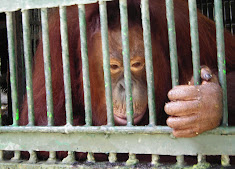


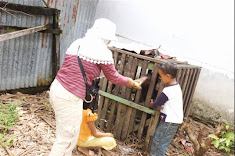
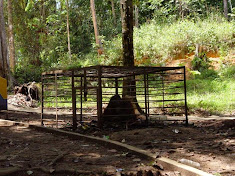

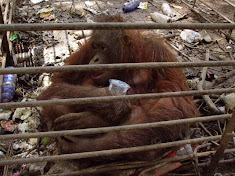



-a.jpg)


