Four Arrested For Illegal Logs
Source: The Jakarta Post - September 4, 2007
JAMBI, Jambi province
Police in Tebo regency, Jambi, have arrested four people on suspicion of transporting processed wood taken from illegally felled logs, Jambi Police spokesman Adj. Sr. Comr. Yatim Suyatmo said Monday. The four were arrested as they were driving three trucks full of wood near Kuamang village in Kuta Ulu district, Tebo, Yatim said.
Police detained the four for further questioning when they were unable to produce the necessary documents for the wood, he said. Yatim said police confiscated 24 cubic meters of woods and the three trucks as evidence.
"The arrests and confiscation of the wood and trucks shows we are serious about fighting illegal logging," he said. National Police chief Gen. Sutanto earlier ordered his officers around the country to make fighting illegal logging a priority. Officers are still searching for unlicensed sawmills in the area that are supplying illegal wood to buyers, Yatim said. -- JP
Tuesday, 11 September 2007
Officials Suspected Of Illegal Logging
Officials Suspected Of Illegal Logging
Source: The Jakarta Post - September 4, 2007
JAKARTA
The National Police headquarters have named over 350 suspects, including dozens of Forestry ministry officials and police officers, in illegal logging cases in Riau, Jambi, and Central, East and West Kalimantan provinces, a top police officer said Monday.
"In Riau province alone, there are a total for 189 suspects of illegal logging -- and among them are forestry officials," National Police chief of detectives Comr. Gen. Bambang Hendarso Danuri said as quoted by detik.com news portal.
"Meanwhile, there are a total of 170 illegal logging suspects in Jambi, Central, East and West Kalimantan provinces, 12 of whom are East Kalimantan's forestry ministry officials and another two are Central Kalimantan's forestry officials." He said the forestry ministry officials were implicated via letters of approval that proved they were involved in the illegal activity.
"They will be charged with the Law No. 41/1999 on forestry and the anticorruption law, as well," the officer said. Bambang did not specify where the police officers named had been working. He said the officers would be handed over to the police's internal affairs division for further investigation. -- JP
Source: The Jakarta Post - September 4, 2007
JAKARTA
The National Police headquarters have named over 350 suspects, including dozens of Forestry ministry officials and police officers, in illegal logging cases in Riau, Jambi, and Central, East and West Kalimantan provinces, a top police officer said Monday.
"In Riau province alone, there are a total for 189 suspects of illegal logging -- and among them are forestry officials," National Police chief of detectives Comr. Gen. Bambang Hendarso Danuri said as quoted by detik.com news portal.
"Meanwhile, there are a total of 170 illegal logging suspects in Jambi, Central, East and West Kalimantan provinces, 12 of whom are East Kalimantan's forestry ministry officials and another two are Central Kalimantan's forestry officials." He said the forestry ministry officials were implicated via letters of approval that proved they were involved in the illegal activity.
"They will be charged with the Law No. 41/1999 on forestry and the anticorruption law, as well," the officer said. Bambang did not specify where the police officers named had been working. He said the officers would be handed over to the police's internal affairs division for further investigation. -- JP


Illegal Logging In Indonesia Inspires Script For 'Blind Eye'
Illegal Logging In Indonesia Inspires Script For 'Blind Eye'
Source: 4RFV – September 3, 2007
Illegal logging and the corruption in the international timber trade has provided the inspiration for what promises to be an emotive Welsh-developed film. A tale of wide-spread corruption, fear and love, 'Blind Eye' tells the adventure of a Freelance Forestry Consultant who finds his principles challenged when working for the UK Government in Indonesia.
Written by Penarth-based Anna Holmes and backed by the Film Agency for Wales, the film is currently in development and follows in a similar vein to the 2006 box office hit 'Blood Diamond' and the 2005 Oscar winning 'The Constant Gardener' starring Ralph Fiennes. Strong interest in 'Blind Eye' is expected from producers later this year.
Having begun her career in Broadcast Journalism, Holmes has been involved with arts production and management for more than 20 years. Holmes' latest project is a subject close to her heart, along with her partner, they run Ecotimber, the supplier of the ceiling timber used in the building of Y Senydd Buildings, the home of the Welsh Assembly Government in Cardiff.
Holmes said: "Illegal logging and the corruption in the international timber trade lends itself so well to a strong plot that is both moving and thought-provoking. This is not an art-house movie, my hope is that the script is commercial enough to have an appeal to a general audience. The Film Agency has offered great support-both practical and financial-which I am grateful for."
Chief Executive of the Film Agency for Wales, Pauline Burt, said: "It's clear from this body of work that she has real talent and, in supporting this current project, we're looking forward to providing some profile to a substantive subject, that is toldin an emotionally engaging manner. Film's such as 'The Constant Gardener' bear testimony to the fact that screenplays can and do take on big subjects in an effective and indeed entertaining way, whilst not shying away from their social and political messages.
"Once again, we're delighted to have an opportunity to support a Welsh writer who's developed a strong, tenable feature idea that has international appeal, which is our primary motivation for financially supporting a project, whatever its genre, budget or setting."
The Film Agency for Wales is funded by the Arts Council of Wales, the UK Film Council and the Welsh Assembly Government, via Creative Business Wales, the latter of which wass set up to support, encourage and increase the range and number of films being produced in Wales and to foster the abundance of creative talent in Wales.
Source: 4RFV – September 3, 2007
Illegal logging and the corruption in the international timber trade has provided the inspiration for what promises to be an emotive Welsh-developed film. A tale of wide-spread corruption, fear and love, 'Blind Eye' tells the adventure of a Freelance Forestry Consultant who finds his principles challenged when working for the UK Government in Indonesia.
Written by Penarth-based Anna Holmes and backed by the Film Agency for Wales, the film is currently in development and follows in a similar vein to the 2006 box office hit 'Blood Diamond' and the 2005 Oscar winning 'The Constant Gardener' starring Ralph Fiennes. Strong interest in 'Blind Eye' is expected from producers later this year.
Having begun her career in Broadcast Journalism, Holmes has been involved with arts production and management for more than 20 years. Holmes' latest project is a subject close to her heart, along with her partner, they run Ecotimber, the supplier of the ceiling timber used in the building of Y Senydd Buildings, the home of the Welsh Assembly Government in Cardiff.
Holmes said: "Illegal logging and the corruption in the international timber trade lends itself so well to a strong plot that is both moving and thought-provoking. This is not an art-house movie, my hope is that the script is commercial enough to have an appeal to a general audience. The Film Agency has offered great support-both practical and financial-which I am grateful for."
Chief Executive of the Film Agency for Wales, Pauline Burt, said: "It's clear from this body of work that she has real talent and, in supporting this current project, we're looking forward to providing some profile to a substantive subject, that is toldin an emotionally engaging manner. Film's such as 'The Constant Gardener' bear testimony to the fact that screenplays can and do take on big subjects in an effective and indeed entertaining way, whilst not shying away from their social and political messages.
"Once again, we're delighted to have an opportunity to support a Welsh writer who's developed a strong, tenable feature idea that has international appeal, which is our primary motivation for financially supporting a project, whatever its genre, budget or setting."
The Film Agency for Wales is funded by the Arts Council of Wales, the UK Film Council and the Welsh Assembly Government, via Creative Business Wales, the latter of which wass set up to support, encourage and increase the range and number of films being produced in Wales and to foster the abundance of creative talent in Wales.
TRAFFIC reveals the state of China’s wildlife trade
TRAFFIC reveals the state of China’s wildlife trade
TRAFFIC - September 6, 2007
Beijing, China
TRAFFIC has published a snapshot of the state of wildlife trade in China in 2006. The report, in English and Chinese, is the first in an annual series on emerging trends in China’s wildlife trade, and provides up-to-date reviews of work being carried out to prevent illegal and support sustainable trade in China.
“The State of Wildlife Trade in China provides an overview of wildlife trade over the past year and examines what impact China’s consumption is having on globally important biodiversity ‘hotspots’, and what emerging trends there are in wildlife trade,” said Dr Xu Hongfa, Director of TRAFFIC’s China Programme.
The lead story is on the illegal trade in Tigers and other Asian big cats, whose bones are in demand for traditional medicines and whose skins are sought after for costumes and decorations.
China has been at the forefront of efforts to control this illegal trade, thanks to a complete trade ban, implemented in 1993.
In 2006, TRAFFIC surveys found little Tiger bone available in China, with less than 3% of 663 medicine shops and dealers in 26 Chinese cities claiming to stock it. But several businesses operating Tiger farms in China have petitioned China’s government to ease its trade ban and allow domestic trade in medicines made from farmed Tiger.
Another key article examines trade in live reef fish through Hong Kong and southern China, the world’s largest importers of such fish. The majority are caught in the tropical reefs of the “Coral Triangle,” bordered by Indonesia, Malaysia and the Philippines and include species such as Humphead wrasse, which is listed in CITES Appendix II, and requires special permits for any trade.
The dramatic increase in China’s wood imports over the last decade, largely driven by the country’s rapid economic growth is also examined.
During 2006, efforts to help buyers of timber and timber products in China avoid wood and wood products from illegally sourced timber have continued, including the development of standards for timber sourcing, TRAFFIC’s publication of the Chinese-language Identification Manual for Timber Imported from the Russian Far East.
The future of China’s yew tree (genus Taxus) comes under scrutiny. Across Asia, these species are under threat from the unsustainable harvest of bark and needles for the production of anti-cancer medicines. China now relies on Taxus imports, mainly from Canada, Myanmar and North Korea, and the future of the industry is tied to successful development of Taxus plantations.
Other articles examine the pangolin trade in China through a review of recent seizures, the on-going challenges presented by the illegal elephant ivory trade, the China Wildlife Trade Monitoring Network—established in 2006, China’s international collaboration to keep wildlife trade legal and sustainable through initiatives such as ASEAN-WEN, development of China’s conservation community and TRAFFIC East Asia’s conservation awareness initiative in partnership with Ogilvy (China).
The report State of Wildlife Trade in China: Information on the trade in wild animals and plants in China 2006 is available herehttp://www.traffic.org/content/1014.pdf
(PDF, 1.8 MB). Its production was generously funded by WWF-Netherlands.
For more information, please contact teachina@wwfchina.org
TRAFFIC - September 6, 2007
Beijing, China
TRAFFIC has published a snapshot of the state of wildlife trade in China in 2006. The report, in English and Chinese, is the first in an annual series on emerging trends in China’s wildlife trade, and provides up-to-date reviews of work being carried out to prevent illegal and support sustainable trade in China.
“The State of Wildlife Trade in China provides an overview of wildlife trade over the past year and examines what impact China’s consumption is having on globally important biodiversity ‘hotspots’, and what emerging trends there are in wildlife trade,” said Dr Xu Hongfa, Director of TRAFFIC’s China Programme.
The lead story is on the illegal trade in Tigers and other Asian big cats, whose bones are in demand for traditional medicines and whose skins are sought after for costumes and decorations.
China has been at the forefront of efforts to control this illegal trade, thanks to a complete trade ban, implemented in 1993.
In 2006, TRAFFIC surveys found little Tiger bone available in China, with less than 3% of 663 medicine shops and dealers in 26 Chinese cities claiming to stock it. But several businesses operating Tiger farms in China have petitioned China’s government to ease its trade ban and allow domestic trade in medicines made from farmed Tiger.
Another key article examines trade in live reef fish through Hong Kong and southern China, the world’s largest importers of such fish. The majority are caught in the tropical reefs of the “Coral Triangle,” bordered by Indonesia, Malaysia and the Philippines and include species such as Humphead wrasse, which is listed in CITES Appendix II, and requires special permits for any trade.
The dramatic increase in China’s wood imports over the last decade, largely driven by the country’s rapid economic growth is also examined.
During 2006, efforts to help buyers of timber and timber products in China avoid wood and wood products from illegally sourced timber have continued, including the development of standards for timber sourcing, TRAFFIC’s publication of the Chinese-language Identification Manual for Timber Imported from the Russian Far East.
The future of China’s yew tree (genus Taxus) comes under scrutiny. Across Asia, these species are under threat from the unsustainable harvest of bark and needles for the production of anti-cancer medicines. China now relies on Taxus imports, mainly from Canada, Myanmar and North Korea, and the future of the industry is tied to successful development of Taxus plantations.
Other articles examine the pangolin trade in China through a review of recent seizures, the on-going challenges presented by the illegal elephant ivory trade, the China Wildlife Trade Monitoring Network—established in 2006, China’s international collaboration to keep wildlife trade legal and sustainable through initiatives such as ASEAN-WEN, development of China’s conservation community and TRAFFIC East Asia’s conservation awareness initiative in partnership with Ogilvy (China).
The report State of Wildlife Trade in China: Information on the trade in wild animals and plants in China 2006 is available herehttp://www.traffic.org/content/1014.pdf
(PDF, 1.8 MB). Its production was generously funded by WWF-Netherlands.
For more information, please contact teachina@wwfchina.org
Myanmar Wildlife Pays the Price for Chinese Demand
Myanmar Wildlife Pays the Price for Chinese Demand
--------------------------------------------------------------------------------
MYANMAR: September 4, 2007
MONG LA, Myanmar - If the market of Mong La is anything to go by, the remaining wild elephants, tigers and bears in Myanmar's forests are being hunted down slowly and sold to China.
Nestled in hills in a rebel-controlled enclave on the Chinese border, the "Las Vegas in the jungle" casino town is clearly branching out from narcotics and prostitution into the illegal wildlife business.
Besides row upon row of fruit, vegetables and cheap plastic sandals, the market offers a grisly array of animal parts, as well as many live specimens, to the hundreds of Chinese tourists who flock across the border each day.
Bear paws and gall bladders, elephant tusks and chunks of hide, tiger and leopard skins, as well as big cat teeth and deer horn are all openly on display next to crudely welded cages of live macaques, cobras, Burmese star tortoises and pangolins.
The live creatures, some of them on the IUCN Conservation Union's "Red List" of critically endangered species, are destined for the cooking pots of exotic animal restaurants in China's neighbouring Yunnan province, or further afield.
Food stalls in the market openly advertise dishes of pangolin or black bear.
The body parts -- some of which will not be real, given the ease with which a pig bladder can be passed off as that of a bear -- will either be ground up for traditional medicine, worn as amulets or simply hung on the wall as trophies.
Most of the specimens come from the former Burma's still vast tracts of virgin forest, wildlife experts believe, although some will have come from as far away as India to be trafficked into China by well-organised criminal gangs.
"Burma is being raped in terms of its natural resources -- trees, plants and animals. They've got to get a hold of the situation quickly before it becomes a barren ground," said Steven Galster, Bangkok-based director of the Wildlife Alliance.
"There's a huge flow of illegal wildlife going into China, through whatever porous border points there are. This is definitely one of them, mainly because the Burmese government just doesn't have a handle on the situation."
MULTI-BILLION DOLLAR TRADE
Myanmar signed up in 1997 to the Convention on International Trade in Endangered Species (CITES), which places partial or total bans on sales of the most threatened species, including bears and big cats.
Experts also say the junta that has run the country for the last 45 years may not be as oblivious to wildlife protection as might be expected from its reputation as an international pariah and ruthless crusher of political dissent.
Illegal logging of Myanmar's famed teak forests is a major problem -- London-based environmental group Global Witness estimates that 1.5 million tonnes of timber worth US$350 million was shipped illegally into China in 2005.
But in 2004, the junta did set aside a stretch of jungle the size of Vermont in the isolated Hukawng Valley to become the world's largest tiger reserve.
However, in the Golden Triangle hinterlands of eastern Shan State, the junta exercises little authority -- no more so than in Mong La, an autonomous fiefdom run by an ethnic Wa-Chinese warlord and drug baron called Sai Lin.
With the exotic animal black market worth billions of dollars a year -- exceeded in value only by the illegal trade in arms and drugs, experts believe -- it is little wonder the likes of Sai Lin are getting involved.
ARMED GANGS
The 100,000 yuan (US$13,250) price tag on a tiger skin stretched across the wall of one Mong La shop shows what cross-border police efforts such as Southeast Asia's Wildlife Enforcement Network, launched in 2005, are up against.
"These gangs are very big and have members stretching from Indonesia and Malaysia to Thailand and right up into China," said Aroon Promphan, a captain in the special wildlife crime division of the Thai police.
"They tend to be armed and there's still political influence in countries like China and Myanmar."
The Chinese government has stepped up efforts in recent years to stamp out the domestic wildlife trade and educate people about the environmental perils of stripping forests of their native flora and fauna.
However, the appetite for exotica remains and, partly as a result of the crackdown, the trade has intensified beyond China's borders.
"The situation in China is still bad, although the awareness among Chinese citizens and the government is much higher than it was before," Galster said.
"The problem is you've got 1.3 billion people and so it only takes a tiny percent of that population to be eating an endangered species to have a major impact." (US$1=7.555 Yuan)
REUTERS NEWS SERVICE
--------------------------------------------------------------------------------
MYANMAR: September 4, 2007
MONG LA, Myanmar - If the market of Mong La is anything to go by, the remaining wild elephants, tigers and bears in Myanmar's forests are being hunted down slowly and sold to China.
Nestled in hills in a rebel-controlled enclave on the Chinese border, the "Las Vegas in the jungle" casino town is clearly branching out from narcotics and prostitution into the illegal wildlife business.
Besides row upon row of fruit, vegetables and cheap plastic sandals, the market offers a grisly array of animal parts, as well as many live specimens, to the hundreds of Chinese tourists who flock across the border each day.
Bear paws and gall bladders, elephant tusks and chunks of hide, tiger and leopard skins, as well as big cat teeth and deer horn are all openly on display next to crudely welded cages of live macaques, cobras, Burmese star tortoises and pangolins.
The live creatures, some of them on the IUCN Conservation Union's "Red List" of critically endangered species, are destined for the cooking pots of exotic animal restaurants in China's neighbouring Yunnan province, or further afield.
Food stalls in the market openly advertise dishes of pangolin or black bear.
The body parts -- some of which will not be real, given the ease with which a pig bladder can be passed off as that of a bear -- will either be ground up for traditional medicine, worn as amulets or simply hung on the wall as trophies.
Most of the specimens come from the former Burma's still vast tracts of virgin forest, wildlife experts believe, although some will have come from as far away as India to be trafficked into China by well-organised criminal gangs.
"Burma is being raped in terms of its natural resources -- trees, plants and animals. They've got to get a hold of the situation quickly before it becomes a barren ground," said Steven Galster, Bangkok-based director of the Wildlife Alliance.
"There's a huge flow of illegal wildlife going into China, through whatever porous border points there are. This is definitely one of them, mainly because the Burmese government just doesn't have a handle on the situation."
MULTI-BILLION DOLLAR TRADE
Myanmar signed up in 1997 to the Convention on International Trade in Endangered Species (CITES), which places partial or total bans on sales of the most threatened species, including bears and big cats.
Experts also say the junta that has run the country for the last 45 years may not be as oblivious to wildlife protection as might be expected from its reputation as an international pariah and ruthless crusher of political dissent.
Illegal logging of Myanmar's famed teak forests is a major problem -- London-based environmental group Global Witness estimates that 1.5 million tonnes of timber worth US$350 million was shipped illegally into China in 2005.
But in 2004, the junta did set aside a stretch of jungle the size of Vermont in the isolated Hukawng Valley to become the world's largest tiger reserve.
However, in the Golden Triangle hinterlands of eastern Shan State, the junta exercises little authority -- no more so than in Mong La, an autonomous fiefdom run by an ethnic Wa-Chinese warlord and drug baron called Sai Lin.
With the exotic animal black market worth billions of dollars a year -- exceeded in value only by the illegal trade in arms and drugs, experts believe -- it is little wonder the likes of Sai Lin are getting involved.
ARMED GANGS
The 100,000 yuan (US$13,250) price tag on a tiger skin stretched across the wall of one Mong La shop shows what cross-border police efforts such as Southeast Asia's Wildlife Enforcement Network, launched in 2005, are up against.
"These gangs are very big and have members stretching from Indonesia and Malaysia to Thailand and right up into China," said Aroon Promphan, a captain in the special wildlife crime division of the Thai police.
"They tend to be armed and there's still political influence in countries like China and Myanmar."
The Chinese government has stepped up efforts in recent years to stamp out the domestic wildlife trade and educate people about the environmental perils of stripping forests of their native flora and fauna.
However, the appetite for exotica remains and, partly as a result of the crackdown, the trade has intensified beyond China's borders.
"The situation in China is still bad, although the awareness among Chinese citizens and the government is much higher than it was before," Galster said.
"The problem is you've got 1.3 billion people and so it only takes a tiny percent of that population to be eating an endangered species to have a major impact." (US$1=7.555 Yuan)
REUTERS NEWS SERVICE
Australia, Indonesia Back Kalimantan Forest Plan
Australia, Indonesia Back Kalimantan Forest Plan
--------------------------------------------------------------------------------
AUSTRALIA: September 10, 2007
SYDNEY - Australia and Indonesia on Sunday signed a deal that aims to preserve 70,000 hectares (173,000 acres) of peat forest in Indonesia's Kalimantan region, re-flood 200,000 hectares of dried peat land and plant up to 100 million trees.
Australia would contribute A$30 (US$22 million) to the project, which aims to raise up to A$100 million over four years and cut greenhouse gas emissions by about 700 million tonnes over 30 years, Foreign Affairs Minister Alexander Downer said in a statement.
A failed 1990s plan to convert 1 million hectares of Kalimantan's peat swamp forests into rice fields sucked dry huge areas of cleared forest, leaving a combustible substance that burns in the dry season and sends a choking haze billowing across the region.
"The deforestation and burning of Indonesia's vast peat lands is the largest single source of its greenhouse gas emissions," Downer said.
A declaration was signed by Downer and his Indonesian counterpart Hassan Wirajuda to establish the project, which would work with other countries, international non-government organisations and the private sector to attract funding.
REUTERS NEWS
--------------------------------------------------------------------------------
AUSTRALIA: September 10, 2007
SYDNEY - Australia and Indonesia on Sunday signed a deal that aims to preserve 70,000 hectares (173,000 acres) of peat forest in Indonesia's Kalimantan region, re-flood 200,000 hectares of dried peat land and plant up to 100 million trees.
Australia would contribute A$30 (US$22 million) to the project, which aims to raise up to A$100 million over four years and cut greenhouse gas emissions by about 700 million tonnes over 30 years, Foreign Affairs Minister Alexander Downer said in a statement.
A failed 1990s plan to convert 1 million hectares of Kalimantan's peat swamp forests into rice fields sucked dry huge areas of cleared forest, leaving a combustible substance that burns in the dry season and sends a choking haze billowing across the region.
"The deforestation and burning of Indonesia's vast peat lands is the largest single source of its greenhouse gas emissions," Downer said.
A declaration was signed by Downer and his Indonesian counterpart Hassan Wirajuda to establish the project, which would work with other countries, international non-government organisations and the private sector to attract funding.
REUTERS NEWS
Orangutans squeezed by biofuel boom
Orangutans squeezed by biofuel boom.
Indonesia, conservationists have different views of palm oil plantations
By Chris Brummitt
Updated: 12:49 p.m. ET Sept. 4, 2007
TUMBANG KULING, Indonesia - Naingolan shunts the excavator into high gear and tears into a patch of smoldering forest on Borneo island, clearing the way for yet another palm oil plantation that Indonesia hopes will tap into a surge in global demand for biofuels.
Despite government claims pristine jungles are escaping the effects of the “green solution” to the energy crunch, the boom is threatening the survival of animals like the endangered orangutan and turning the country into a major global warming contributor, environmentalists say.
The fruits of Naingolan’s labor in one corner of Borneo are plain to see: a wasteland of churned up peat and trees stretching to the horizon with freshly dug-in palm plants dotting every meter. Behind him, smoke from illegal scrub-clearing fires clouds the sky.
Palm oil plantations have long been a staple of the economies of tropical Indonesia and neighboring Malaysia. Oil made from the red, spiky apple-sized fruit is used to make a vast range of products, from soap to chocolate to lipstick.
But concern over pollution from the burning of fossil fuels in Europe and the United States has led to a new use for the oil — mixing it with diesel to make a cleaner burning and cheaper fuel to put in cars.
The EU parliament this year announced a renewed push to meet sustainable energy targets, including mandating using biofuels to supply at least 10 percent of transport fuel needs by 2020.
Tax breaks
Encouraged by government tax breaks, many of Indonesia’s largest conglomerates as well as foreign companies are investing millions in expanding plantations and refining facilities on Borneo, which has one of the richest ecosystems in the world and is one of the only remaining homes of the orangutans.
Conservationists working to preserve the 20,000 great apes say palm oil poses the biggest threat. Rehabilitation centers are overflowing with the animals rescued from plantations, many with wounds inflicted by workers, they say.
“Scientifically, I think the population is doomed, but emotionally I want to feel like there is still hope,” said Raffaella Commitante, a primatologist at a center in east Kalimantan. “Orangutans spend 80 to 90 percent of their time in trees. If you take away the trees, they cannot move.”
Deforestation in tropical countries accounts for roughly 20 percent of greenhouse gas emissions, according to the World Bank, because trees release carbon dioxide, the main heat-trapping gas, when they are destroyed.
Indonesia is the third-highest emitter of carbon dioxide behind China and the United States, largely because much of the palm oil on Borneo is planted on carbon-rich peat land that must be drained first, releasing millions more tons of CO2 into the atmosphere each year.
Demand for biofuel “could prove to be the final nail in the coffin for our remaining forests,” said Greenpeace Southeast Asia campaigner Hapsoro. “Trying to solve one environmental problem by wiping out Indonesian forests is senseless.”
Promises and reality
The government insists that palm oil is only being planted on land that was fully or partially deforested long ago, so called “degraded” land. They said local authorities were now getting tough on illegal loggers after years of working hand-in-hand with them.
“There were will be no trees cut down for the sake of palm oil,” said Environment Minister Rachmat Witoelar. “We have 18 million hectares of plantable area on land designated on degraded land. We are not going to sacrifice any natural forest, much less the rain forest, for planting palm oil.”
Environmentalists dispute that, claiming that developers prefer to chop down virgin forest because they can sell the logs to invest in palm oil plants, which take around five years to reach maturity.
They allege permits changing the status of land from protected to degraded can be bought.
An Associated Press team spent several days touring Borneo’s palm oil heartland in central Kalimantan province, visiting areas where workers were opening up thick jungle land to extend existing plantations or create new ones.
The status of the land was not clear, but massive trees were among those being cut, in some cases workers had piled up the valuable timber by the side of the road, presumably awaiting transport to sell them.
At one plantation owned by a subsidiary of Singapore-based Wilmar International Ltd. police had taped off several large logs, suggesting they were being used as part of an investigation.
The company, which has been accused by Friends of the Earth of bad environmental practice on Borneo, said it does not clear “high value rain forests” for development but will sometimes clear trees on degraded land.
Naingolan, the excavator driver who has spent the last three months clearing land to make way for more palm oil plants, says he realizes he is now part of the problem, but that he needs money for his family.
“I have seen countless gibbons and heard the cries of orangutans,” he said as he finished up work for the day. “But there is no work for me in my village.”
© 2007 The Associated Press.
Indonesia, conservationists have different views of palm oil plantations
By Chris Brummitt
Updated: 12:49 p.m. ET Sept. 4, 2007
TUMBANG KULING, Indonesia - Naingolan shunts the excavator into high gear and tears into a patch of smoldering forest on Borneo island, clearing the way for yet another palm oil plantation that Indonesia hopes will tap into a surge in global demand for biofuels.
Despite government claims pristine jungles are escaping the effects of the “green solution” to the energy crunch, the boom is threatening the survival of animals like the endangered orangutan and turning the country into a major global warming contributor, environmentalists say.
The fruits of Naingolan’s labor in one corner of Borneo are plain to see: a wasteland of churned up peat and trees stretching to the horizon with freshly dug-in palm plants dotting every meter. Behind him, smoke from illegal scrub-clearing fires clouds the sky.
Palm oil plantations have long been a staple of the economies of tropical Indonesia and neighboring Malaysia. Oil made from the red, spiky apple-sized fruit is used to make a vast range of products, from soap to chocolate to lipstick.
But concern over pollution from the burning of fossil fuels in Europe and the United States has led to a new use for the oil — mixing it with diesel to make a cleaner burning and cheaper fuel to put in cars.
The EU parliament this year announced a renewed push to meet sustainable energy targets, including mandating using biofuels to supply at least 10 percent of transport fuel needs by 2020.
Tax breaks
Encouraged by government tax breaks, many of Indonesia’s largest conglomerates as well as foreign companies are investing millions in expanding plantations and refining facilities on Borneo, which has one of the richest ecosystems in the world and is one of the only remaining homes of the orangutans.
Conservationists working to preserve the 20,000 great apes say palm oil poses the biggest threat. Rehabilitation centers are overflowing with the animals rescued from plantations, many with wounds inflicted by workers, they say.
“Scientifically, I think the population is doomed, but emotionally I want to feel like there is still hope,” said Raffaella Commitante, a primatologist at a center in east Kalimantan. “Orangutans spend 80 to 90 percent of their time in trees. If you take away the trees, they cannot move.”
Deforestation in tropical countries accounts for roughly 20 percent of greenhouse gas emissions, according to the World Bank, because trees release carbon dioxide, the main heat-trapping gas, when they are destroyed.
Indonesia is the third-highest emitter of carbon dioxide behind China and the United States, largely because much of the palm oil on Borneo is planted on carbon-rich peat land that must be drained first, releasing millions more tons of CO2 into the atmosphere each year.
Demand for biofuel “could prove to be the final nail in the coffin for our remaining forests,” said Greenpeace Southeast Asia campaigner Hapsoro. “Trying to solve one environmental problem by wiping out Indonesian forests is senseless.”
Promises and reality
The government insists that palm oil is only being planted on land that was fully or partially deforested long ago, so called “degraded” land. They said local authorities were now getting tough on illegal loggers after years of working hand-in-hand with them.
“There were will be no trees cut down for the sake of palm oil,” said Environment Minister Rachmat Witoelar. “We have 18 million hectares of plantable area on land designated on degraded land. We are not going to sacrifice any natural forest, much less the rain forest, for planting palm oil.”
Environmentalists dispute that, claiming that developers prefer to chop down virgin forest because they can sell the logs to invest in palm oil plants, which take around five years to reach maturity.
They allege permits changing the status of land from protected to degraded can be bought.
An Associated Press team spent several days touring Borneo’s palm oil heartland in central Kalimantan province, visiting areas where workers were opening up thick jungle land to extend existing plantations or create new ones.
The status of the land was not clear, but massive trees were among those being cut, in some cases workers had piled up the valuable timber by the side of the road, presumably awaiting transport to sell them.
At one plantation owned by a subsidiary of Singapore-based Wilmar International Ltd. police had taped off several large logs, suggesting they were being used as part of an investigation.
The company, which has been accused by Friends of the Earth of bad environmental practice on Borneo, said it does not clear “high value rain forests” for development but will sometimes clear trees on degraded land.
Naingolan, the excavator driver who has spent the last three months clearing land to make way for more palm oil plants, says he realizes he is now part of the problem, but that he needs money for his family.
“I have seen countless gibbons and heard the cries of orangutans,” he said as he finished up work for the day. “But there is no work for me in my village.”
© 2007 The Associated Press.
Indonesia says more money needed to stop deforestation
Indonesia says more money needed to stop deforestation
By Indonesia correspondent Geoff Thompson
Posted Fri Sep 7, 2007 9:12pm AEST
Updated Fri Sep 7, 2007 9:15pm AEST
The vast annual fires in Kalimantan's deforested peat lands are to blame for Indonesia's high standing in world pollution ranks. (AFP Photo: Jerome Ming)
Video: Aust wasting money on deforestation project: Indon officials (ABC News)
The Federal Government has nominated climate change as a top focus of the APEC summit. But one of the Government's key climate change initiatives is under fire from the very country which benefits from it, Indonesia.
Indonesia is regularly accused of being the world's third biggest emitter of greenhouse gases because of the vast fires across its deforested peat lands every year.
The country's Environment Minister Rachmat Witoelar has told ABC radio's PM program that Australia's $200 million Global Initiative on Forests and Climate "will not solve too many problems".
Jakarta regularly makes it into the top 10 lists of the world's most polluted cities. But it is actually not urban development which is to blame for rocketing Indonesia up the rankings of the world's worst greenhouse gas offenders.
The vast annual fires in Kalimantan's deforested peat lands are to blame for that.
Wetlands International places Indonesia's greenhouse gas emissions behind only the United States and China because of the vast tracts of deforested land where carbon-rich peat decays and catches fire every year, blanketing much of South East Asia in a choking haze.
It is a real problem in search of a real solution and back in March, Indonesia warmly welcomed Australia's $200 million Global Initiative on Forests and Climate, which is aimed fighting climate change by preserving the world's forests.
In July, $10 million of that money was committed to developing forest protection projects in Indonesia.
But now Indonesia's Environment Minister, Rachmat Witoelar, is questioning what in reality the scheme can achieve.
"Maybe if it is upscaled even more because it does not solve too many problems because $200 million divided into so many areas over five years does not give a lot of forest aid," he said.
He would like Australia to contribute more.
Experts argue that forest sustainability programs like the Australian initiative are challenged by the local reality that the forests are worth more dead than alive. Timber and palm oil profits are much greater and easier to grasp than vague notions of sustainability.
Indonesia's Vice President Jusuf Kalla says international alliance is needed to save the forests.
"There are international operations to destroy the forest. Clearly for economic reasons and to improve [there] should be international cooperation to do that," he said.
Professor Emil Salim is the father of Indonesia's environmental movement and a senior adviser to Indonesia's President Susilo Bambang Yudhoyono.
He says that with Indonesia's current population of 230 million expected to grow by another 100 million in the next 30 years, Indonesia needs very good reasons not to clear land. And local people, he says, need good economic reasons to keep the forests standing.
"Why is Australia not bold enough to really translate the action into getting the technology of Australia transferred to the developing country?" he asked.
"And stop talking about $200 million, $10 million. It's not money. It's the capacity of a new development by raising the value added of the forest."
Indonesia's real forests debate kicks off in December in Bali, when the United Nations Framework Convention on Climate Change searches for a successor to Kyoto, which decided against awarding carbon credits for what has been dubbed "avoided deforestation".
In any new Kyoto-style international treaty, Indonesia wants access to the world's multi-billion dollar carbon credit market not just by planting trees but by keeping them.
By Indonesia correspondent Geoff Thompson
Posted Fri Sep 7, 2007 9:12pm AEST
Updated Fri Sep 7, 2007 9:15pm AEST
The vast annual fires in Kalimantan's deforested peat lands are to blame for Indonesia's high standing in world pollution ranks. (AFP Photo: Jerome Ming)
Video: Aust wasting money on deforestation project: Indon officials (ABC News)
The Federal Government has nominated climate change as a top focus of the APEC summit. But one of the Government's key climate change initiatives is under fire from the very country which benefits from it, Indonesia.
Indonesia is regularly accused of being the world's third biggest emitter of greenhouse gases because of the vast fires across its deforested peat lands every year.
The country's Environment Minister Rachmat Witoelar has told ABC radio's PM program that Australia's $200 million Global Initiative on Forests and Climate "will not solve too many problems".
Jakarta regularly makes it into the top 10 lists of the world's most polluted cities. But it is actually not urban development which is to blame for rocketing Indonesia up the rankings of the world's worst greenhouse gas offenders.
The vast annual fires in Kalimantan's deforested peat lands are to blame for that.
Wetlands International places Indonesia's greenhouse gas emissions behind only the United States and China because of the vast tracts of deforested land where carbon-rich peat decays and catches fire every year, blanketing much of South East Asia in a choking haze.
It is a real problem in search of a real solution and back in March, Indonesia warmly welcomed Australia's $200 million Global Initiative on Forests and Climate, which is aimed fighting climate change by preserving the world's forests.
In July, $10 million of that money was committed to developing forest protection projects in Indonesia.
But now Indonesia's Environment Minister, Rachmat Witoelar, is questioning what in reality the scheme can achieve.
"Maybe if it is upscaled even more because it does not solve too many problems because $200 million divided into so many areas over five years does not give a lot of forest aid," he said.
He would like Australia to contribute more.
Experts argue that forest sustainability programs like the Australian initiative are challenged by the local reality that the forests are worth more dead than alive. Timber and palm oil profits are much greater and easier to grasp than vague notions of sustainability.
Indonesia's Vice President Jusuf Kalla says international alliance is needed to save the forests.
"There are international operations to destroy the forest. Clearly for economic reasons and to improve [there] should be international cooperation to do that," he said.
Professor Emil Salim is the father of Indonesia's environmental movement and a senior adviser to Indonesia's President Susilo Bambang Yudhoyono.
He says that with Indonesia's current population of 230 million expected to grow by another 100 million in the next 30 years, Indonesia needs very good reasons not to clear land. And local people, he says, need good economic reasons to keep the forests standing.
"Why is Australia not bold enough to really translate the action into getting the technology of Australia transferred to the developing country?" he asked.
"And stop talking about $200 million, $10 million. It's not money. It's the capacity of a new development by raising the value added of the forest."
Indonesia's real forests debate kicks off in December in Bali, when the United Nations Framework Convention on Climate Change searches for a successor to Kyoto, which decided against awarding carbon credits for what has been dubbed "avoided deforestation".
In any new Kyoto-style international treaty, Indonesia wants access to the world's multi-billion dollar carbon credit market not just by planting trees but by keeping them.
ENVIRONMENT-MALAYSIA: Soft Loans for Reforestation or Deforestation?
ENVIRONMENT-MALAYSIA: Soft Loans for Reforestation or Deforestation? - The Sun
By Anil Netto
PENANG, Sep 6 (IPS) - With a dozen timber firms set to receive new government soft loans to finance ‘reforestation’ projects, critics are saying that the money will translate into logging subsidies for the timber lobby.
Six of these firms are from timber-rich Sarawak state in North Borneo. Five other firms have already signed up for loans making a total of over a dozen firms so far under a forest replanting programme that aims to create plantations of latex timber clone (LTC) rubber trees and acacia.
The federal government has set an initial target of dispensing 200 million ringgit (57 million dollars) in loans to firms. These loans will support up to 12,000 ha of tree plantations for 2006 and a further 24,000 ha for 2007 and 2008.
Over a billion ringgit (300 million dollars) has been allocated for financing tree plantation projects until 2011.
Plantation Industries and Commodities Minister Peter Chin said that Sarawak alone plans to increase its forest plantations to one million hectares by 2020. The plantations would produce the raw material for timber processing mills in the state.
As part of this endeavour, private firms would plant 70,000 ha annually while the public sector would grow 2,400 ha.
The minister said that plantation forests would reduce dependency on natural forests. "To the successful borrowers, it is my hope that all planting operations and activities be carried out in accordance with sound forestry practices and principles", as well as existing rules and laws, said Chin at a loan-signing agreement in July.
Under the replanting programme, soft loans of 3,200 ringgit (920 dollars) per ha are reportedly being provided to plant acacia mangium and 5,400 ringgit (1,550 dollars) per ha to replant rubber trees. Once the trees reach maturity, the firms will repay the soft loans at an interest rate of 3.5 percent.
In contrast, a senior bank manager in Kuala Lumpur told IPS that a commercial loan to a typical established, financially sound timber firm would bear an interest rate of 8.25-8.75 percent.
The savings in interest charges as a result of soft loans could thus work out to millions of ringgit. "As the commercial banks are a bit stringent in providing such funding or soft loans to companies to undertake their forest plantation projects, the initiatives by my ministry and the Ministry of Finance should be lauded and (are) indeed timely," said Chin.
But critics wonder why profitable firms should be given soft loans for reforestation. "A soft loan is a subsidy. You want to give a loan, give it at the market rate. Why a soft loan?" asked political scientist Andrew Aeria, pointing out that the government was subsidising some of the very companies that destroy the forests.
"These companies already make huge amounts of money, much of it invested overseas; so why is the federal government giving them more subsidies?" he asked. "Is it because the plantation minister is from a Sarawak-based party and most of the big timber firms are linked to the same political party? Is this a case of cronyism?"
Some of these firms have come from nowhere to become lucrative concerns, raking in hundreds of millions or even billions of ringgit from logging, say analysts.
Timber firms, said an academic familiar with Sarawak, should have been responsible for enrichment planting and rehabilitation planting in their logging concession areas in the first place. "If they had done so, and had carried out logging responsibly, there would be no need for this so-called ‘re-forestation’."
"This is testimony to the lies told all these years that the logging was selective and sustainable," he added.
Even the designated catchment area for the proposed Bakun Dam project in Sarawak has not been spared from logging and forest clearing, resulting in doubts over the economic viability of the dam itself.
In contrast, sustainable logging practices, while causing some damage, would leave forests able to recover in a single 20-25 year cycle -- though it would take a lot longer to restore the massive trees of the original rain forests.
Even badly degraded natural forest stands a chance of recovering, given enough time. "But of course it's not going to earn anyone big bucks in that time," said the academic who did not want to be identified. Awarding soft loans to timber firms actually amounts to funding deforestation and not reforestation, he added.
He pointed out that "forest plantations" are actually carried out on primary forest land that had been badly degraded by logging operations and usually "involve planting low-value exotic species such as acacia mangium – a highly invasive species regarded as a threat to natural forests and the natural environment".
The Sarawak Forestry Department head could not be reached for comment. The director of the Forestry Department in neighbouring Sabah declined to comment about replanting with acacia, referring IPS instead to the "wealth of information" in the department’s annual reports on its website.
Whatever the condition of the existing forest, planting fast-growing acacia would mean clear felling and removal of stumps, creating a denuded landscape for replanting.
"It’s a plantation like any other plantation," said the academic. "It’s also a mono-crop; nothing will grow in the shadow of acacia, and even if you try to recover the original, it’s very, very difficult as acacia is hardy, its seeds surviving for up to eight years, surviving even through fires, and it sprouts at the slightest chance."
Acacia thus cannot support the rainforest's faunal diversity, which is capable of surviving even in logged-over forest although the species composition may change once the bigger trees are gone.
When contacted, a Sarawak Timber Association official was unable to provide immediate comment, saying that the issue was "sensitive" and that any query would have to be formally sent in writing. He added that they were wary as the media had quoted them out of context before.
A senior Plantation Ministry official Ahmad Loman told IPS that reforestation with acacia would only be carried out in forest land that has been almost cleared. "We plant only on the degraded parts, which are almost empty. Acacia could produce good timber within 15 years," he asserted. According to him, these plantations would have to comply with guidelines in environmental impact assessment reports
As for logged-over (but still viable) forests, he said that planting of trees such as Chengai and Meranti is carried out by the Ministry of Natural Resources and the Environment. Such enrichment planting and silviculture programmes are aimed at increasing tree density and regenerating the forests.
But that is not always the case, challenges the academic. "Why is it then that in Sarawak acacia is being grown on relatively good logged over forest, hardly the (virtually) cleared forests that he’s (Loman’s) talking about? And if it is the case that such planting is also getting the subsidy then, indeed it amounts to financing deforestation!"
He pointed to a recent statement by the Sahabat Alam Malaysia (Friends of the Earth, Malaysia), which revealed that even parts of the Bakun Dam catchment area were being converted to tree plantations. "These are areas that only began to be logged less than 20 years ago," he said.
The fact of the matter is that the government is pushing the cause of tree plantations, much of it with acacia. In the case of the "re-forestation" with acacia mangium for the proposed Bintulu pulp and paper mill in Sarawak, the academic pointed out that ''while a fair bit of this is on badly degraded forest, some of it is on good logged-over forest which, if left alone, would definitely recover."
By Anil Netto
PENANG, Sep 6 (IPS) - With a dozen timber firms set to receive new government soft loans to finance ‘reforestation’ projects, critics are saying that the money will translate into logging subsidies for the timber lobby.
Six of these firms are from timber-rich Sarawak state in North Borneo. Five other firms have already signed up for loans making a total of over a dozen firms so far under a forest replanting programme that aims to create plantations of latex timber clone (LTC) rubber trees and acacia.
The federal government has set an initial target of dispensing 200 million ringgit (57 million dollars) in loans to firms. These loans will support up to 12,000 ha of tree plantations for 2006 and a further 24,000 ha for 2007 and 2008.
Over a billion ringgit (300 million dollars) has been allocated for financing tree plantation projects until 2011.
Plantation Industries and Commodities Minister Peter Chin said that Sarawak alone plans to increase its forest plantations to one million hectares by 2020. The plantations would produce the raw material for timber processing mills in the state.
As part of this endeavour, private firms would plant 70,000 ha annually while the public sector would grow 2,400 ha.
The minister said that plantation forests would reduce dependency on natural forests. "To the successful borrowers, it is my hope that all planting operations and activities be carried out in accordance with sound forestry practices and principles", as well as existing rules and laws, said Chin at a loan-signing agreement in July.
Under the replanting programme, soft loans of 3,200 ringgit (920 dollars) per ha are reportedly being provided to plant acacia mangium and 5,400 ringgit (1,550 dollars) per ha to replant rubber trees. Once the trees reach maturity, the firms will repay the soft loans at an interest rate of 3.5 percent.
In contrast, a senior bank manager in Kuala Lumpur told IPS that a commercial loan to a typical established, financially sound timber firm would bear an interest rate of 8.25-8.75 percent.
The savings in interest charges as a result of soft loans could thus work out to millions of ringgit. "As the commercial banks are a bit stringent in providing such funding or soft loans to companies to undertake their forest plantation projects, the initiatives by my ministry and the Ministry of Finance should be lauded and (are) indeed timely," said Chin.
But critics wonder why profitable firms should be given soft loans for reforestation. "A soft loan is a subsidy. You want to give a loan, give it at the market rate. Why a soft loan?" asked political scientist Andrew Aeria, pointing out that the government was subsidising some of the very companies that destroy the forests.
"These companies already make huge amounts of money, much of it invested overseas; so why is the federal government giving them more subsidies?" he asked. "Is it because the plantation minister is from a Sarawak-based party and most of the big timber firms are linked to the same political party? Is this a case of cronyism?"
Some of these firms have come from nowhere to become lucrative concerns, raking in hundreds of millions or even billions of ringgit from logging, say analysts.
Timber firms, said an academic familiar with Sarawak, should have been responsible for enrichment planting and rehabilitation planting in their logging concession areas in the first place. "If they had done so, and had carried out logging responsibly, there would be no need for this so-called ‘re-forestation’."
"This is testimony to the lies told all these years that the logging was selective and sustainable," he added.
Even the designated catchment area for the proposed Bakun Dam project in Sarawak has not been spared from logging and forest clearing, resulting in doubts over the economic viability of the dam itself.
In contrast, sustainable logging practices, while causing some damage, would leave forests able to recover in a single 20-25 year cycle -- though it would take a lot longer to restore the massive trees of the original rain forests.
Even badly degraded natural forest stands a chance of recovering, given enough time. "But of course it's not going to earn anyone big bucks in that time," said the academic who did not want to be identified. Awarding soft loans to timber firms actually amounts to funding deforestation and not reforestation, he added.
He pointed out that "forest plantations" are actually carried out on primary forest land that had been badly degraded by logging operations and usually "involve planting low-value exotic species such as acacia mangium – a highly invasive species regarded as a threat to natural forests and the natural environment".
The Sarawak Forestry Department head could not be reached for comment. The director of the Forestry Department in neighbouring Sabah declined to comment about replanting with acacia, referring IPS instead to the "wealth of information" in the department’s annual reports on its website.
Whatever the condition of the existing forest, planting fast-growing acacia would mean clear felling and removal of stumps, creating a denuded landscape for replanting.
"It’s a plantation like any other plantation," said the academic. "It’s also a mono-crop; nothing will grow in the shadow of acacia, and even if you try to recover the original, it’s very, very difficult as acacia is hardy, its seeds surviving for up to eight years, surviving even through fires, and it sprouts at the slightest chance."
Acacia thus cannot support the rainforest's faunal diversity, which is capable of surviving even in logged-over forest although the species composition may change once the bigger trees are gone.
When contacted, a Sarawak Timber Association official was unable to provide immediate comment, saying that the issue was "sensitive" and that any query would have to be formally sent in writing. He added that they were wary as the media had quoted them out of context before.
A senior Plantation Ministry official Ahmad Loman told IPS that reforestation with acacia would only be carried out in forest land that has been almost cleared. "We plant only on the degraded parts, which are almost empty. Acacia could produce good timber within 15 years," he asserted. According to him, these plantations would have to comply with guidelines in environmental impact assessment reports
As for logged-over (but still viable) forests, he said that planting of trees such as Chengai and Meranti is carried out by the Ministry of Natural Resources and the Environment. Such enrichment planting and silviculture programmes are aimed at increasing tree density and regenerating the forests.
But that is not always the case, challenges the academic. "Why is it then that in Sarawak acacia is being grown on relatively good logged over forest, hardly the (virtually) cleared forests that he’s (Loman’s) talking about? And if it is the case that such planting is also getting the subsidy then, indeed it amounts to financing deforestation!"
He pointed to a recent statement by the Sahabat Alam Malaysia (Friends of the Earth, Malaysia), which revealed that even parts of the Bakun Dam catchment area were being converted to tree plantations. "These are areas that only began to be logged less than 20 years ago," he said.
The fact of the matter is that the government is pushing the cause of tree plantations, much of it with acacia. In the case of the "re-forestation" with acacia mangium for the proposed Bintulu pulp and paper mill in Sarawak, the academic pointed out that ''while a fair bit of this is on badly degraded forest, some of it is on good logged-over forest which, if left alone, would definitely recover."
China issues rules for logging companies overseas
Personal Comment: Talk to any knowledgable NGO in SE Asia and they will tell you that Chinese businessmen are never to be trusted. Look at most reports concerning logging and the trade in wildlife and you will more often than not see China mentioned as the end consumer.
China issues rules for logging companies overseas
Source: Reuters, August 29, 2007
BEIJING
China has issued guidelines for enterprises engaging in logging overseas,
state media reported on Wednesday, following accusations that it is
plundering the world's forests to meet booming demand for wood.
The guidelines, issued jointly by the State Forestry Administration and the
Ministry of Commerce, aim to encourage forestry cultivation that highlights
sustainability and bio-diversity.
"The purpose of the move is to guide relevant enterprises to help the
countries or regions that are faced with difficulties in forest restoration
and to help improve the livelihood of local residents," Xinhua news agency
quoted Jia Zhibang, head of the Forestry Administration, as saying.
Environment groups say China is at the heart of a global trade for lumber
that it sells to markets in the United States and Europe, and that much of
its plywood exports come from illegal logging.
China accounted for more than half the log exports from Papua New Guinea,
Myanmar and Indonesia, British-based organisation Global Witness has said.
The new guidelines are meant as a basis for evaluating and supervising
logging companies, Jia said, adding that China wants to make its
enterprises more aware of environmental protection as they increasingly
strike out abroad.
China issues rules for logging companies overseas
Source: Reuters, August 29, 2007
BEIJING
China has issued guidelines for enterprises engaging in logging overseas,
state media reported on Wednesday, following accusations that it is
plundering the world's forests to meet booming demand for wood.
The guidelines, issued jointly by the State Forestry Administration and the
Ministry of Commerce, aim to encourage forestry cultivation that highlights
sustainability and bio-diversity.
"The purpose of the move is to guide relevant enterprises to help the
countries or regions that are faced with difficulties in forest restoration
and to help improve the livelihood of local residents," Xinhua news agency
quoted Jia Zhibang, head of the Forestry Administration, as saying.
Environment groups say China is at the heart of a global trade for lumber
that it sells to markets in the United States and Europe, and that much of
its plywood exports come from illegal logging.
China accounted for more than half the log exports from Papua New Guinea,
Myanmar and Indonesia, British-based organisation Global Witness has said.
The new guidelines are meant as a basis for evaluating and supervising
logging companies, Jia said, adding that China wants to make its
enterprises more aware of environmental protection as they increasingly
strike out abroad.
Illegal logging threatens tradition
Illegal logging threatens tradition
Source: The Jakarta Post - August 29, 2007
By Rizal Harahap, Teluk Kuantan
Fatimah cheered as she watched a couple of jalur -- long traditional race
boats powered by up to 50 oarsmen -- racing along the Batang Narosa River
in Teluk Kuantan, in Riau. At the ripe old age of 62, the grandmother of 11
eagerly cheered on the oarsmen as she held her three-year-old grandchild.
"Faster, faster," she yelled in the local tongue. Fatimah wasn't the least
distracted by the scorching sun, nor showed any signs of fatigue from the
seven-hour bus ride from Ujung Batu.
"Look at that ... a boat has overturned!" she exclaimed when a boat tipped
over and the crew members were thrown overboard. Fatimah was one of
thousands of spectators who attended the traditional jalur competition in
Teluk Kuantan, the capital of Kuantan Singingi regency in Riau province,
which was opened by Riau Governor HM Rusli Zainal on Aug. 25. People from
neighboring regencies and provinces, as well as those in Kuantan Sengingi,
participated in the event.
The jovial atmosphere at the festival seemed to surpass that of the Idul
Fitri holidays. "Kuantan Sengingi residents residing outside the area often
don't return home during Idul Fitri ... but they come home to watch the
jalur boat race," Fatimah said.
However, the annual event, which has been held since 1903, is at gradual
risk of extinction. The tradition, which is included in Riau's national
tourism agenda, is likely to disappear due to illegal logging.
"It's getting harder to obtain wood to build a jalur," said an elder in
Kuantan Sengingi, Edyanus Herman Halim, who has the honorary title of Datuk
Bisai Orang Godang Koto Ditongah. Edyanus said at least one large log is
needed to build each jalur boat in Kuantan Sengingi.
Jalur are usually made from choice timber such as the kure and banio
varieties, due to their durability and lightweight quality. These varieties
are quite straight and long, thus able to accommodate 60 oarsmen. However,
these timber varieties are now quite difficult to find due to rampant
logging and forest conversion to make way for farms and plantations.
"Jalur cannot be made from palm oil or akasia trees. If forest conversion
continues unabated 10 to 20 years from now, the jalur boat race will become
a thing of the past," Edyanus said. He urged the Riau administration and
residents to work together to protect and preserve the forest to save the
traditional jalur boat race, which is deeply-rooted in Kuantan Sengingi
culture.
"It's time for us to establish a traditional forest to preserve the timber
to make jalur. It's the only way to ensure the jalur boat race will
survive. We must find a solution now if we want the tradition to exist for
future generations."
The move gained support from Governor Rusli, who said at the launch of the
festival a traditional forest was imminent. He also encouraged forest-based
companies in Riau to set aside land for the program.
"We support the establishment of such an area for the people and to save
the jalur boat race," Rusli said. He added the event should be preserved
due to its cultural value and also as a means to stimulate the local
economy. Each time a jalur boat race is held, thousands of people,
including foreign visitors, visit Teluk Kuantan -- filling hotels,
restaurants, markets and food centers.
"The local economy improves whenever the event is held."
Managing director of PT Riau Andalan Pulp and Paper Rudi Fajar supported
the idea of establishing a traditional forest in an effort to preserve the
local tradition.
"We will support the program because it is in line with our mission to
become more involved in the community and live in harmony alongside the
people of Riau," Rudi said.
As part of its social responsibility to preserve the traditional jalur boat
race, the company sponsored the event by building bazaar stalls and
providing three heads of cattle and a cash prize of Rp 10 million
(approximately US$1,100) for the winner.
Source: The Jakarta Post - August 29, 2007
By Rizal Harahap, Teluk Kuantan
Fatimah cheered as she watched a couple of jalur -- long traditional race
boats powered by up to 50 oarsmen -- racing along the Batang Narosa River
in Teluk Kuantan, in Riau. At the ripe old age of 62, the grandmother of 11
eagerly cheered on the oarsmen as she held her three-year-old grandchild.
"Faster, faster," she yelled in the local tongue. Fatimah wasn't the least
distracted by the scorching sun, nor showed any signs of fatigue from the
seven-hour bus ride from Ujung Batu.
"Look at that ... a boat has overturned!" she exclaimed when a boat tipped
over and the crew members were thrown overboard. Fatimah was one of
thousands of spectators who attended the traditional jalur competition in
Teluk Kuantan, the capital of Kuantan Singingi regency in Riau province,
which was opened by Riau Governor HM Rusli Zainal on Aug. 25. People from
neighboring regencies and provinces, as well as those in Kuantan Sengingi,
participated in the event.
The jovial atmosphere at the festival seemed to surpass that of the Idul
Fitri holidays. "Kuantan Sengingi residents residing outside the area often
don't return home during Idul Fitri ... but they come home to watch the
jalur boat race," Fatimah said.
However, the annual event, which has been held since 1903, is at gradual
risk of extinction. The tradition, which is included in Riau's national
tourism agenda, is likely to disappear due to illegal logging.
"It's getting harder to obtain wood to build a jalur," said an elder in
Kuantan Sengingi, Edyanus Herman Halim, who has the honorary title of Datuk
Bisai Orang Godang Koto Ditongah. Edyanus said at least one large log is
needed to build each jalur boat in Kuantan Sengingi.
Jalur are usually made from choice timber such as the kure and banio
varieties, due to their durability and lightweight quality. These varieties
are quite straight and long, thus able to accommodate 60 oarsmen. However,
these timber varieties are now quite difficult to find due to rampant
logging and forest conversion to make way for farms and plantations.
"Jalur cannot be made from palm oil or akasia trees. If forest conversion
continues unabated 10 to 20 years from now, the jalur boat race will become
a thing of the past," Edyanus said. He urged the Riau administration and
residents to work together to protect and preserve the forest to save the
traditional jalur boat race, which is deeply-rooted in Kuantan Sengingi
culture.
"It's time for us to establish a traditional forest to preserve the timber
to make jalur. It's the only way to ensure the jalur boat race will
survive. We must find a solution now if we want the tradition to exist for
future generations."
The move gained support from Governor Rusli, who said at the launch of the
festival a traditional forest was imminent. He also encouraged forest-based
companies in Riau to set aside land for the program.
"We support the establishment of such an area for the people and to save
the jalur boat race," Rusli said. He added the event should be preserved
due to its cultural value and also as a means to stimulate the local
economy. Each time a jalur boat race is held, thousands of people,
including foreign visitors, visit Teluk Kuantan -- filling hotels,
restaurants, markets and food centers.
"The local economy improves whenever the event is held."
Managing director of PT Riau Andalan Pulp and Paper Rudi Fajar supported
the idea of establishing a traditional forest in an effort to preserve the
local tradition.
"We will support the program because it is in line with our mission to
become more involved in the community and live in harmony alongside the
people of Riau," Rudi said.
As part of its social responsibility to preserve the traditional jalur boat
race, the company sponsored the event by building bazaar stalls and
providing three heads of cattle and a cash prize of Rp 10 million
(approximately US$1,100) for the winner.
Government deforestation programs get shot in arm from overseas
Personal Comment:
Government deforestation programs get shot in arm from overseas
Source: The Jakarta Post - August 28, 2007
Jakarta
The Indonesian government's programs to tackle deforestation are getting a
much needed injection of funds, with several developed countries committing
to providing financial support.
Forestry Minister M.S Kaban, addressing a two-day conference on
deforestation in Central Jakarta on Monday, said the German government
would donate approximately 20 million euros (US$27.3 million) to help
Indonesia in its efforts to overcome deforestation. He said that the
country would need the funds to finance reforestation programs and
operations throughout the country.
The two-day conference aims at collecting information to be used as a
platform for further discussions to be held in Bali at the end of this
year. The Bali conference, to be attended by top government officials, will
be treated as a new benchmark on environmental issues, replacing the Kyoto
Protocol.
Dieter Brulez of the German Technical Cooperation, a subsidiary of the
German Federal Ministry of Economic Cooperation and Development, however,
said that the discussion between Indonesia and German was still ongoing. He
said further technical discussions between the two governments would be
held next month to determine the amount of assistance provided. The
collaboration of the two governments started with the ratification of the
Kyoto Protocol by Indonesia in 2004. The cooperation has provided technical
support throughout the country since then.
"We help the people to understand that they can use the forest but still
have to preserve it for the many generations to come," Brulez told The
Jakarta Post.
Indonesia has cooperated with many countries to overcome environmental
problems. Dozens of countries and groups have supported the government by
providing assistance.
Edith Stelzl of the Hans Seidel Foundation said the foundation has
established many courses that provide locals with skills to improve the
environment.
"We provide experts to teach as many locals as can be taught about how
important it is to guard their forest and environment by themselves," she
said.
Country officer of the Japan Bank for International Cooperation (JBIC),
Atsuko Nishikawa, said that she had attended the conference to collect
information that would be used by the JBIC to consider their further
support for the Indonesian government.
Indonesia's forests occupy 120 million hectares of land or around 65
percent of the country's land area. Unfortunately, deforestation has
significantly cut the country's forest area. Currently, the high rates of
emissions from landclearing, peatland blazes and growing industries have
made Indonesia the world's third largest greenhouse gas emitting country
after the United States and China.
Executive director of the Indonesian Forum on the Environment Chalid
Muhammad said he hoped the government would become more critical toward
developed countries, and added it also needed to raise its voice about gas
emissions produced by those countries, which contributed the greatest
amount worldwide.
Japan, Britain, Germany, the U.S. and Canada are five largest producers of
carbon dioxide emissions.
"We have to force those countries to lower their emissions as well as
increase our efforts to combat deforestation. Don't let them think that we
won't criticize them because they support us financially. Global warming
has become our common enemy," he said.
The World Health Organization estimates that climate change has directly or
indirectly killed more than one million people globally since 2000, with
more than half of those deaths occurring in the Asia-Pacific, the world's
most populous region. These figures do not include deaths linked to urban
air pollution, which kills around 800,000 people worldwide annually. (10)
Government deforestation programs get shot in arm from overseas
Source: The Jakarta Post - August 28, 2007
Jakarta
The Indonesian government's programs to tackle deforestation are getting a
much needed injection of funds, with several developed countries committing
to providing financial support.
Forestry Minister M.S Kaban, addressing a two-day conference on
deforestation in Central Jakarta on Monday, said the German government
would donate approximately 20 million euros (US$27.3 million) to help
Indonesia in its efforts to overcome deforestation. He said that the
country would need the funds to finance reforestation programs and
operations throughout the country.
The two-day conference aims at collecting information to be used as a
platform for further discussions to be held in Bali at the end of this
year. The Bali conference, to be attended by top government officials, will
be treated as a new benchmark on environmental issues, replacing the Kyoto
Protocol.
Dieter Brulez of the German Technical Cooperation, a subsidiary of the
German Federal Ministry of Economic Cooperation and Development, however,
said that the discussion between Indonesia and German was still ongoing. He
said further technical discussions between the two governments would be
held next month to determine the amount of assistance provided. The
collaboration of the two governments started with the ratification of the
Kyoto Protocol by Indonesia in 2004. The cooperation has provided technical
support throughout the country since then.
"We help the people to understand that they can use the forest but still
have to preserve it for the many generations to come," Brulez told The
Jakarta Post.
Indonesia has cooperated with many countries to overcome environmental
problems. Dozens of countries and groups have supported the government by
providing assistance.
Edith Stelzl of the Hans Seidel Foundation said the foundation has
established many courses that provide locals with skills to improve the
environment.
"We provide experts to teach as many locals as can be taught about how
important it is to guard their forest and environment by themselves," she
said.
Country officer of the Japan Bank for International Cooperation (JBIC),
Atsuko Nishikawa, said that she had attended the conference to collect
information that would be used by the JBIC to consider their further
support for the Indonesian government.
Indonesia's forests occupy 120 million hectares of land or around 65
percent of the country's land area. Unfortunately, deforestation has
significantly cut the country's forest area. Currently, the high rates of
emissions from landclearing, peatland blazes and growing industries have
made Indonesia the world's third largest greenhouse gas emitting country
after the United States and China.
Executive director of the Indonesian Forum on the Environment Chalid
Muhammad said he hoped the government would become more critical toward
developed countries, and added it also needed to raise its voice about gas
emissions produced by those countries, which contributed the greatest
amount worldwide.
Japan, Britain, Germany, the U.S. and Canada are five largest producers of
carbon dioxide emissions.
"We have to force those countries to lower their emissions as well as
increase our efforts to combat deforestation. Don't let them think that we
won't criticize them because they support us financially. Global warming
has become our common enemy," he said.
The World Health Organization estimates that climate change has directly or
indirectly killed more than one million people globally since 2000, with
more than half of those deaths occurring in the Asia-Pacific, the world's
most populous region. These figures do not include deaths linked to urban
air pollution, which kills around 800,000 people worldwide annually. (10)
Forestry minister: developed nations indisposed to give incentives
Personal Comment: The amazing audacity of the Indonesian government. They want other countries to pay them not to allow their forest to be cut down. If the past is anything to go by, any such money will 'disappear and the forests will still be logged.
Forestry minister: developed nations indisposed to give incentives
Source: Antara News - August 27, 2007
Forestry Minister MS Kaban said up to now developed countries had been
indisposed to give incentives to the Indonesian government for its efforts
to reduce forest damage. Regions which had maintained national parks,
protected forests and converted areas had so far not received any
incentives, the minister said at a national workshop on forestry and
climate change in Indonesia here Monday.
Meanwhile, he said, developed countries had also given no response to the
government`s efforts to reduce the felling production quota from 21 million
cubic meters to 9.1 million cubic meters per year.
"We also get nothing for our efforts to rehabilitate critical forests and
land. Since 2003, about two million hectares of critical forests and land
have been greened," he said. He thus considered important that developing
countries which have tropical areas and developed ones which are
responsible for carbon emission reach an agreement on a mechanism to
calculate incentives.
According to the minister, developing and developed countries were still
trying to arrive at the same perception on the matter.
"We are trying to agree on the developed countries` concept on efforts to
reduce emissions but we also want incentives for our environment
conservation services," he said. He said only two foreign companies from
Britain and Switzerland had so far made observations on possible provision
of incentives for efforts to reduce carbon emissions due to deforestation
and forest degradation in Indonesia.
Kaban said in the upcoming international conference on climate change in
December in Bali, Indonesia hoped the participants to the event would reach
an agreement on incentives for efforts to reduce carbon emissions.
The minister pointed out that 48 million Indonesian people live and depend
on forests which cover 120.35 million hectares of land, 24 million hectares
of which serve as national parks. Thus, he said, the function of forests in
Indonesia is not only viewed from the environmental but economic and social
aspects as well.
The minister also disclosed that since the past 35-40 years, forest areas
in Indonesia has shrunk by about 24 million hectares due to the growing
population and national economy. (*)
Forestry minister: developed nations indisposed to give incentives
Source: Antara News - August 27, 2007
Forestry Minister MS Kaban said up to now developed countries had been
indisposed to give incentives to the Indonesian government for its efforts
to reduce forest damage. Regions which had maintained national parks,
protected forests and converted areas had so far not received any
incentives, the minister said at a national workshop on forestry and
climate change in Indonesia here Monday.
Meanwhile, he said, developed countries had also given no response to the
government`s efforts to reduce the felling production quota from 21 million
cubic meters to 9.1 million cubic meters per year.
"We also get nothing for our efforts to rehabilitate critical forests and
land. Since 2003, about two million hectares of critical forests and land
have been greened," he said. He thus considered important that developing
countries which have tropical areas and developed ones which are
responsible for carbon emission reach an agreement on a mechanism to
calculate incentives.
According to the minister, developing and developed countries were still
trying to arrive at the same perception on the matter.
"We are trying to agree on the developed countries` concept on efforts to
reduce emissions but we also want incentives for our environment
conservation services," he said. He said only two foreign companies from
Britain and Switzerland had so far made observations on possible provision
of incentives for efforts to reduce carbon emissions due to deforestation
and forest degradation in Indonesia.
Kaban said in the upcoming international conference on climate change in
December in Bali, Indonesia hoped the participants to the event would reach
an agreement on incentives for efforts to reduce carbon emissions.
The minister pointed out that 48 million Indonesian people live and depend
on forests which cover 120.35 million hectares of land, 24 million hectares
of which serve as national parks. Thus, he said, the function of forests in
Indonesia is not only viewed from the environmental but economic and social
aspects as well.
The minister also disclosed that since the past 35-40 years, forest areas
in Indonesia has shrunk by about 24 million hectares due to the growing
population and national economy. (*)
OPINION: Registration of Wild Exotic Pets Should Be Mandatory
OPINION: Registration of Wild Exotic Pets Should Be Mandatory
In his opinion piece of August 23 in the Jakarta Post , reptile vendor
Prihatin "Tutut" Deha argued that a public order bylaw to require the
owners of wild animals to register their pets, is unnecessary. In fact,
within his very reasoning are strong arguments for registration.
He argues, first, that most of the animals he sells are from domestic
breeders, not wild sources. However, wild birds such as cockatoos and
parrots are often sold as 'hand-raised' , often by doctoring their papers
or appearance. And even in his last sentence, Tutut admits that turtles are
still taken from the wild. Registration could reduce such illegal trade in
protected animals, if it was enforced knowledgeably.
He states that customers are "afraid of ordering animals straight from the
wild"-- yet undercover investigations by groups such as ProFauna Indonesia
and the Indonesian Parrot Project demonstrate that the illegal sale of wild
animals is rampant in Indonesia. Just recently, a large number of wild
parrots was confiscated from a high-ranking police officer who admitted
that he had bought them at a bird market . It is well-known that animals
purchased illegally may actually be favored by wealthy buyers as symbols of
prestige and power. Tutut also argues that wild animals are more expensive,
but provides no data to back that claim. Hand-raising exotic animals such
as cockatoos and lories is time-consuming and therefore expensive. At least
in other countries, animals such as parrots taken illegally from the wild
by poachers are considerably less expensive than hand-raised ones--it is
this price difference which actually promotes smuggling.
In addition, the care of wild animals in captivity is fraught with
difficulties and frequently leads to considerable abuse and suffering when
they are cared for in conditions which cannot mimic their innate,
genetically-dictated needs in the wild. Registration might provide a way
not only to look for illegally-obtained wild animals, but hopefully will
require inspection of the wild animals to determine whether they are cared
for on even a minimally-acceptable basis. It should be noted that merely
putting a wild animal in a cage--or buying one which is only a few
generations removed from its capture in the wild-- may involve some degree
of taming, but it is not "domestication"--it took centuries to domesticate
dogs, for instance. In fact, both illegal trade and inhumane treatment of
wild animals is documented in the article on the topic of registration in
an unsuing (August 28) Jakarta Post.
Unfortunately, Pepey, Tutut and other traders provide only arguments about
why registration would be inconvenient for them. Indonesia still has a
widely-recognized problem with the poaching of wild animals, and its pasar
burung are viewed around the world as the keaiban [disgrace] of Indonesia
(see for example, Elizabeth Weise, "Endangered animals sold at market in
Jakarta", USA Today, November 21, 2006 ). The time has come to seriously
protect the wild heritage of Indonesia--and registration of wild animals at
the site of their sale is a good place to start. However, it will only be
another bureaucratic annoyance unless it is coupled to serious efforts to
ascertain the true provenance and conditions of the animals being
registered.
Stewart Metz, M.D., Director
the Indonesian Parrot Project (USA) and
Konservasi Kakatua Indonesia (Indonesia)
Fax 866-711-8213 (USA)
parrotdoc@att.net; projectbirdwatch@att.net
In his opinion piece of August 23 in the Jakarta Post , reptile vendor
Prihatin "Tutut" Deha argued that a public order bylaw to require the
owners of wild animals to register their pets, is unnecessary. In fact,
within his very reasoning are strong arguments for registration.
He argues, first, that most of the animals he sells are from domestic
breeders, not wild sources. However, wild birds such as cockatoos and
parrots are often sold as 'hand-raised' , often by doctoring their papers
or appearance. And even in his last sentence, Tutut admits that turtles are
still taken from the wild. Registration could reduce such illegal trade in
protected animals, if it was enforced knowledgeably.
He states that customers are "afraid of ordering animals straight from the
wild"-- yet undercover investigations by groups such as ProFauna Indonesia
and the Indonesian Parrot Project demonstrate that the illegal sale of wild
animals is rampant in Indonesia. Just recently, a large number of wild
parrots was confiscated from a high-ranking police officer who admitted
that he had bought them at a bird market . It is well-known that animals
purchased illegally may actually be favored by wealthy buyers as symbols of
prestige and power. Tutut also argues that wild animals are more expensive,
but provides no data to back that claim. Hand-raising exotic animals such
as cockatoos and lories is time-consuming and therefore expensive. At least
in other countries, animals such as parrots taken illegally from the wild
by poachers are considerably less expensive than hand-raised ones--it is
this price difference which actually promotes smuggling.
In addition, the care of wild animals in captivity is fraught with
difficulties and frequently leads to considerable abuse and suffering when
they are cared for in conditions which cannot mimic their innate,
genetically-dictated needs in the wild. Registration might provide a way
not only to look for illegally-obtained wild animals, but hopefully will
require inspection of the wild animals to determine whether they are cared
for on even a minimally-acceptable basis. It should be noted that merely
putting a wild animal in a cage--or buying one which is only a few
generations removed from its capture in the wild-- may involve some degree
of taming, but it is not "domestication"--it took centuries to domesticate
dogs, for instance. In fact, both illegal trade and inhumane treatment of
wild animals is documented in the article on the topic of registration in
an unsuing (August 28) Jakarta Post.
Unfortunately, Pepey, Tutut and other traders provide only arguments about
why registration would be inconvenient for them. Indonesia still has a
widely-recognized problem with the poaching of wild animals, and its pasar
burung are viewed around the world as the keaiban [disgrace] of Indonesia
(see for example, Elizabeth Weise, "Endangered animals sold at market in
Jakarta", USA Today, November 21, 2006 ). The time has come to seriously
protect the wild heritage of Indonesia--and registration of wild animals at
the site of their sale is a good place to start. However, it will only be
another bureaucratic annoyance unless it is coupled to serious efforts to
ascertain the true provenance and conditions of the animals being
registered.
Stewart Metz, M.D., Director
the Indonesian Parrot Project (USA) and
Konservasi Kakatua Indonesia (Indonesia)
Fax 866-711-8213 (USA)
parrotdoc@att.net; projectbirdwatch@att.net
NGOs should use palm oil to drive conservation
NGOs should use palm oil to drive conservation
Source: Mongabay - August 29, 2007
Environmentalists view the expansion of oil palm plantations in southeast
Asia as one of the greatest threats to the region's forests and
biodiversity. Campaigners say oil palm is driving the conversion of tens of
thousands of hectares of peatlands and lowland forest in Indonesia and
Malaysia, putting wildlife at risk, increasing the vulnerability of the
forests to fires, and triggering large emissions of greenhouse gases.
Pressure from these groups have in recent months convinced European
policymakers to reconsider sourcing energy crop production to the region.
Palm oil producers are fighting back, accusing the West of hypocrisy for
criticizing their production while overlooking environmental harm caused by
biofuel production in other parts of the world, including Amazonia (soy
biodiesel and sugar cane ethanol), Europe (rapeseed), and the United States
(corn ethanol).
Now a new paper calls for a truce, proposing that conservationists work
with palm oil producers to protect particularly important areas of
biodiversity.
Writing in Nature, Lian Pin Koh and David S. Wilcove from Princeton
University, argue that the high yield and high prices that make oil palm so
attractive "could be turned to a biodiversity advantage." They suggest that
green groups could buy small tracts of existing oil palm plantations and
use the revenue they generate to acquire land to establish a network of
privately-owned nature reserves for biodiversity conservation.
"A typical mature oil-palm plantation in Sabah, Malaysia, generates an
annual net profit of roughly $2,000 per hectare," write the authors. "Based
on the current price of $12,500 per hectare for oil palm-cultivated land,
the capital investment could be recovered in just 6 years. After this
initial period, a 5,000-hectare oil palm plantation could generate annual
profits amounting to some $10 million, which could be used to acquire 1,800
hectares of forested land annually to be set aside as private nature
reserves."
Koh and Wilcove say the scheme would require collaboration between "large
conservation donor groups to fund the initial investments and with local
oil-palm companies for their expertise in running the plantations," but
that the relationship could be a "win-win partnership... because NGOs would
be able to protect forests using the oil palm revenue and the companies
would be able to enhance their corporate image to satisfy
environmentally-conscious consumers."
"Because such oil-palm plantations would be motivated mainly by
conservation objectives, they could provide the industry with leadership
for the sustainable production of palm oil through environmentally-friendly
management practices," they continue. "This could also drive the
development of a premium market for sustainable oil-palm products and
thereby generate economic incentives for more palm-oil producers to adopt
sustainable practices."
Koh and Wilcove appear to be optimistic that this price premium, as well as
the "green" marketing benefits, can overcome the inherent conflict of
interest between the two groups. After all, why would producers want to
help set up direct competitors and fund opposition to oil palm expansion
unless they were sure to get something tangible in return?
CITATION: Lian Pin Koh and David S. Wilcove (2007). Cashing in palm oil for
conservation. Nature Vol 448|30 August 2007
Source: Mongabay - August 29, 2007
Environmentalists view the expansion of oil palm plantations in southeast
Asia as one of the greatest threats to the region's forests and
biodiversity. Campaigners say oil palm is driving the conversion of tens of
thousands of hectares of peatlands and lowland forest in Indonesia and
Malaysia, putting wildlife at risk, increasing the vulnerability of the
forests to fires, and triggering large emissions of greenhouse gases.
Pressure from these groups have in recent months convinced European
policymakers to reconsider sourcing energy crop production to the region.
Palm oil producers are fighting back, accusing the West of hypocrisy for
criticizing their production while overlooking environmental harm caused by
biofuel production in other parts of the world, including Amazonia (soy
biodiesel and sugar cane ethanol), Europe (rapeseed), and the United States
(corn ethanol).
Now a new paper calls for a truce, proposing that conservationists work
with palm oil producers to protect particularly important areas of
biodiversity.
Writing in Nature, Lian Pin Koh and David S. Wilcove from Princeton
University, argue that the high yield and high prices that make oil palm so
attractive "could be turned to a biodiversity advantage." They suggest that
green groups could buy small tracts of existing oil palm plantations and
use the revenue they generate to acquire land to establish a network of
privately-owned nature reserves for biodiversity conservation.
"A typical mature oil-palm plantation in Sabah, Malaysia, generates an
annual net profit of roughly $2,000 per hectare," write the authors. "Based
on the current price of $12,500 per hectare for oil palm-cultivated land,
the capital investment could be recovered in just 6 years. After this
initial period, a 5,000-hectare oil palm plantation could generate annual
profits amounting to some $10 million, which could be used to acquire 1,800
hectares of forested land annually to be set aside as private nature
reserves."
Koh and Wilcove say the scheme would require collaboration between "large
conservation donor groups to fund the initial investments and with local
oil-palm companies for their expertise in running the plantations," but
that the relationship could be a "win-win partnership... because NGOs would
be able to protect forests using the oil palm revenue and the companies
would be able to enhance their corporate image to satisfy
environmentally-conscious consumers."
"Because such oil-palm plantations would be motivated mainly by
conservation objectives, they could provide the industry with leadership
for the sustainable production of palm oil through environmentally-friendly
management practices," they continue. "This could also drive the
development of a premium market for sustainable oil-palm products and
thereby generate economic incentives for more palm-oil producers to adopt
sustainable practices."
Koh and Wilcove appear to be optimistic that this price premium, as well as
the "green" marketing benefits, can overcome the inherent conflict of
interest between the two groups. After all, why would producers want to
help set up direct competitors and fund opposition to oil palm expansion
unless they were sure to get something tangible in return?
CITATION: Lian Pin Koh and David S. Wilcove (2007). Cashing in palm oil for
conservation. Nature Vol 448|30 August 2007
Agusdin: Protector of E. Kalimantan forests
Agusdin: Protector of E. Kalimantan forests
By Nurni Sulaiman, The Jakarta Post, Balikpapan
Agusdin speaks at length and in great detail about forests and their biological diversity, and becomes more impassioned when it comes to the Sungai Wain Forest Reserve in Balikpapan, East Kalimantan, a 9,872.80-hectare conservation area.
It was Agusdin who spearheaded action to prevent the primary rain forest’s total devastation when it was engulfed in flames from 1997 to 1998. It was the most widespread forest fire during the worst drought of the period, which triggered blazes in coal deposits.
Agusdin, acting as community facilitator and coordinator in the Sungai Wain fire-fighting drive, managed with the aid of locals to block the fire’s advance for three months until it was finally extinguished, minimizing damage and saving 4,000 ha of the reserve from destruction.
From 1999 to 2002, Agusdin coordinated local villagers and nature-lover groups to build fire barriers along 32 kilometers of the reserve’s borders and to maintain their vigilance against fires, so they would not spread to undamaged forest areas.
With his active campaigns for forest conservation over the last 11 years, Agusdin has deservedly been dubbed the region’s environmental savior and forest protector.
Using simple tools like a dagger, hoe and compass, Agusdin was prepared to spend three weeks in 1998 at Sungai Wain to combat the fire, leaving his family behind to go on this rescue mission.
This was not part of his job description as orangutan monitoring technical coordinator, a post he held with the Borneo Orangutan Survival Foundation (BOSF) until 1999 for a monthly salary of only Rp 250,000 (US$25); he did it voluntarily, expecting no reward.
Although half of Sungai Wain was already razed by the raging fire, Agusdin energetically led the surrounding community for four years to extinguish the burning coal deposits with additional implements like spades, long hooks and water pumps. During that period, 71 of 80 coal “hot spots” were put out and eight others doused by rainwater, which left only one blazing at a depth of 9 meters.
He said this spot could not be extinguished manually, and that it had to be placed under constant surveillance, particularly during the dry season.
Illegal logging and poaching were rife in Sungai Wain until 2002. Agusdin, armed with his determination and courage, reported the illegal activities to the Balikpapan Forestry office. Along with Balikpapan rangers, he helped capture several poachers.
But the poachers remained undeterred, so at the end of 2001 Agusdin took the initiative to spike trees with the help of local residents.
Apart from contributing his time and efforts to conservation, Agusdin was also prepared to cover the costs — pending funds disbursement — of monitoring, hot spot control, illegal logging raids, fire-fighting, building fire barriers and tree spiking.
“Ridding the forest of fire and crime is very important,” he stressed.
Amid his ardent forest conservation efforts, he acknowledged the psychological pressure he received through intimidation tactics by poachers and illegal loggers.
“But I don’t care about the intimidation and threats to stop capturing poachers. Some illegal loggers even vainly tried to bribe me,” Agusdin said.
Worse still, his life was once threatened when several thugs wielding knives chased him during a raid on poachers. But he faced the challenge without cringing.
“I was nearly killed when local farmers got furious after their crops were ravaged by Sungai Wain’s protected bears. A row with villagers resulting from a misunderstanding over forest conservation led to a brawl, which is an unforgettable experience,” he recalled about his early attempts to protect the reserve.
Agusdin worked as general administrative staffer of the Mof-Tropenbos Kalimantan program from 1999-2002.
His responsibilities conformed to his passion for forest conservation from 2002-2004, when he served as coordinator of a security unit of the Sungai Wain Forest Reserve. Agusdin has headed the forest conservation and protection division since 2005.
Agusdin received the Kalpataru environment award for his achievements and tireless dedication as forest protector at the State Palace on June 12, 2006.
He was also bestowed various awards by the mayor and the regional environmental control office of Balikpapan. At his house, located not far from Sungai Wain, a large photograph of the Kalpataru conferment by President Susilo Bambang Yudhoyono is displayed.
Agusdin has also contributed to the shooting of a documentary, /Orangutans with Julia Roberts/, in Sungai Wain. The forest has been the site of BOSF’s orangutan releases since 1992.
Other rare wildlife species that live in the reserve include the Malay bear — locally called /beruang madu/ (honey bear, /Helarctos Malayanus/), besides numerous species of vegetation.
Not long ago, the bear was declared the mascot of Balikpapan City.
Today, about a year after Agusdin’s return from the State Palace, illegal forest activities persist. But his forest conservation performance has not diminished with the receipt of the Kalpataru award.
Instead, his conservation activities have increased, as the fire barriers he helped build are getting more extensive due to stubborn illegal logging. It is believed also that illegal mining operations are underway in Sungai Wain.
At present, Agusdin and relevant authorities are hunting down suspects and launching raids to catch the perpetrators red handed.
“This forest is like my second home. Its rescue mission will never end,” he said.
By Nurni Sulaiman, The Jakarta Post, Balikpapan
Agusdin speaks at length and in great detail about forests and their biological diversity, and becomes more impassioned when it comes to the Sungai Wain Forest Reserve in Balikpapan, East Kalimantan, a 9,872.80-hectare conservation area.
It was Agusdin who spearheaded action to prevent the primary rain forest’s total devastation when it was engulfed in flames from 1997 to 1998. It was the most widespread forest fire during the worst drought of the period, which triggered blazes in coal deposits.
Agusdin, acting as community facilitator and coordinator in the Sungai Wain fire-fighting drive, managed with the aid of locals to block the fire’s advance for three months until it was finally extinguished, minimizing damage and saving 4,000 ha of the reserve from destruction.
From 1999 to 2002, Agusdin coordinated local villagers and nature-lover groups to build fire barriers along 32 kilometers of the reserve’s borders and to maintain their vigilance against fires, so they would not spread to undamaged forest areas.
With his active campaigns for forest conservation over the last 11 years, Agusdin has deservedly been dubbed the region’s environmental savior and forest protector.
Using simple tools like a dagger, hoe and compass, Agusdin was prepared to spend three weeks in 1998 at Sungai Wain to combat the fire, leaving his family behind to go on this rescue mission.
This was not part of his job description as orangutan monitoring technical coordinator, a post he held with the Borneo Orangutan Survival Foundation (BOSF) until 1999 for a monthly salary of only Rp 250,000 (US$25); he did it voluntarily, expecting no reward.
Although half of Sungai Wain was already razed by the raging fire, Agusdin energetically led the surrounding community for four years to extinguish the burning coal deposits with additional implements like spades, long hooks and water pumps. During that period, 71 of 80 coal “hot spots” were put out and eight others doused by rainwater, which left only one blazing at a depth of 9 meters.
He said this spot could not be extinguished manually, and that it had to be placed under constant surveillance, particularly during the dry season.
Illegal logging and poaching were rife in Sungai Wain until 2002. Agusdin, armed with his determination and courage, reported the illegal activities to the Balikpapan Forestry office. Along with Balikpapan rangers, he helped capture several poachers.
But the poachers remained undeterred, so at the end of 2001 Agusdin took the initiative to spike trees with the help of local residents.
Apart from contributing his time and efforts to conservation, Agusdin was also prepared to cover the costs — pending funds disbursement — of monitoring, hot spot control, illegal logging raids, fire-fighting, building fire barriers and tree spiking.
“Ridding the forest of fire and crime is very important,” he stressed.
Amid his ardent forest conservation efforts, he acknowledged the psychological pressure he received through intimidation tactics by poachers and illegal loggers.
“But I don’t care about the intimidation and threats to stop capturing poachers. Some illegal loggers even vainly tried to bribe me,” Agusdin said.
Worse still, his life was once threatened when several thugs wielding knives chased him during a raid on poachers. But he faced the challenge without cringing.
“I was nearly killed when local farmers got furious after their crops were ravaged by Sungai Wain’s protected bears. A row with villagers resulting from a misunderstanding over forest conservation led to a brawl, which is an unforgettable experience,” he recalled about his early attempts to protect the reserve.
Agusdin worked as general administrative staffer of the Mof-Tropenbos Kalimantan program from 1999-2002.
His responsibilities conformed to his passion for forest conservation from 2002-2004, when he served as coordinator of a security unit of the Sungai Wain Forest Reserve. Agusdin has headed the forest conservation and protection division since 2005.
Agusdin received the Kalpataru environment award for his achievements and tireless dedication as forest protector at the State Palace on June 12, 2006.
He was also bestowed various awards by the mayor and the regional environmental control office of Balikpapan. At his house, located not far from Sungai Wain, a large photograph of the Kalpataru conferment by President Susilo Bambang Yudhoyono is displayed.
Agusdin has also contributed to the shooting of a documentary, /Orangutans with Julia Roberts/, in Sungai Wain. The forest has been the site of BOSF’s orangutan releases since 1992.
Other rare wildlife species that live in the reserve include the Malay bear — locally called /beruang madu/ (honey bear, /Helarctos Malayanus/), besides numerous species of vegetation.
Not long ago, the bear was declared the mascot of Balikpapan City.
Today, about a year after Agusdin’s return from the State Palace, illegal forest activities persist. But his forest conservation performance has not diminished with the receipt of the Kalpataru award.
Instead, his conservation activities have increased, as the fire barriers he helped build are getting more extensive due to stubborn illegal logging. It is believed also that illegal mining operations are underway in Sungai Wain.
At present, Agusdin and relevant authorities are hunting down suspects and launching raids to catch the perpetrators red handed.
“This forest is like my second home. Its rescue mission will never end,” he said.
Friday, 31 August 2007
Palm Oil Not The Cause For Shrinking Number Of Orang Utans, Says GAPKI
COMMENT: The scandal of oil palm companies tearing down rainforests and killing orangutans is clearly 'An Inconvenient Truth' for some.
Palm Oil Not The Cause For Shrinking Number Of Orang Utans, Says GAPKI
By Mahanum Abdul Aziz
KUALA LUMPUR, Aug 30 (Bernama) -- Not all environment issues and related problems like the shrinking number of orang utans in Indonesia can be blamed on the expansion of oil palm plantations in the country, says an industry member.
"When the haze occurs, the oil palm industry is blamed. When an orang utan is killed, the industry is blamed. But that is not entirely true," said Indonesian Palm Oil Producers Association (GAPKI) executive chairman Derom Bangun.
In Indonesia the orang utans are found only in the northern part of Sumatra and Kalimantan and about 400,000 hectares of areas in Tanjung Puting National Park has been allocated for the habitat of orang utan.
It is not correct for people to say with that any expansion in oil palm plantations will affect the orang utan, he said.
"The decreasing number of the orang utan population is not all associated with oil palm expansion," he told Bernama at the last day of the International Palm Oil Congress (PIPOC 2007) here, Thursday.
He cited activities such as illegal smuggling as some of the causes.
As for the haze problem caused by open burning, Bangun said dry weather also contributed to forest fires.
Bangun said the Indonesian government has implemented several laws for the conservation of the country's forest and wildlife.
"The government has done a lot by promoting different laws on forestry and environment, including conservation of endangered species," he said.
Lately, wildlife conservation groups have claimed that native species such as the orang utan and Sumatra rhinos are being treatened by the clearing of forests for oil palm expansion in Indonesia and Malaysia.
-- BERNAMA
Palm Oil Not The Cause For Shrinking Number Of Orang Utans, Says GAPKI
By Mahanum Abdul Aziz
KUALA LUMPUR, Aug 30 (Bernama) -- Not all environment issues and related problems like the shrinking number of orang utans in Indonesia can be blamed on the expansion of oil palm plantations in the country, says an industry member.
"When the haze occurs, the oil palm industry is blamed. When an orang utan is killed, the industry is blamed. But that is not entirely true," said Indonesian Palm Oil Producers Association (GAPKI) executive chairman Derom Bangun.
In Indonesia the orang utans are found only in the northern part of Sumatra and Kalimantan and about 400,000 hectares of areas in Tanjung Puting National Park has been allocated for the habitat of orang utan.
It is not correct for people to say with that any expansion in oil palm plantations will affect the orang utan, he said.
"The decreasing number of the orang utan population is not all associated with oil palm expansion," he told Bernama at the last day of the International Palm Oil Congress (PIPOC 2007) here, Thursday.
He cited activities such as illegal smuggling as some of the causes.
As for the haze problem caused by open burning, Bangun said dry weather also contributed to forest fires.
Bangun said the Indonesian government has implemented several laws for the conservation of the country's forest and wildlife.
"The government has done a lot by promoting different laws on forestry and environment, including conservation of endangered species," he said.
Lately, wildlife conservation groups have claimed that native species such as the orang utan and Sumatra rhinos are being treatened by the clearing of forests for oil palm expansion in Indonesia and Malaysia.
-- BERNAMA
Indonesian palm oil boom threatens orangutan, environment
Indonesian palm oil boom threatens orangutan, environment
Jakarta Post 31st August 2007
TUMBANG KULING (AP): Naingolan shunts the excavator into high gear and tears into a patch of smoldering forest on Borneo island, clearing the way for yet another palm oil plantation thatIndonesia hopes will tap into a surge in global demand for biofuels.
Despite government claims pristine jungles are escaping the effects of the "green solution" to the energy crunch, the boom is threatening the survival of animals like the endangered orangutan and turning the country into a major global warming contributor, environmentalists say.
The fruits of Naingolan's labor in one corner of Borneo are plain to see: a wasteland of churned up peat and trees stretching to the horizon with freshly dug-in palm plants dotting every meter. Behind him, smoke from illegal scrub-clearing fires clouds the sky.
Palm oil plantations have long been a staple of the economies of tropical Indonesia and neighboring Malaysia. Oil made from the red, spiky apple-sized fruit is used to make a vast range of products, from soap to chocolate to lipstick.
But concern over pollution from the burning of fossil fuels in Europe and the United States has led to a new use for the oil - mixing it with diesel to make a cleaner burning and cheaper fuel to put in cars.
The EU parliament this year announced a renewed push to meet sustainable energy targets, including mandating using biofuels to supply at least 10 percent of transport fuel needs by 2020.
Encouraged by government tax breaks, many of Indonesia's largest conglomerates as well as foreign companies are investing millions in expanding plantations and refining facilities on Borneo, which has one of the richest ecosystems in the world and is one of the only remaining homes of the orangutans.
Conservationists working to preserve the 20,000 great apes say palm oil poses the biggest threat. Rehabilitation centers are overflowing with the animals rescued from plantations, many with wounds inflicted by workers, they say.
"Scientifically, I think the population is doomed, but emotionally I want to feel like there is still hope," said Raffaella Commitante, a primatologist at a center in east Kalimantan. "Orangutans spend 80 to 90 percent of their time in trees. If you take away the trees, they cannot move."
Deforestation in tropical countries accounts for roughly 20 percent of greenhouse gas emissions, according to the World Bank, because trees release carbon dioxide, the main heat-trapping gas, when they are destroyed.
Indonesia is the third-highest emitter of carbon dioxide behind China and the United States, largely because much of the palm oil on Borneo is planted on carbon-rich peat land that must be drained first, releasing millions more tons of CO2 into the atmosphere each year.
Demand for biofuel "could prove to be the final nail in the coffin for our remaining forests," said Greenpeace Southeast Asia campaigner Hapsoro. "Trying to solve one environmental problem by wiping out Indonesian forests is senseless."
The government insists that palm oil is only being planted on land that was fully or partially deforested long ago, so called "degraded" land. They said local authorities were now getting tough on illegal loggers after years of working hand-in-hand with them.
Jakarta Post 31st August 2007
TUMBANG KULING (AP): Naingolan shunts the excavator into high gear and tears into a patch of smoldering forest on Borneo island, clearing the way for yet another palm oil plantation thatIndonesia hopes will tap into a surge in global demand for biofuels.
Despite government claims pristine jungles are escaping the effects of the "green solution" to the energy crunch, the boom is threatening the survival of animals like the endangered orangutan and turning the country into a major global warming contributor, environmentalists say.
The fruits of Naingolan's labor in one corner of Borneo are plain to see: a wasteland of churned up peat and trees stretching to the horizon with freshly dug-in palm plants dotting every meter. Behind him, smoke from illegal scrub-clearing fires clouds the sky.
Palm oil plantations have long been a staple of the economies of tropical Indonesia and neighboring Malaysia. Oil made from the red, spiky apple-sized fruit is used to make a vast range of products, from soap to chocolate to lipstick.
But concern over pollution from the burning of fossil fuels in Europe and the United States has led to a new use for the oil - mixing it with diesel to make a cleaner burning and cheaper fuel to put in cars.
The EU parliament this year announced a renewed push to meet sustainable energy targets, including mandating using biofuels to supply at least 10 percent of transport fuel needs by 2020.
Encouraged by government tax breaks, many of Indonesia's largest conglomerates as well as foreign companies are investing millions in expanding plantations and refining facilities on Borneo, which has one of the richest ecosystems in the world and is one of the only remaining homes of the orangutans.
Conservationists working to preserve the 20,000 great apes say palm oil poses the biggest threat. Rehabilitation centers are overflowing with the animals rescued from plantations, many with wounds inflicted by workers, they say.
"Scientifically, I think the population is doomed, but emotionally I want to feel like there is still hope," said Raffaella Commitante, a primatologist at a center in east Kalimantan. "Orangutans spend 80 to 90 percent of their time in trees. If you take away the trees, they cannot move."
Deforestation in tropical countries accounts for roughly 20 percent of greenhouse gas emissions, according to the World Bank, because trees release carbon dioxide, the main heat-trapping gas, when they are destroyed.
Indonesia is the third-highest emitter of carbon dioxide behind China and the United States, largely because much of the palm oil on Borneo is planted on carbon-rich peat land that must be drained first, releasing millions more tons of CO2 into the atmosphere each year.
Demand for biofuel "could prove to be the final nail in the coffin for our remaining forests," said Greenpeace Southeast Asia campaigner Hapsoro. "Trying to solve one environmental problem by wiping out Indonesian forests is senseless."
The government insists that palm oil is only being planted on land that was fully or partially deforested long ago, so called "degraded" land. They said local authorities were now getting tough on illegal loggers after years of working hand-in-hand with them.
Thursday, 30 August 2007
China Issues Rules for Logging Companies Overseas
China Issues Rules for Logging Companies Overseas
-----------------------------------------
CHINA: August 30, 2007
BEIJING - China has issued guidelines for enterprises engaging in logging overseas, state media reported on Wednesday, following accusations that it is plundering the world's forests to meet booming demand for wood.
The guidelines, issued jointly by the State Forestry Administration and the Ministry of Commerce, aim to encourage forestry cultivation that highlights sustainability and bio-diversity. "The purpose of the move is to guide relevant enterprises to help the countries or regions that are faced with difficulties in forest restoration and to help improve the livelihood of local residents," Xinhua news agency quoted Jia Zhibang, head of the Forestry Administration, as saying.
Environment groups say China is at the heart of a global trade for lumber that it sells to markets in the United States and Europe, and that much of its plywood exports come from illegal logging. China accounted for more than half the log exports from Papua New Guinea, Myanmar and Indonesia, British-based organisation Global Witness has said.
The new guidelines are meant as a basis for evaluating and supervising logging companies, Jia said, adding that China wants to make its enterprises more aware of environmental protection as they increasingly strike out abroad.
REUTERS NEWS SERVICE
-----------------------------------------
CHINA: August 30, 2007
BEIJING - China has issued guidelines for enterprises engaging in logging overseas, state media reported on Wednesday, following accusations that it is plundering the world's forests to meet booming demand for wood.
The guidelines, issued jointly by the State Forestry Administration and the Ministry of Commerce, aim to encourage forestry cultivation that highlights sustainability and bio-diversity. "The purpose of the move is to guide relevant enterprises to help the countries or regions that are faced with difficulties in forest restoration and to help improve the livelihood of local residents," Xinhua news agency quoted Jia Zhibang, head of the Forestry Administration, as saying.
Environment groups say China is at the heart of a global trade for lumber that it sells to markets in the United States and Europe, and that much of its plywood exports come from illegal logging. China accounted for more than half the log exports from Papua New Guinea, Myanmar and Indonesia, British-based organisation Global Witness has said.
The new guidelines are meant as a basis for evaluating and supervising logging companies, Jia said, adding that China wants to make its enterprises more aware of environmental protection as they increasingly strike out abroad.
REUTERS NEWS SERVICE
Palm oil mills dumping waste, minister promises action
Wednesday August 29, 2007
Palm oil mills dumping waste, minister promises action, Star newspaper, Malaysia
By RUBEN SARIO
KOTA KINABALU: Some palm oil mill operators are allegedly dumping waste into Sabah rivers, prompting a pledge from a state minister to personally track down these "recalcitrants."
State Tourism, Culture and Environment Minister Datuk Masidi Manjum said he intended to carry out surprise spot checks on such mills around the state.
"These checks would give me a better picture of what the actual situation is on the ground," he said Wednesday after a two-day trip to the east coast Kinabatangan district.
He said he came across a palm oil mill there discharging effluent into the tributary of the nation's second longest waterway.
"The water in the river stank. You don't need to be scientist to know that there was something wrong there," Masidi said.
He added that he had told the mill operator to "clean up his act" in six weeks or face action from the Department of Environment.
Masidi said he intended to begin the state-wide surprise checks after the upcoming Hari Raya celebrations. He said that while some palm oil mill operators in the state had complied with a ruling requiring them to treat their effluent as of June last year, others had not.
In this regard, Masidi said those flouting environmental regulations should expect to face "tougher days" in the future as the enforcement unit of the state Environmental Conservation Department (ECD) was being beefed with an additional 14 personnel.
Palm oil mills dumping waste, minister promises action, Star newspaper, Malaysia
By RUBEN SARIO
KOTA KINABALU: Some palm oil mill operators are allegedly dumping waste into Sabah rivers, prompting a pledge from a state minister to personally track down these "recalcitrants."
State Tourism, Culture and Environment Minister Datuk Masidi Manjum said he intended to carry out surprise spot checks on such mills around the state.
"These checks would give me a better picture of what the actual situation is on the ground," he said Wednesday after a two-day trip to the east coast Kinabatangan district.
He said he came across a palm oil mill there discharging effluent into the tributary of the nation's second longest waterway.
"The water in the river stank. You don't need to be scientist to know that there was something wrong there," Masidi said.
He added that he had told the mill operator to "clean up his act" in six weeks or face action from the Department of Environment.
Masidi said he intended to begin the state-wide surprise checks after the upcoming Hari Raya celebrations. He said that while some palm oil mill operators in the state had complied with a ruling requiring them to treat their effluent as of June last year, others had not.
In this regard, Masidi said those flouting environmental regulations should expect to face "tougher days" in the future as the enforcement unit of the state Environmental Conservation Department (ECD) was being beefed with an additional 14 personnel.
Satellite photos confirm widespread logging on Umno’s land, Malaysia
COMMENT: This IS clearly yet another man-made environmental disaster linked to oil palm companies. So, let's see which household name international conservation NGO groups protest this and generally raise hell. It's worrying that not one such organisation is even quoted in this article - presumably the reporter could not think of a group who is actually doing anything on these issues in Malaysia
When published, this article was illsutrated with the satellite photos it mentions.
Satellite photos confirm widespread logging on Umno’s land, Malaysia
Steven Gan
Aug 7, 03 5:02am
Exclusive In the movie ‘Signs’, a Pennsylvanian family discovered huge crop circles on their cornfield, left there by aliens. Malaysia, too, has one such ‘sign’. This one, however, is the work of humans, and instead of circles, it is an oblong square. The ‘sign’ is revealed in satellite images obtained by malaysiakini of a virgin forest given to the ruling Umno party in Pahang that has been systematically logged over the past years.
What is left now is a huge oblique patch - about 60 sq km in size - visible from space. The bright green plot, as seen in the satellite photos, is what was once 10,000 acres of virgin peat swamp forest in southeast Pahang, which had been methodically clear-felled.
On paper, the Umno Pahang land should be about 40 sq km, but it appears to be closer to 60 sq km in the satellite images. Industry sources said this could be because loggers might have encroached into the neighbouring forest reserve and wiped out a large slice of the protected wetland. The images were taken by Landsat - a satellite launched by the United States Geological Survey (USGS) and the National Aeronautics and Space Administration (Nasa) - from an altitude of approximately 700km.
Collaborating images were acquired from the French Space Agency’s Spot satellite, which orbits at around 800km up.
One close-up image shows the controversial Umno plot crisscrossed with straight lines which industry experts say are canals. These canals run deep into the forest and are used to transport the logs as building roads would be too costly.
Bulldozers tugged the felled logs into the canals, and from there the logs were drawn by barges to waiting trucks near the outskirts of the forest.
The close-up image also depicts bulldozer tracks, represented by faint fine lines branching out from the canals.
Ladang Umno
The Pahang government in 1998 - under then mentri besar Khalil Yaacob - gave the huge piece of land to the state Umno, a party led by the menteri besar himself.
Dubbed as Ladang Umno (Umno plantation) by those close to the industry, the forest near Nenasi - a town about 50km south of Pekan - was cleared ostensibly for oil palm plantation.
But today - with most, if not all, of the trees gone - there are no signs that the ruling political party is going ahead with its plantation plan.
Forestry consultant Lim Teck Wyn, who has 10 years of experience in the industry, told malaysiakini that Ladang Umno is not suitable for oil palm cultivation. The land, he said, is a peat swamp forest, most parts of which are under at least one metre of water.
Umno Pahang would need to drain the entire tract if it is to be made viable for oil palm cultivation. Lim, who has provided consultancy services to a major logging company in Pahang, said that draining such a vast plot will be a monumental task.
But even if Ladang Umno is indeed earmarked for oil palm plantation, the devastation of such a virgin forest is expected to draw criticism from the country’s major trading partners.
Some European countries have balked at purchasing Malaysia-produced palm oil because of allegations that the industry contributed to widespread deforestation.
Early this year, Primary Industries Minister Dr Lim Keng Yaik went to Europe on a mission to counter these allegations, and help countries there to "see the forest for the trees".
"We are the biggest palm oil exporter in the world with an established system in place," said the minister. "There is no need to clear forests and replace them with palm trees."
Dwindling wildlife
The Umno land is located in southeast Pahang’s permanent forest reserve, which is by far the largest and oldest virgin peat swamp forest in Asia.
Peat swamp forests are the country’s most biologically diverse and most threatened of wetland areas.
According to a United Nations Development Programme report, the southeast Pahang peat swamp forest is home to many of Malaysia’s endangered species - elephants, rhinos, tigers, clouded leopards and tapirs.
Altogether, 15 mammal, nine bird, three reptile and two tree species which have been categorised as ‘globally threatened’ can be found in the area.
"The clearance of the forest for plantation eliminates all original plant species and virtually all animal species. It is unlikely that displaced animals, other than a few large mammals, will be able to emigrate to surrounding areas. Most or all will die," said forestry expert Lim.
"Of those animals which are able to translocate to the adjacent forests, their survival rates will be low - the region already has a limited carrying capacity."
Peat swamp forests also act as carbon sinks and play an important role in regulating floods as well as providing water during droughts.
However, unsustainable logging and drainage would dry out top peat layers, making it prone to forest fires and causing a loss of biodiversity and water resources.
"In 1996, the Nenasi forest was declared an environmentally sensitive area in the Pekan district structural plan, and the area was also gazetted as a permanent forest reserve. The fact that such an area can be clear-fell points to severe shortcomings in the existing legal framework," said Lim.
Law suit
The Umno land is now the subject of a law suit filed by Kuantan-based logging company Seruan Gemilang Makmur (SGM), which was given the task to log the land three years ago.
The company recently sought RM31 million in compensation through the courts from Pahang Umno after the party failed to secure a licence from the state forestry department for SCM to complete clearing the land.
From the satellite photos, Ladang Umno was almost logged out by the time SGM was awarded the concession in 2000.
Industry expert Lim said that the initial clearing could be done by other logging companies after the land was approved in 1998.
"Clear-cutting is often done in stages. The first to go in will extract the best and biggest trees. The concession is later given to others for a second round of logging, who will pick up the leftovers. SCM appears to be one of these salvage loggers."
Prime Minister Dr Mahathir Mohamad, when asked about the matter last week, said that state land could not be given to a political party, and vowed to investigate the matter.
Meanwhile, Pahang Mentri Besar Adnan Yaacob told reporters that the party was not involved in the botched logging deal with SGM.
When published, this article was illsutrated with the satellite photos it mentions.
Satellite photos confirm widespread logging on Umno’s land, Malaysia
Steven Gan
Aug 7, 03 5:02am
Exclusive In the movie ‘Signs’, a Pennsylvanian family discovered huge crop circles on their cornfield, left there by aliens. Malaysia, too, has one such ‘sign’. This one, however, is the work of humans, and instead of circles, it is an oblong square. The ‘sign’ is revealed in satellite images obtained by malaysiakini of a virgin forest given to the ruling Umno party in Pahang that has been systematically logged over the past years.
What is left now is a huge oblique patch - about 60 sq km in size - visible from space. The bright green plot, as seen in the satellite photos, is what was once 10,000 acres of virgin peat swamp forest in southeast Pahang, which had been methodically clear-felled.
On paper, the Umno Pahang land should be about 40 sq km, but it appears to be closer to 60 sq km in the satellite images. Industry sources said this could be because loggers might have encroached into the neighbouring forest reserve and wiped out a large slice of the protected wetland. The images were taken by Landsat - a satellite launched by the United States Geological Survey (USGS) and the National Aeronautics and Space Administration (Nasa) - from an altitude of approximately 700km.
Collaborating images were acquired from the French Space Agency’s Spot satellite, which orbits at around 800km up.
One close-up image shows the controversial Umno plot crisscrossed with straight lines which industry experts say are canals. These canals run deep into the forest and are used to transport the logs as building roads would be too costly.
Bulldozers tugged the felled logs into the canals, and from there the logs were drawn by barges to waiting trucks near the outskirts of the forest.
The close-up image also depicts bulldozer tracks, represented by faint fine lines branching out from the canals.
Ladang Umno
The Pahang government in 1998 - under then mentri besar Khalil Yaacob - gave the huge piece of land to the state Umno, a party led by the menteri besar himself.
Dubbed as Ladang Umno (Umno plantation) by those close to the industry, the forest near Nenasi - a town about 50km south of Pekan - was cleared ostensibly for oil palm plantation.
But today - with most, if not all, of the trees gone - there are no signs that the ruling political party is going ahead with its plantation plan.
Forestry consultant Lim Teck Wyn, who has 10 years of experience in the industry, told malaysiakini that Ladang Umno is not suitable for oil palm cultivation. The land, he said, is a peat swamp forest, most parts of which are under at least one metre of water.
Umno Pahang would need to drain the entire tract if it is to be made viable for oil palm cultivation. Lim, who has provided consultancy services to a major logging company in Pahang, said that draining such a vast plot will be a monumental task.
But even if Ladang Umno is indeed earmarked for oil palm plantation, the devastation of such a virgin forest is expected to draw criticism from the country’s major trading partners.
Some European countries have balked at purchasing Malaysia-produced palm oil because of allegations that the industry contributed to widespread deforestation.
Early this year, Primary Industries Minister Dr Lim Keng Yaik went to Europe on a mission to counter these allegations, and help countries there to "see the forest for the trees".
"We are the biggest palm oil exporter in the world with an established system in place," said the minister. "There is no need to clear forests and replace them with palm trees."
Dwindling wildlife
The Umno land is located in southeast Pahang’s permanent forest reserve, which is by far the largest and oldest virgin peat swamp forest in Asia.
Peat swamp forests are the country’s most biologically diverse and most threatened of wetland areas.
According to a United Nations Development Programme report, the southeast Pahang peat swamp forest is home to many of Malaysia’s endangered species - elephants, rhinos, tigers, clouded leopards and tapirs.
Altogether, 15 mammal, nine bird, three reptile and two tree species which have been categorised as ‘globally threatened’ can be found in the area.
"The clearance of the forest for plantation eliminates all original plant species and virtually all animal species. It is unlikely that displaced animals, other than a few large mammals, will be able to emigrate to surrounding areas. Most or all will die," said forestry expert Lim.
"Of those animals which are able to translocate to the adjacent forests, their survival rates will be low - the region already has a limited carrying capacity."
Peat swamp forests also act as carbon sinks and play an important role in regulating floods as well as providing water during droughts.
However, unsustainable logging and drainage would dry out top peat layers, making it prone to forest fires and causing a loss of biodiversity and water resources.
"In 1996, the Nenasi forest was declared an environmentally sensitive area in the Pekan district structural plan, and the area was also gazetted as a permanent forest reserve. The fact that such an area can be clear-fell points to severe shortcomings in the existing legal framework," said Lim.
Law suit
The Umno land is now the subject of a law suit filed by Kuantan-based logging company Seruan Gemilang Makmur (SGM), which was given the task to log the land three years ago.
The company recently sought RM31 million in compensation through the courts from Pahang Umno after the party failed to secure a licence from the state forestry department for SCM to complete clearing the land.
From the satellite photos, Ladang Umno was almost logged out by the time SGM was awarded the concession in 2000.
Industry expert Lim said that the initial clearing could be done by other logging companies after the land was approved in 1998.
"Clear-cutting is often done in stages. The first to go in will extract the best and biggest trees. The concession is later given to others for a second round of logging, who will pick up the leftovers. SCM appears to be one of these salvage loggers."
Prime Minister Dr Mahathir Mohamad, when asked about the matter last week, said that state land could not be given to a political party, and vowed to investigate the matter.
Meanwhile, Pahang Mentri Besar Adnan Yaacob told reporters that the party was not involved in the botched logging deal with SGM.
Tuesday, 28 August 2007
Animal trafficking - a side to Malaysia most tourists do not see.
At the end of this article from Malaysia there is a mention
of a new 'Wildlife Act'. When this was first mentioned
about a year ago it made reference to the new act
including a ban on all entertainment shows using
wildlife. IF this happens, it will be little short
of a miracle. But, with luck it will, and therefore
cover (i.e. ban) the truly dreadful shows using
orangutans in Malaysian zoos. There is little doubt
that this was prompted by the tens of thousands
of postcards sent by concerned people from all
over the world.
Smuggled tortoises dying... during long wait
Fauwaz Abdul Aziz
Aug 25, 07 12:18pm
While the Wildlife Department haggles with officials of the Tanzanian government over the repatriation of smuggled leopard tortoises seized two months ago, about two dozens are believed to have died in custody.
The tortoises, categorised in the United Nations’ Convention on International Trade of Endangered Species of Wild Fauna and Flora’s (Cites) Appendix II, were intercepted on June 12 by POS Malaysia officials.
The officials were suspicious of the parcels - bearing the description ‘claypots’ - that originated from Tanzania.
According to a source, only about 50 of the 76 tortoises confiscated are still alive.
Contacted today, the department’s law and enforcement division principal assistant director Haidar Khan confirmed the death of several tortoises, but expressed uncertainty as to how many exactly have died.
He said the delay was due to the fact this is the first time the Tanzanian government is faced with such a request from Malaysia.
“We are still in negotiations with the Tanzanian authorities over the details of the (repatriation) exercise,” said Haidar.
“The Indian government was quick to arrange for the return of their tortoises because it has done so many times,” said Haidar referring to 385 Indian Star tortoises seized last April. They were eventually sent back to India on an Indian airlines flight.
Wildlife trafficking alarming.
While species on Cites Appendix I are strictly forbidden from being traded except for conservation or research purposes, Cites II species can be traded but under strictly-controlled provisions.
Wildlife officials have said that criminal gangs were using Malaysia as a hub for exporting millions of ringgit worth of wildlife for the Chinese market.
Trafficking of wildlife is said to have hit alarming levels in Malaysia, which has also played the role of source and consumer.
While smugglers of species protected by national laws can be slapped with fines and jail sentences, no action can yet be taken against anyone guilty of smuggling partially-protected species cited under Cites due to the lack of legal provisions in the current Wildlife Protection Act.
The drafting of the new Wildlife Protection and Conservation Act, which would fill the loopholes and contain harsher punishments for infringements of wildlife laws, are said to be in the final stages of preparations.
of a new 'Wildlife Act'. When this was first mentioned
about a year ago it made reference to the new act
including a ban on all entertainment shows using
wildlife. IF this happens, it will be little short
of a miracle. But, with luck it will, and therefore
cover (i.e. ban) the truly dreadful shows using
orangutans in Malaysian zoos. There is little doubt
that this was prompted by the tens of thousands
of postcards sent by concerned people from all
over the world.
Smuggled tortoises dying... during long wait
Fauwaz Abdul Aziz
Aug 25, 07 12:18pm
While the Wildlife Department haggles with officials of the Tanzanian government over the repatriation of smuggled leopard tortoises seized two months ago, about two dozens are believed to have died in custody.
The tortoises, categorised in the United Nations’ Convention on International Trade of Endangered Species of Wild Fauna and Flora’s (Cites) Appendix II, were intercepted on June 12 by POS Malaysia officials.
The officials were suspicious of the parcels - bearing the description ‘claypots’ - that originated from Tanzania.
According to a source, only about 50 of the 76 tortoises confiscated are still alive.
Contacted today, the department’s law and enforcement division principal assistant director Haidar Khan confirmed the death of several tortoises, but expressed uncertainty as to how many exactly have died.
He said the delay was due to the fact this is the first time the Tanzanian government is faced with such a request from Malaysia.
“We are still in negotiations with the Tanzanian authorities over the details of the (repatriation) exercise,” said Haidar.
“The Indian government was quick to arrange for the return of their tortoises because it has done so many times,” said Haidar referring to 385 Indian Star tortoises seized last April. They were eventually sent back to India on an Indian airlines flight.
Wildlife trafficking alarming.
While species on Cites Appendix I are strictly forbidden from being traded except for conservation or research purposes, Cites II species can be traded but under strictly-controlled provisions.
Wildlife officials have said that criminal gangs were using Malaysia as a hub for exporting millions of ringgit worth of wildlife for the Chinese market.
Trafficking of wildlife is said to have hit alarming levels in Malaysia, which has also played the role of source and consumer.
While smugglers of species protected by national laws can be slapped with fines and jail sentences, no action can yet be taken against anyone guilty of smuggling partially-protected species cited under Cites due to the lack of legal provisions in the current Wildlife Protection Act.
The drafting of the new Wildlife Protection and Conservation Act, which would fill the loopholes and contain harsher punishments for infringements of wildlife laws, are said to be in the final stages of preparations.
IJM Plantations to boost oil palm estates in Indonesia-New Straits Times, Malaysia
Further evidence, if ever it was needed, of Malaysian companies
hunger for more rainforests in Indonesia.
Do we stand by and watch this happen before our very eyes?
Whilst various international meetings are being held, it is business as
usual for these companies. By the time, if indeed it ever happens, any
internationally binding agreement is ever reached, let alone enforced
on the ground in Indonesia, it will be too late for thousands of orangutans
and countless other species, not forgetting millions irreplaceable of trees.
Sad, so very sad.
IJM Plantations to boost oil palm estates in Indonesia-New Straits Times, Malaysia
By Zaidi Isham Ismail
bt@nstp.com.my
August 28 2007
IJM Plantations Bhd plans to spend RM250 million over the next five to six years to boost its estates by a quarter in Indonesia and carry out more cultivating activities.
The plantation arm of IJM Corp Bhd, a construction and property group, wants to enlarge its estates to 40,000ha and plant more oil palm trees. It now owns 32,000ha oil palm estates in east Kalimantan, Indonesia.
IJM managing director and chief executive officer Velayuthan Tan Kim Song said the company already has a 4,000ha oil palm nursery which it expects to start producing by the first quarter of next year.
"Indonesia is a good place to expand due to better yields, cheap labour, good logistics, abundant rainfall and good land terrain and close to our home operations in Sabah.
"We would like to acquire new oil palm land in Sabah but there's none available ... prime oil palm land is already scarce," Tan said after the company's annual general meeting in Selangor yesterday.
IJM Plantations is one of the country's smallest planters that is strong in Sabah with almost 30,000ha of estates.
Tan said future prospects for the company look good as crude palm oil (CPO) prices are expected to hover between RM2,000 and RM2,200 a tonne in 2008 due to flood problems in Europe and the US as well as crop failures in South America.
On its plan to build a palm oil-based biodiesel plant, Tan said the plan is still on despite concerns of high CPO prices at the moment. CPO is the feedstock to make biodiesel.
"We look at investment in the long term and biodiesel is still a favourable business to go in," said Tan.
He said the 90,000-tonne-a-year biodiesel plant in Sabah is built on a modular basis, of which the initial 30,000 tonnes will be operational by the second half of 2008. It will be fully operational by 2009.
Tan said IJM Plantations is also keeping its options open on merger and acquisition initiatives.
He added that the company has not set any dividend policy and will pay them out accordingly. It paid a dividend of nine and seven per cent (less 28 per cent tax) in 2006 and 2005 respectively.
------------------------------------------------------------
Sarawak Plantation to expand palm oil acreage in Kalimantan
August 28 2007
SARAWAK PLANTATION TO BUY LAND IN KALIMANTAN TO EXPAND PALM OIL ACREAGE
SARAWAK Plantation Bhd, a main board plantation company, plans to secure between 30,000 and 50,000 hectares in Kalimantan, Indonesia, in the next three years to expand its palm oil acreage.
The company, which has about 27,000ha, is already in talks with the Indonesian government.
“We will identify more land outside and inside Sarawak to expand our palm oil plantations,” group managing director, Mohamad Bolhair Reduan, told reporters after the company’s listing on Bursa Malaysia today.
Mohamad Bolhair said the identified land in Kalimantan was suitable for palm oil plantations.
Sarawak Plantation is mainly involved in developing, cultivating and managing oil palm plantation on a large scale and milling of fresh fruit bunches.
The company’s shares opened at RM3.40 for a premium of 40 sen over its offer price of RM3.00 with 6,913 lots traded. It eased to RM3.14 after more than an hour of trade.
“We hit RM3.40 at the opening bell and it then consolidated. I think it is a good start. We are not worried about the immediate term but more concern about the long-term development of the price,” he said.
The company was incorporated on October 28, 1997 as the vehicle company for the privatisation of Sarawak Land Development Board’s assets.
Upon listing, the Sarawak State Government owns 38 per cent in the company through State Financial Secretary Inc, Yayasan Sarawak, Yayasan Budaya Melayu Sarawak and Dayak Cultural Foundation.
Another substantial shareholder is Cermat Ceria Sdn Bhd, which owns 37 per cent.
The company registered RM142 million in revenue and RM63 million in net profit last year. — Bernama
hunger for more rainforests in Indonesia.
Do we stand by and watch this happen before our very eyes?
Whilst various international meetings are being held, it is business as
usual for these companies. By the time, if indeed it ever happens, any
internationally binding agreement is ever reached, let alone enforced
on the ground in Indonesia, it will be too late for thousands of orangutans
and countless other species, not forgetting millions irreplaceable of trees.
Sad, so very sad.
IJM Plantations to boost oil palm estates in Indonesia-New Straits Times, Malaysia
By Zaidi Isham Ismail
bt@nstp.com.my
August 28 2007
IJM Plantations Bhd plans to spend RM250 million over the next five to six years to boost its estates by a quarter in Indonesia and carry out more cultivating activities.
The plantation arm of IJM Corp Bhd, a construction and property group, wants to enlarge its estates to 40,000ha and plant more oil palm trees. It now owns 32,000ha oil palm estates in east Kalimantan, Indonesia.
IJM managing director and chief executive officer Velayuthan Tan Kim Song said the company already has a 4,000ha oil palm nursery which it expects to start producing by the first quarter of next year.
"Indonesia is a good place to expand due to better yields, cheap labour, good logistics, abundant rainfall and good land terrain and close to our home operations in Sabah.
"We would like to acquire new oil palm land in Sabah but there's none available ... prime oil palm land is already scarce," Tan said after the company's annual general meeting in Selangor yesterday.
IJM Plantations is one of the country's smallest planters that is strong in Sabah with almost 30,000ha of estates.
Tan said future prospects for the company look good as crude palm oil (CPO) prices are expected to hover between RM2,000 and RM2,200 a tonne in 2008 due to flood problems in Europe and the US as well as crop failures in South America.
On its plan to build a palm oil-based biodiesel plant, Tan said the plan is still on despite concerns of high CPO prices at the moment. CPO is the feedstock to make biodiesel.
"We look at investment in the long term and biodiesel is still a favourable business to go in," said Tan.
He said the 90,000-tonne-a-year biodiesel plant in Sabah is built on a modular basis, of which the initial 30,000 tonnes will be operational by the second half of 2008. It will be fully operational by 2009.
Tan said IJM Plantations is also keeping its options open on merger and acquisition initiatives.
He added that the company has not set any dividend policy and will pay them out accordingly. It paid a dividend of nine and seven per cent (less 28 per cent tax) in 2006 and 2005 respectively.
------------------------------------------------------------
Sarawak Plantation to expand palm oil acreage in Kalimantan
August 28 2007
SARAWAK PLANTATION TO BUY LAND IN KALIMANTAN TO EXPAND PALM OIL ACREAGE
SARAWAK Plantation Bhd, a main board plantation company, plans to secure between 30,000 and 50,000 hectares in Kalimantan, Indonesia, in the next three years to expand its palm oil acreage.
The company, which has about 27,000ha, is already in talks with the Indonesian government.
“We will identify more land outside and inside Sarawak to expand our palm oil plantations,” group managing director, Mohamad Bolhair Reduan, told reporters after the company’s listing on Bursa Malaysia today.
Mohamad Bolhair said the identified land in Kalimantan was suitable for palm oil plantations.
Sarawak Plantation is mainly involved in developing, cultivating and managing oil palm plantation on a large scale and milling of fresh fruit bunches.
The company’s shares opened at RM3.40 for a premium of 40 sen over its offer price of RM3.00 with 6,913 lots traded. It eased to RM3.14 after more than an hour of trade.
“We hit RM3.40 at the opening bell and it then consolidated. I think it is a good start. We are not worried about the immediate term but more concern about the long-term development of the price,” he said.
The company was incorporated on October 28, 1997 as the vehicle company for the privatisation of Sarawak Land Development Board’s assets.
Upon listing, the Sarawak State Government owns 38 per cent in the company through State Financial Secretary Inc, Yayasan Sarawak, Yayasan Budaya Melayu Sarawak and Dayak Cultural Foundation.
Another substantial shareholder is Cermat Ceria Sdn Bhd, which owns 37 per cent.
The company registered RM142 million in revenue and RM63 million in net profit last year. — Bernama
Monday, 27 August 2007
Peat bog destruction highlights major flaw in Kyoto Protocol
Behind the News by Tom Bell
Aug 27, 2007
Peat bog destruction highlights major flaw in Kyoto Protocol
The destruction of peat bogs in Indonesia, partly to grow supposedly "green" biofuels, releases more carbon dioxide every year than India or Russia and three times as much as Germany.
During the summer dry season, when fires lit to clear the jungle for palm oil plantations sweep the islands of Borneo and Sumatra, the peat bogs can burn for months.
According to recent research by Wetlands International and Delft Hydraulics, "the emissions in 1997 alone", which was a particularly bad year, "were estimated to have reached 40 per cent of global CO2 emissions".
When the destruction of peat bogs is taken into account, Indonesia rises from 21st position to become the world's third-worst greenhouse gas polluter.
As the dry season gets under way, environmentalists in Central Borneo are waiting to see how bad this year will be. Last year, smoke covered much of Indonesia and Malaysia.
In Central Borneo "it was impossible to see from one side of the road to the other", said Nordin, of the Save Our Borneo Campaign, who uses only one name. Everything was covered in ash. A third of local children have respiratory diseases.
Peat is made up of ancient plant material which never decomposed fully due to wet conditions forming a carbon bank which continues to slowly store more carbon under natural conditions.
According to Wetlands International, a conservation group, the world's peat lands hold enough carbon for two thousand million tonnes of CO2, equivalent to 70 years of global emissions at current levels. Nearly half of it is in Southeast Asia, especially Malaysia and Indonesia. Burning the peat is only the most dramatic and rapid way in which the carbon is released.
Alue Dohong, who runs Wetlands International's operation in Central Borneo, says peat is like a sponge. When canals are cut through the bogs to drain them for agriculture the water rapidly flows out, drying the peat and making it flammable. But even if the peat doesn't burn, the carbon is oxidised and escapes into the atmosphere, releasing the same greenhouse gases more slowly. The earth shrinks, collapses and blows away.
Every square kilometre of drying peat produces an average of 8,600 tonnes of carbon dioxide a year through oxidisation alone.
One of the biggest environmental disasters on Borneo is the Mega Rice project, a 10,000-sq km area of former peat bog once covered with tropical forest that was felled, drained and burned by former Indonesian president Suharto for rice cultivation in the mid-1990s.
A tight grid of canals was cut through the area, destroying the peat, but rice never grew here. Suharto had ignored advice that the crop would fail in acidic soil.
"Who dared challenge Suharto at that time?" said Mr Dohong.
Today, the devastated area is strewn with the burned remains of trees and dusty soil. Ronald Vernimmen, a consultant from the Dutch engineering firm Delft Hydraulics, meanders down one of the canals in a motorised canoe.
He is involved in a survey to design a system of about 200 dams to prevent water seepage. Each one costs only about US$800 but, so far, just 12 have been built. Although the dry season is the best time for dam building, construction has stopped for lack of funds.
Although the existing degradation of peat lands in Borneo is alarming, there is economic pressure for even more bogs to be drained. Indonesia and Malaysia, which rule most of this giant island, are the world's top producers of palm oil, which is in growing demand for use in bio-diesel.
According to Wetlands International, each country grows about a quarter of its palm oil on peat lands. For the crop to flourish the land must be drained, resulting in carbon emissions that far outweigh any supposed environmental benefit.
In the Mega Rice area, which conservationists want to flood to preserve the peat, the district government has drawn up plans to plant 1,140 sq km of oil palms.
In all, Indonesia has allocated more than 100,000 sq km of Borneo for palm oil plantations by 2010. But campaigners say the official data is too opaque to know how much of this will be on peat land.
Ketut Sudiatmaja, the manager of a palm oil plantation, denied that his industry had any environmental responsibilities.
Moses Nicodemus, the director of environmental management for the Central Borneo provincial government, said he did not have data about palm oil plantations on peat bogs, and insisted that it was government policy to make the island "the lungs of the world".
It is also Indonesian government policy to surpass Malaysia to become the world's biggest palm oil producer, a goal it expects to achieve this year. The industry is booming, sparking mergers and takeovers among growers. Palm oil futures on the Malaysian exchange hit a record high of US$798 a tonne in June.
Supporting this growth is a guaranteed rise in demand for palm oil to make bio-diesel. European Union legislation requires that 2 per cent of all diesel must be vegetable oil, rising to 5.7 per cent in 2010 and 10 per cent by 2020. Elsewhere, governments including the US are promoting bio-fuels.
Palm oil is used in many products besides fuel, from food and toothpaste to shampoo. "The world is thirsty for palm oil," said environmentalist Hardi Baktiantoro from the Centre for Orangutan Protection. "Who doesn't need palm oil for food and cosmetics? I think everyone does."
Under the Kyoto Protocol, which set up carbon trading mechanisms to help limit greenhouse gas emissions, carbon released into the atmosphere through the destruction of forests and peat bogs is not included.
Environmentalists are pinning their hopes on a major UN climate conference in Bali in December. There is growing pressure, including from some governments, for a new carbon trading system to take account of carbon stored in peat and forests, thus creating an economic incentive to preserve them.
Aug 27, 2007
Peat bog destruction highlights major flaw in Kyoto Protocol
The destruction of peat bogs in Indonesia, partly to grow supposedly "green" biofuels, releases more carbon dioxide every year than India or Russia and three times as much as Germany.
During the summer dry season, when fires lit to clear the jungle for palm oil plantations sweep the islands of Borneo and Sumatra, the peat bogs can burn for months.
According to recent research by Wetlands International and Delft Hydraulics, "the emissions in 1997 alone", which was a particularly bad year, "were estimated to have reached 40 per cent of global CO2 emissions".
When the destruction of peat bogs is taken into account, Indonesia rises from 21st position to become the world's third-worst greenhouse gas polluter.
As the dry season gets under way, environmentalists in Central Borneo are waiting to see how bad this year will be. Last year, smoke covered much of Indonesia and Malaysia.
In Central Borneo "it was impossible to see from one side of the road to the other", said Nordin, of the Save Our Borneo Campaign, who uses only one name. Everything was covered in ash. A third of local children have respiratory diseases.
Peat is made up of ancient plant material which never decomposed fully due to wet conditions forming a carbon bank which continues to slowly store more carbon under natural conditions.
According to Wetlands International, a conservation group, the world's peat lands hold enough carbon for two thousand million tonnes of CO2, equivalent to 70 years of global emissions at current levels. Nearly half of it is in Southeast Asia, especially Malaysia and Indonesia. Burning the peat is only the most dramatic and rapid way in which the carbon is released.
Alue Dohong, who runs Wetlands International's operation in Central Borneo, says peat is like a sponge. When canals are cut through the bogs to drain them for agriculture the water rapidly flows out, drying the peat and making it flammable. But even if the peat doesn't burn, the carbon is oxidised and escapes into the atmosphere, releasing the same greenhouse gases more slowly. The earth shrinks, collapses and blows away.
Every square kilometre of drying peat produces an average of 8,600 tonnes of carbon dioxide a year through oxidisation alone.
One of the biggest environmental disasters on Borneo is the Mega Rice project, a 10,000-sq km area of former peat bog once covered with tropical forest that was felled, drained and burned by former Indonesian president Suharto for rice cultivation in the mid-1990s.
A tight grid of canals was cut through the area, destroying the peat, but rice never grew here. Suharto had ignored advice that the crop would fail in acidic soil.
"Who dared challenge Suharto at that time?" said Mr Dohong.
Today, the devastated area is strewn with the burned remains of trees and dusty soil. Ronald Vernimmen, a consultant from the Dutch engineering firm Delft Hydraulics, meanders down one of the canals in a motorised canoe.
He is involved in a survey to design a system of about 200 dams to prevent water seepage. Each one costs only about US$800 but, so far, just 12 have been built. Although the dry season is the best time for dam building, construction has stopped for lack of funds.
Although the existing degradation of peat lands in Borneo is alarming, there is economic pressure for even more bogs to be drained. Indonesia and Malaysia, which rule most of this giant island, are the world's top producers of palm oil, which is in growing demand for use in bio-diesel.
According to Wetlands International, each country grows about a quarter of its palm oil on peat lands. For the crop to flourish the land must be drained, resulting in carbon emissions that far outweigh any supposed environmental benefit.
In the Mega Rice area, which conservationists want to flood to preserve the peat, the district government has drawn up plans to plant 1,140 sq km of oil palms.
In all, Indonesia has allocated more than 100,000 sq km of Borneo for palm oil plantations by 2010. But campaigners say the official data is too opaque to know how much of this will be on peat land.
Ketut Sudiatmaja, the manager of a palm oil plantation, denied that his industry had any environmental responsibilities.
Moses Nicodemus, the director of environmental management for the Central Borneo provincial government, said he did not have data about palm oil plantations on peat bogs, and insisted that it was government policy to make the island "the lungs of the world".
It is also Indonesian government policy to surpass Malaysia to become the world's biggest palm oil producer, a goal it expects to achieve this year. The industry is booming, sparking mergers and takeovers among growers. Palm oil futures on the Malaysian exchange hit a record high of US$798 a tonne in June.
Supporting this growth is a guaranteed rise in demand for palm oil to make bio-diesel. European Union legislation requires that 2 per cent of all diesel must be vegetable oil, rising to 5.7 per cent in 2010 and 10 per cent by 2020. Elsewhere, governments including the US are promoting bio-fuels.
Palm oil is used in many products besides fuel, from food and toothpaste to shampoo. "The world is thirsty for palm oil," said environmentalist Hardi Baktiantoro from the Centre for Orangutan Protection. "Who doesn't need palm oil for food and cosmetics? I think everyone does."
Under the Kyoto Protocol, which set up carbon trading mechanisms to help limit greenhouse gas emissions, carbon released into the atmosphere through the destruction of forests and peat bogs is not included.
Environmentalists are pinning their hopes on a major UN climate conference in Bali in December. There is growing pressure, including from some governments, for a new carbon trading system to take account of carbon stored in peat and forests, thus creating an economic incentive to preserve them.
Saturday, 25 August 2007
Indonesia Logging Curbs Hit Pulp Industry - Firms
Indonesia Logging Curbs Hit Pulp Industry - Firms
--------------------------------------------------------------------------------
INDONESIA: August 24, 2007
JAKARTA - Police raids targeting illegal loggers in Indonesia are hurting supplies of raw materials to pulp and paper companies, two major forestry companies said on Thursday.
Indonesia had the fastest pace of deforestation in the world between 2000-2005, destroying an area of forest the size of 300 soccer pitches every our, according to Greenpeace.
Since the start of the year, police have tried to catch illegal loggers in areas including forest concessions owned by companies supplying wood to PT Indah Kiat Pulp & Paper and PT Riau Andalan Pulp and Paper in Sumatra island, said Agus Wahyudi, director of PT Sinar Mas Forestry.
Indah Kiat is a subsidiary of Asia Pulp and Paper, part of the Sinar Mas Group, while PT Riau Andalan is a subsidiary of APRIL, owned by RGM International Group.
"The illegal logging operation has stopped completely flows of raw material from our partners. With the current raw material stocks, we can only operate until October," Wahyudi told reporters after executives from APRIL and Asia Pulp and Paper met government officials.
The two companies needed a total of 9 million tonnes of wood per year, Wahyudi said.
He said talks with the forestry ministry had not had any results.
Riau Andalan has the capacity to produce 2 million tonnes of pulp a year and 350,000 tonnes of paper a year, the company said on its Web site.
Indah Kiat Pulp & Paper has a capacity to produce 2 million tonnes of pulp, according to data from Indonesia's Industry Ministry.
Indonesia has 14 pulp mills with total capacity of 6.7 million tonnes and 79 paper factories with total output capacity of 10.36 million tonnes a year.
In 2006, Indonesia produced 6.23 million tonnes of pulp and 8.64 million tonnes of paper.
Environmentalists blame Indonesia's timber groups for illegal logging and the destruction of forests. The pulp and paper groups have denied that they use illegally logged timber.
REUTERS NEWS SERVICE
--------------------------------------------------------------------------------
INDONESIA: August 24, 2007
JAKARTA - Police raids targeting illegal loggers in Indonesia are hurting supplies of raw materials to pulp and paper companies, two major forestry companies said on Thursday.
Indonesia had the fastest pace of deforestation in the world between 2000-2005, destroying an area of forest the size of 300 soccer pitches every our, according to Greenpeace.
Since the start of the year, police have tried to catch illegal loggers in areas including forest concessions owned by companies supplying wood to PT Indah Kiat Pulp & Paper and PT Riau Andalan Pulp and Paper in Sumatra island, said Agus Wahyudi, director of PT Sinar Mas Forestry.
Indah Kiat is a subsidiary of Asia Pulp and Paper, part of the Sinar Mas Group, while PT Riau Andalan is a subsidiary of APRIL, owned by RGM International Group.
"The illegal logging operation has stopped completely flows of raw material from our partners. With the current raw material stocks, we can only operate until October," Wahyudi told reporters after executives from APRIL and Asia Pulp and Paper met government officials.
The two companies needed a total of 9 million tonnes of wood per year, Wahyudi said.
He said talks with the forestry ministry had not had any results.
Riau Andalan has the capacity to produce 2 million tonnes of pulp a year and 350,000 tonnes of paper a year, the company said on its Web site.
Indah Kiat Pulp & Paper has a capacity to produce 2 million tonnes of pulp, according to data from Indonesia's Industry Ministry.
Indonesia has 14 pulp mills with total capacity of 6.7 million tonnes and 79 paper factories with total output capacity of 10.36 million tonnes a year.
In 2006, Indonesia produced 6.23 million tonnes of pulp and 8.64 million tonnes of paper.
Environmentalists blame Indonesia's timber groups for illegal logging and the destruction of forests. The pulp and paper groups have denied that they use illegally logged timber.
REUTERS NEWS SERVICE
Friday, 24 August 2007
Protector of East Kalimantan forests
Protector of E. Kalimantan forests.
The Jakarta Post, Balikpapan
Agusdin speaks at length and in great detail about forests and their biological diversity, and becomes more impassioned when it comes to the Sungai Wain Forest Reserve in Balikpapan, East Kalimantan, a 9,872.80-hectare conservation area.
It was Agusdin who spearheaded action to prevent the primary rain forest’s total devastation when it was engulfed in flames from 1997 to 1998. It was the most widespread forest fire during the worst drought of the period, which triggered blazes in coal deposits.
Agusdin, acting as community facilitator and coordinator in the Sungai Wain fire-fighting drive, managed with the aid of locals to block the fire’s advance for three months until it was finally extinguished, minimizing damage and saving 4,000 ha of the reserve from destruction.
From 1999 to 2002, Agusdin coordinated local villagers and nature-lover groups to build fire barriers along 32 kilometers of the reserve’s borders and to maintain their vigilance against fires, so they would not spread to undamaged forest areas.
With his active campaigns for forest conservation over the last 11 years, Agusdin has deservedly been dubbed the region’s environmental savior and forest protector.
Using simple tools like a dagger, hoe and compass, Agusdin was prepared to spend three weeks in 1998 at Sungai Wain to combat the fire, leaving his family behind to go on this rescue mission.
This was not part of his job description as orangutan monitoring technical coordinator, a post he held with the Borneo Orangutan Survival Foundation (BOSF) until 1999 for a monthly salary of only Rp 250,000 (US$25); he did it voluntarily, expecting no reward.
Although half of Sungai Wain was already razed by the raging fire, Agusdin energetically led the surrounding community for four years to extinguish the burning coal deposits with additional implements like spades, long hooks and water pumps. During that period, 71 of 80 coal “hot spots” were put out and eight others doused by rainwater, which left only one blazing at a depth of 9 meters.
He said this spot could not be extinguished manually, and that it had to be placed under constant surveillance, particularly during the dry season.
Illegal logging and poaching were rife in Sungai Wain until 2002. Agusdin, armed with his determination and courage, reported the illegal activities to the Balikpapan Forestry office. Along with Balikpapan rangers, he helped capture several poachers.
But the poachers remained undeterred, so at the end of 2001 Agusdin took the initiative to spike trees with the help of local residents.
Apart from contributing his time and efforts to conservation, Agusdin was also prepared to cover the costs — pending funds disbursement — of monitoring, hot spot control, illegal logging raids, fire-fighting, building fire barriers and tree spiking.
“Ridding the forest of fire and crime is very important,” he stressed.
Amid his ardent forest conservation efforts, he acknowledged the psychological pressure he received through intimidation tactics by poachers and illegal loggers.
“But I don’t care about the intimidation and threats to stop capturing poachers. Some illegal loggers even vainly tried to bribe me,” Agusdin said.
Worse still, his life was once threatened when several thugs wielding knives chased him during a raid on poachers. But he faced the challenge without cringing.
“I was nearly killed when local farmers got furious after their crops were ravaged by Sungai Wain’s protected bears. A row with villagers resulting from a misunderstanding over forest conservation led to a brawl, which is an unforgettable experience,” he recalled about his early attempts to protect the reserve.
Agusdin worked as general administrative staffer of the Mof-Tropenbos Kalimantan program from 1999-2002.
His responsibilities conformed to his passion for forest conservation from 2002-2004, when he served as coordinator of a security unit of the Sungai Wain Forest Reserve. Agusdin has headed the forest conservation and protection division since 2005.
Agusdin received the Kalpataru environment award for his achievements and tireless dedication as forest protector at the State Palace on June 12, 2006.
He was also bestowed various awards by the mayor and the regional environmental control office of Balikpapan. At his house, located not far from Sungai Wain, a large photograph of the Kalpataru conferment by President Susilo Bambang Yudhoyono is displayed.
Agusdin has also contributed to the shooting of a documentary, /Orangutans with Julia Roberts/, in Sungai Wain. The forest has been the site of BOSF’s orangutan releases since 1992.
Other rare wildlife species that live in the reserve include the Malay bear — locally called /beruang madu/ (honey bear, /Helarctos Malayanus/), besides numerous species of vegetation.
Not long ago, the bear was declared the mascot of Balikpapan City.
Today, about a year after Agusdin’s return from the State Palace, illegal forest activities persist. But his forest conservation performance has not diminished with the receipt of the Kalpataru award.
Instead, his conservation activities have increased, as the fire barriers he helped build are getting more extensive due to stubborn illegal logging. It is believed also that illegal mining operations are underway in Sungai Wain.
At present, Agusdin and relevant authorities are hunting down suspects and launching raids to catch the perpetrators red handed.
“This forest is like my second home. Its rescue mission will never end,” he said.
The Jakarta Post, Balikpapan
Agusdin speaks at length and in great detail about forests and their biological diversity, and becomes more impassioned when it comes to the Sungai Wain Forest Reserve in Balikpapan, East Kalimantan, a 9,872.80-hectare conservation area.
It was Agusdin who spearheaded action to prevent the primary rain forest’s total devastation when it was engulfed in flames from 1997 to 1998. It was the most widespread forest fire during the worst drought of the period, which triggered blazes in coal deposits.
Agusdin, acting as community facilitator and coordinator in the Sungai Wain fire-fighting drive, managed with the aid of locals to block the fire’s advance for three months until it was finally extinguished, minimizing damage and saving 4,000 ha of the reserve from destruction.
From 1999 to 2002, Agusdin coordinated local villagers and nature-lover groups to build fire barriers along 32 kilometers of the reserve’s borders and to maintain their vigilance against fires, so they would not spread to undamaged forest areas.
With his active campaigns for forest conservation over the last 11 years, Agusdin has deservedly been dubbed the region’s environmental savior and forest protector.
Using simple tools like a dagger, hoe and compass, Agusdin was prepared to spend three weeks in 1998 at Sungai Wain to combat the fire, leaving his family behind to go on this rescue mission.
This was not part of his job description as orangutan monitoring technical coordinator, a post he held with the Borneo Orangutan Survival Foundation (BOSF) until 1999 for a monthly salary of only Rp 250,000 (US$25); he did it voluntarily, expecting no reward.
Although half of Sungai Wain was already razed by the raging fire, Agusdin energetically led the surrounding community for four years to extinguish the burning coal deposits with additional implements like spades, long hooks and water pumps. During that period, 71 of 80 coal “hot spots” were put out and eight others doused by rainwater, which left only one blazing at a depth of 9 meters.
He said this spot could not be extinguished manually, and that it had to be placed under constant surveillance, particularly during the dry season.
Illegal logging and poaching were rife in Sungai Wain until 2002. Agusdin, armed with his determination and courage, reported the illegal activities to the Balikpapan Forestry office. Along with Balikpapan rangers, he helped capture several poachers.
But the poachers remained undeterred, so at the end of 2001 Agusdin took the initiative to spike trees with the help of local residents.
Apart from contributing his time and efforts to conservation, Agusdin was also prepared to cover the costs — pending funds disbursement — of monitoring, hot spot control, illegal logging raids, fire-fighting, building fire barriers and tree spiking.
“Ridding the forest of fire and crime is very important,” he stressed.
Amid his ardent forest conservation efforts, he acknowledged the psychological pressure he received through intimidation tactics by poachers and illegal loggers.
“But I don’t care about the intimidation and threats to stop capturing poachers. Some illegal loggers even vainly tried to bribe me,” Agusdin said.
Worse still, his life was once threatened when several thugs wielding knives chased him during a raid on poachers. But he faced the challenge without cringing.
“I was nearly killed when local farmers got furious after their crops were ravaged by Sungai Wain’s protected bears. A row with villagers resulting from a misunderstanding over forest conservation led to a brawl, which is an unforgettable experience,” he recalled about his early attempts to protect the reserve.
Agusdin worked as general administrative staffer of the Mof-Tropenbos Kalimantan program from 1999-2002.
His responsibilities conformed to his passion for forest conservation from 2002-2004, when he served as coordinator of a security unit of the Sungai Wain Forest Reserve. Agusdin has headed the forest conservation and protection division since 2005.
Agusdin received the Kalpataru environment award for his achievements and tireless dedication as forest protector at the State Palace on June 12, 2006.
He was also bestowed various awards by the mayor and the regional environmental control office of Balikpapan. At his house, located not far from Sungai Wain, a large photograph of the Kalpataru conferment by President Susilo Bambang Yudhoyono is displayed.
Agusdin has also contributed to the shooting of a documentary, /Orangutans with Julia Roberts/, in Sungai Wain. The forest has been the site of BOSF’s orangutan releases since 1992.
Other rare wildlife species that live in the reserve include the Malay bear — locally called /beruang madu/ (honey bear, /Helarctos Malayanus/), besides numerous species of vegetation.
Not long ago, the bear was declared the mascot of Balikpapan City.
Today, about a year after Agusdin’s return from the State Palace, illegal forest activities persist. But his forest conservation performance has not diminished with the receipt of the Kalpataru award.
Instead, his conservation activities have increased, as the fire barriers he helped build are getting more extensive due to stubborn illegal logging. It is believed also that illegal mining operations are underway in Sungai Wain.
At present, Agusdin and relevant authorities are hunting down suspects and launching raids to catch the perpetrators red handed.
“This forest is like my second home. Its rescue mission will never end,” he said.
Oil palm not a golden crop for some.
Oil palm not a golden crop for some.
August 22 2007 New Straits Times, Malaysia
LANGKAT: Palm oil prices might be going through the roof and making investors and businessmen rich, but the soaring prices have not improved the lot of pickers and locals working on the fringes of the palm oil industry.
On the island of Sumatra, one of the main oil palm growing islands in Indonesia, the world's second-largest producer after Malaysia, 52-year-old Minah salvages unspoilt fruit from partly rotten palm branch that have fallen to the ground.
The Indonesian mother of eight ekes out a living on a state-run palm oil plantation near her house by picking through fallen branches to extract fruit which she sells for 600 rupiah per kg (100 rupiah = RM0.04) to a middleman.
"The plantation doesn't mind as long as I don't touch bunches still on trees," said Minah, as flies and other insects perch on her hands, stained by the sticky brown juice that oozes from the fruit. The sales net her around US$1 to US$2 per day. "And people say palm oil is expensive," she remarks.
Almost half of Indonesia's 220 million people still live on less than US$2 (US$1 = RM3.50) a day, according to the World Bank. Poverty levels remain high despite a pledge by President Susilo Bambang Yudhoyono to tackle widespread poverty made worse by chronic unemployment and underemployment.
In Langkat, about 50 km west of North Sumatra's provincial capital of Medan, hundreds of people rely on palm oil - the world's second most popular edible oil after soy oil. They work as illegal fruit collectors like Minah, small holders, drivers, middlemen and labourers for palm oil refiners.
In nearby Malaysia, palm oil futures trading on the Bursa Malaysia Derivatives Exchange in Kuala Lumpur - the benchmark for global prices - hit a historic high of RM2,764 a tonne in early June.
The price has since dropped but is still within sight of the highs, helped by soaring demand for palm oil in manufactured foods as well as for new greener biodiesel made from palm oil. Obtained by crushing oil palm fruit, the reddish-brown oil is also used in cookies, toothpaste and ice cream.
Indonesia is set to overtake Malaysia as the world's top producer this year with output seen at 17.4 million tonnes, up from 15.9 million tonnes in 2006. But back in Sumatra, many farmers struggle to make ends meet while revenue at big plantation companies such as PT Astra Agro Lestari tbk has doubled on sky-high palm oil prices. The plantation companies are enjoying a boom in commodity prices driven by strong demand from countries such as India and China and demand from the biofuel sector.
The biodiesel frenzy has also sparked mergers and takeovers across the plantation sectors in Asia. Big firms with their financial muscle are able to expand their plantations and hire people to work for them while small holders are left behind.
With little support from the government, some palm oil farmers have to cope with high prices of fertilisers and a lack of funds to maintain their plantations and boost output by replacing old, unproductive trees.
Jakarta's recent decision to raise the export tax on crude palm oil to 6.5 per cent from 1.5 per cent is another blow to farmers as it has caused prices to drop to around 1,000 rupiah a kilogram from 1,200 rupiah.
"I can't rely on palm oil alone to survive, especially because the price of fertiliser is very high," said Juanda Peranginanginthe, a 25-year-old farmer who cultivates 70 palm oil trees inherited from his father.
Farmers bear the brunt of the increased excise tax because refiners now refuse to buy fresh fruit bunches without a discount, said Asmar Arsjad, head of the Indonesian Palm Oil Farmers Association, which represents five million smallholders.
Indonesia has 6.07 million hectares of land planted with oil palm, of which 45 per cent is owned by private firms. Smallholders own 43 per cent of the country's oil palm plantations while state plantation firms own the rest. Indonesia raised the export tax for crude palm oil and its by-products to stabilise domestic cooking oil prices which surged due to global palm oil price hikes and dealt a blow to millions of poor Indonesians who rely on the oil as a staple food.
Rusman Sihombing, a driver who has been working for a palm oil collector for five years, said he has to transport 5,000 kilograms of the fruit to break even due to the paltry fees he receives for hauling the crops to refiners. "I am not sure if the increase in (palm oil) prices actually has an impact on people here," he said. - Reuters
August 22 2007 New Straits Times, Malaysia
LANGKAT: Palm oil prices might be going through the roof and making investors and businessmen rich, but the soaring prices have not improved the lot of pickers and locals working on the fringes of the palm oil industry.
On the island of Sumatra, one of the main oil palm growing islands in Indonesia, the world's second-largest producer after Malaysia, 52-year-old Minah salvages unspoilt fruit from partly rotten palm branch that have fallen to the ground.
The Indonesian mother of eight ekes out a living on a state-run palm oil plantation near her house by picking through fallen branches to extract fruit which she sells for 600 rupiah per kg (100 rupiah = RM0.04) to a middleman.
"The plantation doesn't mind as long as I don't touch bunches still on trees," said Minah, as flies and other insects perch on her hands, stained by the sticky brown juice that oozes from the fruit. The sales net her around US$1 to US$2 per day. "And people say palm oil is expensive," she remarks.
Almost half of Indonesia's 220 million people still live on less than US$2 (US$1 = RM3.50) a day, according to the World Bank. Poverty levels remain high despite a pledge by President Susilo Bambang Yudhoyono to tackle widespread poverty made worse by chronic unemployment and underemployment.
In Langkat, about 50 km west of North Sumatra's provincial capital of Medan, hundreds of people rely on palm oil - the world's second most popular edible oil after soy oil. They work as illegal fruit collectors like Minah, small holders, drivers, middlemen and labourers for palm oil refiners.
In nearby Malaysia, palm oil futures trading on the Bursa Malaysia Derivatives Exchange in Kuala Lumpur - the benchmark for global prices - hit a historic high of RM2,764 a tonne in early June.
The price has since dropped but is still within sight of the highs, helped by soaring demand for palm oil in manufactured foods as well as for new greener biodiesel made from palm oil. Obtained by crushing oil palm fruit, the reddish-brown oil is also used in cookies, toothpaste and ice cream.
Indonesia is set to overtake Malaysia as the world's top producer this year with output seen at 17.4 million tonnes, up from 15.9 million tonnes in 2006. But back in Sumatra, many farmers struggle to make ends meet while revenue at big plantation companies such as PT Astra Agro Lestari tbk has doubled on sky-high palm oil prices. The plantation companies are enjoying a boom in commodity prices driven by strong demand from countries such as India and China and demand from the biofuel sector.
The biodiesel frenzy has also sparked mergers and takeovers across the plantation sectors in Asia. Big firms with their financial muscle are able to expand their plantations and hire people to work for them while small holders are left behind.
With little support from the government, some palm oil farmers have to cope with high prices of fertilisers and a lack of funds to maintain their plantations and boost output by replacing old, unproductive trees.
Jakarta's recent decision to raise the export tax on crude palm oil to 6.5 per cent from 1.5 per cent is another blow to farmers as it has caused prices to drop to around 1,000 rupiah a kilogram from 1,200 rupiah.
"I can't rely on palm oil alone to survive, especially because the price of fertiliser is very high," said Juanda Peranginanginthe, a 25-year-old farmer who cultivates 70 palm oil trees inherited from his father.
Farmers bear the brunt of the increased excise tax because refiners now refuse to buy fresh fruit bunches without a discount, said Asmar Arsjad, head of the Indonesian Palm Oil Farmers Association, which represents five million smallholders.
Indonesia has 6.07 million hectares of land planted with oil palm, of which 45 per cent is owned by private firms. Smallholders own 43 per cent of the country's oil palm plantations while state plantation firms own the rest. Indonesia raised the export tax for crude palm oil and its by-products to stabilise domestic cooking oil prices which surged due to global palm oil price hikes and dealt a blow to millions of poor Indonesians who rely on the oil as a staple food.
Rusman Sihombing, a driver who has been working for a palm oil collector for five years, said he has to transport 5,000 kilograms of the fruit to break even due to the paltry fees he receives for hauling the crops to refiners. "I am not sure if the increase in (palm oil) prices actually has an impact on people here," he said. - Reuters
Subscribe to:
Posts (Atom)





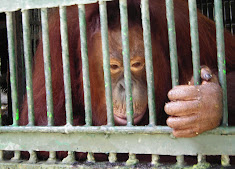



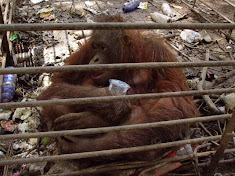



-a.jpg)


