Monday April 14, 2008 The StarOnline, Malaysia
Conference on palm oil to draw over 400
KOTA KINABALU: More than 400 delegates are expected to attend the two-day International Palm Oil Sustainability Conference that begins here today.
Organised by Malaysian Palm Oil Promotion Council (MPOC), the conference will be opened by Plantation Industries and Commodities Minister Datuk Peter Chin Fah Kui.
The conference is expected to address several important issues with regard to palm oil and other edible oils.
These include providing the Malaysian perspective to sustainable palm oil production, the need for certification of the global oils and fats industry, opportunities in biomass to liquids from palm biomass, development of oil palm plantations on peat land, governments' role in wildlife and conservation care and the palm oil industry, the life cycle assessment approach to illustrate palm oil's sustainability advantages and an update on the food, fuel and energy debate.
There will also be a special session devoted to the orang utan conservation in Malaysia and its current status as well as prospects.
As part of its efforts to highlight the palm oil industry's efforts in adhering to Good Agricultural Practices (GAP) and leading to sustainable production of palm oil, the MPOC had invited several foreign journalists on a familiarisation programme to Sandakan ahead of the conference here.
The journalists were also briefed on orang utan and wildlife conservation in Malaysia.
MPOC hopes that at the end of their two-day visit, they would have gained considerable understanding of the various GAP and wildlife conservation efforts being undertaken by Malaysia's palm oil industry. – Bernama
Monday, 14 April 2008
Malaysia Concerned About Negative Carbon Debt Campaigns On Palm Oil Industry, Says Peter Chin
April 14, 2008 11:56 AM
Malaysia Concerned About Negative Carbon Debt Campaigns On Palm Oil Industry, Says Peter Chin
KOTA KINABALU, April 14 (Bernama) -- Malaysia is greatly concerned by the negative campaigns targeted at the palm oil industry especially with regard to the distorting views on carbon debt, said Minister of Plantation Industries and Commodities, Datuk Peter Chin Fah Kui.
He said it was not fair to arbitrarily specify a cut-off point for calculation purposes and in the process shackle developing countries to incur carbon debt through deforestration.Speaking at the two-day International Palm Oil Sustainability Conference beginning here Monday, he said biased calculations on oil palm and carbon debt leading to distorting conclusions had emerged from Europe in an attempt to tarnish the image of the industry.
Chin said carbon emissions for palm oil plantation were often calculated based on carbon stocks of pristine rain forests as the starting point.
However, he said although carbon stocks in the oil palm ecosystem were high, they had been totally ignored in these studies.As such, he said these studies had proclaimed that palm oil cultivation would create a huge carbon debt that would take many years to settle in order to make the industry carbon neutral.
"In reality, every piece of land has a carbon sink capacity. Any piece of forested land with high carbon stock, once converted to agriculture, would automatically carry a carbon debt since agricultural land use usually carries a lower carbon stock than a pristine forest.
This principle applies whenever any forested land is converted to agricultural land."If you think about it, how many farms exist today that was not a forest many, many years ago, irrespective of whether that farm is situated in a temperate or tropical country?""Whatever happened to the carbon debt the farm incurred when the forest was first felled for agricultural development?" he asked.
Chin said an oil palm plantation, as a planted forest, drew many similarities with that of a forest in the production of oxygen, absorption of carbon dioxide and served as a habitat for various forms of biodiveristy to thrive in.
Referring to the Malaysian palm oil industry, he said that contrary to the current perception that large tracts of virgin jungles were bulldozed to make way for oil palm plantations and this eventually deprived endangered specifies of their natural habitat and pushed them to the brink of extinction, this was not happening in the country.
"Oil palm cultivation is Malaysia is strictly regulated and can only be developed on legally designated agricultural land and does not encroach on protected virgin rainforests. Moreover when oil palm is planted on degraded land that was previously used for other commercial activities, the planting of oil palms rehabilitates the land and converts it to a green lung," he said.
More importantly, he said oil palm being a perennial crop could be sustainably produced for 25 years or more with minimum disturbance to the environment compared to th cultivation of other oil seeds that needed annual harvesting and large land preparation, usually with the use of machinery.
In addition, he said Malaysian plantations took serious care of their environment."The Malaysian palm oil industry adopts good agricultural practices such as zero burning in platations and the utilisation of waste -- for example fresh fruit bunches are converted to organic fertilisers.
The industry is environmentally-friendly where the waste water that flows out of the treatment ponds are not harmful to aquatic life that live downstream. All these practices ensure that the palm oil industry operates in a sustainable manner," he said.-- BERNAMA
Malaysia Concerned About Negative Carbon Debt Campaigns On Palm Oil Industry, Says Peter Chin
KOTA KINABALU, April 14 (Bernama) -- Malaysia is greatly concerned by the negative campaigns targeted at the palm oil industry especially with regard to the distorting views on carbon debt, said Minister of Plantation Industries and Commodities, Datuk Peter Chin Fah Kui.
He said it was not fair to arbitrarily specify a cut-off point for calculation purposes and in the process shackle developing countries to incur carbon debt through deforestration.Speaking at the two-day International Palm Oil Sustainability Conference beginning here Monday, he said biased calculations on oil palm and carbon debt leading to distorting conclusions had emerged from Europe in an attempt to tarnish the image of the industry.
Chin said carbon emissions for palm oil plantation were often calculated based on carbon stocks of pristine rain forests as the starting point.
However, he said although carbon stocks in the oil palm ecosystem were high, they had been totally ignored in these studies.As such, he said these studies had proclaimed that palm oil cultivation would create a huge carbon debt that would take many years to settle in order to make the industry carbon neutral.
"In reality, every piece of land has a carbon sink capacity. Any piece of forested land with high carbon stock, once converted to agriculture, would automatically carry a carbon debt since agricultural land use usually carries a lower carbon stock than a pristine forest.
This principle applies whenever any forested land is converted to agricultural land."If you think about it, how many farms exist today that was not a forest many, many years ago, irrespective of whether that farm is situated in a temperate or tropical country?""Whatever happened to the carbon debt the farm incurred when the forest was first felled for agricultural development?" he asked.
Chin said an oil palm plantation, as a planted forest, drew many similarities with that of a forest in the production of oxygen, absorption of carbon dioxide and served as a habitat for various forms of biodiveristy to thrive in.
Referring to the Malaysian palm oil industry, he said that contrary to the current perception that large tracts of virgin jungles were bulldozed to make way for oil palm plantations and this eventually deprived endangered specifies of their natural habitat and pushed them to the brink of extinction, this was not happening in the country.
"Oil palm cultivation is Malaysia is strictly regulated and can only be developed on legally designated agricultural land and does not encroach on protected virgin rainforests. Moreover when oil palm is planted on degraded land that was previously used for other commercial activities, the planting of oil palms rehabilitates the land and converts it to a green lung," he said.
More importantly, he said oil palm being a perennial crop could be sustainably produced for 25 years or more with minimum disturbance to the environment compared to th cultivation of other oil seeds that needed annual harvesting and large land preparation, usually with the use of machinery.
In addition, he said Malaysian plantations took serious care of their environment."The Malaysian palm oil industry adopts good agricultural practices such as zero burning in platations and the utilisation of waste -- for example fresh fruit bunches are converted to organic fertilisers.
The industry is environmentally-friendly where the waste water that flows out of the treatment ponds are not harmful to aquatic life that live downstream. All these practices ensure that the palm oil industry operates in a sustainable manner," he said.-- BERNAMA


Scientists Ask EU to Drop Biofuel Targets
ENVIRONMENT: Scientists Ask EU to Drop Biofuel Targets
By David CroninBRUSSELS, Apr 12 (IPS) -
Scientists tasked with advising the European Union's policy-makers have called for a target on promoting the greater use of biofuels to be dropped.As part of a battery of measures officially aimed at addressing climate change, the EU's governments agreed in 2006 that 10 percent of the bloc's transport needs should derive from agricultural crops by 2020.
In a new paper, the European Environment Agency's scientific committee describes the goal as "overambitious" and recommends it should be suspended until a comprehensive study on the pros and cons of biofuels is completed. According to the paper, meeting the 10 percent objective will necessitate large-scale import of biofuels from outside the EU.
With the growing production of biofuels such as palm oil already accelerating deforestation in poor countries, the scientists argue that it will be difficult to monitor whether crops destined for use in European vehicles are being cultivated in an ecologically sustainable manner. They also suggest that the production and use of biofuels may not lead to major cuts in the emissions of carbon dioxide, the main substance triggering global warming, when compared to conventional petrol or diesel.
They express concern that an upsurge in biofuel production will put increasing pressure on water, soil, flora and fauna. And they query if the EU's target is realistic, given that a previous one -- set in 2003 -- of ensuring that biofuels comprise 2 percent of transport fuels by 2005 was not attained.
Chaired by Hungarian professor László Somlyódy, the committee is the second EU scientific body this year to query the wisdom of the 10 percent target. In January, a leaked paper from scientists in the European Commission's Joint Research Centre said that the costs of reaching the goal will "almost certainly outweigh the benefits." The JRC called into question the EU's decision to focus its target on transport, contending that it would be more efficient to use agricultural resources for generating electricity than as biofuels.
The EEA's position contrasts with the stance taken by José Manuel Barroso, the European Commission's president, earlier in the week. Barroso claimed that the EU should "remain attached" to its target, adding that the alternative to biofuels is to continue running most cars on conventional petrol. He dismissed, too, recent statements by the World Food Programme and the World Bank that the ballooning demand for biofuels is contributing to rising prices of food and the prospect of a major hunger crisis in poor crisis.
Barroso's comments were similar to those made by Andris Piebalgs, Europe's energy commissioner, who complained last month that biofuels have been made a "scapegoat" for rising commodity prices, suggesting that poor harvests and higher living standards among the middle classes in India and China are more to blame. Adrian Bebb, a campaigner with Friends of the Earth, said: "Barroso is looking increasingly isolated in holding this view. He is living in a different world if he thinks that he knows better than all of the experts on food policy.
The 10 percent target is untenable." Bebb alleged that the Commission's position is being influenced more by lobbying from firms with a vested interest in biofuels than in a desire to protect the environment. "The only winners from the 10 percent target will be the big agro-chemical companies, those who sell seeds and chemicals," he said. "Everyone else will be losers." Gerard Choplin from the European Farmers Coordination said: "Biofuels are not a scapegoat (for rising food prices).
In the U.S., corn is being increasingly grown for biofuels, so the U.S. is exporting less corn. This has put a new pressure on the world market. It is directly linked to biofuels." Despite Barroso's comments, Choplin noted that other senior EU figures have been less obstinate in defending the 10 percent target. In March, Slovenian Prime Minister Janez Jansa, whose country holds the Union's rotating presidency, said that the possibility of revising or amending the target has not been excluded. Barroso has also argued that criteria should be devised in order to ensure that biofuels are produced in a way that does not cause large-scale ecological damage.
However, environmental activists have branded as too weak a set of criteria prepared in late March by officials at the Council of Ministers, which bands together the EU's 27 governments. While the officials recommended that the Commission should analyse the ecological and social effects of biofuel production, it only recommended that "corrective action" should be proposed "if appropriate".
No suggestions were made about addressing concerns that biofuels may be exacerbating global hunger. Greenpeace, the European Environmental Bureau, Friends of the Earth and BirdLife International have written jointly to EU governments urging them not to rush into devising criteria. A hasty EU agreement on standards that fails "to prevent potentially devastating outcomes for climate protection, biodiversity and vulnerable peoples would severely undermine the credibility of EU efforts to tackle climate change and to address emissions from transport in a sensible way," the organisations said. (END/2008)
By David CroninBRUSSELS, Apr 12 (IPS) -
Scientists tasked with advising the European Union's policy-makers have called for a target on promoting the greater use of biofuels to be dropped.As part of a battery of measures officially aimed at addressing climate change, the EU's governments agreed in 2006 that 10 percent of the bloc's transport needs should derive from agricultural crops by 2020.
In a new paper, the European Environment Agency's scientific committee describes the goal as "overambitious" and recommends it should be suspended until a comprehensive study on the pros and cons of biofuels is completed. According to the paper, meeting the 10 percent objective will necessitate large-scale import of biofuels from outside the EU.
With the growing production of biofuels such as palm oil already accelerating deforestation in poor countries, the scientists argue that it will be difficult to monitor whether crops destined for use in European vehicles are being cultivated in an ecologically sustainable manner. They also suggest that the production and use of biofuels may not lead to major cuts in the emissions of carbon dioxide, the main substance triggering global warming, when compared to conventional petrol or diesel.
They express concern that an upsurge in biofuel production will put increasing pressure on water, soil, flora and fauna. And they query if the EU's target is realistic, given that a previous one -- set in 2003 -- of ensuring that biofuels comprise 2 percent of transport fuels by 2005 was not attained.
Chaired by Hungarian professor László Somlyódy, the committee is the second EU scientific body this year to query the wisdom of the 10 percent target. In January, a leaked paper from scientists in the European Commission's Joint Research Centre said that the costs of reaching the goal will "almost certainly outweigh the benefits." The JRC called into question the EU's decision to focus its target on transport, contending that it would be more efficient to use agricultural resources for generating electricity than as biofuels.
The EEA's position contrasts with the stance taken by José Manuel Barroso, the European Commission's president, earlier in the week. Barroso claimed that the EU should "remain attached" to its target, adding that the alternative to biofuels is to continue running most cars on conventional petrol. He dismissed, too, recent statements by the World Food Programme and the World Bank that the ballooning demand for biofuels is contributing to rising prices of food and the prospect of a major hunger crisis in poor crisis.
Barroso's comments were similar to those made by Andris Piebalgs, Europe's energy commissioner, who complained last month that biofuels have been made a "scapegoat" for rising commodity prices, suggesting that poor harvests and higher living standards among the middle classes in India and China are more to blame. Adrian Bebb, a campaigner with Friends of the Earth, said: "Barroso is looking increasingly isolated in holding this view. He is living in a different world if he thinks that he knows better than all of the experts on food policy.
The 10 percent target is untenable." Bebb alleged that the Commission's position is being influenced more by lobbying from firms with a vested interest in biofuels than in a desire to protect the environment. "The only winners from the 10 percent target will be the big agro-chemical companies, those who sell seeds and chemicals," he said. "Everyone else will be losers." Gerard Choplin from the European Farmers Coordination said: "Biofuels are not a scapegoat (for rising food prices).
In the U.S., corn is being increasingly grown for biofuels, so the U.S. is exporting less corn. This has put a new pressure on the world market. It is directly linked to biofuels." Despite Barroso's comments, Choplin noted that other senior EU figures have been less obstinate in defending the 10 percent target. In March, Slovenian Prime Minister Janez Jansa, whose country holds the Union's rotating presidency, said that the possibility of revising or amending the target has not been excluded. Barroso has also argued that criteria should be devised in order to ensure that biofuels are produced in a way that does not cause large-scale ecological damage.
However, environmental activists have branded as too weak a set of criteria prepared in late March by officials at the Council of Ministers, which bands together the EU's 27 governments. While the officials recommended that the Commission should analyse the ecological and social effects of biofuel production, it only recommended that "corrective action" should be proposed "if appropriate".
No suggestions were made about addressing concerns that biofuels may be exacerbating global hunger. Greenpeace, the European Environmental Bureau, Friends of the Earth and BirdLife International have written jointly to EU governments urging them not to rush into devising criteria. A hasty EU agreement on standards that fails "to prevent potentially devastating outcomes for climate protection, biodiversity and vulnerable peoples would severely undermine the credibility of EU efforts to tackle climate change and to address emissions from transport in a sensible way," the organisations said. (END/2008)
Saturday, 12 April 2008
The other global crisis: rush to biofuels is driving up price of food
Long looking article? Then maybe scroll down to see the higlighted (by me) quote.
The other global crisis: rush to biofuels is driving up price of food
By Paul VallelySaturday, 12 April 2008 The Independent newspaper (UK)
The world's most powerful finance ministers and central bankers are meeting in Washington tomorrow; but as they preoccupy themselves with the global credit crunch, another crisis, far more grave, is facing the world's poorest people.
A dramatic rise in the worldwide cost of food is provoking riots throughout the Third World where millions more of the world's most vulnerable people are facing starvation as food shortages grow and cereal prices soar. It threatens to become the biggest crisis of the 21st century.
This week crowds of hungry demonstrators in Haiti stormed the presidential palace in the capital, Port-au-Prince, in protests over food prices. And a crisis gripped the Philippines as massive queues formed to buy rice from government stocks.
There have been riots in Niger, Senegal, Cameroon and Burkina Faso and protests in Mauritania, Ivory Coast, Egypt and Morocco. Mexico has had "tortilla riots" and, in Yemen, children have marched to draw attention to their hunger.
The global price of wheat has risen by 130 per cent in the past year. Rice has rocketed by 74 per cent in the same period. It went up by more than 10 per cent in a single day last Friday – to an all-time high as African and Asian importers competed for the diminishing supply on international markets in an attempt to head off the mounting social unrest. The International Rice Research Institute warned yesterday that prices will keep going up.
The buffers stocks of staple foods that governments once held are being steadily exhausted.
Rising prices have triggered a food crisis in 36 countries, says the UN Food and Agriculture Organisation. The hike in prices means the World Food Programme is cutting food handout rations to some 73 million people in 78 countries. The threat of malnutrition on a massive scale is looming.
The impact is beginning to be felt in the rich world, too. More expensive wheat has caused large rises in the cost of pasta and bread in Italy where consumer groups staged a one-day strike that brought pasta consumption down 5 per cent. The price of miso, a fermented rice and barley mixture, is up in Japan. France and Australia have launched national inquiries into rising food prices and are pressing food producers and supermarkets to absorb price rises. In Britain, the price of bread is rising in line with the cost of wheat.
Governments have begun to negotiate secretive barter arrangements as the price of agricultural commodities leap to record highs. Ukraine and Libya are close to a deal on wheat. Egypt and Syria have signed a rice-for-wheat swap. The Philippines has just failed in a rice deal with Vietnam.
All across the world, cereals, meat, eggs and dairy products are becoming dearer. "Food prices are now rising at rates that few of us can ever have seen before in our lifetimes," said John Powell of the World Food Programme. Prices are likely to remain high for at least 10 years, the Food and Agriculture Organisation is projecting.
A complex interaction of factors has provoked the panic among dealers in international food markets.
Diets are changing radically in nations such as China, India, Brazil and Russia, where economic growth has boosted meat consumption. In China, it is up by 150 per cent since 1980. In India, it has risen by 40 per cent in the past 15 years. The demand for meat from across all developing countries has doubled since 1980.
Because cattle and chickens are fed on corn – it takes 8kg of grain to produce 1kg of beef – the price has risen.
The new market for biofuels has raised grain prices. Corn is being used to produce energy and the market is anticipating hugely increased production in the coming decade. George Bush wants 15 per cent of American cars to run on biofuels by 2017, which will mean trebling maize production. Europe has a set a transport fuels target of 5.75 per cent from biofuels by 2010. As a result, the price of corn has begun to track that of oil quite closely.
The soaring cost of oil, which last week topped $105 (£53) a barrel for the first time, has another impact. It increases the price of fertiliser, and also the costs of food processing and transport.
Climate change is taking its toll. Droughts and floods are affecting harvests.
Floods in central China this year displaced millions of people and devastated rice and corn crops. Overall China's grain harvest has fallen by 10 per cent over the past seven years. Last year, Australia experienced its worst drought for more than a century, causing the wheat harvest to fall by 60 per cent. The UK wheat harvest is expected to be 10 per cent down this year, partly because of the flooding.
Worldwide, an area of fertile soil the size of Ukraine is lost every year because of drought, deforestation and climate instability.
There is also increasing demand from a rising world population which is expected to grow from 6.2 billion today to 9.5 billion by 2050. The World Bank predicts global demand for food will double by 2030.
Government policies do not help: the rich world subsidises agriculture not to feed the world but to enrich its farmers.
There is an increasing recognition of the gravity of all of this among the leaders of the industrialised world. On Thursday, Gordon Brown called on the Japanese Prime Minister, Yasuo Fukuda, the current chairman of the G8, to devise an international plan to deal with rising food prices with the World Bank, the IMF and the UN.
There is increasing concern about the rush to biofuels. Britain's new chief scientist, Professor John Beddington, has said cutting down rainforest to produce biofuel crops was "profoundly stupid". It was, he said, "very hard to imagine how we can see a world growing enough crops to produce renewable energy and, at the same time, meet the enormous increase in the demand for food".
Lennart Båge, the president of the UN's International Fund for Agricultural Development, suggested that those opposed to GM crops should take another look at the productivity gains they can unleash and bring changes as massive as the "green revolution" of the 1960s, when crop yields in India and other developing nations jumped because of of better seeds, fertilisers and improved irrigation.
That change brought down food prices, freeing millions from hunger. If world leaders cannot come up with something similar again, the food riots could spread across the globe.
The other global crisis: rush to biofuels is driving up price of food
By Paul VallelySaturday, 12 April 2008 The Independent newspaper (UK)
The world's most powerful finance ministers and central bankers are meeting in Washington tomorrow; but as they preoccupy themselves with the global credit crunch, another crisis, far more grave, is facing the world's poorest people.
A dramatic rise in the worldwide cost of food is provoking riots throughout the Third World where millions more of the world's most vulnerable people are facing starvation as food shortages grow and cereal prices soar. It threatens to become the biggest crisis of the 21st century.
This week crowds of hungry demonstrators in Haiti stormed the presidential palace in the capital, Port-au-Prince, in protests over food prices. And a crisis gripped the Philippines as massive queues formed to buy rice from government stocks.
There have been riots in Niger, Senegal, Cameroon and Burkina Faso and protests in Mauritania, Ivory Coast, Egypt and Morocco. Mexico has had "tortilla riots" and, in Yemen, children have marched to draw attention to their hunger.
The global price of wheat has risen by 130 per cent in the past year. Rice has rocketed by 74 per cent in the same period. It went up by more than 10 per cent in a single day last Friday – to an all-time high as African and Asian importers competed for the diminishing supply on international markets in an attempt to head off the mounting social unrest. The International Rice Research Institute warned yesterday that prices will keep going up.
The buffers stocks of staple foods that governments once held are being steadily exhausted.
Rising prices have triggered a food crisis in 36 countries, says the UN Food and Agriculture Organisation. The hike in prices means the World Food Programme is cutting food handout rations to some 73 million people in 78 countries. The threat of malnutrition on a massive scale is looming.
The impact is beginning to be felt in the rich world, too. More expensive wheat has caused large rises in the cost of pasta and bread in Italy where consumer groups staged a one-day strike that brought pasta consumption down 5 per cent. The price of miso, a fermented rice and barley mixture, is up in Japan. France and Australia have launched national inquiries into rising food prices and are pressing food producers and supermarkets to absorb price rises. In Britain, the price of bread is rising in line with the cost of wheat.
Governments have begun to negotiate secretive barter arrangements as the price of agricultural commodities leap to record highs. Ukraine and Libya are close to a deal on wheat. Egypt and Syria have signed a rice-for-wheat swap. The Philippines has just failed in a rice deal with Vietnam.
All across the world, cereals, meat, eggs and dairy products are becoming dearer. "Food prices are now rising at rates that few of us can ever have seen before in our lifetimes," said John Powell of the World Food Programme. Prices are likely to remain high for at least 10 years, the Food and Agriculture Organisation is projecting.
A complex interaction of factors has provoked the panic among dealers in international food markets.
Diets are changing radically in nations such as China, India, Brazil and Russia, where economic growth has boosted meat consumption. In China, it is up by 150 per cent since 1980. In India, it has risen by 40 per cent in the past 15 years. The demand for meat from across all developing countries has doubled since 1980.
Because cattle and chickens are fed on corn – it takes 8kg of grain to produce 1kg of beef – the price has risen.
The new market for biofuels has raised grain prices. Corn is being used to produce energy and the market is anticipating hugely increased production in the coming decade. George Bush wants 15 per cent of American cars to run on biofuels by 2017, which will mean trebling maize production. Europe has a set a transport fuels target of 5.75 per cent from biofuels by 2010. As a result, the price of corn has begun to track that of oil quite closely.
The soaring cost of oil, which last week topped $105 (£53) a barrel for the first time, has another impact. It increases the price of fertiliser, and also the costs of food processing and transport.
Climate change is taking its toll. Droughts and floods are affecting harvests.
Floods in central China this year displaced millions of people and devastated rice and corn crops. Overall China's grain harvest has fallen by 10 per cent over the past seven years. Last year, Australia experienced its worst drought for more than a century, causing the wheat harvest to fall by 60 per cent. The UK wheat harvest is expected to be 10 per cent down this year, partly because of the flooding.
Worldwide, an area of fertile soil the size of Ukraine is lost every year because of drought, deforestation and climate instability.
There is also increasing demand from a rising world population which is expected to grow from 6.2 billion today to 9.5 billion by 2050. The World Bank predicts global demand for food will double by 2030.
Government policies do not help: the rich world subsidises agriculture not to feed the world but to enrich its farmers.
There is an increasing recognition of the gravity of all of this among the leaders of the industrialised world. On Thursday, Gordon Brown called on the Japanese Prime Minister, Yasuo Fukuda, the current chairman of the G8, to devise an international plan to deal with rising food prices with the World Bank, the IMF and the UN.
There is increasing concern about the rush to biofuels. Britain's new chief scientist, Professor John Beddington, has said cutting down rainforest to produce biofuel crops was "profoundly stupid". It was, he said, "very hard to imagine how we can see a world growing enough crops to produce renewable energy and, at the same time, meet the enormous increase in the demand for food".
Lennart Båge, the president of the UN's International Fund for Agricultural Development, suggested that those opposed to GM crops should take another look at the productivity gains they can unleash and bring changes as massive as the "green revolution" of the 1960s, when crop yields in India and other developing nations jumped because of of better seeds, fertilisers and improved irrigation.
That change brought down food prices, freeing millions from hunger. If world leaders cannot come up with something similar again, the food riots could spread across the globe.
Friday, 11 April 2008
Haze Could Worsen This Year - ASEAN Ministers
Haze Could Worsen This Year - ASEAN Ministers
MALAYSIA: April 9, 2008
PUTRAJAYA - Smog from forest fires, which costs Southeast Asian economies billions in lost tourist dollars, could worsen as changing weather patterns cause an unusually dry spell, the region's environment ministers warned on Tuesday.
The effects of the La Nina weather phenomenon are expected to wear off in the third quarter of 2008, which could result in arid conditions, the ministers said, quoting a forecast from the ASEAN Meteorological Centre.
"This could lead to drier periods and the possibility of escalating hot-spot activities during the coming dry season," environment ministers from Malaysia, Indonesia, Thailand, Singapore and Brunei said in a statement.
La Nina refers to an abnormal cooling of sea surface temperatures in the Pacific Ocean, while its counterpart El Nino refers to a warming of surface temperatures.
Since 1997, peat and forest fires in Indonesia's Sumatra and Borneo islands have triggered a choking haze which billows across the region, affecting Singapore, Malaysia and parts of Thailand.
The ASEAN ministers had gathered in the Malaysian administrative capital to discuss the haze, which usually occurs around mid-year as farmers and timber and plantation firms in the region openly burn plots of land ahead of the planting season.
ASEAN, the Association of Southeast Asian Nations, groups the countries of Malaysia, Indonesia, Thailand, Singapore, Brunei, Cambodia, Laos, Myanmar, Vietnam and the Philippines.
"We have to prepare for the worst and hope for the best," Indonesian Environment Minister Rachmat Witoelar told reporters.
"We are not going to delude ourselves that we are going to wipe out all the haze. There will be some burning, some haze."
Near-annual bouts of haze have made many people ill across a wide area of Southeast Asia, cost local economies billions of dollars and badly hit the tourism and airline sectors.
Singapore appealed to tourists not to avoid the region during the period as has happened in the past.
Southeast Asia is a magnet for big-spending visitors from the Middle East in July and August, as they seek to escape the scorching summer back home.
"Please come and visit the region," Singapore Environment Minister Yaacob Ibrahim said.
(Writing by Liau Y-Sing; Editing by Valerie Lee)
Story by Jalil Hamid
REUTERS NEWS SERVICE
MALAYSIA: April 9, 2008
PUTRAJAYA - Smog from forest fires, which costs Southeast Asian economies billions in lost tourist dollars, could worsen as changing weather patterns cause an unusually dry spell, the region's environment ministers warned on Tuesday.
The effects of the La Nina weather phenomenon are expected to wear off in the third quarter of 2008, which could result in arid conditions, the ministers said, quoting a forecast from the ASEAN Meteorological Centre.
"This could lead to drier periods and the possibility of escalating hot-spot activities during the coming dry season," environment ministers from Malaysia, Indonesia, Thailand, Singapore and Brunei said in a statement.
La Nina refers to an abnormal cooling of sea surface temperatures in the Pacific Ocean, while its counterpart El Nino refers to a warming of surface temperatures.
Since 1997, peat and forest fires in Indonesia's Sumatra and Borneo islands have triggered a choking haze which billows across the region, affecting Singapore, Malaysia and parts of Thailand.
The ASEAN ministers had gathered in the Malaysian administrative capital to discuss the haze, which usually occurs around mid-year as farmers and timber and plantation firms in the region openly burn plots of land ahead of the planting season.
ASEAN, the Association of Southeast Asian Nations, groups the countries of Malaysia, Indonesia, Thailand, Singapore, Brunei, Cambodia, Laos, Myanmar, Vietnam and the Philippines.
"We have to prepare for the worst and hope for the best," Indonesian Environment Minister Rachmat Witoelar told reporters.
"We are not going to delude ourselves that we are going to wipe out all the haze. There will be some burning, some haze."
Near-annual bouts of haze have made many people ill across a wide area of Southeast Asia, cost local economies billions of dollars and badly hit the tourism and airline sectors.
Singapore appealed to tourists not to avoid the region during the period as has happened in the past.
Southeast Asia is a magnet for big-spending visitors from the Middle East in July and August, as they seek to escape the scorching summer back home.
"Please come and visit the region," Singapore Environment Minister Yaacob Ibrahim said.
(Writing by Liau Y-Sing; Editing by Valerie Lee)
Story by Jalil Hamid
REUTERS NEWS SERVICE
Indonesia failing to stop forest destruction: Greenpeace
Indonesia failing to stop forest destruction:
Greenpeace, JAKARTA (AFP) —
Indonesia is failing to halt the destruction of its peatland forests despite promising to do so during last year's climate change conference in Bali, pressure group Greenpeace said Monday.
Greenpeace said its workers had witnessed two palm oil companies illegally clearing government-owned land on Sumatra island in March.
"Last month, a Greenpeace team revisited an area of Sumatra's Riau province where it had monitored palm oil expansion in 2007, to find that further large tracts of peatland forest had been destroyed inside (areas) which had not been granted permits," the group said.
Indonesia has one of the highest rates of deforestation in the world, driven by voracious demand for commodities and weak law enforcement.
Large swathes of peatland forest are being cleared to make way for the booming palm oil industry.
Emissions from deforestation, and in particular peatland -- which is made up of deep layers of semi-decomposed vegetation -- have made Indonesia the world's third-largest carbon emitter, behind the United States and China.
Greenpeace accused the government of sending out "mixed messages" on palm oil, saying forest destruction had been allowed to continue even though the agriculture minister had called for a halt to any new plantations on peatlands.
"We call on the government to give teeth to their Bali commitment to save the forests and tackle climate change by urgently putting in place measures to regulate the palm oil industry," said Greenpeace campaigner Hapsoro.
Agriculture ministry officials could not be reached for comment.
Greenpeace, JAKARTA (AFP) —
Indonesia is failing to halt the destruction of its peatland forests despite promising to do so during last year's climate change conference in Bali, pressure group Greenpeace said Monday.
Greenpeace said its workers had witnessed two palm oil companies illegally clearing government-owned land on Sumatra island in March.
"Last month, a Greenpeace team revisited an area of Sumatra's Riau province where it had monitored palm oil expansion in 2007, to find that further large tracts of peatland forest had been destroyed inside (areas) which had not been granted permits," the group said.
Indonesia has one of the highest rates of deforestation in the world, driven by voracious demand for commodities and weak law enforcement.
Large swathes of peatland forest are being cleared to make way for the booming palm oil industry.
Emissions from deforestation, and in particular peatland -- which is made up of deep layers of semi-decomposed vegetation -- have made Indonesia the world's third-largest carbon emitter, behind the United States and China.
Greenpeace accused the government of sending out "mixed messages" on palm oil, saying forest destruction had been allowed to continue even though the agriculture minister had called for a halt to any new plantations on peatlands.
"We call on the government to give teeth to their Bali commitment to save the forests and tackle climate change by urgently putting in place measures to regulate the palm oil industry," said Greenpeace campaigner Hapsoro.
Agriculture ministry officials could not be reached for comment.
TDM to acquire oil palm land in Kalimantan
The StarOnline, Malaysia, 11th May.
TDM to acquire oil palm land in Kalimantan
KUALA LUMPUR: TDM Bhd has signed a heads of agreement (HOA) with its subsidiary PT Rafi Kamajaya Abadi and Bapak H. Rahman to acquire another 30,000ha in West Kalimantan for oil palm plantation development.
In an announcement to Bursa Malaysia, TDM said PT Rafi was incorporated as the special-purpose vehicle for the purpose of acquiring and developing land into oil palm plantation and to operate oil palm business in Indonesia.
“Under the HOA, PT Rafi will further acquire about 30,000ha in Kecamatan Nanga Pinoh and Kecamatan Belimbing, West Kalimantan and to develop the land into oil palm plantation,” it said. – Bernama
TDM to acquire oil palm land in Kalimantan
KUALA LUMPUR: TDM Bhd has signed a heads of agreement (HOA) with its subsidiary PT Rafi Kamajaya Abadi and Bapak H. Rahman to acquire another 30,000ha in West Kalimantan for oil palm plantation development.
In an announcement to Bursa Malaysia, TDM said PT Rafi was incorporated as the special-purpose vehicle for the purpose of acquiring and developing land into oil palm plantation and to operate oil palm business in Indonesia.
“Under the HOA, PT Rafi will further acquire about 30,000ha in Kecamatan Nanga Pinoh and Kecamatan Belimbing, West Kalimantan and to develop the land into oil palm plantation,” it said. – Bernama
Australian company secures carbon deal for Indonesian forests
Australian company secures carbon deal for Indonesian forests
Updated Fri Apr 11, 2008 11:43am AEST
ABC RADIO AUSTRALIA
An Australian company has secured an international corporate deal, that will save 750,000 hectares of rainforest in Indonesia.
The company, Carbon Conservation, has persuaded Wall St banker Merrill Lynch to sink $AUD9 million into local businesses in Aceh which could be worth $AUD400 million in carbon credits for the bank.Carbon Conservation CEO, Dorje Sun, says the forest will be guarded by 1000 heavily armed former Free Aceh rebels.
He says 100 million tonnes of carbon dioxide will now stay locked in the rainforest."Never before in history has there been a commercial bank, with commercial returns in mind to actually pay people, community owners in Aceh, for the protection and the utility the rainforests provide there," he says.
Updated Fri Apr 11, 2008 11:43am AEST
ABC RADIO AUSTRALIA
An Australian company has secured an international corporate deal, that will save 750,000 hectares of rainforest in Indonesia.
The company, Carbon Conservation, has persuaded Wall St banker Merrill Lynch to sink $AUD9 million into local businesses in Aceh which could be worth $AUD400 million in carbon credits for the bank.Carbon Conservation CEO, Dorje Sun, says the forest will be guarded by 1000 heavily armed former Free Aceh rebels.
He says 100 million tonnes of carbon dioxide will now stay locked in the rainforest."Never before in history has there been a commercial bank, with commercial returns in mind to actually pay people, community owners in Aceh, for the protection and the utility the rainforests provide there," he says.
RI requests Malaysia take action against illegal logging
RI requests Malaysia take action against illegal logging
Antara , Jakarta Fri, 04/11/2008 6:11 PM National
The Indonesian government has asked Malaysia to take action against illegal logging along the border between the two countries, Vice President Jusuf Kalla said Friday.
"Forestry Minister Malam Sambat Kaban has filed a protest to Malaysia and we ask Malaysia to take action immediately," he said.
"We are expecting bilateral meetings to solve illegal logging activities. We have taken action and it is expected that Malaysia will follow suit."
Kalla also expressed his gratitude to the Indonesian Military (TNI) and the National Police for their efforts to curb illegal logging in the border areas.
Indonesia's provinces of West Kalimantan and East Kalimantan border the Malaysian states of Sabah and Sarawak on Kalimantan island.
TNI chief Gen. Djoko Santoso said the two countries had agreed to increase cooperation in securing their border.
"We discussed a number of issues during the Malindo general border committee meeting, including the construction of new border posts as well as joint posts," he said.
"TNI will build 14 more posts along the border."
Antara , Jakarta Fri, 04/11/2008 6:11 PM National
The Indonesian government has asked Malaysia to take action against illegal logging along the border between the two countries, Vice President Jusuf Kalla said Friday.
"Forestry Minister Malam Sambat Kaban has filed a protest to Malaysia and we ask Malaysia to take action immediately," he said.
"We are expecting bilateral meetings to solve illegal logging activities. We have taken action and it is expected that Malaysia will follow suit."
Kalla also expressed his gratitude to the Indonesian Military (TNI) and the National Police for their efforts to curb illegal logging in the border areas.
Indonesia's provinces of West Kalimantan and East Kalimantan border the Malaysian states of Sabah and Sarawak on Kalimantan island.
TNI chief Gen. Djoko Santoso said the two countries had agreed to increase cooperation in securing their border.
"We discussed a number of issues during the Malindo general border committee meeting, including the construction of new border posts as well as joint posts," he said.
"TNI will build 14 more posts along the border."
Police Remove Out Auctioned Logs From APRIL’s Concession
Police Remove Out Auctioned Logs From APRIL’s Concession
Source: EoF - April 4, 2008
PekanbaruPolice and PT Riau Andalan Pulp and Paper (RAPP) employees were engaged in clash in the gate of the Asia Pacific Resources International Holding Limited (APRIL) compound in Pangkalan Kerinci, Pelalawan of Riau, yesterday (3 April 2008) caused several employees and policemen suffered minor injuries, reports said. The tense in Pangkalan Kerinci town following the clash had calmed down last night, said Riau Police Chief, Brig.-Gen. Sutjiptadi, Koran Tempo daily reported today (4/4/2008).
At least 450 PT RAPP’s employees tried to block the police and CV Gunung Mas’ trucks to enter the APRIL’s compound. The complex would be the first entrance before reaching PT Madukoro’s concession in Kerumutan forest block, around 40 km away from Pangkalan Kerinci.
The blockade incited the clash as the police used the clubs to disperse the employees preventing the police to enter the area. Pekanbaru Tribun daily (4 April 2008) reported that nine RAPP’s security provider personnel were interrogated and detained by the police following the riot.
Around 200 of policemen from Pelalawan Resort Office and Riau Police Office guarded the timber company CV Gunung Mas, which brought some excavators and trucks, to take out illegal logs located in concession of PT Madukoro, an APRIL’s affiliated pulpwood company.
CV Gunung Mas is a winner of auction conducted by the State’s authority in March 2008 to obtain 21,993 cubic meter of logs from natural forest that cleared by PT Madukoro (APRIL-affiliated timber company). The logs seized by the police on illegal logging raids last year, Tribun Pekanbaru reported.
The police interrogated security personnel of PT RAPP. “They obstructed the police implementing their duty,” said Gusti K. Gunawa, chief of Pelalawan Police, as quoted by Koran Tempo daily (4/4/2008).
“The road blockade and ambush of police had been coordinated. It’s obviously the arrogance of the company [PT RAPP] and the security guards which intolerable and we will probe it,” Gusti told the journalists as reported by Tribun Pekanbaru.
Gusti Gunawa said that his side have asked permit letter to the company to enter the pulp company complex. “But there is no response,” he said. The trucks and heavy machines along with the police personnel from Riau Police Office and Pelalawan Police departed Wednesday evening and on early morning on Thursday they stood by in logging road near the compound, Koran Tempo reported.
PT RAPP security guard service prohibited the police to enter the mill until 10.00 a.m. “Finally we decided to get in,” he said. The clash broke out inevitably. The police and CV Gunung Mas finally could take out the auctioned logs after the tense ran within an hour, Gusti said.
“The police pushed to get in, while the Security Guard and employees insisted to defend the area. Eventually, they attacked and chased to each other,” said Parasian Siregar, an employee of the company, as quoted by Koran Tempo daily as saying.
Troy Pantouw, PR Manager of PT RAPP, said that the company did not obstruct the police‘s duty. “So, it is a problem between PT RAPP and CV Gunung Mas, not the police,” he said as quoted by Detikcom website Thursday.
Nandik Sufaryono, the company’s PR officer, said that “we have the right to hold the heavy machines to come into, due to legally it is our area,” reported by Tribun Pekanbaru. He blasted CV Gunung Mas has violated ethics of business by utilizing the police to forced entering PT RAPP area, Tribun Pekanbaru reported.
Chief of Police Office, Sutjiptadi, said that the employees of PT RAPP previously did not understand the matter, but finally they did and allowed the police to reach the concession after being explained.
EoF learned that PT Madukoro is the first and one of several pulpwood plantation companies in Riau that probed by the police since February 2007. Those companies are affiliated to APRIL and Asia Pulp & Paper (APP) where some directors named suspects.
The police said they planned to summon Riau Governor and five district heads relating to the illegal logging cases, but there is no permit granted by President Susilo Bambang Yudhoyono so far.
In another development, Minister of Forestry Malam Sambat Kaban reportedly could not attend a summon in Corruption Eradication Commission (KPK) that scheduled on Wednesday (2/4/2008), Koran Tempo reported Thursday. Kaban will be questioned by KPK as a witness for Pelalawan District Head Azmun Jaafar’s graft case.
Azmun had been detained by KPK since mid of December last year over allegedly issuing logging licenses to 15 companies in Pelalawan district.
Source: EoF - April 4, 2008
PekanbaruPolice and PT Riau Andalan Pulp and Paper (RAPP) employees were engaged in clash in the gate of the Asia Pacific Resources International Holding Limited (APRIL) compound in Pangkalan Kerinci, Pelalawan of Riau, yesterday (3 April 2008) caused several employees and policemen suffered minor injuries, reports said. The tense in Pangkalan Kerinci town following the clash had calmed down last night, said Riau Police Chief, Brig.-Gen. Sutjiptadi, Koran Tempo daily reported today (4/4/2008).
At least 450 PT RAPP’s employees tried to block the police and CV Gunung Mas’ trucks to enter the APRIL’s compound. The complex would be the first entrance before reaching PT Madukoro’s concession in Kerumutan forest block, around 40 km away from Pangkalan Kerinci.
The blockade incited the clash as the police used the clubs to disperse the employees preventing the police to enter the area. Pekanbaru Tribun daily (4 April 2008) reported that nine RAPP’s security provider personnel were interrogated and detained by the police following the riot.
Around 200 of policemen from Pelalawan Resort Office and Riau Police Office guarded the timber company CV Gunung Mas, which brought some excavators and trucks, to take out illegal logs located in concession of PT Madukoro, an APRIL’s affiliated pulpwood company.
CV Gunung Mas is a winner of auction conducted by the State’s authority in March 2008 to obtain 21,993 cubic meter of logs from natural forest that cleared by PT Madukoro (APRIL-affiliated timber company). The logs seized by the police on illegal logging raids last year, Tribun Pekanbaru reported.
The police interrogated security personnel of PT RAPP. “They obstructed the police implementing their duty,” said Gusti K. Gunawa, chief of Pelalawan Police, as quoted by Koran Tempo daily (4/4/2008).
“The road blockade and ambush of police had been coordinated. It’s obviously the arrogance of the company [PT RAPP] and the security guards which intolerable and we will probe it,” Gusti told the journalists as reported by Tribun Pekanbaru.
Gusti Gunawa said that his side have asked permit letter to the company to enter the pulp company complex. “But there is no response,” he said. The trucks and heavy machines along with the police personnel from Riau Police Office and Pelalawan Police departed Wednesday evening and on early morning on Thursday they stood by in logging road near the compound, Koran Tempo reported.
PT RAPP security guard service prohibited the police to enter the mill until 10.00 a.m. “Finally we decided to get in,” he said. The clash broke out inevitably. The police and CV Gunung Mas finally could take out the auctioned logs after the tense ran within an hour, Gusti said.
“The police pushed to get in, while the Security Guard and employees insisted to defend the area. Eventually, they attacked and chased to each other,” said Parasian Siregar, an employee of the company, as quoted by Koran Tempo daily as saying.
Troy Pantouw, PR Manager of PT RAPP, said that the company did not obstruct the police‘s duty. “So, it is a problem between PT RAPP and CV Gunung Mas, not the police,” he said as quoted by Detikcom website Thursday.
Nandik Sufaryono, the company’s PR officer, said that “we have the right to hold the heavy machines to come into, due to legally it is our area,” reported by Tribun Pekanbaru. He blasted CV Gunung Mas has violated ethics of business by utilizing the police to forced entering PT RAPP area, Tribun Pekanbaru reported.
Chief of Police Office, Sutjiptadi, said that the employees of PT RAPP previously did not understand the matter, but finally they did and allowed the police to reach the concession after being explained.
EoF learned that PT Madukoro is the first and one of several pulpwood plantation companies in Riau that probed by the police since February 2007. Those companies are affiliated to APRIL and Asia Pulp & Paper (APP) where some directors named suspects.
The police said they planned to summon Riau Governor and five district heads relating to the illegal logging cases, but there is no permit granted by President Susilo Bambang Yudhoyono so far.
In another development, Minister of Forestry Malam Sambat Kaban reportedly could not attend a summon in Corruption Eradication Commission (KPK) that scheduled on Wednesday (2/4/2008), Koran Tempo reported Thursday. Kaban will be questioned by KPK as a witness for Pelalawan District Head Azmun Jaafar’s graft case.
Azmun had been detained by KPK since mid of December last year over allegedly issuing logging licenses to 15 companies in Pelalawan district.
Indonesian Police Send Personnel to Ketapang
Indonesian Police Send Personnel to Ketapang
Source: Tempo Interactive - April 4, 2008
KetapangIndonesian Police Headquarters sent personnel to Ketapang district in West Kalimantan, to investigate the illegal logging. “We are serious about this,” said Police Chief, General Sutanto, when observing 12 thousands cubic meters of confiscated logs in the Pawan river, Ketapang, yesterday. It is predicted that the logs are worth Rp 208 billion.
Sutanto said that the team will hunt the brokers and punish police member involved in illegal logging. The suspects will be processed in Jakarta. Based on the investigation of 17 suspects, police are possibly involved in this case. Two people are already decided as main targets: Auon As and Adi Murdiani, a candidate for deputy regent of Kayong Utara .
It is reported that the police received Rp 120 million from every boat carrying illegal logs. Indonesian Police Headquarters send their personnel to obtain more information.
It is confirmed by General Bambang Heandarso Danuri, head of Criminal Investigation of Police Headquarters. “But do not ask the details of the process to me,” he said.Public Relations of the Police, Bambang Kuncoko, said one of brokers, Wijaya, was arrested in Pontianak. Auon As is still being hunted and it is suspected that he is the one receiving logs from Andrew Wong and Benny Wong, brokers from Malaysia.
Illegal logs from Ketapang was taken to Sematan Port in Malaysia, where a company of hardwood timber is located. It is owned by Sarawak head minister, Taib bin Mahmud. The investigative team has examined this area and found the tree cutting location in Sandai, West Kalimantan. There are 30 boats carrying Indonesian logs from Indonesia to Malaysia. Every boat contains 800 cubic meter of logs. Bambang said. In one day, Indonesia lost Rp 432 billion or Rp Rp 12.96 trillion for one month. Forestry Minister, M.S. Kaban, will complain to Malaysia about it. HARRY DAYA
Source: Tempo Interactive - April 4, 2008
KetapangIndonesian Police Headquarters sent personnel to Ketapang district in West Kalimantan, to investigate the illegal logging. “We are serious about this,” said Police Chief, General Sutanto, when observing 12 thousands cubic meters of confiscated logs in the Pawan river, Ketapang, yesterday. It is predicted that the logs are worth Rp 208 billion.
Sutanto said that the team will hunt the brokers and punish police member involved in illegal logging. The suspects will be processed in Jakarta. Based on the investigation of 17 suspects, police are possibly involved in this case. Two people are already decided as main targets: Auon As and Adi Murdiani, a candidate for deputy regent of Kayong Utara .
It is reported that the police received Rp 120 million from every boat carrying illegal logs. Indonesian Police Headquarters send their personnel to obtain more information.
It is confirmed by General Bambang Heandarso Danuri, head of Criminal Investigation of Police Headquarters. “But do not ask the details of the process to me,” he said.Public Relations of the Police, Bambang Kuncoko, said one of brokers, Wijaya, was arrested in Pontianak. Auon As is still being hunted and it is suspected that he is the one receiving logs from Andrew Wong and Benny Wong, brokers from Malaysia.
Illegal logs from Ketapang was taken to Sematan Port in Malaysia, where a company of hardwood timber is located. It is owned by Sarawak head minister, Taib bin Mahmud. The investigative team has examined this area and found the tree cutting location in Sandai, West Kalimantan. There are 30 boats carrying Indonesian logs from Indonesia to Malaysia. Every boat contains 800 cubic meter of logs. Bambang said. In one day, Indonesia lost Rp 432 billion or Rp Rp 12.96 trillion for one month. Forestry Minister, M.S. Kaban, will complain to Malaysia about it. HARRY DAYA
Indonesian President Asks for Diplomats to Fight Illegal Logging
Indonesian President Asks for Diplomats to Fight Illegal Logging
Source: Tempo Interactive - April 3, 2008Jakarta
President Susilo Bambang Yudhoyono asks the ambassador, general consul, and the consul, to continue eradicating illegal logging. “Keep doing it and working together as intense as possible to stop illegal logging,” said Yudhoyono at his speech with Indonesian diplomats at his office in Jakarta yesterday.
The President emphasizes that illegal logging causes state losses. Illegal logging, he said, has reduced the state revenue. Some of the illegal logging are used for a furniture business. “The furniture is sold at a high price,” he said. Indonesian diplomats are asked to watch the illegal logging transactions. “I stress it again, we have been taken advantage of many times. Our wood is stolen. It damages our environment, causes flood and land slide disasters. It kills our people's properties and lives,” said the President. “I really want us to eradicate it .”
According to President Yudhoyono, the perpetrators work together with neighboring countries. “There is an international network for it,” he said. However, there are still legal importers. It is difficult to identify the illegal logging because it is not a matter for importers when obtaining the wood.
They consider all wood legal when it comes to the international area. According to the World Bank Data for 1985-1997, Indonesias's forests are reduced to 1.5 million hectares every year and there are only 20 million hectares left for productive forests. Four years ago, Greenpeace research said 3.8 million hectares of Indonesian forests were damaged every year.
Most of the damage was caused by illegal logging. Indonesia brought Adelin Lis in Mandailing Natal, North Sumatera to the court. Adelin then was let go for an unproven case. Then finance manager of PT Keang Nam Development Indonesia, was summoned for 10 years imprisoned and Rp one billion penalty.
On 14 March, the police revealed illegal logging in Ketapang, West Kalimantan. Seventeen people were suspected, four of them brokers. The police confiscated 12 thousands meters of logs of Meranti, Bengkirai, and Kruing. “The logs were transferred via the Pawan river to Ketapang island, then taken to Kuching, Malaysia,” said Brigadier General Hadiatmoko, Director for Criminal Action.
The Indonesian police confiscated 19 boats carrying logs. Hadiatmoko said they have engaged in illegal logging since three years ago and caused Rp 36 trillion of financial losses. The police are still hunting for six more brokers.The police said that they have been handling the illegal logging. “The investigation is slow because the police prevent the case from being unfinished. “It is not easy,” said Inspector General Abubakar Nataprawira, head of the Public Relations division. FANNY FEBIANA Desy Pakpahan PURWANTO
Source: Tempo Interactive - April 3, 2008Jakarta
President Susilo Bambang Yudhoyono asks the ambassador, general consul, and the consul, to continue eradicating illegal logging. “Keep doing it and working together as intense as possible to stop illegal logging,” said Yudhoyono at his speech with Indonesian diplomats at his office in Jakarta yesterday.
The President emphasizes that illegal logging causes state losses. Illegal logging, he said, has reduced the state revenue. Some of the illegal logging are used for a furniture business. “The furniture is sold at a high price,” he said. Indonesian diplomats are asked to watch the illegal logging transactions. “I stress it again, we have been taken advantage of many times. Our wood is stolen. It damages our environment, causes flood and land slide disasters. It kills our people's properties and lives,” said the President. “I really want us to eradicate it .”
According to President Yudhoyono, the perpetrators work together with neighboring countries. “There is an international network for it,” he said. However, there are still legal importers. It is difficult to identify the illegal logging because it is not a matter for importers when obtaining the wood.
They consider all wood legal when it comes to the international area. According to the World Bank Data for 1985-1997, Indonesias's forests are reduced to 1.5 million hectares every year and there are only 20 million hectares left for productive forests. Four years ago, Greenpeace research said 3.8 million hectares of Indonesian forests were damaged every year.
Most of the damage was caused by illegal logging. Indonesia brought Adelin Lis in Mandailing Natal, North Sumatera to the court. Adelin then was let go for an unproven case. Then finance manager of PT Keang Nam Development Indonesia, was summoned for 10 years imprisoned and Rp one billion penalty.
On 14 March, the police revealed illegal logging in Ketapang, West Kalimantan. Seventeen people were suspected, four of them brokers. The police confiscated 12 thousands meters of logs of Meranti, Bengkirai, and Kruing. “The logs were transferred via the Pawan river to Ketapang island, then taken to Kuching, Malaysia,” said Brigadier General Hadiatmoko, Director for Criminal Action.
The Indonesian police confiscated 19 boats carrying logs. Hadiatmoko said they have engaged in illegal logging since three years ago and caused Rp 36 trillion of financial losses. The police are still hunting for six more brokers.The police said that they have been handling the illegal logging. “The investigation is slow because the police prevent the case from being unfinished. “It is not easy,” said Inspector General Abubakar Nataprawira, head of the Public Relations division. FANNY FEBIANA Desy Pakpahan PURWANTO
Police Find More Buried Logs in Riau
Police Find More Buried Logs in Riau
Source: The Jakarta Post - April 2, 2008 By Rizal Harahap, Bangkinang
Police in Riau province on Tuesday discovered two more large stashes of buried logs believed to have been illegally felled near Gunung Sahilan village in Kampar Kiri district, Kampar.
The latest discovery follows an investigation into an earlier find in the same area. The number of logs in these two latest sites is much higher than at the first.The original stash of buried logs was discovered March 26 during a routine patrol by Kampar Kiri Police and local residents.
They noticed a number of logs protruding through the ground after flooding in the upper reaches of the Air Panas River in Gunung Sahilan.After scouring the area, police found thousands of logs buried side by side, about five meters below the ground.
The entire site was 20 meters wide and spanned more than one kilometer.Police on Tuesday found another pile of logs protruding from the ground, about 3 kilometers from the first site, with acacia trees growing in the area.According to Kampar Police chief Adj. Sr. Comr. MZ Muttaqien, this new site was about five meters deep and around one kilometer long."The sites are like mass graves for logs.
Some of the logs have rotted, probably because they have been buried so long," said Muttaqien on Tuesday. Kampar Police later intensified patrols along the border between Kampar and Kuantan Sengingi regencies. There they found several logs protruding from the ground among acacia trees.After scouring the area, they found another site, covering about 8 hectares, with logs buried to about a depth of 10 meters.
"The last location was very difficult to reach because we had to pass through a narrow path with fallen trees obstructing the way. At a glance, no one would imagine it contained thousands of buried trees due to the presence of the acacia trees planted over them," said Muttaqien.
He estimated the acacia trees covering the site were planted six to eight months ago. Kampar Police will invite a team of experts from the Bogor Agriculture Institute to assess the volume of logs and help determine when they were buried."We earlier estimated the logs have been buried for a year," he added. Muttaqien believes the logs were buried by illegal loggers trying to conceal evidence.
"We still have no indication as to who they belong to. We must uphold the presumption of innocence and not arbitrarily accuse anyone," he said.According to Kampar Forestry Office head Zafrul Ilyas, the three burial sites are located in forest preserves, near concession areas for production forests.
"They are located between the Tanjung Pauh and the Tesso Nillo limited production forest concession areas," he said.Kampar Regent Burhanuddin Husein speculated the illegal logs were felled in natural forests around the three sites."Apparently, we still face difficulties in protecting the forest due to limited personnel.
I call on every component of society to protect the forest together," he said.Riau Forestry Office head Zulkifli Yusuf said he had handed over the case to the police and that his office would assist them in providing whatever information was necessary."We won't be directly involved, only as expert witnesses," he said.
He said his office would take over the case if the police officially announced they had been unable to determine the owners of the logs."The evidence will be auctioned off if the case cannot be prosecuted because those responsible can not be found," said Zulkifli.
Source: The Jakarta Post - April 2, 2008 By Rizal Harahap, Bangkinang
Police in Riau province on Tuesday discovered two more large stashes of buried logs believed to have been illegally felled near Gunung Sahilan village in Kampar Kiri district, Kampar.
The latest discovery follows an investigation into an earlier find in the same area. The number of logs in these two latest sites is much higher than at the first.The original stash of buried logs was discovered March 26 during a routine patrol by Kampar Kiri Police and local residents.
They noticed a number of logs protruding through the ground after flooding in the upper reaches of the Air Panas River in Gunung Sahilan.After scouring the area, police found thousands of logs buried side by side, about five meters below the ground.
The entire site was 20 meters wide and spanned more than one kilometer.Police on Tuesday found another pile of logs protruding from the ground, about 3 kilometers from the first site, with acacia trees growing in the area.According to Kampar Police chief Adj. Sr. Comr. MZ Muttaqien, this new site was about five meters deep and around one kilometer long."The sites are like mass graves for logs.
Some of the logs have rotted, probably because they have been buried so long," said Muttaqien on Tuesday. Kampar Police later intensified patrols along the border between Kampar and Kuantan Sengingi regencies. There they found several logs protruding from the ground among acacia trees.After scouring the area, they found another site, covering about 8 hectares, with logs buried to about a depth of 10 meters.
"The last location was very difficult to reach because we had to pass through a narrow path with fallen trees obstructing the way. At a glance, no one would imagine it contained thousands of buried trees due to the presence of the acacia trees planted over them," said Muttaqien.
He estimated the acacia trees covering the site were planted six to eight months ago. Kampar Police will invite a team of experts from the Bogor Agriculture Institute to assess the volume of logs and help determine when they were buried."We earlier estimated the logs have been buried for a year," he added. Muttaqien believes the logs were buried by illegal loggers trying to conceal evidence.
"We still have no indication as to who they belong to. We must uphold the presumption of innocence and not arbitrarily accuse anyone," he said.According to Kampar Forestry Office head Zafrul Ilyas, the three burial sites are located in forest preserves, near concession areas for production forests.
"They are located between the Tanjung Pauh and the Tesso Nillo limited production forest concession areas," he said.Kampar Regent Burhanuddin Husein speculated the illegal logs were felled in natural forests around the three sites."Apparently, we still face difficulties in protecting the forest due to limited personnel.
I call on every component of society to protect the forest together," he said.Riau Forestry Office head Zulkifli Yusuf said he had handed over the case to the police and that his office would assist them in providing whatever information was necessary."We won't be directly involved, only as expert witnesses," he said.
He said his office would take over the case if the police officially announced they had been unable to determine the owners of the logs."The evidence will be auctioned off if the case cannot be prosecuted because those responsible can not be found," said Zulkifli.
Indonesia's Palm Oil Boom Takes Environmental Toll
Indonesia's Palm Oil Boom Takes Environmental Toll
Source: AFP via Today Online - April 2, 2008
Marto Wijoyo and his family left the overcrowded Indonesian island of Java 27 years ago in search of a better life on neighbouring Sumatra. The government had given Wijoyo, now 60, a tract of fertile land to plant with rice and a home to call his own as part of a plan to ease Java's population pressures.
Soon, he was producing twice-yearly harvests of more than ten tonnes of rice. Life was easy then, he said. All that changed four years ago when his neighbours in this lush village in Sumatra's Riau province decided to join the palm oil craze that has turned Indonesia into the world's biggest producer.
Farmers across the region have switched from food crops to oil palm, lured by rising prices as the demand for the clean-burning biofuels it is largely used to make has risen.Last year, around 2.1 million hectares of land in Riau was taken up by oil palm plantations, compared with only around 400,000 hectares a decade ago.
But despite its green credentials, the crop is taking a major toll on the environment, driving forest clearing, polluting rivers and introducing more pests. Wijoyo, who resisted joining the rush, said his crop has halved since oil palm plantations began springing up in nearby fields, providing a dry haven for pests to nest away from the damp rise paddies.
"Ever since they planted oil palm the number of birds, rats, snails has increased, and they are destroying our rice crops," he said. Large swathes of Sumatra's forest have been destroyed to make way for palm oil plantations, with companies clearing the trees and burning the stumps that remain.
Greenpeace activist Zulfahmi said the fires can smoulder underneath the dry peat for months, producing clouds of acrid smoke that spread far and wide."The demand for palm oil has driven the clearing of more and more peatland forests. What we see here is one of the last remaining forests in Riau," he said, waving at forested peatlands in the process of being cleared."Peat thickness in Riau in some areas can reach more than ten metres. To prepare a peatland forest for plantation, a company will clear all the timber out, then stack the remaining stumps and burn them.
"The large amount of fertilizer required for oil palm cultivation is also threatening local rivers -- and the livelihoods of the fishermen that depend on them.Bujang Sok, 65, showed AFP his meagre catch of less than two kilogrammes (five pounds) of fish from the Cenaku river. A decade ago, he said, he was catching 10 times as much.
"How can we catch any fish? The water is polluted by the palm oil companies' fertilizers and the peat water," he said as he pointed at the murky river.Kuala Cenaku chief Mursyid Ali fondly remembers the days when his village was known all over the country as one of Indonesia's biggest rice producers.
He accused people of blindly following the palm oil craze and worried that the irrigation system in place for growing rice would be left to rot."In five years I am sure there will be fewer and fewer people planting rice," he said. "Unfortunately, the agriculture office cannot force people to plant rice. People can plant whatever they want."
Source: AFP via Today Online - April 2, 2008
Marto Wijoyo and his family left the overcrowded Indonesian island of Java 27 years ago in search of a better life on neighbouring Sumatra. The government had given Wijoyo, now 60, a tract of fertile land to plant with rice and a home to call his own as part of a plan to ease Java's population pressures.
Soon, he was producing twice-yearly harvests of more than ten tonnes of rice. Life was easy then, he said. All that changed four years ago when his neighbours in this lush village in Sumatra's Riau province decided to join the palm oil craze that has turned Indonesia into the world's biggest producer.
Farmers across the region have switched from food crops to oil palm, lured by rising prices as the demand for the clean-burning biofuels it is largely used to make has risen.Last year, around 2.1 million hectares of land in Riau was taken up by oil palm plantations, compared with only around 400,000 hectares a decade ago.
But despite its green credentials, the crop is taking a major toll on the environment, driving forest clearing, polluting rivers and introducing more pests. Wijoyo, who resisted joining the rush, said his crop has halved since oil palm plantations began springing up in nearby fields, providing a dry haven for pests to nest away from the damp rise paddies.
"Ever since they planted oil palm the number of birds, rats, snails has increased, and they are destroying our rice crops," he said. Large swathes of Sumatra's forest have been destroyed to make way for palm oil plantations, with companies clearing the trees and burning the stumps that remain.
Greenpeace activist Zulfahmi said the fires can smoulder underneath the dry peat for months, producing clouds of acrid smoke that spread far and wide."The demand for palm oil has driven the clearing of more and more peatland forests. What we see here is one of the last remaining forests in Riau," he said, waving at forested peatlands in the process of being cleared."Peat thickness in Riau in some areas can reach more than ten metres. To prepare a peatland forest for plantation, a company will clear all the timber out, then stack the remaining stumps and burn them.
"The large amount of fertilizer required for oil palm cultivation is also threatening local rivers -- and the livelihoods of the fishermen that depend on them.Bujang Sok, 65, showed AFP his meagre catch of less than two kilogrammes (five pounds) of fish from the Cenaku river. A decade ago, he said, he was catching 10 times as much.
"How can we catch any fish? The water is polluted by the palm oil companies' fertilizers and the peat water," he said as he pointed at the murky river.Kuala Cenaku chief Mursyid Ali fondly remembers the days when his village was known all over the country as one of Indonesia's biggest rice producers.
He accused people of blindly following the palm oil craze and worried that the irrigation system in place for growing rice would be left to rot."In five years I am sure there will be fewer and fewer people planting rice," he said. "Unfortunately, the agriculture office cannot force people to plant rice. People can plant whatever they want."
Forest Council Finds Holes in Law
Source: The Jakarta Post - April 1, 2008 By Adianto P. Simamora , Jakarta
Forest Council Finds Holes in Law
The National Forest Council has recommended the government postpone legalizing a controversial regulation that would allow more companies to operate in protected forests.
Many articles of the regulation do not match repeated public statements made by the government, including on the issue of new licenses for open-pit mining in protected forests, the council said.
"There are no explicit articles stipulating only 13 mining companies would be permitted (to operate in protected forests)," the council said in its recommendations, made available Monday to The Jakarta Post."The government must review the 2008 regulation by considering the latest developments and mining systems in the field. The academic review should involve more parties to provide a balanced perspective of the economic, environmental and social aspects of forest use.
"So far, no parties outside the government know what processes have been used to formulate the regulation, the statement said.These recommendations were sent Friday to the Forestry Ministry, Finance Ministry, Mineral and Natural Resources Ministry and the Coordinating Ministry for the Economy.The council -- comprising government and business experts and forest activists -- was set up in 2006 to offer input on policies relating to forests.
None of the members of the council, however, were included in the formulation of the new regulation, National Forest Council chairman Hariadi Kartodihardjo said.The government issued a regulation on forest fees early this year, a month after Indonesia hosted a major UN conference on climate change, which, among other things, mandated forest protection to reduce greenhouse gas emissions.
Controversies over the tariff system for forest use have mounted, with claims that the regulation would allow open-pit mining companies to dig in protected forests while paying only Rp 3 million (US$326) per hectare per year.
President Susilo Bambang Yudhoyono and Forestry Minister MS Ka'ban have given repeated public assurances that no new licenses would be issued to mining companies to operate in protected forests.
"There are differences in the opinions of the Forestry Ministry and the Mineral and Natural Resources Ministry. The latter says more mining firms could use the regulation to operate in protected forests," Hariadi said. "The government needs to make a general review of its mining policy, especially in forests."The regulation also fails to explain where the money raised from the forest fees would go, the council said.
Ka'ban had said earlier the revenue would be used to restore the country's ailing forests.
By law, all of Indonesia's protected forests should be free from exploitation and exploration activities for commercial purposes, but 13 companies gained an exception in 2004 following a much-publicized dispute.
The companies include PT Aneka Tambang (Antam), PT Inco, PT Freeport McMoran Indonesia, PT Nusa Halmahera, PT Nataran Mining, PT Indominco Mandiri. The Forestry Ministry said it was expecting to gain revenue of around Rp 600 billion a year from the new regulation. Activists from Greenomics Indonesia said potential revenue from the tariff system was only Rp 2.78 trillion per annum, far short of evaluated potential losses of Rp 70 trillion per annum
Forest Council Finds Holes in Law
The National Forest Council has recommended the government postpone legalizing a controversial regulation that would allow more companies to operate in protected forests.
Many articles of the regulation do not match repeated public statements made by the government, including on the issue of new licenses for open-pit mining in protected forests, the council said.
"There are no explicit articles stipulating only 13 mining companies would be permitted (to operate in protected forests)," the council said in its recommendations, made available Monday to The Jakarta Post."The government must review the 2008 regulation by considering the latest developments and mining systems in the field. The academic review should involve more parties to provide a balanced perspective of the economic, environmental and social aspects of forest use.
"So far, no parties outside the government know what processes have been used to formulate the regulation, the statement said.These recommendations were sent Friday to the Forestry Ministry, Finance Ministry, Mineral and Natural Resources Ministry and the Coordinating Ministry for the Economy.The council -- comprising government and business experts and forest activists -- was set up in 2006 to offer input on policies relating to forests.
None of the members of the council, however, were included in the formulation of the new regulation, National Forest Council chairman Hariadi Kartodihardjo said.The government issued a regulation on forest fees early this year, a month after Indonesia hosted a major UN conference on climate change, which, among other things, mandated forest protection to reduce greenhouse gas emissions.
Controversies over the tariff system for forest use have mounted, with claims that the regulation would allow open-pit mining companies to dig in protected forests while paying only Rp 3 million (US$326) per hectare per year.
President Susilo Bambang Yudhoyono and Forestry Minister MS Ka'ban have given repeated public assurances that no new licenses would be issued to mining companies to operate in protected forests.
"There are differences in the opinions of the Forestry Ministry and the Mineral and Natural Resources Ministry. The latter says more mining firms could use the regulation to operate in protected forests," Hariadi said. "The government needs to make a general review of its mining policy, especially in forests."The regulation also fails to explain where the money raised from the forest fees would go, the council said.
Ka'ban had said earlier the revenue would be used to restore the country's ailing forests.
By law, all of Indonesia's protected forests should be free from exploitation and exploration activities for commercial purposes, but 13 companies gained an exception in 2004 following a much-publicized dispute.
The companies include PT Aneka Tambang (Antam), PT Inco, PT Freeport McMoran Indonesia, PT Nusa Halmahera, PT Nataran Mining, PT Indominco Mandiri. The Forestry Ministry said it was expecting to gain revenue of around Rp 600 billion a year from the new regulation. Activists from Greenomics Indonesia said potential revenue from the tariff system was only Rp 2.78 trillion per annum, far short of evaluated potential losses of Rp 70 trillion per annum
Sunday, 6 April 2008
Another day, another death.

The baby orangutan in the foreground died last week from malnutrition. Look how skinny she was when we came across her in a West Kalimantan zoo. We hired someone to visit and feed her, but sadly her body was weak and her heart broken.
She was an orphan whose mother had been killed by either loggers or palm oil company employees - these people are often the same.
That's another needless, cruel death - one of an estimated 3000 orangutans which will either be killed or die this year as a consequence of logging and/or new palm oil plantations.
SHAME ON THE INDONESIAN GOVERNMENT
Saturday, 5 April 2008
RI to protest Malaysia for accepting smuggled logs
04/03/08
RI to protest Malaysia for accepting smuggled logs: Ketapang, West Kalimantan
(ANTARA News)
Before anyone has their hopes raised by Minister Kaban's visit, late last year his personal intervention in a court case enabled a notorious illegal and patently guilty logger to go free. Subsequently, at least one (some say three) of the judges in this case was/were promoted.
Forestry Minister MS Kaban said the Indonesian government would soon lodge a protest against Malaysia foraccepting illegal logs smuggled from West Kalimantan on a large scale.
Minister Kaban made the statement in Muara Sungai Pawan on Thursday when inspecting 12,000 cubic meters of logs that had been seized by the police and 19 boats detained for transporting the illegal logs. During the visit, Kaban was accompanied by National Police Chief General Sutanto and the National Police`s Criminal Investigation Department Head Comm Gen Bambang Hendarto Danuri.
The forestry ministry believed the seized logs were to have been smuggledto Kuching, Malaysia as wood industries in the neighboring country had often used smuggled logs from Indonesia.
"We also urge the international world to boycott the wood products. International support is very much needed," Kaban said.
Indonesia had documents proving that Malaysia had accommodated smuggledwood from Indonesia, the minister said. "We are ready to carry out a DNA test (on the wood), so that they cannot deny that the logs they have used were smuggled Indonesian logs," the minister said. Indonesia had the results of DNA tests on wood from its forests, he said.
The Indonesian Police Headquarters had arrested 18 suspects consisting of boat skippers and log owners in an anti-illegal log raid in West Ketapang. Six officers of the Ketapang forestry service were also detained for issuing documents to legalize the illegal logs. Other suspects identified as A Song and A Un were currently still at large.
Minister Kaban urged the two suspects to surrender to the police as they would never be able to escape from the law. Police Chief General Sutanto said that even if the suspects had fled to a foreign country, the police would continue to pursue them with the assistance of the International Police. (*)
RI to protest Malaysia for accepting smuggled logs: Ketapang, West Kalimantan
(ANTARA News)
Before anyone has their hopes raised by Minister Kaban's visit, late last year his personal intervention in a court case enabled a notorious illegal and patently guilty logger to go free. Subsequently, at least one (some say three) of the judges in this case was/were promoted.
Forestry Minister MS Kaban said the Indonesian government would soon lodge a protest against Malaysia foraccepting illegal logs smuggled from West Kalimantan on a large scale.
Minister Kaban made the statement in Muara Sungai Pawan on Thursday when inspecting 12,000 cubic meters of logs that had been seized by the police and 19 boats detained for transporting the illegal logs. During the visit, Kaban was accompanied by National Police Chief General Sutanto and the National Police`s Criminal Investigation Department Head Comm Gen Bambang Hendarto Danuri.
The forestry ministry believed the seized logs were to have been smuggledto Kuching, Malaysia as wood industries in the neighboring country had often used smuggled logs from Indonesia.
"We also urge the international world to boycott the wood products. International support is very much needed," Kaban said.
Indonesia had documents proving that Malaysia had accommodated smuggledwood from Indonesia, the minister said. "We are ready to carry out a DNA test (on the wood), so that they cannot deny that the logs they have used were smuggled Indonesian logs," the minister said. Indonesia had the results of DNA tests on wood from its forests, he said.
The Indonesian Police Headquarters had arrested 18 suspects consisting of boat skippers and log owners in an anti-illegal log raid in West Ketapang. Six officers of the Ketapang forestry service were also detained for issuing documents to legalize the illegal logs. Other suspects identified as A Song and A Un were currently still at large.
Minister Kaban urged the two suspects to surrender to the police as they would never be able to escape from the law. Police Chief General Sutanto said that even if the suspects had fled to a foreign country, the police would continue to pursue them with the assistance of the International Police. (*)
Illegal logging causes trafficking
Friday, April 4, 2008 10:59 PM
Illegal logging causes trafficking
The Jakarta Post
Illegal logging is causing more than the destruction of forests -- it is destroying human lives through trafficking of girls to logging camps.
Roostien Ilyas of the National Commission for Child Protection (KPA) said recent cases of women and children trafficking had been uncovered in illegal logging spots in West Kalimantan.
"We found around 150 girls aged between 14 and 16 who were being forced to provide sexual services for illegal loggers," Roostien said Thursday in a discussion during the second Asia-Pacific Congress for the International Council of Women in Jakarta.
The non-governmental organization investigating the case, Nanda Dian Nusantara Foundation, failed to get cooperation from local police because some police officers and local government officials were allegedly involved in the crime, said Roostien, who is also the foundation chairwoman.
"We had to ask the National Police and the Social Services Ministry to help with this," she said, adding that these cases were just some of the many children trafficking cases that have never been reported to the public.
The Indonesian representative of the International Council of Women, Tanya Alwi, said such cases were overlooked by the public because they happened in remote areas where the government's supervision and law enforcement were weak.
"That's why we demand that local administrations keep a close eye out for cases of human trade in their regions," she told The Jakarta Post.
The congress, attended by dozens of women from Asia-Pacific countries, also urged the National Police to adopt a better gender-perspective when dealing with cases of women and child trafficking.
"The police should hire more women, who can be trained to handle sensitive cases, because the culture in Indonesia is not conducive to facilitate women to report if they are victims of sexual violence. In fact, they usually pull away from the community because they are ashamed of what happened to them," Tanya said.
Despite the fact that police have established a special division called the Complaints Unit for Women and Children, the service is only available at the provincial and municipality levels, she said.
"The police should also provide the service at subprecincts because crimes usually happen at the subdistrict level," she added.
The police have provided a special unit for women and children at a subprecinct level, but only in border areas, National Police detective Adj. Sr. Comr. Sundari said.
"What we considered is that human trafficking mostly occurs in border areas," she told the Post.
The National Police chief takes human trafficking cases seriously and has ordered all police officers to use a special approach when dealing with victims, Sundari said.
"The police have also considered opening special shelters for victims, but haven't got the budget for now. All we can do for the moment is work with non-governmental organizations to provide shelters, as well as counseling," she said. (dia)
Illegal logging causes trafficking
The Jakarta Post
Illegal logging is causing more than the destruction of forests -- it is destroying human lives through trafficking of girls to logging camps.
Roostien Ilyas of the National Commission for Child Protection (KPA) said recent cases of women and children trafficking had been uncovered in illegal logging spots in West Kalimantan.
"We found around 150 girls aged between 14 and 16 who were being forced to provide sexual services for illegal loggers," Roostien said Thursday in a discussion during the second Asia-Pacific Congress for the International Council of Women in Jakarta.
The non-governmental organization investigating the case, Nanda Dian Nusantara Foundation, failed to get cooperation from local police because some police officers and local government officials were allegedly involved in the crime, said Roostien, who is also the foundation chairwoman.
"We had to ask the National Police and the Social Services Ministry to help with this," she said, adding that these cases were just some of the many children trafficking cases that have never been reported to the public.
The Indonesian representative of the International Council of Women, Tanya Alwi, said such cases were overlooked by the public because they happened in remote areas where the government's supervision and law enforcement were weak.
"That's why we demand that local administrations keep a close eye out for cases of human trade in their regions," she told The Jakarta Post.
The congress, attended by dozens of women from Asia-Pacific countries, also urged the National Police to adopt a better gender-perspective when dealing with cases of women and child trafficking.
"The police should hire more women, who can be trained to handle sensitive cases, because the culture in Indonesia is not conducive to facilitate women to report if they are victims of sexual violence. In fact, they usually pull away from the community because they are ashamed of what happened to them," Tanya said.
Despite the fact that police have established a special division called the Complaints Unit for Women and Children, the service is only available at the provincial and municipality levels, she said.
"The police should also provide the service at subprecincts because crimes usually happen at the subdistrict level," she added.
The police have provided a special unit for women and children at a subprecinct level, but only in border areas, National Police detective Adj. Sr. Comr. Sundari said.
"What we considered is that human trafficking mostly occurs in border areas," she told the Post.
The National Police chief takes human trafficking cases seriously and has ordered all police officers to use a special approach when dealing with victims, Sundari said.
"The police have also considered opening special shelters for victims, but haven't got the budget for now. All we can do for the moment is work with non-governmental organizations to provide shelters, as well as counseling," she said. (dia)
Thursday, 3 April 2008
The Centre for Orangutan Protection steps in to help orangutans that others neglect.

Regular visistors to this blog will know that we first discovered this orangutan at the Pontianak zoo, West Kalimantan (Indonesia Borneo).
Uni is an approximately four year old wild-caught orangutan who has spent most of her life in this cage of about two x one x one metre high cage, surrounded by rubbish and with no cover from either the blistering sun or torrential rains.
The Centre for Orangutan Protection has provided some rubber tyres for Uni to sit on and play with, and since these photos were taken a roof has been fixed to the cage.

As we can see Uni is desperate for company as
well as a drink. Here we can see Yenny, COPs vet, providing both. COP is also paying a local person (the zoo is a very long way, two flights, from Yenny's home) to visit Uni on a regular basis to feed and check up on her.


Saving orangutans is what it is all about.
Inuk (photos 2 & 3) is a 6 year old orangutan who until recently had her left arm chained to her neck - apparently to stop her escaping from the enclosure at a park in Indonesia Borneo, close to the border with Sarawak. Further down this blog you will find photos of Inuk with the chain in place. The Centre for Orangutan Protection sent Yenny, their vet, to release Inuk from the chain and at the same time take blood for testing against hep. A,B, C and TB.
Photos 1 & 4 show Cuplis, companion to Inuk, cautiously making friends with Yenny. Further down this Blog you will find further photos of these two orangutans.


Providing vital food and care to an orphan orangutan


This is Frengky, a young orangutan that was recently rescued in West Kalimantan. Like all the other babies, his mother was killed by loggers or palm oil company employees.
Frengky is currently being looked after at a local government authority compound, pending his transfer to a rescue centre.
Here we see Frengky being fed and checked over by Yenny, the Centre for Orangutan Conservation (COP) vet.
Hands on conservation

Yenny, the vet from the Centre for Orangutan Protection, conducts blood tests on one of the two orangutans held at a rescue centre on the island of Sulawesi, west of Borneo. Both orangutans had been confiscated by the authorities.
This rescue centre is so short of money that animals
and birds there die every week; 35 the week before
this visit and on a visit I  made there in February I saw corpses stored in a freezer.
 made there in February I saw corpses stored in a freezer.
It is alleged that the local government authorities have stolen some $40,000 allocated to the centre by central government.
The British charity Orangutan Appeal UK have kindly provided funds for these blood tests and enough food to keep the orangutans alive.
They results of the blood tests thankfully show the orangutans to be free of Hepatitis A,B, C and Tuberculosis.
Wednesday, 2 April 2008
Conservation in action - Indonesia style
 Just one of the many hazards faced by
COP team members helping to save orangutans in Borneo.

Helping save orangutans is what the Centre for Orangutan Protection (COP) does.

Hardi (second from left), Founder of COP, providing food for Inuk and his partner; please see news item above.
Also important for these highly intelligent animals is anything to help keep them curious, and balls like these provide orangutans with a lot of fun!


Great Ape Eco-Tourism Could Be Accidental Conduit for Deadly Viruses
News by the Ethical Traveler News Team
April 2008
Great Ape Eco-Tourism Could Be Accidental Conduit for Deadly Viruses
By Jenny Williams, Ethical Traveler News
The endangered mountain gorillas of Central Africa already face poaching, agricultural encroachment, and deforestation.
Now there's another threat to add to the list: two potentially fatal viruses that could be passed from humans to gorillas and other primates (including chimpanzees and orangutans) as easily as the common cold. HRSV (human respiratory syncytial virus) and HMPV (human metapneumovirus) were recently found to be the cause of death of chimpanzees in the western African nation of Ivory Coast.
Scientists are concerned that eco-tourists visiting chimpanzees, orangutans and mountain gorillas in their natural habitats could unwittingly introduce the two viruses into these endangered populations and spark a devastating outbreak.
Currently, tourists pay hundreds of dollars each for a permit to track gorilla groups into the mountains and spend an hour in their presence. This money is a vital source of income for the governments of Rwanda, Uganda and the DR Congo, which would otherwise be hard-pressed to find funding to protect and maintain the national parks the gorillas call home.
Mountain gorillas are a critically endangered species, with fewer than 700 individuals left in existence. Tourists who have cold- or flu-like symptoms are told not to participate in the trek, and while this approach is a good start to protecting the health of gorillas, it is flawed in several ways.
First, tourists have spent a great deal of money on the permits, which are non-refundable, and flights to and from Africa are very expensive particularly for short-term travelers. This means that tourists may be tempted to hide their symptoms so they get the most value for their money.Second, HRSV and HMPV do not always demonstrate symptoms in humans, so people are not likely to know they are carriers at all.
In order to avoid transference of HRSV or HMPV from humans to apes, scientists are proposing stricter safety measures such as requiring tourists and researchers to "produce proof of vaccinations and to disinfect all clothing and footwear before being allowed near the animals."
One of the simplest and most effective methods of lowering the risk of infection is for people to wear masks, such as those recommended against avian flu. But this poses its own set of problems.As Dr Fabian Leendertz, a wildlife epidemiologist at Berlin's Robert Koch-Institute, pointed out to The Guardian: "If you have spent all that money, the very least you want is a photograph of yourself with the gorillas. And the photograph doesn't look as good if you have to wear a mask. But we hope the type of people who go on these holidays will take that responsibility."
April 2008
Great Ape Eco-Tourism Could Be Accidental Conduit for Deadly Viruses
By Jenny Williams, Ethical Traveler News
The endangered mountain gorillas of Central Africa already face poaching, agricultural encroachment, and deforestation.
Now there's another threat to add to the list: two potentially fatal viruses that could be passed from humans to gorillas and other primates (including chimpanzees and orangutans) as easily as the common cold. HRSV (human respiratory syncytial virus) and HMPV (human metapneumovirus) were recently found to be the cause of death of chimpanzees in the western African nation of Ivory Coast.
Scientists are concerned that eco-tourists visiting chimpanzees, orangutans and mountain gorillas in their natural habitats could unwittingly introduce the two viruses into these endangered populations and spark a devastating outbreak.
Currently, tourists pay hundreds of dollars each for a permit to track gorilla groups into the mountains and spend an hour in their presence. This money is a vital source of income for the governments of Rwanda, Uganda and the DR Congo, which would otherwise be hard-pressed to find funding to protect and maintain the national parks the gorillas call home.
Mountain gorillas are a critically endangered species, with fewer than 700 individuals left in existence. Tourists who have cold- or flu-like symptoms are told not to participate in the trek, and while this approach is a good start to protecting the health of gorillas, it is flawed in several ways.
First, tourists have spent a great deal of money on the permits, which are non-refundable, and flights to and from Africa are very expensive particularly for short-term travelers. This means that tourists may be tempted to hide their symptoms so they get the most value for their money.Second, HRSV and HMPV do not always demonstrate symptoms in humans, so people are not likely to know they are carriers at all.
In order to avoid transference of HRSV or HMPV from humans to apes, scientists are proposing stricter safety measures such as requiring tourists and researchers to "produce proof of vaccinations and to disinfect all clothing and footwear before being allowed near the animals."
One of the simplest and most effective methods of lowering the risk of infection is for people to wear masks, such as those recommended against avian flu. But this poses its own set of problems.As Dr Fabian Leendertz, a wildlife epidemiologist at Berlin's Robert Koch-Institute, pointed out to The Guardian: "If you have spent all that money, the very least you want is a photograph of yourself with the gorillas. And the photograph doesn't look as good if you have to wear a mask. But we hope the type of people who go on these holidays will take that responsibility."
Tuesday, 1 April 2008
Deadly Price: Southeast Asia's endangered species and indigenous people are suffering while we debate turning food crops into fuel
Cover Story
Deadly PriceSoutheast Asia's endangered species and indigenous people are suffering while we debate turning food crops into fuel
by Rob Parsons Maui Time Weekly. photos: courtesy of Nature Alert.
April 03, 2008
Please note this article was published with photographs and you should be able to access them at http://www.mauitime.com:80/Articles-i-2008-04-03-176632.112113_Deadly_Price.html
Thirteen months ago, in February 2007, the announcement that Hawaiian Electric Company (HECO) would partner with BlueEarth Biofuels LLC to build a $61 million biodiesel refinery on Maui caught many by surprise.
Touted as a way to start weaning Maui Electric Company's (MECO) Ma'alaea generators off petroleum, the secondary goal was to stimulate local agricultural production of biofuel crops.
"This is a huge and gigantic step in the right direction," Mayor Charmaine Tavares said at the time. Yet many unanswered questions dampened the initial enthusiasm. Who was BlueEarth? Was the company qualified to do such a project, even though it never built a refinery of any size, much less a 120 million gallon/year facility?
And why were they chosen by HECO and MECO—bypassing state procurement laws—over award-winning local producer Pacific Biodiesel?More issues arose. Should the state Legislature consider awarding $59 million in special revenue bonds without even the benefit of reviewing an Environmental Impact Statement (EIS)?
Would building such a large facility really stimulate local biodiesel crop production? A 2006 mandate for 10 percent ethanol in our gasoline had predicted similar local business opportunities, but hasn't yet panned out. As a result, all Hawai'i's ethanol still comes from outside the state.
Then there was the most burning questions of all: would Hawai'i import palm oil from Indonesia and Malaysia, where its boom has brought about devastating environmental, ecological and social justice issues?
News of the HECO/BlueEarth proposal was soon followed by word that Imperium Renewables of Seattle hoped to build a 100 million-gallon-a-year (mgy) biodiesel refinery on Oahu. Imperium was also planning to import "significant amounts of palm oil from Southeast Asia, primarily Indonesia and Malaysia," according to U.S. Securities and Exchange Commission filings.Now, a year later, it's time to examine the true price of HECO's decision to open a "palm oil pipeline" for Hawai'i's electrical generation needs.
photo: courtesy of Nature Alert.
"It is unthinkable that such an environmentally aware state as Hawai'i would consider for a moment importing palm oil from anywhere in Southeast Asia," Sean Whyte, Chief Executive of U.K.-based Nature Alert, says. "If it does, it will arrive tainted with the blood of thousands of orangutan deaths. Hawai'i residents will then become part of the problem rather than part of the solution."
Nature Alert's regular email outreach on the destructive impacts of the palm oil industry echoes those of dozens of other environmental organizations.
Two weeks ago, a study released by the World Wildlife Fund warned that destruction of Sumatra's natural forest is accelerating global climate change and pushing endangered species closer to extinction. Though the island of Borneo is similarly facing rapid expansion of oil palm plantations, Indonesia's fastest rate of deforestation is occurring in Sumatra's Riau province, according to the study.
There, during the last 25 years, more than 4.2 million hectares (10.5 million acres) of tropical forests and peat swamps have been cleared for industrial plantations."Worldwide, deforestation continues at an alarming rate of about 13 million hectares (nearly 33 million acres) a year," announced the United Nations Food and Agriculture Organization in their 2007 State of the World's Forests report.
In 2007, the UN Environment Programme released a compelling Rapid Response Assessment, titled The Last Stand of the Orangutan/State of Emergency: Illegal Logging, Fire, and Palm Oil in Indonesia's National Parks.
The Borneo Orangutan is listed as Endangered, while the Sumatran Orangutan (a separate species) as Critically Endangered, with barely 7,000 left in the wild. Loss of habitat from deforestation has driven some of these magnificent apes to starvation, though others are shot, killed by machete or burned alive from slash and burn clearing.In Malay, the word "orang-utan" translates to "man of the forest." Indeed, this magnificent ape may be man's closest relative, sharing nearly 95 percent of the DNA with homo sapiens, the species placing their survival in jeopardy.
photo: courtesy of Nature Alert.
While the orangutan is the "poster child" of rainforest destruction in this region, the impacts on countless other species, endangered and otherwise, has approached tragic proportions. A long list of Critically Endangered species includes the Javan Rhinoceros, Silvery Gibbon, Mentawai Macaque, Sumatran rabbit, flying squirrel, rhinoceros and water shrew. Another 100-plus species are designated Endangered or Vulnerable, including the Clouded Leopard, Sumatran Tiger, Borneo Pygmy Elephant, Malayan Tapir and Porcupine, as well as dozens of bird species.
The broad impacts of the Malaysian and Indonesian palm oil boom are not limited to the forests and their unique creatures. Surging palm oil prices are causing food costs to soar, indigenous people to lose their traditional lands and lifestyles as well as poisoning the earth, air and water. The January New York Times article "Once a Dream Fuel, Palm Oil may Be an Eco-Nighmare" related the rising cost of cooking oil throughout Asia, especially in India, where palm oil demand for biodiesel has tripled its price over the past two years. Food costs among the poorest of Asia's people are greatly affected, the Times reported.
A February study by Smithsonian scientists published in the prestigious journal Science revealed that many biofuels, including Malaysian palm oil, have greater aggregate environmental costs and emissions than fossil fuels when other factors are weighed, including forest burning, carbon release from draining peat lands, processing and transportation to the end market. (Maybe that explains why every time I type "biofuels," my computer's spell check program wants me to change the word to "befouls.")
photo: courtesy of Nature Alert.
Oil palm production is also dependent on large input of fertilizers, mostly nitrogen, according to John McCarthy, a lecturer at Australian National University who's managing a research project in Indonesia.
One observer estimated the fertilizer demand at 50 kilos per year to achieve maximum production. Writing in the Mar. 28 Jakarta Post, McCarthy noted that with new policies allocating lands to investors interested in bio-fuel production crops, the country's land in plantation production is expected to triple to 20 million hectares (nearly 50 million acres).
Forest Peoples Programme, a human rights group based in the Netherlands, has collaborated with the Indonesian group Sawit Watch on a number of publications about the ongoing injustice to indigenous peoples' landholdings and tribal rights.
The collective stories they tell share a common theme: native people pushed off their own lands by profiteers at the expense of their lifestyles, livelihood, resources and dignity. Sawit Watch works in 17 Indonesian provinces and has documented more than 350 land conflicts related to palm oil plantation development.
Back in Hawai'i, HECO's announcement had barely sunk in with the community when local eco-minded organizations sounded the alarm. Why would HECO support the huge refinery proposals, knowing that it would be five to 10 years before any biofuel crops planted locally would mature and bear fruit?
This would lock us into another imported fuel—one with its price rising dramatically in addition to its myriad deleterious impacts. Furthermore, the combined capacity of the two proposed refineries far exceeded the capacity of what could be produced on statewide agricultural lands, even if all available acreage were utilized for this purpose.In May 2007, the state Legislature approved $59 million in special revenue bonds bill, with amendments, despite testimony that opposed the vote by a six to one margin.
Special revenue bonds are not an outlay of state funding, but allow a business venture to use the state's preferred bond lending rate to their advantage.Word quickly spread beyond the Islands. Last June, Rettet den Regenwald (Rainforest Rescue)—a German rainforest action group—posted a Hawai'i coalition press release and online action to ask Governor Linda Lingle to veto the $59 million revenue bond measure. Despite more than 8,000 emails sent from the site to the governor's office, she signed the bill.
Concurrently, HECO began trying to deflect criticism that they were going to be complicit in environmental destruction in Southeast Asia or elsewhere. They announced a partnership with the Natural Resources Defense Council (NRDC) to hash out the criteria for procurement of "sustainable biofuels." This curious alliance raised a number of eyebrows. Why would such a respected conservation and protection group go through this exercise in trying to assign sustainability criteria to an industry clearly out of control with regard to environmental standards?
The agreement to work together actually pre-dated the mid-summer 2007 round of public meetings on three islands that attempted to explain draft "sustainable biofuels" criteria. Months earlier in appeals to the Legislature for revenue bond funding, HECO and BlueEarth incorporated their "working with NRDC" comments into written and spoken testimony to imply adherence to good environmental standards.
photo: courtesy of Nature Alert.
As a former contributor to NRDC, I often clicked on their BioGems email appeals, signed petitions and sent money to save wild places from pending development. Past and present BioGems efforts include ecosystems from Patagonia to the Arctic Refuge, and from the Tongass National Forest and Yellowstone to the Tahuamanu Rainforest in Peru.
The dire situation in Indonesia and Malaysia from illegal logging and palm oil plantation slash and burn clearing could have originated a BioGems appeal of its very own: Dear BioGem Defender: Two giant energy companies are pushing to import over 200 million gallons of palm oil from alongside Indonesia's spectacular rainforests. We need your immediate action to block this destructive green-washing scheme, which could pave the way for further massive agro-business industrialization and devastating these natural resource treasures and unique ecosystems.
Please go to http://www.hawaiibiofuel.org and urge Hawaiian Electric Co., BlueEarth Biodiesel and Imperium Renewables to halt the palm oil importation proposals until thorough studies of potentially devastating environmental impacts can be carried out.The Indonesian Rainforest is an important resource in the fight against global warming as the "lungs of the Earth", sequestering massive amounts of CO2. The emissions from thousands of yearly fires in SE Asia, while clearing forest and peat for mono-crop plantations, has landed Indonesia as the world's third largest producer of harmful greenhouse gases, after China and the U.S.
photo: courtesy of Nature Alert.
Use by energy companies and utilities in Hawai'i would accelerate the demand for palm oil exportation and production, and, with the help of NRDC, would continue to encourage reckless and destructive everlasting alterations of these unique ecosystems. Please go to www.lifeofthelandhawaii.org/Palm_Oil_for_Electricity_Generation.html and demand that the NRDC protect the rainforests, their indigenous peoples and endangered species and stop burning down the forest! Thank you for helping to protect our remaining pristine rainforests, and keeping our precious Hawaiian islands from becoming the scourge of the global environmental community. The HECO/NRDC alliance appears to have been forged through a long-standing friendship between Karl Stahlkopf, HECO's senior vice president, and Ralph Cavanaugh, NRDC's senior attorney.Stahlkopf worked for a national utility company—Energy Power Research Institute of Palo Alto, California—that had dealings with Indonesia during the heyday of the corrupt Suharto regime.
According to a December 1998 Wall Street Journal article, most of the billions of dollars of U.S. electric-power investments in Indonesia between 1990 and 1997 went through Suharto's cronies and relatives. Suharto died in January. He had been ousted in May 1998 after 32 years of dictatorship but escaped a corruption trial associated with his amassing a huge fortune during his years in power because his lawyers said his poor health would not allow him to stand trial. A recent Bali Times cover story reported that Suharto's half-brother was freed from jail after serving two-thirds of his four-year sentence for corruption.
As for Cavanaugh, he's "never met a private utility he didn't like," Daniel Berman, co-author of Who Owns the Sun? said during a WBAI-FM interview, according to environmental author Lorna Salzman's article "National Resources Defense Council: Eco-logic or Eco-sellout?"For its part, the NRDC insists that its partnership with HECO will be for the good.
"NRDC decided to become involved since HECO planned to move forward to source biodiesel with or without our involvement and we hoped that with our involvement we could help to steer the production of palm oil in a more sustainable direction and that although burning biodiesel for electricity is not the ideal source, it is better than burning fossil fuels from a total GHG perspective," NRDC's Amy Greer emailed me.
Eventually, Hawai'i groups rallied, and a coalition of five organizations issued a 46-page analysis of the HECO/NRDC draft criteria, which also faced scathing questions during a round of public meetings. The five groups—Sierra Club-Maui, KAHEA, Life of the Land, 'Ilio'ulaokalani Coalition and Environmental Defense-Hawai'i—released the critique of HECO's proposed sustainability criteria for procurement of biodiesel from palm oil. Circulated to worldwide groups, soon more than 70 organizations from a dozen nations lent their support to the Hawai'i coalition comments.
Undaunted, HECO and NRDC issued their final biodiesel procurement policy in late August 2007, claiming they had incorporated public input into the document and strengthened safeguards. An independent auditor would assure sustainability standards, they wrote. They added that their criteria complied with the standards set by the Roundtable for Sustainable Palm Oil (RSPO), an international organization of more than 200 members "representing all aspects of the palm oil industry that has worked for the past five years to create a sustainable model for palm oil production," according to the HECO press release.
Around the same time, Hawaiian Electric Company became a member of the RSPO.Also last summer, Maui watchdog groups publicly called for HECO and BlueEarth to prepare an EIS, noting that one of the triggers for Hawai'i's law is building an oil refinery. Sharp eyes noted that BlueEarth's website had changed language about their facility from a "refinery" to a "transesterifaction facility," claiming the process was more akin to making soap than refining oil.
Then in September, BlueEarth yielded, announcing that they would prepare a "voluntary EIS." So far, more than six months have passed, with no sign of such a document.BlueEarth has conducted their work largely behind the scenes, with Kiwanis and Rotary meetings and a panel discussion at the November 2007 Maui County Energy Expo being the only times they addressed the public, other than on their website or The Maui News' op-ed page.Along the way, the company hired former Maui County Council Chair Dain Kane as their Maui Liaison.
When the Maui County Council re-hired Kane as their lobbyist to the state Legislature in January of this year, some questioned if there was an ethical conflict of interest in lobbying for both the county and BlueEarth.Just before the holidays, Imperium Renewables fired its Chief Executive Officer. Two weeks later, the company announced that they were postponing an IPO—Initial Public Offering—of $345 million in company stock. Imperium had intended to use two-thirds of that sum to construct refinery facilities in Argentina, Philadelphia and at Barber's Point on Oahu. Imperium's plans are now uncertain, and they could default on an exclusive contract to supply biodiesel to Constellation Energy on the East Coast by this December.
In analyzing the reasons for the recent moves, Rick Kment—a biofuel analyst in Omaha, Nebraska—noted that the price of soybean oil has risen by 78 percent, and that palm oil, also used by Imperium, has also seen prices rise sharply.It seems that HECO—the parent public utility company for three of four Hawaiian Island counties (Kauai Electric is co-operatively owned by its ratepayers)—has pigeon-holed itself into choosing biofuel electrical generation above all other choices.
Indeed, MECO, which is heavily invested in diesel-burning power plants that require some 75 million gallons yearly, might assume that replacing petroleum with biodiesel in their Ma'alaea boilers is the quickest fix towards renewable energy. They may be missing the greater point that, while some may consider biofuels renewable, the biodiverse forest ecosystems that once stood where they are grown are irreplaceable. "All sustainability is local." That's the mantra of Kelly and Bob King, owners of Kahului-based Pacific Biodiesel.
Their successful business model incorporates using locally available oils (recycled cooking oils at their Hawai'i facilities) to produce competitively priced biodiesel fuel, mainly for transportation purchases. "There's too many things that don't add up about the motivation to do this project," Kelly King said at last July's public meeting regarding the HECO/NRDC procurement criteria. Importing foreign oil, diesel or otherwise, should in no way be deemed "sustainable," she said.
The Kings are also co-founders of the non-profit Sustainable Biodiesel Alliance, whose ultimate goal is a certification process to verify that all points in harvesting, production and distribution meet sustainability standards for community-based biodiesel."If you build it, they will come," HECO's Stahlkopf said at the July meeting, referring to an incentive for local agricultural ventures to grow biodiesel feedstock crops. Yet, local high costs of land, water, labor and equipment may never compete with those in so-called "Third World" countries, and no cost analysis or fuel crop testing has been done to date in Hawai'i.
In fact, HECO has also failed to acknowledge that it may be far more important to utilize available or fallow Hawai'i farmlands for food production rather than energy crops, as we import 80 to 90 percent of both our food and energy needs.Hawai'i environmental groups have urged HECO to pursue renewable energy solutions that incorporate locally abundant sources—wind, solar, waves and ocean thermal technologies.
Yet public utilities officials seem unyielding in their support for constructing the huge biodiesel refineries, far beyond the scope of what could ever be supported by future locally grown biofuel agriculture.The premise that an "independent auditor" could verify "sustainable source" for palm oil strikes many as ludicrous, especially since Hawai'i has a mottled history of environmental enforcement, including the recent lawsuits swirling around the process to approve the $230 million Hawai'i Superferry.
Henry Curtis, Life of the Land's Executive Director, is a veteran of dealing with legislators, HECO and the state Public Utilities Commission (PUC) on energy issues. "In an era where so many cases of abuse are being documented worldwide regarding agrofuels and palm oil, Hawaiian Electric Company pledged transparency, but has now reneged on that promise, and has requested multiple layers of secrecy before the Hawaii PUC," Curtis wrote in response to HECO's Imperium Services proposal. "Shame. Shame. Shame."Curtis was among those participating in public education sign-waving in January at the University of Hawai'i campus. With the world's media watching a U.S.-initiated meeting with 16 of the world's top carbon-emitting nations, protesters held signs saying "HECO: No Rainforest Destruction For Biofuels" and "BlueEarth Greenwash."Against objections, HECO has gained approval to build another liquid-fuel burning generation plant at Oahu's Campbell Industrial Park.
Originally proposed to burn ethanol, HECO switched their plans to have the 110-mw plant burn biodiesel. With palm oil prices soaring, Imperium's plans wavering and the world watching Hawai'i's decisions, the new plant, scheduled to be operational in 2009, appears to be in limbo.So what is the ultimate price of HECO, BlueEarth and Imperium's decisions to commit resources to importing another foreign fuel? In the case of palm oil biodiesel from Indonesia and Malaysia, the ultimate price is not paid in dollars, but in ecological crimes against nature, injustices to native peoples and in extinctions to some of the most majestic creatures with which we share the planet Earth.
Sacrificing all this to keep Hawai'i's lights on and homes and condos air-conditioned is not merely unacceptable, but is also ill-conceived and reprehensible. To paraphrase Nature Alert's director Sean Whyte, it's time for Hawai'i to step forward and be part of the solution, not part of the problem. MTW
Deadly PriceSoutheast Asia's endangered species and indigenous people are suffering while we debate turning food crops into fuel
by Rob Parsons Maui Time Weekly. photos: courtesy of Nature Alert.
April 03, 2008
Please note this article was published with photographs and you should be able to access them at http://www.mauitime.com:80/Articles-i-2008-04-03-176632.112113_Deadly_Price.html
Thirteen months ago, in February 2007, the announcement that Hawaiian Electric Company (HECO) would partner with BlueEarth Biofuels LLC to build a $61 million biodiesel refinery on Maui caught many by surprise.
Touted as a way to start weaning Maui Electric Company's (MECO) Ma'alaea generators off petroleum, the secondary goal was to stimulate local agricultural production of biofuel crops.
"This is a huge and gigantic step in the right direction," Mayor Charmaine Tavares said at the time. Yet many unanswered questions dampened the initial enthusiasm. Who was BlueEarth? Was the company qualified to do such a project, even though it never built a refinery of any size, much less a 120 million gallon/year facility?
And why were they chosen by HECO and MECO—bypassing state procurement laws—over award-winning local producer Pacific Biodiesel?More issues arose. Should the state Legislature consider awarding $59 million in special revenue bonds without even the benefit of reviewing an Environmental Impact Statement (EIS)?
Would building such a large facility really stimulate local biodiesel crop production? A 2006 mandate for 10 percent ethanol in our gasoline had predicted similar local business opportunities, but hasn't yet panned out. As a result, all Hawai'i's ethanol still comes from outside the state.
Then there was the most burning questions of all: would Hawai'i import palm oil from Indonesia and Malaysia, where its boom has brought about devastating environmental, ecological and social justice issues?
News of the HECO/BlueEarth proposal was soon followed by word that Imperium Renewables of Seattle hoped to build a 100 million-gallon-a-year (mgy) biodiesel refinery on Oahu. Imperium was also planning to import "significant amounts of palm oil from Southeast Asia, primarily Indonesia and Malaysia," according to U.S. Securities and Exchange Commission filings.Now, a year later, it's time to examine the true price of HECO's decision to open a "palm oil pipeline" for Hawai'i's electrical generation needs.
photo: courtesy of Nature Alert.
"It is unthinkable that such an environmentally aware state as Hawai'i would consider for a moment importing palm oil from anywhere in Southeast Asia," Sean Whyte, Chief Executive of U.K.-based Nature Alert, says. "If it does, it will arrive tainted with the blood of thousands of orangutan deaths. Hawai'i residents will then become part of the problem rather than part of the solution."
Nature Alert's regular email outreach on the destructive impacts of the palm oil industry echoes those of dozens of other environmental organizations.
Two weeks ago, a study released by the World Wildlife Fund warned that destruction of Sumatra's natural forest is accelerating global climate change and pushing endangered species closer to extinction. Though the island of Borneo is similarly facing rapid expansion of oil palm plantations, Indonesia's fastest rate of deforestation is occurring in Sumatra's Riau province, according to the study.
There, during the last 25 years, more than 4.2 million hectares (10.5 million acres) of tropical forests and peat swamps have been cleared for industrial plantations."Worldwide, deforestation continues at an alarming rate of about 13 million hectares (nearly 33 million acres) a year," announced the United Nations Food and Agriculture Organization in their 2007 State of the World's Forests report.
In 2007, the UN Environment Programme released a compelling Rapid Response Assessment, titled The Last Stand of the Orangutan/State of Emergency: Illegal Logging, Fire, and Palm Oil in Indonesia's National Parks.
The Borneo Orangutan is listed as Endangered, while the Sumatran Orangutan (a separate species) as Critically Endangered, with barely 7,000 left in the wild. Loss of habitat from deforestation has driven some of these magnificent apes to starvation, though others are shot, killed by machete or burned alive from slash and burn clearing.In Malay, the word "orang-utan" translates to "man of the forest." Indeed, this magnificent ape may be man's closest relative, sharing nearly 95 percent of the DNA with homo sapiens, the species placing their survival in jeopardy.
photo: courtesy of Nature Alert.
While the orangutan is the "poster child" of rainforest destruction in this region, the impacts on countless other species, endangered and otherwise, has approached tragic proportions. A long list of Critically Endangered species includes the Javan Rhinoceros, Silvery Gibbon, Mentawai Macaque, Sumatran rabbit, flying squirrel, rhinoceros and water shrew. Another 100-plus species are designated Endangered or Vulnerable, including the Clouded Leopard, Sumatran Tiger, Borneo Pygmy Elephant, Malayan Tapir and Porcupine, as well as dozens of bird species.
The broad impacts of the Malaysian and Indonesian palm oil boom are not limited to the forests and their unique creatures. Surging palm oil prices are causing food costs to soar, indigenous people to lose their traditional lands and lifestyles as well as poisoning the earth, air and water. The January New York Times article "Once a Dream Fuel, Palm Oil may Be an Eco-Nighmare" related the rising cost of cooking oil throughout Asia, especially in India, where palm oil demand for biodiesel has tripled its price over the past two years. Food costs among the poorest of Asia's people are greatly affected, the Times reported.
A February study by Smithsonian scientists published in the prestigious journal Science revealed that many biofuels, including Malaysian palm oil, have greater aggregate environmental costs and emissions than fossil fuels when other factors are weighed, including forest burning, carbon release from draining peat lands, processing and transportation to the end market. (Maybe that explains why every time I type "biofuels," my computer's spell check program wants me to change the word to "befouls.")
photo: courtesy of Nature Alert.
Oil palm production is also dependent on large input of fertilizers, mostly nitrogen, according to John McCarthy, a lecturer at Australian National University who's managing a research project in Indonesia.
One observer estimated the fertilizer demand at 50 kilos per year to achieve maximum production. Writing in the Mar. 28 Jakarta Post, McCarthy noted that with new policies allocating lands to investors interested in bio-fuel production crops, the country's land in plantation production is expected to triple to 20 million hectares (nearly 50 million acres).
Forest Peoples Programme, a human rights group based in the Netherlands, has collaborated with the Indonesian group Sawit Watch on a number of publications about the ongoing injustice to indigenous peoples' landholdings and tribal rights.
The collective stories they tell share a common theme: native people pushed off their own lands by profiteers at the expense of their lifestyles, livelihood, resources and dignity. Sawit Watch works in 17 Indonesian provinces and has documented more than 350 land conflicts related to palm oil plantation development.
Back in Hawai'i, HECO's announcement had barely sunk in with the community when local eco-minded organizations sounded the alarm. Why would HECO support the huge refinery proposals, knowing that it would be five to 10 years before any biofuel crops planted locally would mature and bear fruit?
This would lock us into another imported fuel—one with its price rising dramatically in addition to its myriad deleterious impacts. Furthermore, the combined capacity of the two proposed refineries far exceeded the capacity of what could be produced on statewide agricultural lands, even if all available acreage were utilized for this purpose.In May 2007, the state Legislature approved $59 million in special revenue bonds bill, with amendments, despite testimony that opposed the vote by a six to one margin.
Special revenue bonds are not an outlay of state funding, but allow a business venture to use the state's preferred bond lending rate to their advantage.Word quickly spread beyond the Islands. Last June, Rettet den Regenwald (Rainforest Rescue)—a German rainforest action group—posted a Hawai'i coalition press release and online action to ask Governor Linda Lingle to veto the $59 million revenue bond measure. Despite more than 8,000 emails sent from the site to the governor's office, she signed the bill.
Concurrently, HECO began trying to deflect criticism that they were going to be complicit in environmental destruction in Southeast Asia or elsewhere. They announced a partnership with the Natural Resources Defense Council (NRDC) to hash out the criteria for procurement of "sustainable biofuels." This curious alliance raised a number of eyebrows. Why would such a respected conservation and protection group go through this exercise in trying to assign sustainability criteria to an industry clearly out of control with regard to environmental standards?
The agreement to work together actually pre-dated the mid-summer 2007 round of public meetings on three islands that attempted to explain draft "sustainable biofuels" criteria. Months earlier in appeals to the Legislature for revenue bond funding, HECO and BlueEarth incorporated their "working with NRDC" comments into written and spoken testimony to imply adherence to good environmental standards.
photo: courtesy of Nature Alert.
As a former contributor to NRDC, I often clicked on their BioGems email appeals, signed petitions and sent money to save wild places from pending development. Past and present BioGems efforts include ecosystems from Patagonia to the Arctic Refuge, and from the Tongass National Forest and Yellowstone to the Tahuamanu Rainforest in Peru.
The dire situation in Indonesia and Malaysia from illegal logging and palm oil plantation slash and burn clearing could have originated a BioGems appeal of its very own: Dear BioGem Defender: Two giant energy companies are pushing to import over 200 million gallons of palm oil from alongside Indonesia's spectacular rainforests. We need your immediate action to block this destructive green-washing scheme, which could pave the way for further massive agro-business industrialization and devastating these natural resource treasures and unique ecosystems.
Please go to http://www.hawaiibiofuel.org and urge Hawaiian Electric Co., BlueEarth Biodiesel and Imperium Renewables to halt the palm oil importation proposals until thorough studies of potentially devastating environmental impacts can be carried out.The Indonesian Rainforest is an important resource in the fight against global warming as the "lungs of the Earth", sequestering massive amounts of CO2. The emissions from thousands of yearly fires in SE Asia, while clearing forest and peat for mono-crop plantations, has landed Indonesia as the world's third largest producer of harmful greenhouse gases, after China and the U.S.
photo: courtesy of Nature Alert.
Use by energy companies and utilities in Hawai'i would accelerate the demand for palm oil exportation and production, and, with the help of NRDC, would continue to encourage reckless and destructive everlasting alterations of these unique ecosystems. Please go to www.lifeofthelandhawaii.org/Palm_Oil_for_Electricity_Generation.html and demand that the NRDC protect the rainforests, their indigenous peoples and endangered species and stop burning down the forest! Thank you for helping to protect our remaining pristine rainforests, and keeping our precious Hawaiian islands from becoming the scourge of the global environmental community. The HECO/NRDC alliance appears to have been forged through a long-standing friendship between Karl Stahlkopf, HECO's senior vice president, and Ralph Cavanaugh, NRDC's senior attorney.Stahlkopf worked for a national utility company—Energy Power Research Institute of Palo Alto, California—that had dealings with Indonesia during the heyday of the corrupt Suharto regime.
According to a December 1998 Wall Street Journal article, most of the billions of dollars of U.S. electric-power investments in Indonesia between 1990 and 1997 went through Suharto's cronies and relatives. Suharto died in January. He had been ousted in May 1998 after 32 years of dictatorship but escaped a corruption trial associated with his amassing a huge fortune during his years in power because his lawyers said his poor health would not allow him to stand trial. A recent Bali Times cover story reported that Suharto's half-brother was freed from jail after serving two-thirds of his four-year sentence for corruption.
As for Cavanaugh, he's "never met a private utility he didn't like," Daniel Berman, co-author of Who Owns the Sun? said during a WBAI-FM interview, according to environmental author Lorna Salzman's article "National Resources Defense Council: Eco-logic or Eco-sellout?"For its part, the NRDC insists that its partnership with HECO will be for the good.
"NRDC decided to become involved since HECO planned to move forward to source biodiesel with or without our involvement and we hoped that with our involvement we could help to steer the production of palm oil in a more sustainable direction and that although burning biodiesel for electricity is not the ideal source, it is better than burning fossil fuels from a total GHG perspective," NRDC's Amy Greer emailed me.
Eventually, Hawai'i groups rallied, and a coalition of five organizations issued a 46-page analysis of the HECO/NRDC draft criteria, which also faced scathing questions during a round of public meetings. The five groups—Sierra Club-Maui, KAHEA, Life of the Land, 'Ilio'ulaokalani Coalition and Environmental Defense-Hawai'i—released the critique of HECO's proposed sustainability criteria for procurement of biodiesel from palm oil. Circulated to worldwide groups, soon more than 70 organizations from a dozen nations lent their support to the Hawai'i coalition comments.
Undaunted, HECO and NRDC issued their final biodiesel procurement policy in late August 2007, claiming they had incorporated public input into the document and strengthened safeguards. An independent auditor would assure sustainability standards, they wrote. They added that their criteria complied with the standards set by the Roundtable for Sustainable Palm Oil (RSPO), an international organization of more than 200 members "representing all aspects of the palm oil industry that has worked for the past five years to create a sustainable model for palm oil production," according to the HECO press release.
Around the same time, Hawaiian Electric Company became a member of the RSPO.Also last summer, Maui watchdog groups publicly called for HECO and BlueEarth to prepare an EIS, noting that one of the triggers for Hawai'i's law is building an oil refinery. Sharp eyes noted that BlueEarth's website had changed language about their facility from a "refinery" to a "transesterifaction facility," claiming the process was more akin to making soap than refining oil.
Then in September, BlueEarth yielded, announcing that they would prepare a "voluntary EIS." So far, more than six months have passed, with no sign of such a document.BlueEarth has conducted their work largely behind the scenes, with Kiwanis and Rotary meetings and a panel discussion at the November 2007 Maui County Energy Expo being the only times they addressed the public, other than on their website or The Maui News' op-ed page.Along the way, the company hired former Maui County Council Chair Dain Kane as their Maui Liaison.
When the Maui County Council re-hired Kane as their lobbyist to the state Legislature in January of this year, some questioned if there was an ethical conflict of interest in lobbying for both the county and BlueEarth.Just before the holidays, Imperium Renewables fired its Chief Executive Officer. Two weeks later, the company announced that they were postponing an IPO—Initial Public Offering—of $345 million in company stock. Imperium had intended to use two-thirds of that sum to construct refinery facilities in Argentina, Philadelphia and at Barber's Point on Oahu. Imperium's plans are now uncertain, and they could default on an exclusive contract to supply biodiesel to Constellation Energy on the East Coast by this December.
In analyzing the reasons for the recent moves, Rick Kment—a biofuel analyst in Omaha, Nebraska—noted that the price of soybean oil has risen by 78 percent, and that palm oil, also used by Imperium, has also seen prices rise sharply.It seems that HECO—the parent public utility company for three of four Hawaiian Island counties (Kauai Electric is co-operatively owned by its ratepayers)—has pigeon-holed itself into choosing biofuel electrical generation above all other choices.
Indeed, MECO, which is heavily invested in diesel-burning power plants that require some 75 million gallons yearly, might assume that replacing petroleum with biodiesel in their Ma'alaea boilers is the quickest fix towards renewable energy. They may be missing the greater point that, while some may consider biofuels renewable, the biodiverse forest ecosystems that once stood where they are grown are irreplaceable. "All sustainability is local." That's the mantra of Kelly and Bob King, owners of Kahului-based Pacific Biodiesel.
Their successful business model incorporates using locally available oils (recycled cooking oils at their Hawai'i facilities) to produce competitively priced biodiesel fuel, mainly for transportation purchases. "There's too many things that don't add up about the motivation to do this project," Kelly King said at last July's public meeting regarding the HECO/NRDC procurement criteria. Importing foreign oil, diesel or otherwise, should in no way be deemed "sustainable," she said.
The Kings are also co-founders of the non-profit Sustainable Biodiesel Alliance, whose ultimate goal is a certification process to verify that all points in harvesting, production and distribution meet sustainability standards for community-based biodiesel."If you build it, they will come," HECO's Stahlkopf said at the July meeting, referring to an incentive for local agricultural ventures to grow biodiesel feedstock crops. Yet, local high costs of land, water, labor and equipment may never compete with those in so-called "Third World" countries, and no cost analysis or fuel crop testing has been done to date in Hawai'i.
In fact, HECO has also failed to acknowledge that it may be far more important to utilize available or fallow Hawai'i farmlands for food production rather than energy crops, as we import 80 to 90 percent of both our food and energy needs.Hawai'i environmental groups have urged HECO to pursue renewable energy solutions that incorporate locally abundant sources—wind, solar, waves and ocean thermal technologies.
Yet public utilities officials seem unyielding in their support for constructing the huge biodiesel refineries, far beyond the scope of what could ever be supported by future locally grown biofuel agriculture.The premise that an "independent auditor" could verify "sustainable source" for palm oil strikes many as ludicrous, especially since Hawai'i has a mottled history of environmental enforcement, including the recent lawsuits swirling around the process to approve the $230 million Hawai'i Superferry.
Henry Curtis, Life of the Land's Executive Director, is a veteran of dealing with legislators, HECO and the state Public Utilities Commission (PUC) on energy issues. "In an era where so many cases of abuse are being documented worldwide regarding agrofuels and palm oil, Hawaiian Electric Company pledged transparency, but has now reneged on that promise, and has requested multiple layers of secrecy before the Hawaii PUC," Curtis wrote in response to HECO's Imperium Services proposal. "Shame. Shame. Shame."Curtis was among those participating in public education sign-waving in January at the University of Hawai'i campus. With the world's media watching a U.S.-initiated meeting with 16 of the world's top carbon-emitting nations, protesters held signs saying "HECO: No Rainforest Destruction For Biofuels" and "BlueEarth Greenwash."Against objections, HECO has gained approval to build another liquid-fuel burning generation plant at Oahu's Campbell Industrial Park.
Originally proposed to burn ethanol, HECO switched their plans to have the 110-mw plant burn biodiesel. With palm oil prices soaring, Imperium's plans wavering and the world watching Hawai'i's decisions, the new plant, scheduled to be operational in 2009, appears to be in limbo.So what is the ultimate price of HECO, BlueEarth and Imperium's decisions to commit resources to importing another foreign fuel? In the case of palm oil biodiesel from Indonesia and Malaysia, the ultimate price is not paid in dollars, but in ecological crimes against nature, injustices to native peoples and in extinctions to some of the most majestic creatures with which we share the planet Earth.
Sacrificing all this to keep Hawai'i's lights on and homes and condos air-conditioned is not merely unacceptable, but is also ill-conceived and reprehensible. To paraphrase Nature Alert's director Sean Whyte, it's time for Hawai'i to step forward and be part of the solution, not part of the problem. MTW
Saturday, 29 March 2008
Charity Transparency and Accountability
Living in the USA? Want to know more about a charity you support?
This web site is very easy to navigate and will provide you with a lot of interesting information. http://www.charitynavigator.org/
When looking at any charity I never, ever, look at the money
spent on fundraising, campaigns etc. Why? Because any good
accountant can, without doing anything illegal, make such figures
appear favourable and charts/graphs look reasonable.
Far more interesting are things like, how much do the Directors pay themselves? How much money does a charity have sitting in its bank accounts? And in the case of wildlife charities, how many animals, forests etc have they REALLY saved in the last year? Because these charities exist only to save animals, habitat etc. and if they are not doing this, then why should they receive your money?
Caution: You will find some charities do pay their senior staff very well and they appear to save very little.
Finally, bear in mind when you see how much some of these groups have sitting in their bank accounts (and many groups also have overseas offices with their own money), they are still asking for more money whilst orangutans, tigers etc are facing extinction.
This web site is very easy to navigate and will provide you with a lot of interesting information. http://www.charitynavigator.org/
When looking at any charity I never, ever, look at the money
spent on fundraising, campaigns etc. Why? Because any good
accountant can, without doing anything illegal, make such figures
appear favourable and charts/graphs look reasonable.
Far more interesting are things like, how much do the Directors pay themselves? How much money does a charity have sitting in its bank accounts? And in the case of wildlife charities, how many animals, forests etc have they REALLY saved in the last year? Because these charities exist only to save animals, habitat etc. and if they are not doing this, then why should they receive your money?
Caution: You will find some charities do pay their senior staff very well and they appear to save very little.
Finally, bear in mind when you see how much some of these groups have sitting in their bank accounts (and many groups also have overseas offices with their own money), they are still asking for more money whilst orangutans, tigers etc are facing extinction.
Subscribe to:
Posts (Atom)








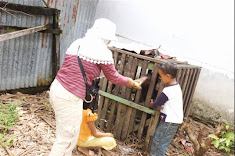
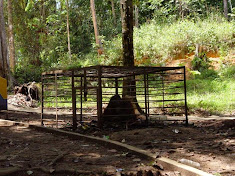

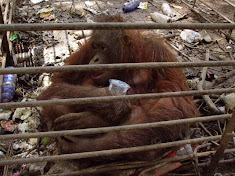



-a.jpg)


