
Saturday, 13 September 2008
Rapid Response Team in action
Earlier this year Orangutan Appeal UK supporters kindly enabled the Centre for Orangutan Protection (COP) to obtain their first APE CRUSADER Rapid Response Vehicle. Since when it has been in constant use with the COP team rescuing orangutans, tracking illegal loggers, investigating palm oil companies, 24/7.


Time for a break
After four continuous months of criss-crossing Borneo the truck undergoes its first full service.


Putting palm oil companies squarely in the frame.
A well attended Centre for Orangutan Protection Press Conference in Jakarta just over one week ago. Please see below for details.


Giving it to the media - straight.
Hardi is seen here explaining some of the problems to the attentive media audience.


Press Release
The deforestation photos below all relate to this
Press Release issued by the Centre for Orangutan Protection.
PRESS RELEASE
FOR IMMEDIATE RELEASE
RSPO MAIN THREAT TO ORANGUTANS
Jakarta, September 4th, 2008
GAPKI rejection of a proposed moratorium on forest and peatland conversion is a serious threat to the existence of orangutans (Pongo Pygmaeus) in Kalimantan. GAPKI’s argument that the criteria and principles for sustainable palm oil production have been sufficiently set forth by Roundtable on Sustainable Palm Oil (RSPO) does not guarantee that palm oil companies will not harm orangutans and their habitats.
“The fact is that there is no proven link between RSPO guidelines and forest clearing for oil palm plantations. While the criteria and principles for environmentally friendly oil palm plantations are regularly discussed and revised in every RSPO annual meeting, forest is continually cleared and orangutans are killed in every single year by members of RSPO. This is ironic”, said Novi Hardianto, Habitat Program Manager from Centre for Orangutan Protection (COP)
Recent investigation by COP in concession area of Agro Group and IOI Group, both are members of RSPO, in Kotawaringin Timur District in Central Kalimantan Province found that both companies had cleared the forest and caused harm to orangutans.
Between 2006-2007, at least 50 orangutans had to be evacuated from the concession area of PT. Agro Bukit by a joint rescue team from Department of Forestry and Borneo Orangutan Survival (BOS) Foundation. Agro Bukit Ltd., a subsidiary of Agro Group is a member of RSPO since August 18th, 2006.
Rather than letting the orangutans to be killed as they frighten the plantation workers and are often seen as pest, evacuation is the best option so far. In May 4th, 2007, investigators had got evidences of an orangutan mother who was captured by Agro Bukit workers and confined inside a wooden box.
This orangutan mother was severely injured on her head and was likely attacked using hoe. Regrettably, Department of Forestry hardly could do anything to enforce the law towards the persons or management responsible for this cruelty.
Ironically, Department of Forestry had received 60 millions rupiah from Agro Group to fund its Workshop on Orangutan Action Plan held in Palangka Raya on August 12th – 13th, 2008. This workshop was an initiative of USAID funded-Orangutan Conservation Service Program (OCSP).
Coincidentally, Agro Wana Lestari Ltd, another subsidiary of Agro Group, had cleared the forest in Kuala Kuayan, Central Kalimantan. Its concession area bought from the Indonesian Government encompasses 20000 hectares of forest. Between August 2nd-7th, 2008 COP volunteers together with 14 local people have documented the biodiversity in the area around Bukit Sentuai - Kuala Kuayan.
The team found nests, footprints, food remains and sounds indicating the presence of rare and protected wild animals such as orangutans (Pongo pygmaeus), sun bear (Helarctos malayanus), Tarsier (Tarsius bancanus) , Borneo gibbon (Hylobates muelleri) and Bornean Slow Loris or coucang (Nycticebus menagensis).
It is therefore questionable that there was no report from the company indicating the presence of orangutans and other wild animals to BOS Foundation and Department of Forestry as the company had cleared the forest in the area around Bukit Sentuai ie. Kaminting, Tilap, Tanahluan, Penyahuan, Sapia, Tewamara dan Tumbang Panyang villages. Bukit Sentuai has been regarded as a sacred area according to local Dayak culture.
Still in the Kotawaringin Timur District, IOI Group is also continually cleared the forest for its expanding oil palm plantation. During the fifth RSPO annual meeting in Kuala Lumpur on November 18th, 2007, a rescue team of BOS Foundation and Department of Forestry were untiringly evacuated the remaining orangutans in the concession area of Karya Makmur Bahagia Ltd., a subsidiary of IOI Group in Antang Kalang, Central Kalimantan.
The rescued orangutans were then transferred to another forest area which had not been yet cleared and designated as the company protected area. But the facts spoke differently, as in July 2008 BOS Foundation and Department of Forestry had to re-evacuate the orangutans because their newly habitat was also cleared off for new oil palm plantations area.
In conclusion, COP observes that RSPO has become a tool to deceive the public and legitimize the environmental crimes committed by oil palm companies towards orangutans and their habitats. Allowing this would make COP prediction, that orangutans outside conservation area in Central Kalimantan would be extinct in the next 3 years, to become a reality.
Notes for Editors:
Based on Population and Habitat Viability (PHVA) 2004, the total population of orangutans in Kalimantan is 54567. With the extinction rate of 9% a year or 5325 orangutans a year, the total number of orangutans in 2008 would be 37 275. Particularly in Central Kalimantan, there were 31300 orangutans in 2004. With the extinction rate of 9% a year or 2817 orangutans a year, the total number of orangutans in 2008 would be 20032. From this number, there are 8631 orangutans live outside conservation areas which are often under threat and their habitats could be destroyed for oil palm plantation at anytime. With the extinction rate of 2,817 orangutans a year, orangutans living outside conservation area will be extinct from the wildlife within the next 3 years.
GAPKI Executive Derom Bangun, in a meeting initiated by Greenpeace South East Asia in Jakarta, Selasa (26/8) stated ”We do not need to join the moratorium, the more important is to protect the environment according to RSPO principles”.
HARDI BAKTIANTORO
and orangutan
Press Release issued by the Centre for Orangutan Protection.
PRESS RELEASE
FOR IMMEDIATE RELEASE
RSPO MAIN THREAT TO ORANGUTANS
Jakarta, September 4th, 2008
GAPKI rejection of a proposed moratorium on forest and peatland conversion is a serious threat to the existence of orangutans (Pongo Pygmaeus) in Kalimantan. GAPKI’s argument that the criteria and principles for sustainable palm oil production have been sufficiently set forth by Roundtable on Sustainable Palm Oil (RSPO) does not guarantee that palm oil companies will not harm orangutans and their habitats.
“The fact is that there is no proven link between RSPO guidelines and forest clearing for oil palm plantations. While the criteria and principles for environmentally friendly oil palm plantations are regularly discussed and revised in every RSPO annual meeting, forest is continually cleared and orangutans are killed in every single year by members of RSPO. This is ironic”, said Novi Hardianto, Habitat Program Manager from Centre for Orangutan Protection (COP)
Recent investigation by COP in concession area of Agro Group and IOI Group, both are members of RSPO, in Kotawaringin Timur District in Central Kalimantan Province found that both companies had cleared the forest and caused harm to orangutans.
Between 2006-2007, at least 50 orangutans had to be evacuated from the concession area of PT. Agro Bukit by a joint rescue team from Department of Forestry and Borneo Orangutan Survival (BOS) Foundation. Agro Bukit Ltd., a subsidiary of Agro Group is a member of RSPO since August 18th, 2006.
Rather than letting the orangutans to be killed as they frighten the plantation workers and are often seen as pest, evacuation is the best option so far. In May 4th, 2007, investigators had got evidences of an orangutan mother who was captured by Agro Bukit workers and confined inside a wooden box.
This orangutan mother was severely injured on her head and was likely attacked using hoe. Regrettably, Department of Forestry hardly could do anything to enforce the law towards the persons or management responsible for this cruelty.
Ironically, Department of Forestry had received 60 millions rupiah from Agro Group to fund its Workshop on Orangutan Action Plan held in Palangka Raya on August 12th – 13th, 2008. This workshop was an initiative of USAID funded-Orangutan Conservation Service Program (OCSP).
Coincidentally, Agro Wana Lestari Ltd, another subsidiary of Agro Group, had cleared the forest in Kuala Kuayan, Central Kalimantan. Its concession area bought from the Indonesian Government encompasses 20000 hectares of forest. Between August 2nd-7th, 2008 COP volunteers together with 14 local people have documented the biodiversity in the area around Bukit Sentuai - Kuala Kuayan.
The team found nests, footprints, food remains and sounds indicating the presence of rare and protected wild animals such as orangutans (Pongo pygmaeus), sun bear (Helarctos malayanus), Tarsier (Tarsius bancanus) , Borneo gibbon (Hylobates muelleri) and Bornean Slow Loris or coucang (Nycticebus menagensis).
It is therefore questionable that there was no report from the company indicating the presence of orangutans and other wild animals to BOS Foundation and Department of Forestry as the company had cleared the forest in the area around Bukit Sentuai ie. Kaminting, Tilap, Tanahluan, Penyahuan, Sapia, Tewamara dan Tumbang Panyang villages. Bukit Sentuai has been regarded as a sacred area according to local Dayak culture.
Still in the Kotawaringin Timur District, IOI Group is also continually cleared the forest for its expanding oil palm plantation. During the fifth RSPO annual meeting in Kuala Lumpur on November 18th, 2007, a rescue team of BOS Foundation and Department of Forestry were untiringly evacuated the remaining orangutans in the concession area of Karya Makmur Bahagia Ltd., a subsidiary of IOI Group in Antang Kalang, Central Kalimantan.
The rescued orangutans were then transferred to another forest area which had not been yet cleared and designated as the company protected area. But the facts spoke differently, as in July 2008 BOS Foundation and Department of Forestry had to re-evacuate the orangutans because their newly habitat was also cleared off for new oil palm plantations area.
In conclusion, COP observes that RSPO has become a tool to deceive the public and legitimize the environmental crimes committed by oil palm companies towards orangutans and their habitats. Allowing this would make COP prediction, that orangutans outside conservation area in Central Kalimantan would be extinct in the next 3 years, to become a reality.
Notes for Editors:
Based on Population and Habitat Viability (PHVA) 2004, the total population of orangutans in Kalimantan is 54567. With the extinction rate of 9% a year or 5325 orangutans a year, the total number of orangutans in 2008 would be 37 275. Particularly in Central Kalimantan, there were 31300 orangutans in 2004. With the extinction rate of 9% a year or 2817 orangutans a year, the total number of orangutans in 2008 would be 20032. From this number, there are 8631 orangutans live outside conservation areas which are often under threat and their habitats could be destroyed for oil palm plantation at anytime. With the extinction rate of 2,817 orangutans a year, orangutans living outside conservation area will be extinct from the wildlife within the next 3 years.
GAPKI Executive Derom Bangun, in a meeting initiated by Greenpeace South East Asia in Jakarta, Selasa (26/8) stated ”We do not need to join the moratorium, the more important is to protect the environment according to RSPO principles”.
HARDI BAKTIANTORO
and orangutan
Telling it how it is.
Novi, Senior Field/Forest Investigator for the Centre for Orangutan Protection being interviewed by the Indonesian media.


Giving a helping hand to orangutans.
The Centre for Orangutan Protection (COP) reaches out to school children like no other organisation does. Once the children understand the problems and solutions they immediately become Goodwill Ambassadors for orangutans and rainforests. The man to the right is COP's Senior Field/Forest Investigator.


Reaching out to children.
The Centre for Orangutan Protection (COP) is increasingly active in local schools throughout central Borneo. Children like these would never see a wild orangutan, so before we can expect them to understand why 'their' great ape and the rainforests should be protected, first they need to be taught the reasons.


Could wood like this end up as furniture in your home?
Many palm oil companies absolutely love wood! Which is one reason why they like to chop down rainforests at such an alarming rate. Why? Because selling off the wood makes them a big fat and quick profit - long before a palm oil seedling bears fruit. In fact, many companies have bought land from the government for developing palm oil plantations.
First they log all the forest. Then they disappear without planting a single palm oil seed. They have made a quick profit and cleared off, even closing down their company - only to open up another one under a different name and start all over again. In July of this year I was driven across central Borneo for about eight hours without seeing a single piece of forest. Welcome to Borneo 2008.

First they log all the forest. Then they disappear without planting a single palm oil seed. They have made a quick profit and cleared off, even closing down their company - only to open up another one under a different name and start all over again. In July of this year I was driven across central Borneo for about eight hours without seeing a single piece of forest. Welcome to Borneo 2008.

Making way for even more palm oil plantations.
The pace of rainforest destruction is both frantic and relentless. It continues with a sense of something like 'gold fever'; 'let's grab as much as we can now, before our competitors do and ....before it's all gone.


Palm oil company destroys orangutan habitat.
In the distance can be seen orangutan habitat recently cleared by a palm oil company. SHAME ON THE COMPANY AND THE MINISTRY OF FORESTRY.
Photo: Centre for Orangutan Protection

Photo: Centre for Orangutan Protection


Victory!
This orangutan inhabited forest has been saved from a palm oil company by the Centre for Orangutan Protection.
Photo: Centre for Orangutan Protection

Photo: Centre for Orangutan Protection


EU accused over failure to tackle illegal logging
EU accused over failure to tackle illegal logging
The EU has been accused of abandoning laws to end illegal logging as campaigners claim the commission is undermining its green credentials.
By Louise Gray, Environment Correspondent Sep 2008
The Telegraph UK
Deforestation accounts for 20 per cent of all greenhouse gas emissions
Europe is the largest market for timber in the world. However, up to a fifth of imports are illegally felled from protected rainforests.
The European Commission was meant to bring forward legislation this week to end the trade inside EU borders.
But the vote was delayed and environment groups now fear it could be years before any decision is made.
Leading environmental groups including the World Wildlife Fund, Greenpeace and Friends of the Earth have written to President of the EU Manuel Barroso to demand legislation is brought forward.
Deforestation accounts for 20 per cent of all greenhouse gas emissions, more carbon dioxide than is produced by all worldwide transport, and the group fear that the EU's inaction on illegal logging signals wider complacency over climate change.
DIY wooden goods, furniture, paper and pulp are a massive market in Europe and environnmentalists fear the delay is being caused by pressure from industry groups as well as wrangling over the right way forward for legislation.
In a strongly-worded letter the group claim that the US is ahead of the EU in controlling illegal timber and any further delay will "jeopardize EU leadership" on environmental matters.
It read: "We are gravely concerned that the EU's response towards the pressing problem of deforestation, illegal logging and related trade has been repeatedly delayed for no apparent reason. We believe that it is in the EU's interests to establish a level playing field and to support progressive companies rather than to tolerate bad practice by inaction."
Barry Gardiner, the Prime Minister's special envoy on forestry, said the legislation has been repeatedly "fudged" and now risks being abandoned altogether.
Owen Espley, forests campaigner at Friends of the Earth, said: "It is very important that the EU shows leadership in eradicating the market for illegal timber in Europe.
If they do not we can expect the deforestation to continue, forest communities to lose their homes and livelihoods and the corruption and human rights abuses around illegal logging to get worse."
Deforestation was came to the fore this week after Prince Charles called on the City to set up financial markets to protect the rainforest.
The EU has been accused of abandoning laws to end illegal logging as campaigners claim the commission is undermining its green credentials.
By Louise Gray, Environment Correspondent Sep 2008
The Telegraph UK
Deforestation accounts for 20 per cent of all greenhouse gas emissions
Europe is the largest market for timber in the world. However, up to a fifth of imports are illegally felled from protected rainforests.
The European Commission was meant to bring forward legislation this week to end the trade inside EU borders.
But the vote was delayed and environment groups now fear it could be years before any decision is made.
Leading environmental groups including the World Wildlife Fund, Greenpeace and Friends of the Earth have written to President of the EU Manuel Barroso to demand legislation is brought forward.
Deforestation accounts for 20 per cent of all greenhouse gas emissions, more carbon dioxide than is produced by all worldwide transport, and the group fear that the EU's inaction on illegal logging signals wider complacency over climate change.
DIY wooden goods, furniture, paper and pulp are a massive market in Europe and environnmentalists fear the delay is being caused by pressure from industry groups as well as wrangling over the right way forward for legislation.
In a strongly-worded letter the group claim that the US is ahead of the EU in controlling illegal timber and any further delay will "jeopardize EU leadership" on environmental matters.
It read: "We are gravely concerned that the EU's response towards the pressing problem of deforestation, illegal logging and related trade has been repeatedly delayed for no apparent reason. We believe that it is in the EU's interests to establish a level playing field and to support progressive companies rather than to tolerate bad practice by inaction."
Barry Gardiner, the Prime Minister's special envoy on forestry, said the legislation has been repeatedly "fudged" and now risks being abandoned altogether.
Owen Espley, forests campaigner at Friends of the Earth, said: "It is very important that the EU shows leadership in eradicating the market for illegal timber in Europe.
If they do not we can expect the deforestation to continue, forest communities to lose their homes and livelihoods and the corruption and human rights abuses around illegal logging to get worse."
Deforestation was came to the fore this week after Prince Charles called on the City to set up financial markets to protect the rainforest.
From Tengku Noor Shamsiah Tengku Abdullah
From Tengku Noor Shamsiah Tengku Abdullah
BRUSSELS, 12 Sept (Bernama) -- The Malaysian Palm Oil Council (MPOC) has been working hard for the past three years to promote palm oil in Europe, its chief executive officer Tan Sri Datuk Dr Yusof Basiron said."As far as MPOC is concerned, we have been working to position palm oil in a very favourable way for the last three years," he told Bernama on the sidelines of the Joint Ministerial Mission here Friday.
He said MPOC helped to organise the mission to the European Union (EU) to help overcome problems like the import of palm oil into Europe following the issuance of the EU's directives.
"The mission, from Sept 7-15 and led by Minister of Plantation Industries and Commodities, Datuk Peter Chin Fah Kui, came here to meet the relevant authorities, including the commissioners and the chairmen of various committees, to voice our opposition to the impending legislation or directives that will affect palm oil sales to Europe," he said.
On the proposed EU legislation, he said: "We knew they will be putting a lot of barriers to palm oil's entry into Europe."Yusof said the EU was doing this for reasons like its concern for environment and to ensure palm oil would be not eligible to participate in its biodiesel industry so that it did not have to pay subsidies to the Malaysian exporters.
"The ultimate intention is well-known but of course is not written. What they write are technical issues in the directives that will automatically disqualify palm oil."They miscalculated or purposely put a very low carbon emission saving percentage figure for palm oil which is below their threshold figure of 35 percent," he said.
He said palm oil was given 32 percent so that it would be automatically disqualified from having access to biofuel market in the EU."This is a clever design and we are opposing it because the figure is actually not scientific-based," he said.Yusof said the MPOC had engaged a public relations firm to explain the developments and managed to arrange meetings with various authorities in Europe to explain the country's views.-- BERNAMA
BRUSSELS, 12 Sept (Bernama) -- The Malaysian Palm Oil Council (MPOC) has been working hard for the past three years to promote palm oil in Europe, its chief executive officer Tan Sri Datuk Dr Yusof Basiron said."As far as MPOC is concerned, we have been working to position palm oil in a very favourable way for the last three years," he told Bernama on the sidelines of the Joint Ministerial Mission here Friday.
He said MPOC helped to organise the mission to the European Union (EU) to help overcome problems like the import of palm oil into Europe following the issuance of the EU's directives.
"The mission, from Sept 7-15 and led by Minister of Plantation Industries and Commodities, Datuk Peter Chin Fah Kui, came here to meet the relevant authorities, including the commissioners and the chairmen of various committees, to voice our opposition to the impending legislation or directives that will affect palm oil sales to Europe," he said.
On the proposed EU legislation, he said: "We knew they will be putting a lot of barriers to palm oil's entry into Europe."Yusof said the EU was doing this for reasons like its concern for environment and to ensure palm oil would be not eligible to participate in its biodiesel industry so that it did not have to pay subsidies to the Malaysian exporters.
"The ultimate intention is well-known but of course is not written. What they write are technical issues in the directives that will automatically disqualify palm oil."They miscalculated or purposely put a very low carbon emission saving percentage figure for palm oil which is below their threshold figure of 35 percent," he said.
He said palm oil was given 32 percent so that it would be automatically disqualified from having access to biofuel market in the EU."This is a clever design and we are opposing it because the figure is actually not scientific-based," he said.Yusof said the MPOC had engaged a public relations firm to explain the developments and managed to arrange meetings with various authorities in Europe to explain the country's views.-- BERNAMA
Malaysia, Indonesia want EU to consider their views
Malaysia, Indonesia want EU to consider their views
BRUSSELS: Malaysia and Indonesia want the European Union (EU) to consider their views pertaining to its directives on renewable energy and fuel quality, especially on the use of palm oil for the production of biofuel.
“Malaysia and Indonesia jointly account for 85 per cent of global palm oil production. Therefore we hope the EU acknowledges and give us a chance to be heard,” said Minister of Plantation Industries and Commodities, Datuk Peter Chin Fah Kui.
Chin said this to Malaysian and Indonesian journalists at joint press conference between both countries at the EU Parliament House here yesterday.
Earlier, Malaysia and Indonesia had a joint Roundtable Discussions with members of the European Parliament.
The discussion was chaired by Miroslav Ouzky, a member of EU Parliament.
Chin led the Malaysian delegation and Indonesia by Dr Anton Apriyantono, Minister of Agriculture.
In a joint communique issued after the roundtable, Malaysia and Indonesia expressed concern on the proposed emission savings for palm-based biodiesel in the EU directives on renewal energy which were below the specified threshold value of 35 per cent.
“This will exclude palm oil and impose onerous requirements to provide actual data for each and every consignment of palm oil or biodiesel exported to the EU.
“The value set by the EU was based on secondary data, which may not be representative of the current scenario,” Chin said.
On the implementation date of January 2008, he said both countries agreed that the EU directives, being a piece of legislation, should be effective prospectively and not retrospectively as this would be unfair to economic operators.
Chin said both countries proposed a grace period of three years after the directives came into force.
On the imposition of off-limit areas such as high carbon stock, high biodiversity and continuously deforested areas, both countries wished to reiterate the principle that this could not overrule the national policies and regulations on their utilisation as this was regarded as sovereign rights.
He said the definitions of ‘forest’ and ‘deforestation’ were not clear and appeared to prevent the replanting of tree crops, such as rubber to palm oil which both countries believed were not the intention of the directives.
Chin said there was no clear definitions of ‘high biodiversity grass land’ and ‘continuously forested area’.
“The methods of defining higher biodiversity and high carbon stock are not available in the directives.
“The directives were more focused on the environmental (planet) aspect rather than taking into account the other two factors i.e. people and profit as provided for under the Roundtable on Sustainable Palm Oil,” he said.
On the issue of food versus fuel, Chin said, both countries reiterated their agreement that no more than six million tonnes of crude palm oil would be allocated for fuel purposes.
“However, it is the prerogative of importing countries to balance the usage of palm oil between food and fuel,” he said.
Last year, Malaysia produced 15.82 million tonnes of crude palm oil, while Indonesia’s output was 16.9 million tonnes.
Chin and Anton were satisfied at the outcome of the Roundtable Discussions.
— Bernama
BRUSSELS: Malaysia and Indonesia want the European Union (EU) to consider their views pertaining to its directives on renewable energy and fuel quality, especially on the use of palm oil for the production of biofuel.
“Malaysia and Indonesia jointly account for 85 per cent of global palm oil production. Therefore we hope the EU acknowledges and give us a chance to be heard,” said Minister of Plantation Industries and Commodities, Datuk Peter Chin Fah Kui.
Chin said this to Malaysian and Indonesian journalists at joint press conference between both countries at the EU Parliament House here yesterday.
Earlier, Malaysia and Indonesia had a joint Roundtable Discussions with members of the European Parliament.
The discussion was chaired by Miroslav Ouzky, a member of EU Parliament.
Chin led the Malaysian delegation and Indonesia by Dr Anton Apriyantono, Minister of Agriculture.
In a joint communique issued after the roundtable, Malaysia and Indonesia expressed concern on the proposed emission savings for palm-based biodiesel in the EU directives on renewal energy which were below the specified threshold value of 35 per cent.
“This will exclude palm oil and impose onerous requirements to provide actual data for each and every consignment of palm oil or biodiesel exported to the EU.
“The value set by the EU was based on secondary data, which may not be representative of the current scenario,” Chin said.
On the implementation date of January 2008, he said both countries agreed that the EU directives, being a piece of legislation, should be effective prospectively and not retrospectively as this would be unfair to economic operators.
Chin said both countries proposed a grace period of three years after the directives came into force.
On the imposition of off-limit areas such as high carbon stock, high biodiversity and continuously deforested areas, both countries wished to reiterate the principle that this could not overrule the national policies and regulations on their utilisation as this was regarded as sovereign rights.
He said the definitions of ‘forest’ and ‘deforestation’ were not clear and appeared to prevent the replanting of tree crops, such as rubber to palm oil which both countries believed were not the intention of the directives.
Chin said there was no clear definitions of ‘high biodiversity grass land’ and ‘continuously forested area’.
“The methods of defining higher biodiversity and high carbon stock are not available in the directives.
“The directives were more focused on the environmental (planet) aspect rather than taking into account the other two factors i.e. people and profit as provided for under the Roundtable on Sustainable Palm Oil,” he said.
On the issue of food versus fuel, Chin said, both countries reiterated their agreement that no more than six million tonnes of crude palm oil would be allocated for fuel purposes.
“However, it is the prerogative of importing countries to balance the usage of palm oil between food and fuel,” he said.
Last year, Malaysia produced 15.82 million tonnes of crude palm oil, while Indonesia’s output was 16.9 million tonnes.
Chin and Anton were satisfied at the outcome of the Roundtable Discussions.
— Bernama
Government to audit forestry companies' wood stocks
Friday, September 12, 2008
Government to audit forestry companies' wood stocks
The Jakarta Post , Jakarta Fri, 09/12/2008
Forestry companies will be required to have their wood stocks inspected from the very beginning of the purchasing chain, to help ensure the companies do not receive stocks from illegally felled timber.
Hadi Pasaribu, the Forestry Ministry's director general for the management of forestry production, said the ministry would appoint several independent assessor companies to verify the flow of the wood from upstream to downstream.
"The new verification system will involve all stakeholders, including NGOs," Hadi said.
The new system, dubbed the Wood Legality Verification System (SVLK), is expected to replace the current system run by the Forestry Industry Revitalization Agency (BRIK), which only inspects legal documents for the wood.
Under the proposed system, assessors will be deployed to conduct field checks on forests where the wood is logged.
Companies that use timber as a raw material are also required to report the origin of their wood supplies to the government for legal certification. Those failing to comply will risk being prosecuted or losing their operating licenses.
Taufik Alamin, Indonesian Ecolabeling Institute (LEI) executive director, said the new system was necessary because several importing countries, including Britain and Japan, required documents certifying the legality of the wood and the sustainability of the forests as the source of the wood.
LEI spokesperson Indra Setiadewi said the independent assessors would also function as watchdogs, legality verifiers, and license authorities.
Indonesia is on the losing side in a battle against illegal logging, despite an intense crackdown by authorities.
Widespread illegal logging stems from the huge gap between supply and demand, luring the poor and unemployed in remote areas in Kalimantan and Sumatra to plunder forests to meet orders from local and foreign tycoons.
Indonesia's timber demand this year is predicted to reach 30 million cubic meters, while the logging quota has already been set at 9.1 million cubic meters by the ministry.
According to the ministry, there are 324 logging permit holders, with the capacity to retrieve 22 million cubic meters of timber per year.
The Indonesian Forum of Environment (WALHI) claims more than 2.8 million hectares of woods are illegally logged each year.
Indonesia has the second-largest area of rainforest in the world after Brazil.
LEI and local NGOs have worked on the verification system for the past five years, since the Indonesian and British governments signed a memorandum of understanding in 2003 to tackle illegal logging.
Robianto Koestomo, Indonesian Wood Panel Association (Apkindo) chairman, argued the business sector did not need another verification system.
"It will only give us more bureaucracy and unnecessary additional costs," he said.
Taufik, however, said businesses did not have to worry about the new system because it would allow them to lodge their protests with a special institution. (KLP)
Government to audit forestry companies' wood stocks
The Jakarta Post , Jakarta Fri, 09/12/2008
Forestry companies will be required to have their wood stocks inspected from the very beginning of the purchasing chain, to help ensure the companies do not receive stocks from illegally felled timber.
Hadi Pasaribu, the Forestry Ministry's director general for the management of forestry production, said the ministry would appoint several independent assessor companies to verify the flow of the wood from upstream to downstream.
"The new verification system will involve all stakeholders, including NGOs," Hadi said.
The new system, dubbed the Wood Legality Verification System (SVLK), is expected to replace the current system run by the Forestry Industry Revitalization Agency (BRIK), which only inspects legal documents for the wood.
Under the proposed system, assessors will be deployed to conduct field checks on forests where the wood is logged.
Companies that use timber as a raw material are also required to report the origin of their wood supplies to the government for legal certification. Those failing to comply will risk being prosecuted or losing their operating licenses.
Taufik Alamin, Indonesian Ecolabeling Institute (LEI) executive director, said the new system was necessary because several importing countries, including Britain and Japan, required documents certifying the legality of the wood and the sustainability of the forests as the source of the wood.
LEI spokesperson Indra Setiadewi said the independent assessors would also function as watchdogs, legality verifiers, and license authorities.
Indonesia is on the losing side in a battle against illegal logging, despite an intense crackdown by authorities.
Widespread illegal logging stems from the huge gap between supply and demand, luring the poor and unemployed in remote areas in Kalimantan and Sumatra to plunder forests to meet orders from local and foreign tycoons.
Indonesia's timber demand this year is predicted to reach 30 million cubic meters, while the logging quota has already been set at 9.1 million cubic meters by the ministry.
According to the ministry, there are 324 logging permit holders, with the capacity to retrieve 22 million cubic meters of timber per year.
The Indonesian Forum of Environment (WALHI) claims more than 2.8 million hectares of woods are illegally logged each year.
Indonesia has the second-largest area of rainforest in the world after Brazil.
LEI and local NGOs have worked on the verification system for the past five years, since the Indonesian and British governments signed a memorandum of understanding in 2003 to tackle illegal logging.
Robianto Koestomo, Indonesian Wood Panel Association (Apkindo) chairman, argued the business sector did not need another verification system.
"It will only give us more bureaucracy and unnecessary additional costs," he said.
Taufik, however, said businesses did not have to worry about the new system because it would allow them to lodge their protests with a special institution. (KLP)
Hunting the biggest threat to Orangutan`s survival
09/13/08
Hunting the biggest threat to Orangutan`s survival
Medan, N Sumatra, (ANTARA News) - Wildlife hunting is still the biggest threat to the survival of the orangutan, a researcher said. Wildlife hunting has been practiced since the 19th century mainly to improve one`s economic welbeing, and often also for the flesh of the big ape.
Field and Research Assistant Manager of the Sumatran Orangutan Conservation Programme (SOCP) Asril said here Friday the species collected for scientific purposes by the foreign scientists in the 19th and 20th centuries had also caused the orangutan to become an endangered species in Indonesia.
"The most distinct impact of the hunting is a drop in the orangutan population, bringing the big apes closer to extinction," he said.Based on the result of the Population And Habitat Viability Analysis (PHVA) Workshop, the number of orangutans has been predicted to reach only 58.300, including 51.000 of them in the Kalimantan forests, and the rest in Sumatra.
Lately, Asril said, the orangutans confiscated by the Ministry of Forestry is mostly from the legally well-informed people like government officials, military and entrepreneurs, which is a very deplorable situation."They make orangutans their pets, because they think orangutans are adorable and can entertain them," he said.
Damage in their habitat caused by the conservation of forests into farmland, illegal logging and forest fires have the same impact as that of hunting orangutans.(*)
COPYRIGHT © 2008
Hunting the biggest threat to Orangutan`s survival
Medan, N Sumatra, (ANTARA News) - Wildlife hunting is still the biggest threat to the survival of the orangutan, a researcher said. Wildlife hunting has been practiced since the 19th century mainly to improve one`s economic welbeing, and often also for the flesh of the big ape.
Field and Research Assistant Manager of the Sumatran Orangutan Conservation Programme (SOCP) Asril said here Friday the species collected for scientific purposes by the foreign scientists in the 19th and 20th centuries had also caused the orangutan to become an endangered species in Indonesia.
"The most distinct impact of the hunting is a drop in the orangutan population, bringing the big apes closer to extinction," he said.Based on the result of the Population And Habitat Viability Analysis (PHVA) Workshop, the number of orangutans has been predicted to reach only 58.300, including 51.000 of them in the Kalimantan forests, and the rest in Sumatra.
Lately, Asril said, the orangutans confiscated by the Ministry of Forestry is mostly from the legally well-informed people like government officials, military and entrepreneurs, which is a very deplorable situation."They make orangutans their pets, because they think orangutans are adorable and can entertain them," he said.
Damage in their habitat caused by the conservation of forests into farmland, illegal logging and forest fires have the same impact as that of hunting orangutans.(*)
COPYRIGHT © 2008
MPOC Works To Expand Existing Palm Oil Markets
Saturday September 13, 2008
MPOC Works To Expand Existing Palm Oil Markets
From Tengku Noor Shamsiah Tengku AbdullahBRUSSELS, Sept 13 (Bernama) -- The Malaysian Palm Oil Council (MPOC), is in the midst of expanding the existing markets, said its chief executive officer Tan Sri Datuk Dr Yusof Basiron.Apart from Europe, he said the main palm oil export destinations for Malaysia includes the Middle East,the United States, China and India.
"We have officers in these regions who will continue to improve opportunities while trying to reduce the trade barriers."We have also organised many trade fairs and seminars on palm oil to highlight its suitability as an edible oil for use with food products," he told Bernama here on the sidelines of the Joint Ministerial Meeting in Europe.
Yusof is part of a Joint Ministerial Mission to Europe, namely to the Hague, Brussels and London, led by the Minister of Plantation Industries and Commodities Datuk Peter Chin Fah Kui.The nine-day mission which began on Sept 7 is co-organised by the Malaysian Palm Oil Council (MPOC) and the Malaysian Timber Council (MTC), in an effort to address various issues pertaining to Malaysian palm oil and timber with relevant European stakeholders.
According to Yusof, the MPOC's promotional efforts were ongoing."We also develop new markets by educating countries who may have just come into the edible oil picture. The MPOC does this through awareness programmes on palm oil," he said.According to Yusof, China continues to be the biggest palm oil market, followed by the EU.-- BERNAMA
MPOC Works To Expand Existing Palm Oil Markets
From Tengku Noor Shamsiah Tengku AbdullahBRUSSELS, Sept 13 (Bernama) -- The Malaysian Palm Oil Council (MPOC), is in the midst of expanding the existing markets, said its chief executive officer Tan Sri Datuk Dr Yusof Basiron.Apart from Europe, he said the main palm oil export destinations for Malaysia includes the Middle East,the United States, China and India.
"We have officers in these regions who will continue to improve opportunities while trying to reduce the trade barriers."We have also organised many trade fairs and seminars on palm oil to highlight its suitability as an edible oil for use with food products," he told Bernama here on the sidelines of the Joint Ministerial Meeting in Europe.
Yusof is part of a Joint Ministerial Mission to Europe, namely to the Hague, Brussels and London, led by the Minister of Plantation Industries and Commodities Datuk Peter Chin Fah Kui.The nine-day mission which began on Sept 7 is co-organised by the Malaysian Palm Oil Council (MPOC) and the Malaysian Timber Council (MTC), in an effort to address various issues pertaining to Malaysian palm oil and timber with relevant European stakeholders.
According to Yusof, the MPOC's promotional efforts were ongoing."We also develop new markets by educating countries who may have just come into the edible oil picture. The MPOC does this through awareness programmes on palm oil," he said.According to Yusof, China continues to be the biggest palm oil market, followed by the EU.-- BERNAMA
Thursday, 11 September 2008
Th Great Orangutan Scandal
If you are one of the caring and concerned people who have written at my request to the people I have highlighted on this Blog, thank you once again on behalf of the orangutans - creatures that are unable to help themselves.
As you have probably noticed, the people targeted by your letters have been at best evasive in their answers, or worse they have not even replied.
What does this tell us about those people and the organisations they work for? Do you think they are just plain lazy or couldn't care less? Could they think they are 'untouchable'? Why would some people not reply?
I have to tell you that in my opinion what is happening out in parts of Indonesia regarding orangutan protection/conservation is nothing less than an international scandal.
If, like Nature Alert or the Centre for Orangutan Protection (COP), you try to question or oppose what is happening, you are treated as nothing more than troublemakers. Being based in Indonesia COP is frequently intimidated by people they know, as well as by 'strangers'.
I'm quite sure many of the people I refer to above read this blog. For them there is this news - neither COP or Nature Alert are going to back down and desert the orangutans as you have; our undercover investigators are probably looking at you or your organisation right now, so be afraid, be very afraid. If you know in your heart you are in any way letting down the orangutans or deceiving the public, the chances are - we know who you are.
As you have probably noticed, the people targeted by your letters have been at best evasive in their answers, or worse they have not even replied.
What does this tell us about those people and the organisations they work for? Do you think they are just plain lazy or couldn't care less? Could they think they are 'untouchable'? Why would some people not reply?
I have to tell you that in my opinion what is happening out in parts of Indonesia regarding orangutan protection/conservation is nothing less than an international scandal.
If, like Nature Alert or the Centre for Orangutan Protection (COP), you try to question or oppose what is happening, you are treated as nothing more than troublemakers. Being based in Indonesia COP is frequently intimidated by people they know, as well as by 'strangers'.
I'm quite sure many of the people I refer to above read this blog. For them there is this news - neither COP or Nature Alert are going to back down and desert the orangutans as you have; our undercover investigators are probably looking at you or your organisation right now, so be afraid, be very afraid. If you know in your heart you are in any way letting down the orangutans or deceiving the public, the chances are - we know who you are.
The Inconvenient Orangutans
In July of this year I joined Hardi Baktiantoro of the Centre for Orangutan Conservation Protection (COP) on a investigative visit to amongst other places, Western Kalimantan (Borneo). Our second in six months to this region.
Both then and now, I remain shocked at how so-called conservation groups who proclaim publicly to be helping save orangutans, choose to ignore those in need of urgent help and often close to their own offices - where to my mind their staff appear to spend a lot of their time.
In a town called Pontianak, located in north-west Borneo, there are two orangutans which are 'owned' by a businessman who keeps them in cages
located in a housing complex, which you will see in the photos below.
Hardi and I took fresh fruit, a luxury to them in captivity, on both this occasion and last January. NO, not one, so-called conservation group locally will help these two orangutans or others like them. Who are these groups? Please see below.
To my mind, leaving these orangutans to the fate of this businessman would be nothing less than obscene, inhumane, disgraceful and, if you are receiving public money to save orangutans, then it is also in my opinion a - SCANDAL.
Please will you take a few minutes to view the photos below and if you are moved at all by them, write this very minute, whilst it is still fresh in your mind, to the people I mention above. If you don't, I'm afraid you become just as complicit as those groups I mention - in other words, you will choose NOT to help these and other orangutans.....and could you live with this choice?
--------------------------------------------------------------------------------------
Both then and now, I remain shocked at how so-called conservation groups who proclaim publicly to be helping save orangutans, choose to ignore those in need of urgent help and often close to their own offices - where to my mind their staff appear to spend a lot of their time.
In a town called Pontianak, located in north-west Borneo, there are two orangutans which are 'owned' by a businessman who keeps them in cages
located in a housing complex, which you will see in the photos below.
Hardi and I took fresh fruit, a luxury to them in captivity, on both this occasion and last January. NO, not one, so-called conservation group locally will help these two orangutans or others like them. Who are these groups? Please see below.
To my mind, leaving these orangutans to the fate of this businessman would be nothing less than obscene, inhumane, disgraceful and, if you are receiving public money to save orangutans, then it is also in my opinion a - SCANDAL.
Please will you take a few minutes to view the photos below and if you are moved at all by them, write this very minute, whilst it is still fresh in your mind, to the people I mention above. If you don't, I'm afraid you become just as complicit as those groups I mention - in other words, you will choose NOT to help these and other orangutans.....and could you live with this choice?
--------------------------------------------------------------------------------------
Saving orangutans and a quest for transparency continues.
Who can you write to and voice your own opinion on what you see below? Please scroll on down to see the photos?
The Titian Foundation. A small group of largely volunteers who are largely dependent on funding from an organisation called USAid....who get their money from the US government and taxpayers. Only after strenuous efforts on my part has this rather secretive group revealed what they claim to have achieved with the money in recent years. I was less successful in obtaining any financial reports from either them or USAid. The Titian Foundation know these (and others) orangutans exist, yet refuse to help them. Why not write to this person and ask why:
- will USAid/OCSP insist the Titian Foundation helps these two orangutans immediately, by arranging for them to be confiscated by the Forestry Department (who locally are very helpful) and arrange for them to be sent to a rescue/rehabilitation centre? I'm sure this is what American taxpayers would want and USAid has a multi-million dollar budget for orangutan conservation.
- will USAid also ask the Titian Foundation to rescue other illegally held orangutans in their region?
The person to email is Paul Hartman Paul_Hartman@dai.com and you might copy to hbryer@usaid.gov PLEASE - you don't have to be American to write; so, you will write won't you?
You might also help by writing to Douglas Alexander MP at the UK Department for International Development and ask if they could send you any reports, financial or otherwise, regarding the support they gave to the Titian Foundation (Indonesia) in 2006. email address: enquiry@dfid.gov.uk
------------------------------------------------------------------------------------
The Titian Foundation. A small group of largely volunteers who are largely dependent on funding from an organisation called USAid....who get their money from the US government and taxpayers. Only after strenuous efforts on my part has this rather secretive group revealed what they claim to have achieved with the money in recent years. I was less successful in obtaining any financial reports from either them or USAid. The Titian Foundation know these (and others) orangutans exist, yet refuse to help them. Why not write to this person and ask why:
- will USAid/OCSP insist the Titian Foundation helps these two orangutans immediately, by arranging for them to be confiscated by the Forestry Department (who locally are very helpful) and arrange for them to be sent to a rescue/rehabilitation centre? I'm sure this is what American taxpayers would want and USAid has a multi-million dollar budget for orangutan conservation.
- will USAid also ask the Titian Foundation to rescue other illegally held orangutans in their region?
The person to email is Paul Hartman Paul_Hartman@dai.com and you might copy to hbryer@usaid.gov PLEASE - you don't have to be American to write; so, you will write won't you?
You might also help by writing to Douglas Alexander MP at the UK Department for International Development and ask if they could send you any reports, financial or otherwise, regarding the support they gave to the Titian Foundation (Indonesia) in 2006. email address: enquiry@dfid.gov.uk
------------------------------------------------------------------------------------
Shame on the Ministry of Forestry
The person with the ultimate responsibility for helping these orangutans is Tonny Soehartono of the Ministry of Forestry.
Please will you write and ask him what he and his government are doing to help all the illegally held captive orangutans?
His email address is: tsoehartono@yahoo.com and I recommend you copy your email to his colleague at herrysusilo@yahoo.com
---------------------------------------------------------------
Thank you or caring and helping.
Please will you write and ask him what he and his government are doing to help all the illegally held captive orangutans?
His email address is: tsoehartono@yahoo.com and I recommend you copy your email to his colleague at herrysusilo@yahoo.com
---------------------------------------------------------------
Thank you or caring and helping.
Fruit is plentiful in Indonesia, unless you are an orangutan in captivity.
 Hardi buying fruit for both orangutans. In case you wonder, our visit to the orangutans was 'undercover', so we could not wear COP t-shirts.
Shame on those who refuse to help these orangutans and others like them in DESPERATE need of rescue.
 All over the island of Borneo there are wonderful orangutans chained up in small cages like this one in Pontianak, Western Borneo. All are held illegally, often close to the offices of organisations like WWF and FFI. These same organisations solicit money from people like you to save orangutans, but refuse to help the many unfortunate orangutans in situations like this.
The two orangutans I feature here and below are no more than a few miles from the WWF office. Imagine, how could WWF choose not to help them? And it is a choice they choose to make. WWF raises over £1 million pounds a year for orangutan conservation. Does anyone want to guess at how many orangutans they have saved?
What do you think about this situation?
Some food and comforting goes a long way.

Me feeding as well as trying to comfort "Lupis" - he is such a gentle 'giant'.

"Home Alone"
 Beneath the shelter in that tiny cage lives all alone a 17 year old female orangutan called "Lupis". As you can see, the cage is positioned alongside the rubbish dump used by the local homeowners on this housing estate.
Some long overdue fresh fruit.

These fruits provided a much needed change of diet and equally as important - a refreshing drink. As far as we could see or tell, no drinking water is provided to these orangutans, despite daily temperatures well into the 30's centigrade.


Ignored by many who claim to be conservationists.
 On the same housing complex about some 50 years from "Lupis", lives "Lupus" - he is about nine years old and has lived in this tiny cage all alone for at least 18 months.
WWF, USAid, The Titian Foundation, FFI - amongst others, all choose to leave these orangutans (and others) to suffer.

How can any 'conservation' group prefer to ignore these orangutans?
"Lupus" can be seen here trying to keep out of the blisteringly hot sun, but as you can see from his back, it proves impossible, so he has to 'fry' there, every day.


Just how much worse can it get?
 "Lupus" lives just a couple of feet above this pit, 24/7. As this is in the tropics (actually right on the Equator) you can possibly image the smell and the insect life around the cage above.
How would you like a big chain like this around your neck 24/7?
Remember. A group in receipt of US and UK taxpayers money refuses to help "Lupis" and "Lupus", even though they could - and should. How do you feel about this? 


A life of sheer misery
 Beneath Lupis's cage it looked as if it has not been cleaned out for many years. Rubbish, food remains, faeces, urine, etc, and poor Lupis has to live over this day and night - as well as having only a rusty iron-grid floor to sit on. She has endured this treatment for at least 365 days - so far.
Don't forget, a local group of people sponsored by USAid (taxpayers money)
and the UK government REFUSE TO HELP HER.
Prince believes City can save rainforests
Prince believes City can save rainforests
By Fiona Harvey, Environment Correspondent
Published: September 10 2008
The Prince of Wales will seek tonight to harness City muscle in the fight to preserve the world's rainforests - presenting his initiative as a hard-headed business proposition, not philanthropy.
City grandees including Lord Levene, chairman of Lloyd's of London, Chris Gibson-Smith, chairman of the London Stock Exchange, Robert Swannell, vice-president of Citi Europe, and Stanley Fink, former chief executive of Man Group, will be among 250 attending a Mansion House dinner intended to produce new ideas to generate billions of pounds for conservation efforts.
Prince Charles hopes to convince London's financial community that a healthy return can be made from protecting environmental assets.
The carbon market is supposed to achieve this, but the prince's advisers are concerned that it is not providing enough incentives to invest in protecting the rainforests, which are being destroyed at the rate of an area the size of greater London every day.
In his first big foray into the environmental agenda since his widely dismissed tirade against the evils of GM food last month, he will urge bankers to come up with new ideas to bring market forces to bear on the problem. He will say: "The City of London is famous throughout the world for its inventiveness and its ability to seize opportunities early, and it is these skills that we desperately need now. London's financial institutions have the power to make the whole difference in the battle against climate change."
The carbon market, through which companies are awarded carbon credits for projects that cut emissions, is supposed to provide a financial rationale to invest, as the credits can be sold to companies which are obliged to cut their emissions.
But under current rules it is difficult to obtain credits for preserving existing forests, rather than planting new trees.
This partly reflects fears that the market would be flooded with cheap credits if existing forests were eligible, giving investors little incentive to cut emissions in other ways.
The prince feels that the City is best placed to find ways round these problems, potentially unleashing tens of billions of investment in forests. His charity, the Prince's Rainforests Project, will present the resulting ideas to negotiators working on a treaty to replace the Kyoto protocol by the end of 2009.
According to Mr Fink, if the true worth of tropical forests were reflected in their price no one would cut them down. Deforestation accounts for about a fifth of the world's annual greenhouse gas emissions.
Tropical forests are essential to regulating the world's climate, soaking up carbon and providing oxygen, but they also generate rainfall, providing the water to surrounding regions that makes agriculture possible.
Mr Fink told the Financial Times that services provided by tropical forests ran into trillions of pounds, with each hectare of forest worth about $15,000 (£8,500).
By contrast, such land is worth only about $200 to $400 a hectare when converted to agricultural use.
Financial businesses such as Goldman Sachs, UBS, Jupiter Asset Management and RBS will be represented, joined by industry figures such as James Smith, chairman of Shell; Tom Albanese, chief executive of Rio Tinto; Jeremy Darroch, chief executive of BSkyB; and Steve Easterbrook, chief executive of McDonald's.
Copyright The Financial Times Limited 2008
By Fiona Harvey, Environment Correspondent
Published: September 10 2008
The Prince of Wales will seek tonight to harness City muscle in the fight to preserve the world's rainforests - presenting his initiative as a hard-headed business proposition, not philanthropy.
City grandees including Lord Levene, chairman of Lloyd's of London, Chris Gibson-Smith, chairman of the London Stock Exchange, Robert Swannell, vice-president of Citi Europe, and Stanley Fink, former chief executive of Man Group, will be among 250 attending a Mansion House dinner intended to produce new ideas to generate billions of pounds for conservation efforts.
Prince Charles hopes to convince London's financial community that a healthy return can be made from protecting environmental assets.
The carbon market is supposed to achieve this, but the prince's advisers are concerned that it is not providing enough incentives to invest in protecting the rainforests, which are being destroyed at the rate of an area the size of greater London every day.
In his first big foray into the environmental agenda since his widely dismissed tirade against the evils of GM food last month, he will urge bankers to come up with new ideas to bring market forces to bear on the problem. He will say: "The City of London is famous throughout the world for its inventiveness and its ability to seize opportunities early, and it is these skills that we desperately need now. London's financial institutions have the power to make the whole difference in the battle against climate change."
The carbon market, through which companies are awarded carbon credits for projects that cut emissions, is supposed to provide a financial rationale to invest, as the credits can be sold to companies which are obliged to cut their emissions.
But under current rules it is difficult to obtain credits for preserving existing forests, rather than planting new trees.
This partly reflects fears that the market would be flooded with cheap credits if existing forests were eligible, giving investors little incentive to cut emissions in other ways.
The prince feels that the City is best placed to find ways round these problems, potentially unleashing tens of billions of investment in forests. His charity, the Prince's Rainforests Project, will present the resulting ideas to negotiators working on a treaty to replace the Kyoto protocol by the end of 2009.
According to Mr Fink, if the true worth of tropical forests were reflected in their price no one would cut them down. Deforestation accounts for about a fifth of the world's annual greenhouse gas emissions.
Tropical forests are essential to regulating the world's climate, soaking up carbon and providing oxygen, but they also generate rainfall, providing the water to surrounding regions that makes agriculture possible.
Mr Fink told the Financial Times that services provided by tropical forests ran into trillions of pounds, with each hectare of forest worth about $15,000 (£8,500).
By contrast, such land is worth only about $200 to $400 a hectare when converted to agricultural use.
Financial businesses such as Goldman Sachs, UBS, Jupiter Asset Management and RBS will be represented, joined by industry figures such as James Smith, chairman of Shell; Tom Albanese, chief executive of Rio Tinto; Jeremy Darroch, chief executive of BSkyB; and Steve Easterbrook, chief executive of McDonald's.
Copyright The Financial Times Limited 2008
Tuesday, 9 September 2008
Illegal logging case on trial
09/09/08
Illegal logging case on trial
Jakarta (ANTARA News) - Attorney General Hendarman Supandji explained the illegal logging case in Riau islands and Central Kalimantan, the case under the name of Adjunct Senior Commissioner AS and his colleagues is being handled by the Ketapang Police Station, Western Kalimantan.
The illegal logging case is still on trial, he said in a hearing of the Indonesian House of Representatives` commission III, here, Monday."The policy made for handling the case is by using corruption, he said during the hearing chaired by Trimedia Panjaitan.
Illegal logging case on trial
Jakarta (ANTARA News) - Attorney General Hendarman Supandji explained the illegal logging case in Riau islands and Central Kalimantan, the case under the name of Adjunct Senior Commissioner AS and his colleagues is being handled by the Ketapang Police Station, Western Kalimantan.
The illegal logging case is still on trial, he said in a hearing of the Indonesian House of Representatives` commission III, here, Monday."The policy made for handling the case is by using corruption, he said during the hearing chaired by Trimedia Panjaitan.
Palm oil firms urged to adopt sustainable practices
Jakarta Post, 9th September
Palm oil firms urged to adopt sustainable practices
Blamed for pushing orangutans out of their habitat, palm oil companies are being urged to help conserve the endangered species in Kalimantan.
Lone Droscher-Nielsen, the founder and project manager of Nyaru Menteng Rescue Center in Nyaru Menteng, Central Kalimantan, said more and more orangutans had left their habitat due to damage resulting mostly from forest conversions to industrial timber estates and palm oil plantations.
Most of the orangutans at the rescue center, located some 30 km south of the Central Kalimantan capital Palangka Raya were saved from palm oil plantations in the province, Lone said.
Central Kalimantan is home to some 32,000 orangutans -- more than half of the world's total orangutan population (61,234), she said.
At the world's largest orangutan rescue center, Lone said, there were about 1,000 orangutan in rehabilitation. Many were ready to be released back to forests, but the center had yet to locate suitable and safe forests for them.
In fact, the problem did not only relate to palm oil plantations but to how they do business, Lone said.
"If they ran their agricultural businesses sustainably, there would be no problem," she said, noting that most plantation companies did not adhere to sustainable principles in their work.
Sanjay Upasena, sustainability director of Agro Indomas (a subsidiary of palm oil company Agro Group) said all members of the Roundtable on Sustainable Palm Oil (RSPO) were required to comply with sustainability principles.
"Since becoming a member of the RSPO last year, our company has been in compliance with sustainability principles. It is obligatory for us," he said.
The RSPO defines sustainable palm oil production as an integration of legal compliance and economic viability, as well as environmentally sustainable and socially responsible management and operations.
In keeping with the sustainable practices, Lone said, palm oil plantations should be grown in degraded forests -- but never in primary forests, as this would endanger the environment, including orangutan habitat.
The development of palm oil plantations caused forests to be fragmented, leaving orangutans trapped in limited areas with food shortages, she said.
Lone suggested palm oil companies develop buffer zones around their plantations to accommodate orangutans and develop forest corridors to connect fragmented forests and allow orangutans to roam freely among plantations.
"If they have the will, it is not difficult for this to be done," she said on the sidelines of a workshop held here mid August on implementing the Forestry Ministry's action plan for orangutan conservation.
Edi Suhardi, the corporate social responsibility (CSR) manager of Agro Group, said not all palm oil plantations were to blame for the degradation of orangutan habitat.
"Agro Group has a policy of only growing oil palms in degraded forests. We never develop plantations in primary forests. Also the government, as far as I know, has never approved plantation concessions in primary forests."
But Lone said there were still different definitions of degraded forests.
"We have different definitions of degraded forests. They say that is degraded forest. But for us, it is still quality forest that can support orangutans. All, including the government, need to adopt the same position on this so that the orangutans can be saved," she said.
Orangutan Foundation International (OFI) chairperson Birute Mary Galdikas said palm oil companies should be made responsible for clearing forests.
"They must be made to contribute financially to the conservation of the orangutans, because they have cleared forests (and destroyed orangutan habitat) for their plantations," she said.
-- Benget Besalicto Tnb.
printer
Palm oil firms urged to adopt sustainable practices
Blamed for pushing orangutans out of their habitat, palm oil companies are being urged to help conserve the endangered species in Kalimantan.
Lone Droscher-Nielsen, the founder and project manager of Nyaru Menteng Rescue Center in Nyaru Menteng, Central Kalimantan, said more and more orangutans had left their habitat due to damage resulting mostly from forest conversions to industrial timber estates and palm oil plantations.
Most of the orangutans at the rescue center, located some 30 km south of the Central Kalimantan capital Palangka Raya were saved from palm oil plantations in the province, Lone said.
Central Kalimantan is home to some 32,000 orangutans -- more than half of the world's total orangutan population (61,234), she said.
At the world's largest orangutan rescue center, Lone said, there were about 1,000 orangutan in rehabilitation. Many were ready to be released back to forests, but the center had yet to locate suitable and safe forests for them.
In fact, the problem did not only relate to palm oil plantations but to how they do business, Lone said.
"If they ran their agricultural businesses sustainably, there would be no problem," she said, noting that most plantation companies did not adhere to sustainable principles in their work.
Sanjay Upasena, sustainability director of Agro Indomas (a subsidiary of palm oil company Agro Group) said all members of the Roundtable on Sustainable Palm Oil (RSPO) were required to comply with sustainability principles.
"Since becoming a member of the RSPO last year, our company has been in compliance with sustainability principles. It is obligatory for us," he said.
The RSPO defines sustainable palm oil production as an integration of legal compliance and economic viability, as well as environmentally sustainable and socially responsible management and operations.
In keeping with the sustainable practices, Lone said, palm oil plantations should be grown in degraded forests -- but never in primary forests, as this would endanger the environment, including orangutan habitat.
The development of palm oil plantations caused forests to be fragmented, leaving orangutans trapped in limited areas with food shortages, she said.
Lone suggested palm oil companies develop buffer zones around their plantations to accommodate orangutans and develop forest corridors to connect fragmented forests and allow orangutans to roam freely among plantations.
"If they have the will, it is not difficult for this to be done," she said on the sidelines of a workshop held here mid August on implementing the Forestry Ministry's action plan for orangutan conservation.
Edi Suhardi, the corporate social responsibility (CSR) manager of Agro Group, said not all palm oil plantations were to blame for the degradation of orangutan habitat.
"Agro Group has a policy of only growing oil palms in degraded forests. We never develop plantations in primary forests. Also the government, as far as I know, has never approved plantation concessions in primary forests."
But Lone said there were still different definitions of degraded forests.
"We have different definitions of degraded forests. They say that is degraded forest. But for us, it is still quality forest that can support orangutans. All, including the government, need to adopt the same position on this so that the orangutans can be saved," she said.
Orangutan Foundation International (OFI) chairperson Birute Mary Galdikas said palm oil companies should be made responsible for clearing forests.
"They must be made to contribute financially to the conservation of the orangutans, because they have cleared forests (and destroyed orangutan habitat) for their plantations," she said.
-- Benget Besalicto Tnb.
printer
Pressure mounting to save orangutan
Jakarta Post 9th September
Pressure mounting to save orangutan
Benget Besalicto Tnb., Contributor, Palangka Raya
Pressures are mounting to save endangered orangutans in Central Kalimantan, where most of the world's only great ape lives under increasingly bleak conditions due to declining forests -- their habitat. Aldrianto Priadjati of the Borneo Orangutan Survival (BOS) Foundation said the number of displaced orangutans due to forest conversion for timber estates and agriculture, including palm oil plantations, has increased.
"Currently, there are about 1,000 orangutans being rehabilitated in our orangutan rehabilitation center. Most of them were saved from palm oil plantations," he said.
BOS' Nyaru Menteng, the world's largest orangutan rehabilitation center, is about 30 kilometers south of Palangka Raya, the capital city of Central Kalimantan.
Many of the rehabilitated orangutans have been ready to be released to primary forests. "But it is very difficult for us to find the primary forests for the orangutan to live securely," he said.
He was one of the speakers at an August workshop on the implementation of the strategic and action plans for orangutan conservation.
The workshop was jointly organized by the Forestry Ministry's Natural Resources Conservation Center (BKSDA), BOS, World Wildlife Fund, oil palm company Agro Group, Orangutan Foundation International (OFI), Orangutan Conservation Services Program and the U.S. Agency for International Development. The event aimed to implement orangutan conservation action plans that were launched by the ministry of forestry in Jakarta late last year.
The workshop's participants said the forest's decline was due to rapid conversion of forests into industrial timber estates and agriculture (including palm oil plantations), nonsustainable logging, forest fires and illegal hunting and trading of the species.
According to data from BKSDA, forests have been declining annually between 1 and 1.5 percent in Sumatra and between 1.5 and 2 percent in Kalimantan.
The forests' decline was partly due to the implementation of regional autonomy in 2001, which has given regencies authority to issue any regulation they consider necessary for their respective regencies to attract new investments.
With such authority, many regencies have seen their forests decrease rapidly, bringing catastrophe to many species, including the orangutan.
The rapid conversion of forests, combined with weak enforcement of environmental laws, has also increased the human-orangutan conflicts as many orangutans start seeking food outside of their habitat.
Sanjay Upasena, director of sustainability of Agro Indomas, the subsidiary of Agro Group, said it was not fair to blame the palm oil companies alone for the loss of the orangutan's habitat.
"Not all of them (palm oil companies) ar to blame for the displaced orangutans. In our case, we only use degraded forests for our palm plantations, which formerly belonged to the forest concessionaires (HPH)," he said.
"Most of the orangutans we have were brought by the local people to us. The rest we found entering our palm oil plantations, and to save them we call people from the orangutan rehabilitation center."
Separately, the Indonesian palm oil producers are back in the spotlight this week, with the association rejecting a moratorium call from Greenpeace on land clearing which is threatening to wipe out more than 8,000 orangutans in the next three years, news agency AFP reported last Thursday.
Novi Hardianto of the Center for Orangutan Protection (COP) told AFP the decision to reject the call by Greenpeace means there is no effective mechanism for protecting thousands of orangutans living outside conservation areas.
In rejecting the moratorium, the Indonesian Palm Oil Producers Association argued the standards developed by the Roundtable on Sustainable Palm Oil (RSPO) were enough to protect the species.
However, Novi said land clearing by the companies showed the voluntary standards would do little to arrest the rapid decline of the number of orangutans living outside Central Kalimantan's conservation areas.
"If it keeps up at this rate, we'll see orangutans in this environment wiped out within three years," he was quoted by AFP as saying.
COP estimates 20,032 orangutans live in the wild in Central Kalimantan province and that close to 3,000 of them die every year.
A spokeswoman for the RSPO said the environmental group was entitled to raise any accusations against the companies under its grievance procedures.
"If it is true they (the companies) need to make corrections in the field," Desi Kusmadewi said. "Before they are kicked out as RSPO members, usually the RSPO gives them a chance to correct themselves."
In the workshop, Birute Mary Galdikas, chairwoman of OFI, said the orangutans were facing a bleak future.
"But I'm not saying they cannot be saved. This is possible if all the necessary steps to save the endangered species are taken seriously," Gladikas said, who has been working in Kalimantan for 37 years to conserve the orangutan.
OFI manages the Tanjung Puting protected forests for orangutan in Tanjung Putting, Central Kalimantan. "Orangutans mean people of the forests. If the forests are gone, then the orangutans will also be gone as the forests are their habitat."
Pressure mounting to save orangutan
Benget Besalicto Tnb., Contributor, Palangka Raya
Pressures are mounting to save endangered orangutans in Central Kalimantan, where most of the world's only great ape lives under increasingly bleak conditions due to declining forests -- their habitat. Aldrianto Priadjati of the Borneo Orangutan Survival (BOS) Foundation said the number of displaced orangutans due to forest conversion for timber estates and agriculture, including palm oil plantations, has increased.
"Currently, there are about 1,000 orangutans being rehabilitated in our orangutan rehabilitation center. Most of them were saved from palm oil plantations," he said.
BOS' Nyaru Menteng, the world's largest orangutan rehabilitation center, is about 30 kilometers south of Palangka Raya, the capital city of Central Kalimantan.
Many of the rehabilitated orangutans have been ready to be released to primary forests. "But it is very difficult for us to find the primary forests for the orangutan to live securely," he said.
He was one of the speakers at an August workshop on the implementation of the strategic and action plans for orangutan conservation.
The workshop was jointly organized by the Forestry Ministry's Natural Resources Conservation Center (BKSDA), BOS, World Wildlife Fund, oil palm company Agro Group, Orangutan Foundation International (OFI), Orangutan Conservation Services Program and the U.S. Agency for International Development. The event aimed to implement orangutan conservation action plans that were launched by the ministry of forestry in Jakarta late last year.
The workshop's participants said the forest's decline was due to rapid conversion of forests into industrial timber estates and agriculture (including palm oil plantations), nonsustainable logging, forest fires and illegal hunting and trading of the species.
According to data from BKSDA, forests have been declining annually between 1 and 1.5 percent in Sumatra and between 1.5 and 2 percent in Kalimantan.
The forests' decline was partly due to the implementation of regional autonomy in 2001, which has given regencies authority to issue any regulation they consider necessary for their respective regencies to attract new investments.
With such authority, many regencies have seen their forests decrease rapidly, bringing catastrophe to many species, including the orangutan.
The rapid conversion of forests, combined with weak enforcement of environmental laws, has also increased the human-orangutan conflicts as many orangutans start seeking food outside of their habitat.
Sanjay Upasena, director of sustainability of Agro Indomas, the subsidiary of Agro Group, said it was not fair to blame the palm oil companies alone for the loss of the orangutan's habitat.
"Not all of them (palm oil companies) ar to blame for the displaced orangutans. In our case, we only use degraded forests for our palm plantations, which formerly belonged to the forest concessionaires (HPH)," he said.
"Most of the orangutans we have were brought by the local people to us. The rest we found entering our palm oil plantations, and to save them we call people from the orangutan rehabilitation center."
Separately, the Indonesian palm oil producers are back in the spotlight this week, with the association rejecting a moratorium call from Greenpeace on land clearing which is threatening to wipe out more than 8,000 orangutans in the next three years, news agency AFP reported last Thursday.
Novi Hardianto of the Center for Orangutan Protection (COP) told AFP the decision to reject the call by Greenpeace means there is no effective mechanism for protecting thousands of orangutans living outside conservation areas.
In rejecting the moratorium, the Indonesian Palm Oil Producers Association argued the standards developed by the Roundtable on Sustainable Palm Oil (RSPO) were enough to protect the species.
However, Novi said land clearing by the companies showed the voluntary standards would do little to arrest the rapid decline of the number of orangutans living outside Central Kalimantan's conservation areas.
"If it keeps up at this rate, we'll see orangutans in this environment wiped out within three years," he was quoted by AFP as saying.
COP estimates 20,032 orangutans live in the wild in Central Kalimantan province and that close to 3,000 of them die every year.
A spokeswoman for the RSPO said the environmental group was entitled to raise any accusations against the companies under its grievance procedures.
"If it is true they (the companies) need to make corrections in the field," Desi Kusmadewi said. "Before they are kicked out as RSPO members, usually the RSPO gives them a chance to correct themselves."
In the workshop, Birute Mary Galdikas, chairwoman of OFI, said the orangutans were facing a bleak future.
"But I'm not saying they cannot be saved. This is possible if all the necessary steps to save the endangered species are taken seriously," Gladikas said, who has been working in Kalimantan for 37 years to conserve the orangutan.
OFI manages the Tanjung Puting protected forests for orangutan in Tanjung Putting, Central Kalimantan. "Orangutans mean people of the forests. If the forests are gone, then the orangutans will also be gone as the forests are their habitat."
Sunday, 7 September 2008
Winning 'em over with clean green.
It is good to see some people and companies are responding to public/consumer pressure. BUT. We need to keep in mind that as a country Malaysia is a big importer of illegal logs from Indonesia - and some palm oil companies in Malaysia have financial interests in similar companies across the border in Indonesia.
2008/09/07
Winning ’em over with clean green
RUPA DAMODARAN
Oil palm from trees at United Plantation estates have received the RSPO ‘green’ certification.
The insidious campaign against palm oil by Western ill-informed non-governmental organisations will have to take a back seat with the emergence of ’green oil palm’, writes RUPA DAMODARAN
M.R. Chandran says consumers were beginning to consider the environmental impact of products they buy.
THE good news for palm oil is that Malaysian oil palm plantation companies can wear their responsibility on their corporate sleeves and on their products — the “green” certification.
Issued by the Roundtable for Sustainable Palm Oil (RSPO), this sustainable-accredited palm oil will be offered to European buyers and the global fats and oils market soon by the Malaysian palm oil industry.The first such accreditation was issued to United Plantations Bhd, one of the country’s top plantation companies, late last month.
Can Malaysian palm oil companies now command a premium for this “green oil"?
“Water has a way of finding its level. The premium will, on an industry scale, reflect what additional good the industry has put in, minus whatever they ought to have put in in the first place,” says industry consultant M.R. Chandran.
“It is the ’additionality’ factors or aspects that will matter.”One industry source indicates this will be “in the range of five to 10 per cent of the company’s CPO (crude palm oil) production cost".“Initial cost premiums are always going to be higher with the early adopters, until the market settles and certification becomes the norm, rather than the exception,” he said.
The additional costs incurred by plantation companies in seeking these new standards, specifically related to those above the ISO 14001 general environmental standard, should provide handsome returns.The real, long-term benefits will be from courting investors and shareholders, collateral selling of carbon sequestration credits and variants of Reduction of Emission from Deforestation and Degradation (REDD), says Chandran.
Malaysia has announced that it is ready to supply at least 2.5 million tonnes of this certified palm oil to buyers in Europe and elsewhere.Concern that not all palm oil is being sustainably produced heightened when it was found to be a renewable alternative to fossil fuel.
This prompted global buyers from 140 countries, spearheaded by non-governmental organisations in Europe, to ask for the certification. This came out of the concern that oil palm had adversely affected the natural habitats of orang utans, the need for preservation of virgin forests, the loss of biodiversity as well as increased greenhouse gas emissions.
Palm oil-importing countries, particularly from the European Union, now insist on some kind of guarantee that the palm oil they import comes from plantations and mills with sustainable practices.Dr Vengeta Rao, the secretary-general of the Zurich-registered RSPO, based in Kuala Lumpur, says getting acknowledgement by using RSPO sustainable-accredited palm oil is now the key.
As to whether this form of accreditation was enough to dispel the negative perception that European governments, NGOs and consumers have towards palm oil, Rao says this would depend on how RSPO develops and conducts itself.
“With increasing concerns over climate change and global warming and human impact on natural resources, consumers are, more than ever, considering the environmental impact of products when making purchasing decisions.
”The RSPO, through its multi-stakeholder engagement process over the past half decade, has developed a robust standard for its certification. RSPO stakeholders hail from seven sectors— oil palm growers, palm oil processors and traders, consumer goods manufacturers, retailers, banks, investors, and environmental and social NGOs.This simply means that it is very much up to RSPO to ensure claims that palm oil is “sustainable", “environment-friendly", “green", “carbon-neutral", etc, are genuine.
“RSPO at the outset adopted stringent technical substantiation for such claims by formulating a pragmatic set of eight principles, 39 criteria and nearly 120 guidance indicators as the standard to strengthen the accreditation and certification process.
”Rao indicates that 10 more companies are likely to be accredited through the certification of some or all of their production units, which include mills and fruit supply base (plantations which supply fresh fruit bunches or FFB).This certification process covers a physical audit, the preparation of audit reports and peer review of the reports, all of which can be time consuming.
The lengthy process has prompted some plantation companies to engage more than one certification body to certify their certification units.The RSPO has approved four certification bodies in Malaysia — Control Union Certifications, SGS Malaysia Sdn Bhd, BSI Management Systems Singapore and Sirim QAS International Sdn Bhd.When RSPO announced the principles and criteria this year, a number of Malaysian companies had already conducted several audits.
United Plantations has focused on environmental awareness and responsibility for decades in its 12 plantations, both oil palm and coconut, covering 40,813 hectares in Malaysia. UP also operates six palm oil mills and the Unitata refinery.
The company tries to strike a balance between economy and ecology within the plantation eco-system.It is also strongly committed to its social corporate responsibilities within and around its plantations, which include group hospitals, clinics, housing facilities, creches, schools, places of worship, bakery and an old folks’ home for its more than 6,500 employees and families.UP, which received the Migros Certification by ProForest in 2002, fine-tuned its work culture across its companies’ RSPO Roundtable 5 meeting in Kuala Lumpur last November.
Three business units were created within its oil palm plantations, comprising six oil mills and nine estates, incurring 28,000 man-hours.Sirim QAS International is well-experienced in this regard, having gained the respect from large local and international companies for its certification process.
It has the edge due to the years of involvement in certification in the palm oil sector and its knowledge of local laws, regulations and issues such as the environment, occupational health and safety workers’ rights and issues affecting the local communities as well as agronomy and ecology of oil palm plantations and milling.
Its managing director, Datuk Mariani Mohammad, said audits have been conducted in the oil palm sector according to various management system standards for the past 10 years, with more than 100 companies involved in the palm oil business having been certified.
This makes its task of assessing the RSPO principles and criteria or the supply chain requirements much easier as it would complement their other types of recognition. Sime Darby expects 10 out of its 65 strategic operating units from its 208 oil palm estates in Malaysia and Indonesia to be RSPO certified by the end of the 2007/2008 financial year and the remaining by 2011.Other plantations are also seeking such certification.
Representatives from various plantation groups faced up to the challenges posed by the NGOs and parliamentarians last year while accompanying Plantation Industries and Commodities Minister Datuk Peter Chin to Europe on a mission to counter the smear campaign against palm oil and dispel public misgivings.
Chin leads another mission to Europe today, this time with members of both the palm oil and timber councils, armed with pride that Malaysian plantation companies have taken up the European challenge and met their stringent standards.
It will also raise awareness in the EU that producers, in seeking wider market access for their products, are also concerned about their agronomy, labour laws and pesticide footprint, etc. Rao sees bringing smallholder production under RSPO sustainability-certification as one of the most important challenges ahead.Malaysian plantation companies operating estates in neighbouring Indonesia or Papua New Guinea will also have to face up to this challenge to meet environmental standards by obtaining proper certification.
Palm oil is a major revenue earner for the country. As world population increases, there will be an increasing demand for this versatile wholesome commodity. The industry needs to understand the conflicts involved in production and develop global partnership mechanisms to meet future challenges.
2008/09/07
Winning ’em over with clean green
RUPA DAMODARAN
Oil palm from trees at United Plantation estates have received the RSPO ‘green’ certification.
The insidious campaign against palm oil by Western ill-informed non-governmental organisations will have to take a back seat with the emergence of ’green oil palm’, writes RUPA DAMODARAN
M.R. Chandran says consumers were beginning to consider the environmental impact of products they buy.
THE good news for palm oil is that Malaysian oil palm plantation companies can wear their responsibility on their corporate sleeves and on their products — the “green” certification.
Issued by the Roundtable for Sustainable Palm Oil (RSPO), this sustainable-accredited palm oil will be offered to European buyers and the global fats and oils market soon by the Malaysian palm oil industry.The first such accreditation was issued to United Plantations Bhd, one of the country’s top plantation companies, late last month.
Can Malaysian palm oil companies now command a premium for this “green oil"?
“Water has a way of finding its level. The premium will, on an industry scale, reflect what additional good the industry has put in, minus whatever they ought to have put in in the first place,” says industry consultant M.R. Chandran.
“It is the ’additionality’ factors or aspects that will matter.”One industry source indicates this will be “in the range of five to 10 per cent of the company’s CPO (crude palm oil) production cost".“Initial cost premiums are always going to be higher with the early adopters, until the market settles and certification becomes the norm, rather than the exception,” he said.
The additional costs incurred by plantation companies in seeking these new standards, specifically related to those above the ISO 14001 general environmental standard, should provide handsome returns.The real, long-term benefits will be from courting investors and shareholders, collateral selling of carbon sequestration credits and variants of Reduction of Emission from Deforestation and Degradation (REDD), says Chandran.
Malaysia has announced that it is ready to supply at least 2.5 million tonnes of this certified palm oil to buyers in Europe and elsewhere.Concern that not all palm oil is being sustainably produced heightened when it was found to be a renewable alternative to fossil fuel.
This prompted global buyers from 140 countries, spearheaded by non-governmental organisations in Europe, to ask for the certification. This came out of the concern that oil palm had adversely affected the natural habitats of orang utans, the need for preservation of virgin forests, the loss of biodiversity as well as increased greenhouse gas emissions.
Palm oil-importing countries, particularly from the European Union, now insist on some kind of guarantee that the palm oil they import comes from plantations and mills with sustainable practices.Dr Vengeta Rao, the secretary-general of the Zurich-registered RSPO, based in Kuala Lumpur, says getting acknowledgement by using RSPO sustainable-accredited palm oil is now the key.
As to whether this form of accreditation was enough to dispel the negative perception that European governments, NGOs and consumers have towards palm oil, Rao says this would depend on how RSPO develops and conducts itself.
“With increasing concerns over climate change and global warming and human impact on natural resources, consumers are, more than ever, considering the environmental impact of products when making purchasing decisions.
”The RSPO, through its multi-stakeholder engagement process over the past half decade, has developed a robust standard for its certification. RSPO stakeholders hail from seven sectors— oil palm growers, palm oil processors and traders, consumer goods manufacturers, retailers, banks, investors, and environmental and social NGOs.This simply means that it is very much up to RSPO to ensure claims that palm oil is “sustainable", “environment-friendly", “green", “carbon-neutral", etc, are genuine.
“RSPO at the outset adopted stringent technical substantiation for such claims by formulating a pragmatic set of eight principles, 39 criteria and nearly 120 guidance indicators as the standard to strengthen the accreditation and certification process.
”Rao indicates that 10 more companies are likely to be accredited through the certification of some or all of their production units, which include mills and fruit supply base (plantations which supply fresh fruit bunches or FFB).This certification process covers a physical audit, the preparation of audit reports and peer review of the reports, all of which can be time consuming.
The lengthy process has prompted some plantation companies to engage more than one certification body to certify their certification units.The RSPO has approved four certification bodies in Malaysia — Control Union Certifications, SGS Malaysia Sdn Bhd, BSI Management Systems Singapore and Sirim QAS International Sdn Bhd.When RSPO announced the principles and criteria this year, a number of Malaysian companies had already conducted several audits.
United Plantations has focused on environmental awareness and responsibility for decades in its 12 plantations, both oil palm and coconut, covering 40,813 hectares in Malaysia. UP also operates six palm oil mills and the Unitata refinery.
The company tries to strike a balance between economy and ecology within the plantation eco-system.It is also strongly committed to its social corporate responsibilities within and around its plantations, which include group hospitals, clinics, housing facilities, creches, schools, places of worship, bakery and an old folks’ home for its more than 6,500 employees and families.UP, which received the Migros Certification by ProForest in 2002, fine-tuned its work culture across its companies’ RSPO Roundtable 5 meeting in Kuala Lumpur last November.
Three business units were created within its oil palm plantations, comprising six oil mills and nine estates, incurring 28,000 man-hours.Sirim QAS International is well-experienced in this regard, having gained the respect from large local and international companies for its certification process.
It has the edge due to the years of involvement in certification in the palm oil sector and its knowledge of local laws, regulations and issues such as the environment, occupational health and safety workers’ rights and issues affecting the local communities as well as agronomy and ecology of oil palm plantations and milling.
Its managing director, Datuk Mariani Mohammad, said audits have been conducted in the oil palm sector according to various management system standards for the past 10 years, with more than 100 companies involved in the palm oil business having been certified.
This makes its task of assessing the RSPO principles and criteria or the supply chain requirements much easier as it would complement their other types of recognition. Sime Darby expects 10 out of its 65 strategic operating units from its 208 oil palm estates in Malaysia and Indonesia to be RSPO certified by the end of the 2007/2008 financial year and the remaining by 2011.Other plantations are also seeking such certification.
Representatives from various plantation groups faced up to the challenges posed by the NGOs and parliamentarians last year while accompanying Plantation Industries and Commodities Minister Datuk Peter Chin to Europe on a mission to counter the smear campaign against palm oil and dispel public misgivings.
Chin leads another mission to Europe today, this time with members of both the palm oil and timber councils, armed with pride that Malaysian plantation companies have taken up the European challenge and met their stringent standards.
It will also raise awareness in the EU that producers, in seeking wider market access for their products, are also concerned about their agronomy, labour laws and pesticide footprint, etc. Rao sees bringing smallholder production under RSPO sustainability-certification as one of the most important challenges ahead.Malaysian plantation companies operating estates in neighbouring Indonesia or Papua New Guinea will also have to face up to this challenge to meet environmental standards by obtaining proper certification.
Palm oil is a major revenue earner for the country. As world population increases, there will be an increasing demand for this versatile wholesome commodity. The industry needs to understand the conflicts involved in production and develop global partnership mechanisms to meet future challenges.
Saturday, 6 September 2008
Meeting with the makers of palm oil
Unlike many large conservation groups, with GREENPEACE we can at least see they are VERY active and doing good work.
Meeting with the makers of palm oil
5 September 2008. Greenpeace report
Last week, campaigners from Greenpeace South-East Asia met with palm oil producers and traders to discuss the challenges faced by the industry if it's going to get a grip on the problem of deforestation.
The seminar was designed to get these companies thinking about the impact their trade is having on forests in the region, and working groups brought together industry reps and campaigners to discuss the issues involved, particularly our demand for a moratorium on clearing forest areas for palm oil plantations.
From what I've heard from the campaigners involved, there was plenty of constructive debate even if not everyone agreed on what needs to be done (or even, in some cases, that there is a problem).
Representatives from Unilever called for a moratorium as soon as possible, and a union of smallholders talked about the long list of problems and conflicts between companies and local communities. The union wants the brakes put on palm oil expansion until these issues are resolved and talked about increasing productivity in existing plantations as an alternative to clearing new areas.
But Derom Bangun from Indonesian Palm Oil Producers Association (Gapki) was clearly not in favour of a moratorium.
Bangun threw up the Roundtable on Sustainable Palm Oil (RSPO) as proof that the industry was already doing everything it could to be environmentally responsible, but we know that RSPO members are still involved in clearing large areas of forest and seizing land for local owners without their consent.
He also claimed that Gapki members haven't touched areas of valuable rainforest since 2005, but again that's not true. Palm oil trader Sinar Mas is a Gapki member but was picked out by us last year for devastating areas of Sumatra to grow palm oil.
However, Bangun was right to say that the West needs to do its bit as well - climate change, which is in part being fuelled by the felling of Indonesia's rainforests, is a global problem. His suggestion was that countries like the UK use their agricultural land to grow plant trees and create carbon sinks, but however appealing a landscape full of trees might be it's not very practical.
Apart from recent research which indicates that mature forests store up to 60 per cent more carbon than plantations and the general questions over offsetting emissions by planting trees, the priority is to reduce greenhouse gas emissions rather than soak up the excess.
For developed nations, that includes ramping up energy efficiency, shifting to renewable energy sources and backing financial mechanisms to ensure forests in other parts of the world are protected. Indonesia is one of those forest nations and deforestation is helping to make it the third largest emitter of carbon dioxide.
But the main thrust of Gapki's objection to an immediate moratorium was that it would harm Indonesia's economy and as one of the largest producers of palm oil in the world. As the smallholders pointed out, however, there is a good deal that could be done to increase yields in existing plantations that would allow the palm oil industry to grow without expanding into rainforest and peatland areas.
So while individual players like Unilever are on board, there's still a lot of work to do to get the industry as a whole behind us. But coming up in November is the annual RSPO meeting when hopefully we'll see some major developments. Along with the interim moratorium on deforestation discussed recently in the Sumatran province of Riau, there's a lot going on in Indonesia right now.
Meeting with the makers of palm oil
5 September 2008. Greenpeace report
Last week, campaigners from Greenpeace South-East Asia met with palm oil producers and traders to discuss the challenges faced by the industry if it's going to get a grip on the problem of deforestation.
The seminar was designed to get these companies thinking about the impact their trade is having on forests in the region, and working groups brought together industry reps and campaigners to discuss the issues involved, particularly our demand for a moratorium on clearing forest areas for palm oil plantations.
From what I've heard from the campaigners involved, there was plenty of constructive debate even if not everyone agreed on what needs to be done (or even, in some cases, that there is a problem).
Representatives from Unilever called for a moratorium as soon as possible, and a union of smallholders talked about the long list of problems and conflicts between companies and local communities. The union wants the brakes put on palm oil expansion until these issues are resolved and talked about increasing productivity in existing plantations as an alternative to clearing new areas.
But Derom Bangun from Indonesian Palm Oil Producers Association (Gapki) was clearly not in favour of a moratorium.
Bangun threw up the Roundtable on Sustainable Palm Oil (RSPO) as proof that the industry was already doing everything it could to be environmentally responsible, but we know that RSPO members are still involved in clearing large areas of forest and seizing land for local owners without their consent.
He also claimed that Gapki members haven't touched areas of valuable rainforest since 2005, but again that's not true. Palm oil trader Sinar Mas is a Gapki member but was picked out by us last year for devastating areas of Sumatra to grow palm oil.
However, Bangun was right to say that the West needs to do its bit as well - climate change, which is in part being fuelled by the felling of Indonesia's rainforests, is a global problem. His suggestion was that countries like the UK use their agricultural land to grow plant trees and create carbon sinks, but however appealing a landscape full of trees might be it's not very practical.
Apart from recent research which indicates that mature forests store up to 60 per cent more carbon than plantations and the general questions over offsetting emissions by planting trees, the priority is to reduce greenhouse gas emissions rather than soak up the excess.
For developed nations, that includes ramping up energy efficiency, shifting to renewable energy sources and backing financial mechanisms to ensure forests in other parts of the world are protected. Indonesia is one of those forest nations and deforestation is helping to make it the third largest emitter of carbon dioxide.
But the main thrust of Gapki's objection to an immediate moratorium was that it would harm Indonesia's economy and as one of the largest producers of palm oil in the world. As the smallholders pointed out, however, there is a good deal that could be done to increase yields in existing plantations that would allow the palm oil industry to grow without expanding into rainforest and peatland areas.
So while individual players like Unilever are on board, there's still a lot of work to do to get the industry as a whole behind us. But coming up in November is the annual RSPO meeting when hopefully we'll see some major developments. Along with the interim moratorium on deforestation discussed recently in the Sumatran province of Riau, there's a lot going on in Indonesia right now.
Friday, 5 September 2008
Terri Irwin
This email is my reply to one received from the Australia Zoo regarding Terri Irwin's endorsement of the Indonesian government's rainforest protection programme - which as far as I am concerned, particularly on Borneo, exists largely on paper.
Dear Sir/Madam,
Thank you for your reply. A good PR letter. If I did not know any different I'd find it quite convincing.
Please can you confirm Terri is happy to have her name used by the government of Indonesia in defence of their appalling record of forest destruction? Your letter tends to suggest this, but some clarity would be appreciated.
As you read this email, the same government (apparently with Terri's endorsement) is busy selling rainforests inhabited by orangutans, amongst other many other species. Is Terri not aware that her celebrity status is being exploited by the Indonesian government?
To the best of my knowledge no other 'celebrity' has endorsed the government of Indonesia. You say, "we are confident the Indonesian Government will make sure that landholdings will have all of the appropriate protection mechanisms in place to ensure their future viability as a safe habitat." What exactly gives you this confidence? As far as I know, Terri Irwin is in a minority of one holding this belief. Even UNEP would not agree with Terri. So, please tell us what gives Terri such confidence?
Does the zoo have any desire or plans to import any animals from Indonesia?
Thank you.
Yours sincerely,
Sean Whyte
Chief Executive
Nature Alert
From: Wildlife Warriors [mailto:info@wildlifewarriors.org.au] Sent: 01 September 2008 04:54To: sw@naturealert.org Subject: Orangutan Conservation - Indonesia
Good afternoon
Thank you for your email and expressing your concerns for the Orangutans of Indonesia. Terri Irwin attended the Climate Change Conference in Bali where President Yudhoyono announced Indonesia's initiatives to save their forests and agreed that now is the time to act. We are aware of Indonesia's history however they are changing their ways and have pledged to conserve their forests. Australia Zoo is forging a path to conserve Sumatra’s wildlife.
We are aware loss of habitat, human/orangutan conflict and poaching are threatening the survival of orangutan populations in Bukkit Tigapuluh National Park (BTNP) located in Sumatra. Australia Zoo has commenced a long term relationship with the Frankfurt Zoological Society, which runs the Sumatran Orangutan Conservation Program. Protection of Bukit Tigapuluh National Park is primarily funded by the Australian Orangutan Project, driven by Director Leif Cox. One of these teams is now funded by Australia Zoo and we will be funding another one this year (2008). Our goal here at Australia Zoo is to conduct patrols to ensure the safety of released orangutans.
Conservation will always be on Australia Zoo's agenda hence Terri Irwin's invitation as a guest speaker to the Launch of Indonesia's Orangutan Conservation Strategy and Action Plan therefore it was without hesitation that Terri Irwin offer encouraging words of support where necessary.
The process of land/property acquisition is a strategy that requires an enormous amount of applications, surveying and are subject to funding availability and we are confident the Indonesian Government will make sure that landholdings will have all of the appropriate protection mechanisms in place to ensure their future viability as a safe habitat.
Thank you once again for informing us on this matter.
Yours in conservation,
Australia Zoo Wildlife Warriors Worldwide1638 Steve Irwin Way PO Box 29 Beerwah Qld 4519T +61 (7) 5436 2026 F +61 (7) 5436 2141 E info@wildlifewarriors.org.au W http://www.wildlifewarriors.org.au/
Dear Sir/Madam,
Thank you for your reply. A good PR letter. If I did not know any different I'd find it quite convincing.
Please can you confirm Terri is happy to have her name used by the government of Indonesia in defence of their appalling record of forest destruction? Your letter tends to suggest this, but some clarity would be appreciated.
As you read this email, the same government (apparently with Terri's endorsement) is busy selling rainforests inhabited by orangutans, amongst other many other species. Is Terri not aware that her celebrity status is being exploited by the Indonesian government?
To the best of my knowledge no other 'celebrity' has endorsed the government of Indonesia. You say, "we are confident the Indonesian Government will make sure that landholdings will have all of the appropriate protection mechanisms in place to ensure their future viability as a safe habitat." What exactly gives you this confidence? As far as I know, Terri Irwin is in a minority of one holding this belief. Even UNEP would not agree with Terri. So, please tell us what gives Terri such confidence?
Does the zoo have any desire or plans to import any animals from Indonesia?
Thank you.
Yours sincerely,
Sean Whyte
Chief Executive
Nature Alert
From: Wildlife Warriors [mailto:info@wildlifewarriors.org.au] Sent: 01 September 2008 04:54To: sw@naturealert.org Subject: Orangutan Conservation - Indonesia
Good afternoon
Thank you for your email and expressing your concerns for the Orangutans of Indonesia. Terri Irwin attended the Climate Change Conference in Bali where President Yudhoyono announced Indonesia's initiatives to save their forests and agreed that now is the time to act. We are aware of Indonesia's history however they are changing their ways and have pledged to conserve their forests. Australia Zoo is forging a path to conserve Sumatra’s wildlife.
We are aware loss of habitat, human/orangutan conflict and poaching are threatening the survival of orangutan populations in Bukkit Tigapuluh National Park (BTNP) located in Sumatra. Australia Zoo has commenced a long term relationship with the Frankfurt Zoological Society, which runs the Sumatran Orangutan Conservation Program. Protection of Bukit Tigapuluh National Park is primarily funded by the Australian Orangutan Project, driven by Director Leif Cox. One of these teams is now funded by Australia Zoo and we will be funding another one this year (2008). Our goal here at Australia Zoo is to conduct patrols to ensure the safety of released orangutans.
Conservation will always be on Australia Zoo's agenda hence Terri Irwin's invitation as a guest speaker to the Launch of Indonesia's Orangutan Conservation Strategy and Action Plan therefore it was without hesitation that Terri Irwin offer encouraging words of support where necessary.
The process of land/property acquisition is a strategy that requires an enormous amount of applications, surveying and are subject to funding availability and we are confident the Indonesian Government will make sure that landholdings will have all of the appropriate protection mechanisms in place to ensure their future viability as a safe habitat.
Thank you once again for informing us on this matter.
Yours in conservation,
Australia Zoo Wildlife Warriors Worldwide1638 Steve Irwin Way PO Box 29 Beerwah Qld 4519T +61 (7) 5436 2026 F +61 (7) 5436 2141 E info@wildlifewarriors.org.au W http://www.wildlifewarriors.org.au/
Off to Europe to counter oil palm smear campaign
Nature Alert note: Readers need to consider when reading any press coverage from Malaysia, the government can and does censor news articles. In this specific article what they don't tell you is that Malaysian companies have extensive investments in the Indonesian palm oil industry i.e. whilst Malaysian companies MAY not be so blatantly cutting down forests in their own country, they are VERY active in destroying rainforests and orangutan habitat Indonesia.
Thursday September 4, 2008 MY The StarOnline, Malaysia
Off to Europe to counter oil palm smear campaign
By JACK WONG
KUCHING: A high-level Malaysian delegation would meet with non-governmental organisations (NGOs) in Europe next week in an effort to counter what it said was a smear campaign against the oil palm industry. Sarawak Timber Industry Development Corporation (STIDC) general manager Datuk Len Talif Salleh said the delegation would have roundtable talks with NGOs in the Hague, Brussels and London.
“Some NGOs are telling the world that Malaysia is cutting down forests for oil palm cultivation.
“This is not true. We need to explain (ourselves) and correct this misperception,” he told reporters after touring a promotion and sales exhibition for locally-made furniture at the STIDC hall here on Thursday.
Plantation Industries and Commodities Minister Datuk Peter Chin Fah Kui will lead the delegation to the meetings organised by the Malaysian Palm Oil Board.
Len Talif, also the state’s Planning and Resource Management Ministry deputy permanent secretary, said Malaysia had been unfairly blamed although it produced palm oil for the world.
He said the smear campaign by some NGOs and environmental activists would not dampen Sarawak’s efforts to develop the oil palm and timber industries which created jobs and earned foreign exchanges for the state.
Thursday September 4, 2008 MY The StarOnline, Malaysia
Off to Europe to counter oil palm smear campaign
By JACK WONG
KUCHING: A high-level Malaysian delegation would meet with non-governmental organisations (NGOs) in Europe next week in an effort to counter what it said was a smear campaign against the oil palm industry. Sarawak Timber Industry Development Corporation (STIDC) general manager Datuk Len Talif Salleh said the delegation would have roundtable talks with NGOs in the Hague, Brussels and London.
“Some NGOs are telling the world that Malaysia is cutting down forests for oil palm cultivation.
“This is not true. We need to explain (ourselves) and correct this misperception,” he told reporters after touring a promotion and sales exhibition for locally-made furniture at the STIDC hall here on Thursday.
Plantation Industries and Commodities Minister Datuk Peter Chin Fah Kui will lead the delegation to the meetings organised by the Malaysian Palm Oil Board.
Len Talif, also the state’s Planning and Resource Management Ministry deputy permanent secretary, said Malaysia had been unfairly blamed although it produced palm oil for the world.
He said the smear campaign by some NGOs and environmental activists would not dampen Sarawak’s efforts to develop the oil palm and timber industries which created jobs and earned foreign exchanges for the state.
Biofuels - solving poverty, destroying forests?
Biofuels - solving poverty, destroying forests?
AB Radio Australia 5th September
The oil palm is transforming the environmental and social landscapes of Indonesia and Malaysia. On the one hand, the current bio-fuel boom is providing a way out to a better life for many poor rural communities, while on the other hand, many view the rapid expansion of plantations as an environmental timebomb.
Presenter: Tom FayleSpeaker: John McCarthy, resource management specialist at the Australian National University in Canberra, who's studying agrarian change in both Malaysia and Indonesia
McCARTHY: Well, the Ministry of Forestry in Indonesia has said that there is about eight million hectares of Indonesia that are slated for transformation into oil palm, and recently there was an article in Kompas saying that there was about four million that were planned for transition into oil palm in the province of Papua alone.
So we're talking about a very large transformation, but the figures are not all that easy to come by about exactly how big this is. But if you visit areas of Sumatra, there are very large areas of Sumatra as you drive along the road. You will see people converting remnant areas of forest or areas of what they call jungle rubber which are extensive areas of rubber into oil palm.
And in Kalimantan, there are very large areas also set aside for plantation development. In one district I visited, 12 new plantation licences had been issued in the last four or five years and each license is about 20,000 hectares. So that is 12 by 20, so it's about 240,000 hectares just in one particular district. So if you multiple that across many of the districts across Indonesia, it's enormous transformation, given that in Australia, according to estimates, there are about 20 million hectares under agriculture in Australia now.
FAYLE: Yes, palm oil gets a lot of environmental flack doesn't it. But there are positives?
McCARTHY: Yes, across the world, not just in Indonesia, palm oil for more than 30 years has been used as an instrument for poverty reduction and particularly during the Suharto period in Indonesia.
There were a lot of palm oil developments across Sumatra and Kalimantan and many of these areas, transmigrants were brought in from Java ended up becoming quite well off.
There was one survey of these farmers pointing to the fact that they were emerging 50 per cent above the poverty line. And if you go visit these areas, during the boom in prices earlier this year, farmers were getting something like ten million rupiah a month, which is above the salary that professors in Indonesia get.
So I interviewed during that time a group of teachers, 13 teachers in one school, and nine of them were developing small scale palm oil plantations. So there is a lot of economic benefits and I think as Francis Seymour your earlier interview pointed to a lot of roads and all kinds of things are built and for more remote parts of Indonesia, this is an enormous benefit.
And of course we have also got to remember that Indonesia is a developing economy and it needs to obtain as much foreign currency as possible and this is really a winning part of Indonesia's economy.
FAYLE: Yet there are major negatives to this sort of cultivation, are there not? Just what are the main drawbacks of this sort of agriculture?
McCARTHY: Well, there's the environmental problems, which Frances Seymour pointed to earlier. Firstly, especially the opening of an oil palm in peat swamp areas leds to enormous emissions of carbon. In fact there was one report last year pointing to the fact that Indonesia was now number three in the world in terms of oil palm greenhouse emissions and this was largely due to the opening of oil palm in peat areas.
Now the president of Indonesia tried to curtail this, but it's still I think a difficult issue for the Indonesian Government to tackle. The other issue is that the economy of oil palm, the nature of oil palm as a commodity favours the big players, because it entails very large investments.
One study suggested that 3,500 US dollars per hectare is required for developing one hectare of very lucrative oil palm estate. And this, the kind of technology and seedlings that are required are well beyond the capacity of small local, small holders unless they are in partnership with these big plantations.
And this means that a lot of the poor end up being pushed aside by this development process. Because when there is an economic shock, these people sell on areas of land and as this kind of continues over time, there is one part of the community that are into oil palm that are able to leverage themselves and buy more and more land and then in one part of the community that are not integrated into oil palm, and these people end up being pushed aside and they are losing a lot of their land. So we end up with a lot of social tension.
AB Radio Australia 5th September
The oil palm is transforming the environmental and social landscapes of Indonesia and Malaysia. On the one hand, the current bio-fuel boom is providing a way out to a better life for many poor rural communities, while on the other hand, many view the rapid expansion of plantations as an environmental timebomb.
Presenter: Tom FayleSpeaker: John McCarthy, resource management specialist at the Australian National University in Canberra, who's studying agrarian change in both Malaysia and Indonesia
McCARTHY: Well, the Ministry of Forestry in Indonesia has said that there is about eight million hectares of Indonesia that are slated for transformation into oil palm, and recently there was an article in Kompas saying that there was about four million that were planned for transition into oil palm in the province of Papua alone.
So we're talking about a very large transformation, but the figures are not all that easy to come by about exactly how big this is. But if you visit areas of Sumatra, there are very large areas of Sumatra as you drive along the road. You will see people converting remnant areas of forest or areas of what they call jungle rubber which are extensive areas of rubber into oil palm.
And in Kalimantan, there are very large areas also set aside for plantation development. In one district I visited, 12 new plantation licences had been issued in the last four or five years and each license is about 20,000 hectares. So that is 12 by 20, so it's about 240,000 hectares just in one particular district. So if you multiple that across many of the districts across Indonesia, it's enormous transformation, given that in Australia, according to estimates, there are about 20 million hectares under agriculture in Australia now.
FAYLE: Yes, palm oil gets a lot of environmental flack doesn't it. But there are positives?
McCARTHY: Yes, across the world, not just in Indonesia, palm oil for more than 30 years has been used as an instrument for poverty reduction and particularly during the Suharto period in Indonesia.
There were a lot of palm oil developments across Sumatra and Kalimantan and many of these areas, transmigrants were brought in from Java ended up becoming quite well off.
There was one survey of these farmers pointing to the fact that they were emerging 50 per cent above the poverty line. And if you go visit these areas, during the boom in prices earlier this year, farmers were getting something like ten million rupiah a month, which is above the salary that professors in Indonesia get.
So I interviewed during that time a group of teachers, 13 teachers in one school, and nine of them were developing small scale palm oil plantations. So there is a lot of economic benefits and I think as Francis Seymour your earlier interview pointed to a lot of roads and all kinds of things are built and for more remote parts of Indonesia, this is an enormous benefit.
And of course we have also got to remember that Indonesia is a developing economy and it needs to obtain as much foreign currency as possible and this is really a winning part of Indonesia's economy.
FAYLE: Yet there are major negatives to this sort of cultivation, are there not? Just what are the main drawbacks of this sort of agriculture?
McCARTHY: Well, there's the environmental problems, which Frances Seymour pointed to earlier. Firstly, especially the opening of an oil palm in peat swamp areas leds to enormous emissions of carbon. In fact there was one report last year pointing to the fact that Indonesia was now number three in the world in terms of oil palm greenhouse emissions and this was largely due to the opening of oil palm in peat areas.
Now the president of Indonesia tried to curtail this, but it's still I think a difficult issue for the Indonesian Government to tackle. The other issue is that the economy of oil palm, the nature of oil palm as a commodity favours the big players, because it entails very large investments.
One study suggested that 3,500 US dollars per hectare is required for developing one hectare of very lucrative oil palm estate. And this, the kind of technology and seedlings that are required are well beyond the capacity of small local, small holders unless they are in partnership with these big plantations.
And this means that a lot of the poor end up being pushed aside by this development process. Because when there is an economic shock, these people sell on areas of land and as this kind of continues over time, there is one part of the community that are into oil palm that are able to leverage themselves and buy more and more land and then in one part of the community that are not integrated into oil palm, and these people end up being pushed aside and they are losing a lot of their land. So we end up with a lot of social tension.
Subscribe to:
Comments (Atom)





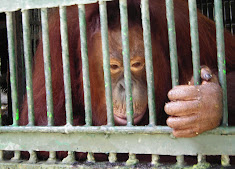


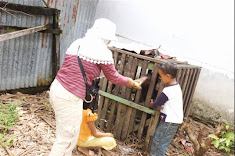
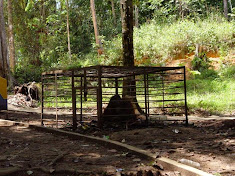

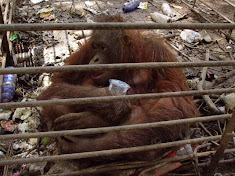



-a.jpg)


